
Garden Calendar & Seasonal Planner: What to Do Each Month
A useful garden calendar should remind you what to check each month without pretending that one planting date works everywhere in the United States. Use this planner for sowing, planting, repotting, pruning, feeding, harvesting, frost preparation, and container care—then adjust each task to your local frost dates, weather, plants, and growing conditions.
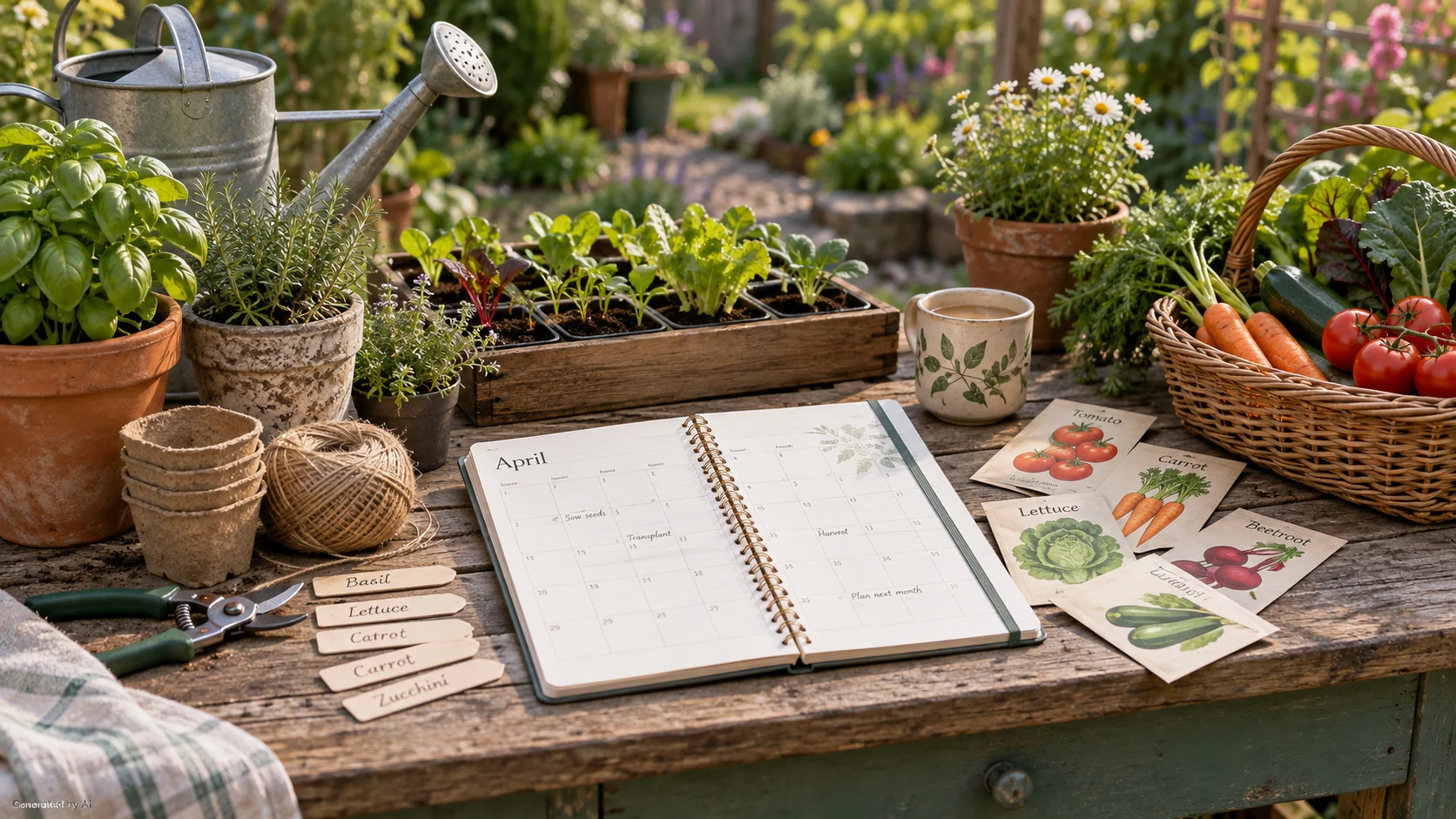
Your Year in the Garden
Use the Month as a Reminder, Not a Deadline
The best U.S. garden calendar combines a simple month-by-month routine with local information. Your USDA Hardiness Zone is useful when choosing perennial plants for winter conditions, while local spring and fall frost timing helps you plan many seasonal planting decisions. Current weather, elevation, exposure, heat, rainfall, and the microclimate around your home can move the practical timing earlier or later.
That means “start thinking about warm-season planting in May” is useful. “Plant every tomato outdoors on May 1” is not.
If the calendar is helping you plan a new growing area rather than maintain an established one, start with the basics of location, sunlight, soil, spacing, and access in our beginner-friendly garden bed planning guide.
Treat each month as a reminder to inspect, prepare, or plan. Take action when the plant, weather, soil, and local growing conditions support it.
Build Your Calendar Around Four Local Anchors
Before planning individual months, write down the four pieces of information that make a general garden calendar useful for your own yard, patio, balcony, or growing space.
Last Spring Frost
Use your local average spring frost timing as one planning reference for frost-sensitive crops. Keep watching the actual forecast as planting time approaches.
First Fall Frost
Fall frost timing helps you work backward when planning late-season crops and reminds you when tender outdoor containers may soon need attention.
USDA Hardiness Zone
Use your zone primarily as a winter-hardiness guide for perennial plants. It does not replace frost dates, current weather, or crop-specific planting guidance.
Microclimate
A sunny wall, exposed balcony, low frost pocket, windy patio, shaded yard, or higher elevation can behave differently from the surrounding area.
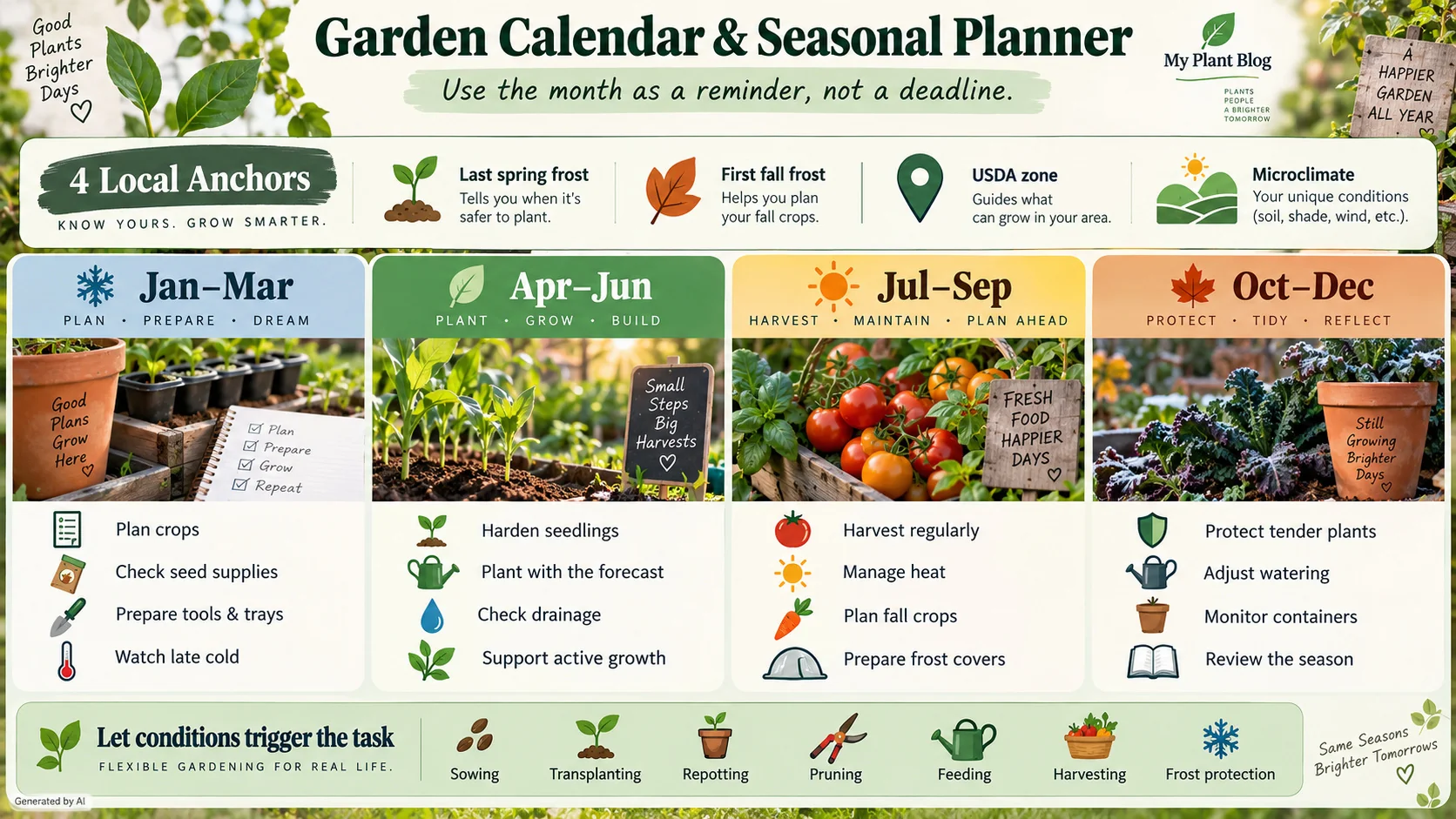
January Through March: Plan, Inspect & Prepare
The first part of the year is a good time to move from broad planning into practical preparation. If you want a deeper seasonal walkthrough for beds, soil, pruning, containers, tools, and early planting decisions, our spring garden preparation guide is a useful companion to this calendar.
Plan the Year
- Review last year's notes and decide what you want to grow.
- Check seed supplies and calculate upcoming planting windows.
- Inspect overwintering containers for drainage and cold exposure.
- Check houseplant potting mix before watering instead of following a fixed schedule.
- Record garden problems you want to solve before spring.
Work Backward From Spring
- Use seed packet guidance and local planting information to calculate indoor seed-starting dates.
- Prepare clean seed-starting containers and suitable growing mix when needed.
- Check perennial plants before doing any dormant-season pruning.
- Avoid assuming every flowering shrub should be pruned in winter.
- Continue monitoring stored and overwintering plants.
Watch for Active Growth
- Prepare beds and containers when soil and weather conditions allow.
- Continue seed starting according to the crop and your local schedule.
- Inspect houseplant roots instead of repotting automatically.
- Clean pots, supports, watering equipment, and garden tools.
- Watch the forecast before moving tender plants outdoors.
Spring is a convenient time to reassess many houseplants, but a calendar date alone is not a reason to move a plant into a larger container. Look for actual root and pot clues first. The guide to when to repot a houseplant can help you decide whether more root space is really needed.
When repotting is appropriate, choose a growing medium that matches the plant and container. See how to choose the right potting mix before filling the new pot.
April Through June: Transition, Plant & Grow
Prepare for the Move Outdoors
- Begin hardening seedlings when their outdoor planting window approaches.
- Watch for late cold snaps rather than trusting the month alone.
- Sow or transplant crops suited to your current local conditions.
- Check patio containers for drainage before the main growing season.
- Inspect irrigation or watering equipment before hot weather arrives.
Plant With the Forecast
- Plant frost-sensitive crops only when local conditions are suitable for them.
- Continue succession sowing where the crop and season allow.
- Add supports before tall or climbing plants become difficult to handle.
- Check containers more often as heat, sun, and wind increase drying.
- Observe young transplants for stress after they move outdoors.
Support Active Growth
- Harvest early crops when they reach the appropriate stage.
- Fill useful gaps with another sowing when your climate allows.
- Check ties and supports as plants gain height and weight.
- Assess container moisture regularly during warmer weather.
- Feed only when appropriate for the plant and product directions.
Seedlings raised indoors or under protected conditions benefit from a gradual transition to outdoor sun, wind, and temperature changes. Do not move tender young plants directly from a protected indoor space into their permanent outdoor position without an adjustment period.
July Through September: Harvest, Manage Heat & Plan Fall
Heat Changes the Routine
- Harvest mature vegetables, herbs, and flowers regularly.
- Check container moisture more often during hot or windy weather.
- Look for heat stress before assuming a plant needs fertilizer.
- Plan fall crops backward from your local fall frost timing.
- Follow local watering restrictions where they apply.
Start Thinking About Fall
- Sow or transplant suitable fall crops when your local season allows.
- Keep harvesting produce as it reaches maturity.
- Watch containers for repeated heat and drying stress.
- List frost-sensitive patio plants that will need later protection.
- Record successful varieties while the season is still fresh in your mind.
Prepare Before Cold Arrives
- Continue fall planting where temperatures and crop timing support it.
- Identify tender containers that may eventually need to move.
- Prepare frost covers or other appropriate protection before an urgent forecast.
- Notice whether containers are beginning to dry more slowly.
- Continue harvesting crops while they are at the stage you want.
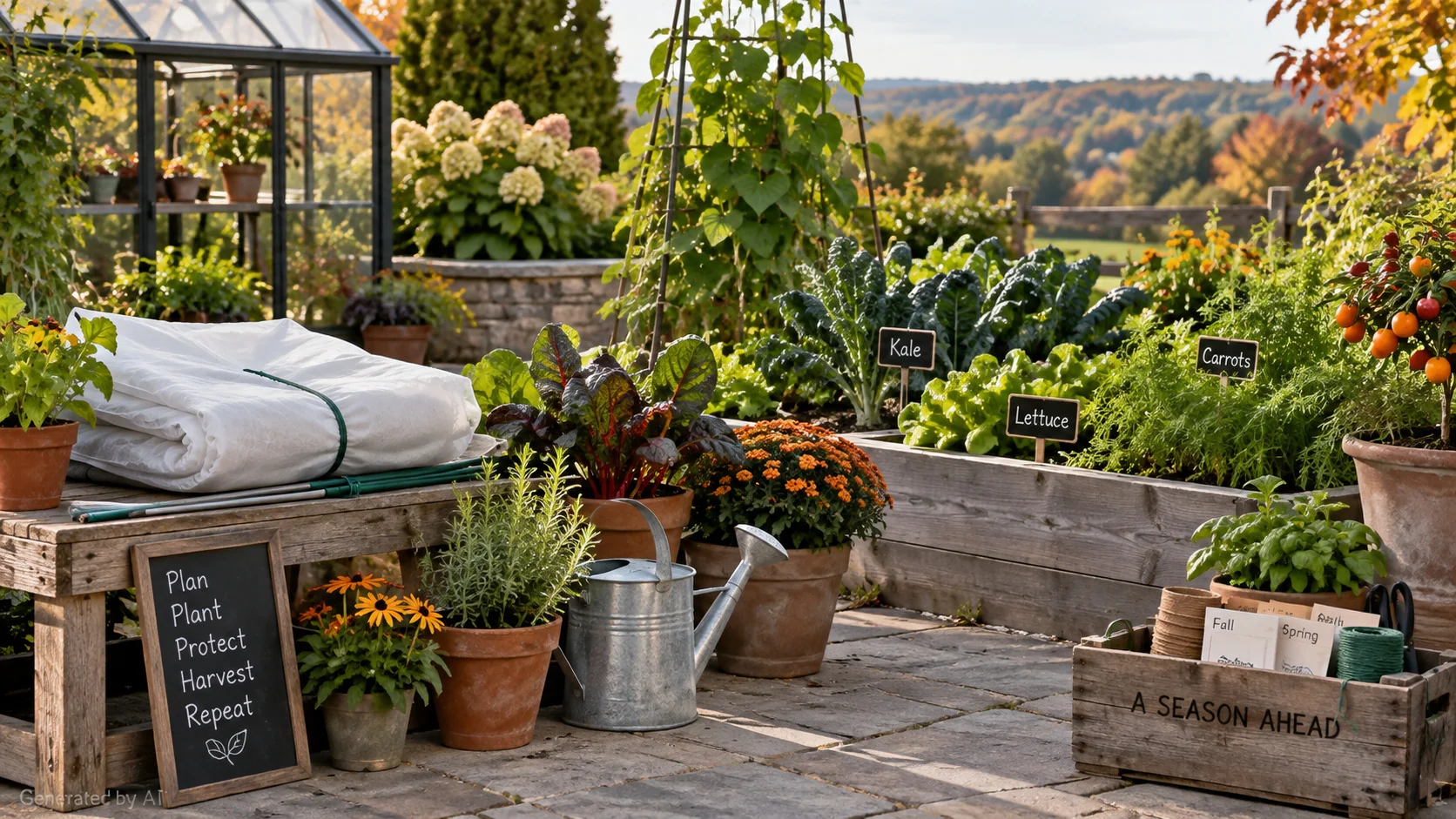
Hot weather can change plant behavior quickly, especially in containers. For more detail on adjusting care during prolonged heat, see our guide to keeping the garden healthy during summer heat.
Summer and early fall are also peak harvesting months for many culinary herbs. If herbs are part of your garden, learn how to harvest herbs without unnecessarily slowing new growth.
October Through December: Protect, Overwinter & Reset
Watch the Forecast
- Protect or relocate frost-sensitive plants when local conditions require it.
- Keep outdoor containers draining freely as temperatures cool.
- Remove plant material that is clearly dead or diseased when appropriate.
- Continue harvesting crops that remain productive.
- Adjust watering to actual drying rather than the summer routine.
Set the Winter Routine
- Check outdoor containers that remain exposed to freezes, wind, or winter rain.
- Monitor plants brought indoors for changes in light and drying.
- Reduce watering only when the potting mix is actually staying moist longer.
- Clean and store tools that are no longer needed outdoors.
- Keep notes on plants that need a different overwintering strategy next year.
Observe and Review
- Inspect winter protection after severe weather.
- Continue checking overwintering plants rather than forgetting them.
- Review the year's successes, losses, and timing problems.
- Update next year's seed and plant wish list.
- Use your own notes to make next year's calendar more local and useful.
Indoor plants often need a different watering rhythm when winter light and growth change. Our guide to watering houseplants in winter explains why checking the potting mix is more useful than automatically watering on the same day every week.
Seasonal changes in sun angle, day length, outdoor shade, and window exposure can also change the amount of usable light a plant receives. The Plant Light Guide can help you reassess indoor and outdoor growing positions as the seasons change.
Seasonal Container Care Has Its Own Calendar
Containers can react to seasonal changes faster than plants growing in the ground. Their limited volume means the root zone can warm, cool, dry, or become saturated relatively quickly, depending on the pot, mix, weather, and location.
Check drainage, root space, potting mix, increasing water use, supports, and whether plants being moved outdoors have been adjusted gradually to their new conditions.
Check moisture more frequently during heat and wind. A check does not automatically mean a watering. Feel the mix and consider the plant before adding water.
Begin identifying frost-sensitive containers early. Watch for slower drying and plan where tender plants will go before cold weather becomes urgent.
Protect suitable outdoor containers according to the plant and climate, maintain drainage, and monitor indoor plants as light, heating, and growth patterns change.
If you are unsure whether a container actually needs water, use the same observation-first approach described in how often you should water plants. The goal is not to water according to the calendar, but to use the season to decide how often you should check.
Let Conditions Trigger the Task
Some garden jobs fit naturally into certain seasons, but the strongest signal is often something more specific than the month itself.
| Garden Task | Use the Calendar to Remember | Use This to Decide |
|---|---|---|
| Sowing | When the usual season is approaching | Crop requirements, local conditions, frost timing, and seed information |
| Transplanting | When the outdoor planting window is getting close | Plant type, hardening, current weather, and frost risk |
| Repotting | Reassess plants during active-growth periods | Root crowding, pot size, drainage, and drying behavior |
| Pruning | Review plants before their normal pruning season | Plant species, flowering habit, age, health, and pruning goal |
| Feeding | Reassess as growth changes | Plant needs, existing potting mix or soil fertility, and current product directions |
| Harvesting | Check crops regularly during their productive season | Crop maturity and the stage you want to use |
| Frost protection | Prepare before your normal cold season | Weather forecast and the cold sensitivity of the plant |
| Container watering | Increase or decrease how often you check | Actual potting-mix moisture, plant needs, heat, light, wind, and pot size |
Do Not Prune or Feed Just Because the Calendar Says So
Pruning Is Plant-Specific
Before pruning a shrub or perennial, identify the plant and understand when it forms flowers and how it responds to pruning. A general “prune everything in winter” rule can remove flowers or create unnecessary stress.
Feeding Is Not a Monthly Requirement
Plant growth, soil or potting-mix conditions, previous fertilizer, watering, and the product itself all matter. Follow current label directions for any fertilizer you use and avoid treating a calendar reminder as an automatic application date.
This becomes especially important as the growing season slows. If you are deciding whether plants still need nutrients later in the year, read Autumn Fertilizing: Do Plants Still Need Nutrients? before turning a fall calendar reminder into an automatic feeding routine.
Shift the Calendar to Match Your Climate
The same January-through-December framework can work across the United States, but the outdoor growing season inside that framework may look very different.
Cold-Winter Regions
Spring outdoor planting may begin later, while frost preparation and container protection can become important earlier in fall. Indoor seed starting may play a larger role for long-season crops.
Four-Season Temperate Regions
Spring and fall frost timing often creates clear seasonal transitions, but year-to-year weather still shifts planting, harvest, and protection dates.
Mild-Winter Regions
Cool-season growing may continue through months that are dormant farther north. Summer heat rather than winter cold may become the larger scheduling challenge for some crops.
Hot, Dry or Highly Exposed Sites
Heat, wind, irrigation access, local water restrictions, and rapid container drying may shape the calendar as strongly as frost. Use local guidance instead of importing planting dates from a very different climate.
Garden Calendar Questions
Does my USDA Hardiness Zone tell me when to plant vegetables?
Not by itself. A Hardiness Zone is primarily a guide to winter temperature conditions for perennial plants. Vegetable planting also depends on local frost timing, crop requirements, current weather, and other local growing conditions.
What is the best month to start seeds indoors?
There is no single month for every crop or U.S. location. Start with the recommended lead time for the crop and work backward from the appropriate local outdoor planting window.
Should I repot all of my houseplants in spring?
No. Spring can be a useful time to inspect them, but repot only when the plant actually needs fresh mix, better drainage, root care, or additional root space.
When should flowering shrubs be pruned?
It depends on the species and when it forms its flower buds. Identify the shrub before pruning rather than relying on a universal winter or spring pruning date.
Should container plants be fertilized every month?
Not automatically. Fertilizer needs vary with the plant, active growth, potting mix, previous feeding, watering, and the product being used. Follow the current product label and the needs of the plant.
When should I start preparing for frost?
Prepare before cold weather becomes urgent, then use current local forecasts and the cold sensitivity of each plant to decide when protection or relocation is actually needed.
Can outdoor containers follow the same schedule as garden beds?
Not exactly. Containers can dry, heat, cool, or become waterlogged differently because their root zone is confined. Check the actual container conditions instead of copying the bed schedule.
How do I plan a fall vegetable garden?
Start with your local fall conditions and the crop's time to maturity. Work backward from likely cold weather while also considering late-summer heat, day length, and the crop's preferred growing conditions.
Your Best Garden Calendar Gets Better Every Year
A national calendar gives you the structure. Your own notes make it accurate. Record frost, heat, sowing dates, transplant timing, harvests, container behavior, and the plants that performed well in your space.
Next year, you will have more than a list of monthly chores—you will have a seasonal planner built around your own garden.
For more quick-reference tools, checklists, watering guides, and seasonal planning help, explore the My Plant Blog Plant Care Resources.
