
How Often to Water Houseplants in Winter
Most houseplants need water less often in winter, but there is no single interval that works for every pot. Lower daylight often slows growth and leaves the potting mix damp for longer. Check the soil every few days and water only when it has dried to the level your plant prefers. A fern may need consistently light moisture, while a snake plant or cactus should dry out much more between waterings.
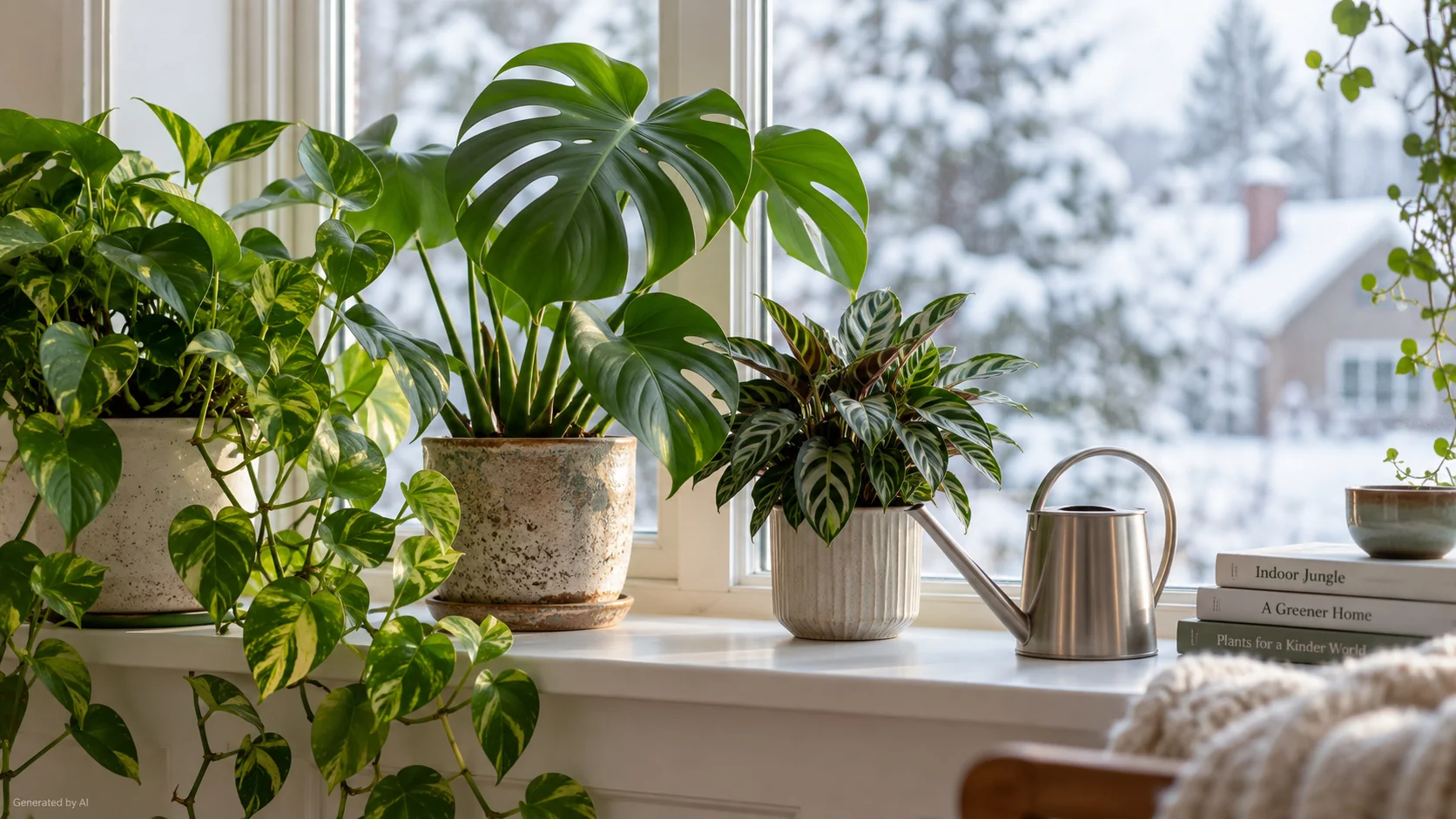
How Often Should You Check Houseplants in Winter?
Start by checking the potting mix once or twice a week. This is a checking routine, not a watering schedule. In a cool, dim room, a plant may go much longer between drinks than it did in summer. In a warm room with strong window light or a grow light, the same plant may dry faster.
Check first. Water when the root zone is dry enough for that particular plant, then let excess water drain away. If the mix still feels damp, check again in a few days rather than adding a little water “just in case.”
For the basic differences between indoor plants, outdoor containers, and garden beds, see our general guide to how often you should water plants.
How to Tell Whether a Houseplant Needs Water
The surface can look dry even when the center of the pot is still wet. Use more than one clue, especially for larger containers.
Feel below the surface
For many leafy houseplants, press a finger about 1–2 inches into the mix. If it is still distinctly damp, wait. For large pots, a clean wooden skewer or moisture meter can help you check deeper, but verify any meter reading against the mix itself. Adjust the depth for the plant and pot.
Lift the pot
Compare its weight just after a thorough watering with its weight several days later. A lighter pot is one sign that water has been used or evaporated, but it is not a substitute for checking the soil.
Look at the whole plant
Drooping, curling, or dull leaves can accompany thirst, but wet roots can cause similar symptoms. Look at the leaves and soil together before deciding what to do.
Check the drainage
Look for standing water in the saucer or decorative outer pot. The roots should not remain submerged after normal watering.
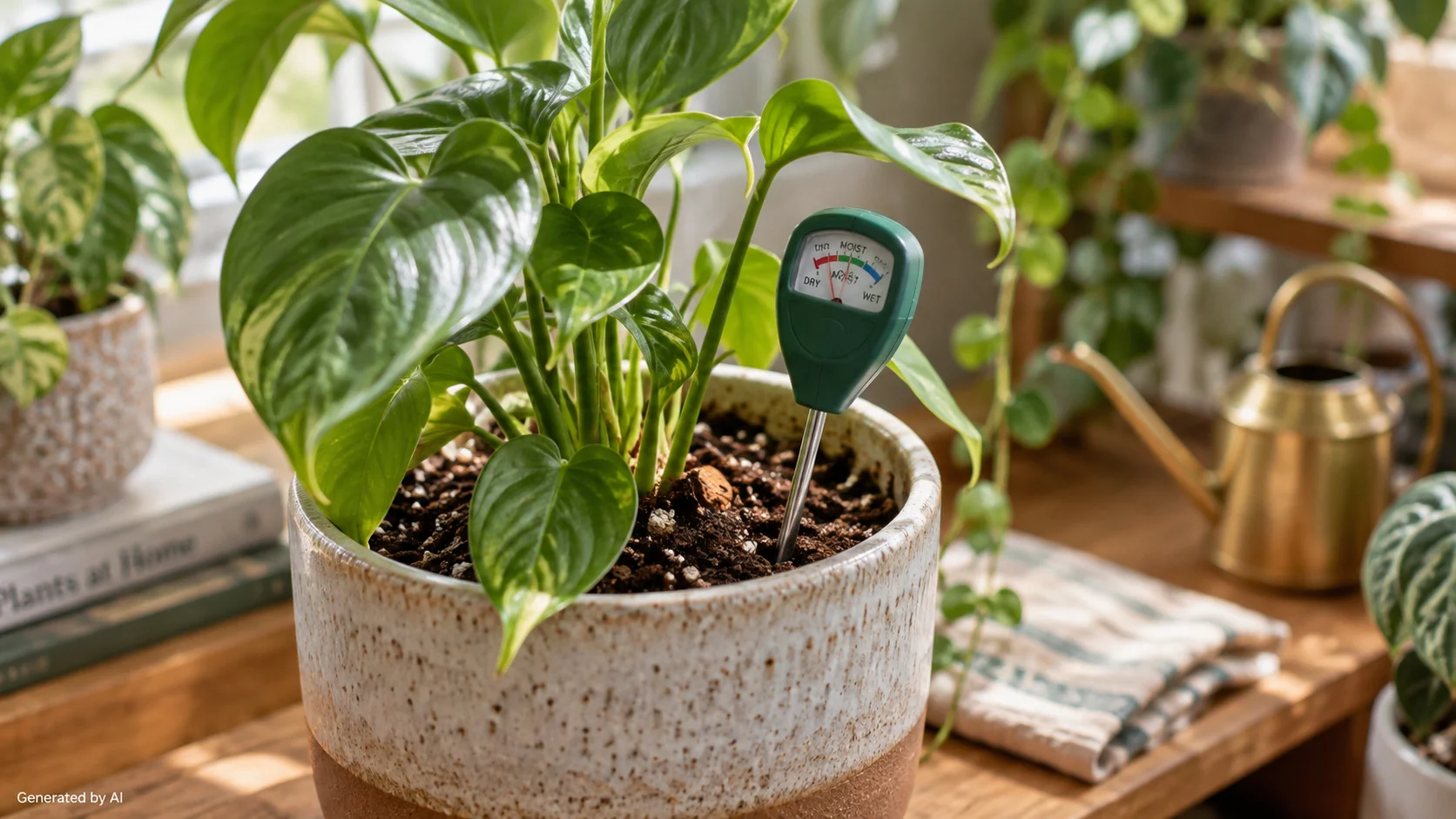
“Every Sunday” can be too often for one plant and too little for another. Let the actual moisture level make the decision.
Winter Watering Needs by Plant Type
Use these differences as a guide to how dry the mix should become, not as a fixed number of days. A plant under a grow light may still be actively growing in winter.
| Plant group | What to check before watering | Important exception |
|---|---|---|
| Pothos, philodendron, monstera | Let the upper portion of the potting mix dry, then check deeper in a large pot. | A bright, warm location may dry faster than a cool, dim one. |
| Peace lilies and many ferns | Check regularly; many prefer more even moisture than drought-tolerant plants. | Do not keep the roots waterlogged. Requirements vary by fern species. |
| Snake plants and ZZ plants | Allow the mix to dry more thoroughly between waterings. | Very low light or an oversized pot can slow drying considerably. |
| Cacti and many succulents | Wait until the mix is dry through the root zone before watering. | Species, temperature, and active growth still matter. |
| Actively growing plants under grow lights | Check moisture according to growth, warmth, and pot size. | They may need water more frequently than plants in winter dormancy. |
Why Winter Changes the Watering Routine
Less daylight usually means slower water use
Many houseplants grow more slowly as days shorten. Their potting mix may remain damp longer, particularly away from windows. Learn how changing light affects placement in our guide to plant light needs.
Heating can dry leaves without drying the roots
Indoor heating may lower relative humidity, even while the potting mix stays wet. Crispy leaf tips alone are not a reason to water. Check the soil and keep sensitive plants away from hot air blowing directly onto the foliage.
Pot size and material affect drying
A large plastic pot with dense mix can stay moist much longer than a small terracotta pot. Drainage, root density, room temperature, and airflow all change the time between waterings. If a pot stays wet for days, check whether the mix has become dense and poorly aerated before changing the watering interval.
How to Water Houseplants Correctly in Winter
- Check the moisture level. Wait until the mix has dried enough for the plant's needs.
- Water the root ball evenly. For most plants in pots with drainage holes, apply water slowly until some runs out of the bottom.
- Let the container drain. Empty any remaining water from its saucer or decorative cachepot.
- Check again before the next watering. Do not compensate for a longer winter interval with daily splashes.
Use comfortably room-temperature water rather than very cold water. If a peat-based mix has become so dry that water runs straight down the sides, rewet it gradually and confirm that the center of the root ball has absorbed moisture.
Winter Watering Problems: What the Symptoms May Mean
| What you see | Possible reason | What to do first |
|---|---|---|
| Drooping leaves, dry mix, light pot | Water shortage | Water thoroughly if the plant is ready, then allow it to drain. |
| Drooping or yellowing leaves, wet mix | Excess moisture, low light, or root stress | Do not add more water. Check drainage and monitor the plant. |
| Brown or crispy leaf tips | Dry air, inconsistent watering, or other stress | Check soil moisture and the location before changing your watering. |
| Mix stays wet for many days and smells sour | Poor aeration or possible root damage | Inspect drainage and consider checking roots if the plant continues to decline. |
If symptoms continue, use the Plant Problems symptom checker to investigate watering stress, root rot, and other possible causes. Avoid repotting or fertilizing immediately unless the actual problem calls for it.
Your Simple Winter Watering Checklist
- Check each pot individually once or twice a week, or more often if it dries quickly.
- Feel below the soil surface and compare the pot's weight.
- Consider the plant type, light, heating, and container size.
- Water thoroughly only when needed; empty saucers afterward.
- Investigate persistent wet soil or worsening yellow leaves before watering again.
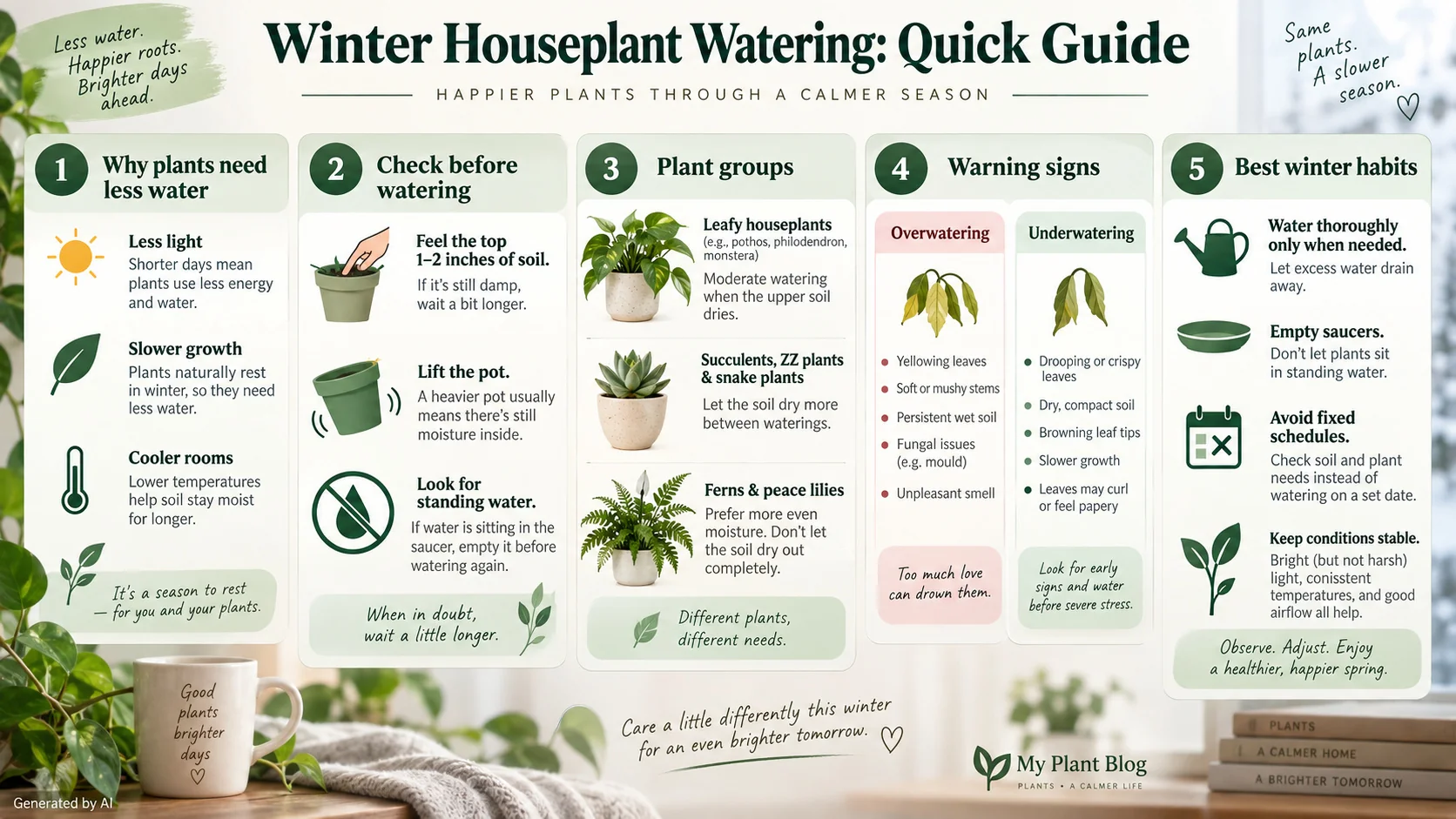
In winter, the most useful routine is to check regularly and water selectively. A longer interval is common, but the potting mix—not the date on the calendar—tells you when to act.
Winter Houseplant Watering FAQ
Should I water my houseplants every week in winter?
Not automatically. Check the potting mix weekly or more often, but water only when the plant has reached its preferred level of dryness. Some pots may remain moist well beyond a week.
Can a houseplant dry out faster when the heating is on?
Yes. Warm air, direct airflow, light, and a small pot can speed drying. Check the root zone rather than assuming every heated room needs the same watering frequency.
Is misting the same as watering?
No. Misting leaves does not replace watering the root ball. It also does not reliably solve low indoor humidity. Check soil moisture independently.
Should I stop watering plants completely in winter?
Most houseplants still need some water. The amount and timing depend on plant type, temperature, light, and whether it is actively growing or resting.
Build a Routine That Fits Your Plants
Start with moisture, then look at light, drainage, and how the plant responds. For a wider set of practical care guides, explore our Grow Guides.
Need a trustworthy starting point? The University of Maryland Extension offers additional guidance on watering indoor plants, including why a fixed schedule can be misleading.
