
Plant Light Guide: How to Find the Right Spot for Your Plants
Finding the right light for a plant can feel more complicated than watering or repotting. Plant tags talk about full sun, bright indirect light, partial shade, or low light, but your home probably has a south-facing window, a covered balcony, a shelf across the room, or one corner that simply looks bright enough.
This beginner-friendly plant light guide helps you translate those labels into real places. The most useful place to begin is with the light that actually reaches the leaves, not how bright the entire room looks to you.
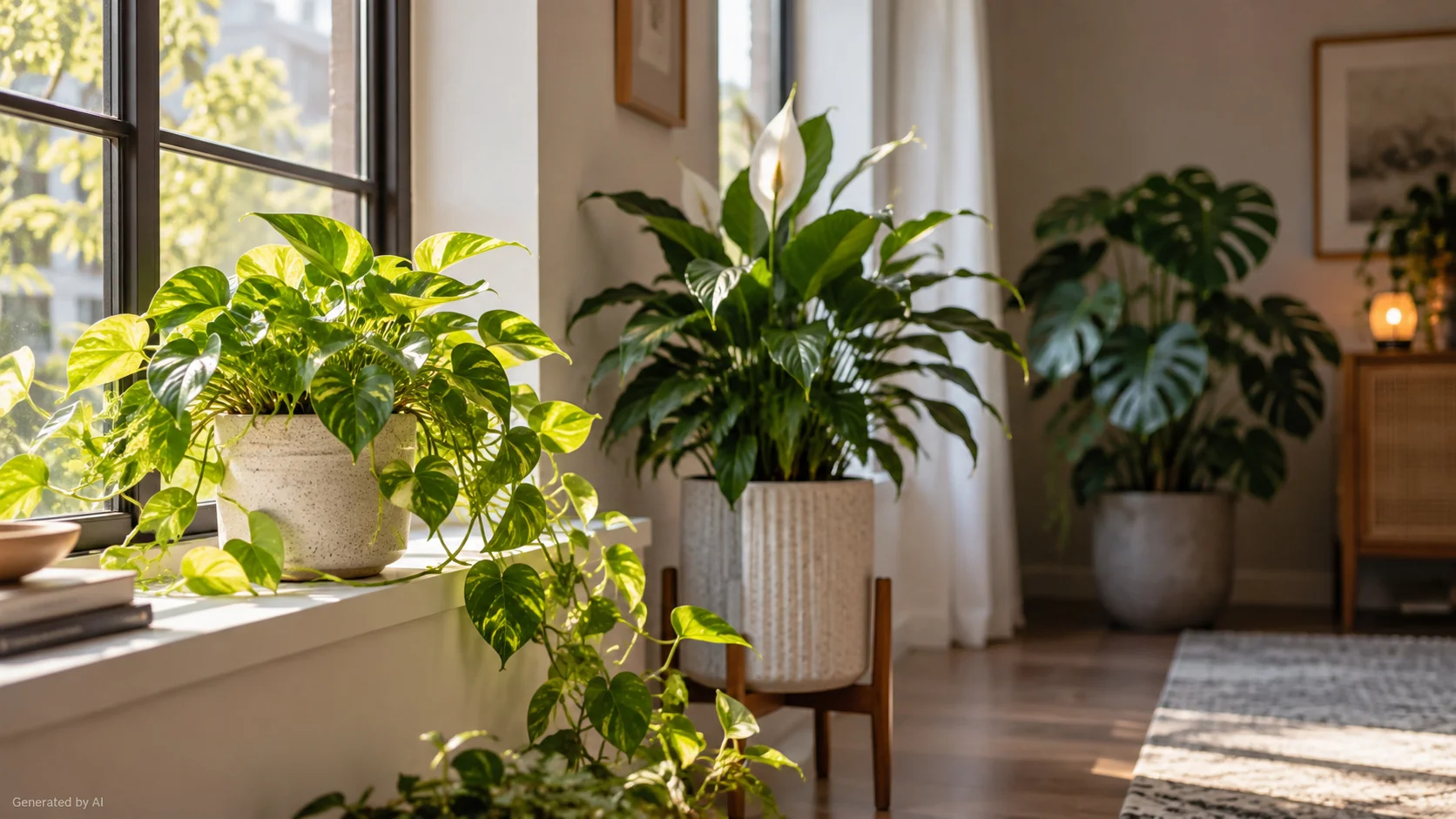
In this plant light guide
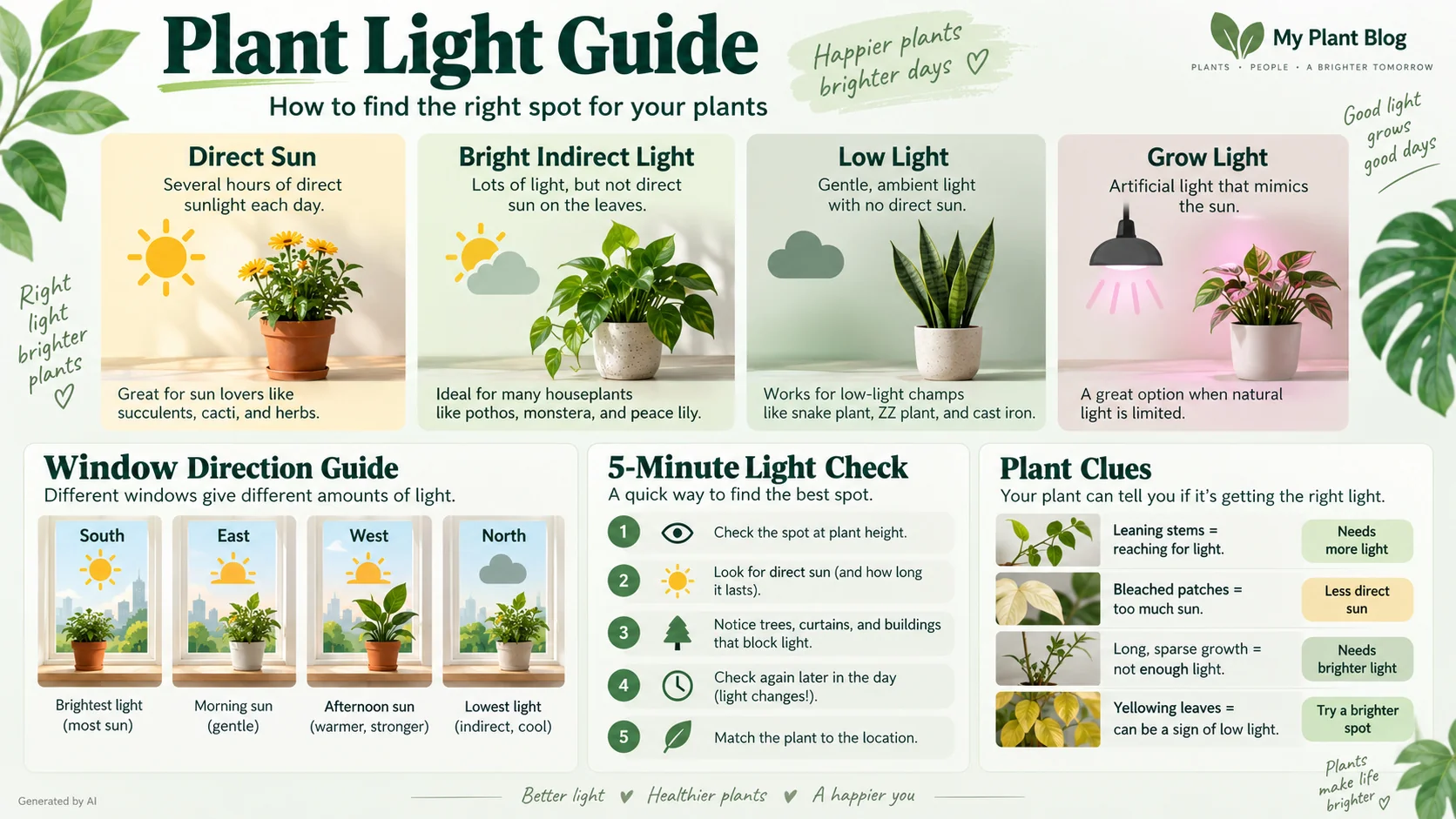
Plant Light Guide: Four Useful Light Categories
Plant-light descriptions are most useful when you treat them as practical categories rather than exact universal measurements. Different species have different requirements, and two apparently similar windows can provide very different conditions.
If you first want to understand what terms such as full sun, bright indirect light, and low light mean, the Plant Light Needs Explained guide covers the terminology in more detail. This guide focuses on applying those terms to the exact place where your plant will grow.
Direct sun
Direct sun means sunlight is falling directly on the leaves. You can usually see a defined beam of sunlight and a noticeable shadow.
Bright indirect light
A bright location with plenty of ambient daylight where the plant does not spend long periods in strong direct sun.
Low or lower light
Daylight still reaches the plant, but there is little or no direct sun. Low light should not be confused with darkness.
Supplemental light
A suitable grow light can help when a shelf, interior room, or shaded corner does not receive enough usable natural daylight.
Start With the Light That Actually Reaches the Plant
When judging a location, stand where the plant will actually sit. A sunny window can make the whole room look bright while a shelf on the opposite wall receives much less useful light. Likewise, a balcony may face a sunny direction but remain shaded for much of the day by the balcony above it.
Watch the location at several points during the day. Morning, midday, and late afternoon are usually enough to reveal whether direct sun reaches the leaves and how the light changes.
Trees, neighboring buildings, balconies, roof overhangs, blinds, curtains, window recesses, and even other plants can significantly change the light at the exact spot where your plant sits.
- Look for direct sunbeams at plant height.
- Check whether anything outside blocks the open sky.
- Notice curtains, blinds, and deep window recesses.
- Check the spot at more than one time of day.
- Reassess the location when the season changes.
What Does Bright Indirect Light Really Mean?
Bright indirect light is one of the most common and confusing plant-care instructions. In everyday plant care, it usually means a location that feels clearly bright during the day but does not expose the plant to prolonged, intense direct sun.
A plant beside an east-facing window may receive some gentle direct morning sun and bright indirect light afterward. A plant near a very sunny south- or west-facing window may need a little more distance from the glass or light filtering if it prefers protection from stronger direct sun.
Bright windows are also useful growing spaces for culinary herbs. Light, watering, drainage, and container size work together, so the guide to caring for basil, rosemary, mint, and other herbs is a useful next step if you grow herbs indoors or in containers.
A plant placed deep inside a room may receive no direct sunlight, but that alone does not make the location bright indirect light. Available daylight can fall quickly as you move away from a window.
How Window Direction Changes Plant Light
Window direction is a useful starting point, but it should never be the only thing you consider. Always compare the general orientation with what you actually see at the plant's location.
| Window | Typical light pattern | What to check |
|---|---|---|
| South-facing | Often one of the brightest indoor locations | Direct sun duration, heat near the glass, trees, awnings, buildings, and seasonal changes. |
| East-facing | Morning sun followed by softer daylight | Outdoor obstructions and how long direct morning sun reaches the plant. |
| West-facing | Brighter and warmer later in the day | Whether stronger afternoon sun creates heat or leaf stress. |
| North-facing | Mostly indirect daylight | Window size, distance from the glass, nearby buildings, and how much open sky is visible. |
A room can look bright while a plant several feet from the window receives much less usable daylight. Judge the exact plant position rather than the room as a whole.
Windows, Balconies, Patios, Shelves, and Shaded Corners
The same plant label can lead to very different placement decisions indoors and outdoors. Use the following examples as a starting point rather than a fixed rating system.
| Location | Likely light | What to check |
|---|---|---|
| Sunny windowsill | Direct or very bright light | How long direct sun reaches the leaves and how intense it becomes. |
| Near a bright window | Often bright indirect light | Window orientation, curtains, outdoor shade, and actual sunbeams. |
| East-facing window | Morning direct sun plus softer daylight | Trees, buildings, and how long morning sun reaches the plant. |
| North-facing window | Indirect light ranging from useful to fairly low | Window size and whether the sky view is unobstructed. |
| Open balcony or patio | Potentially strong direct outdoor light | Sun duration, overhead shade, walls, trees, and changing shadows. |
| Covered balcony or patio | Bright indirect light to substantial shade | Depth of the cover and the open view of the sky. |
| Plant shelf | Highly variable | Shelf height, distance from the window, and shading from other plants. |
| Interior shaded corner | Low or potentially insufficient natural light | Whether meaningful daylight reaches the leaves at all. |
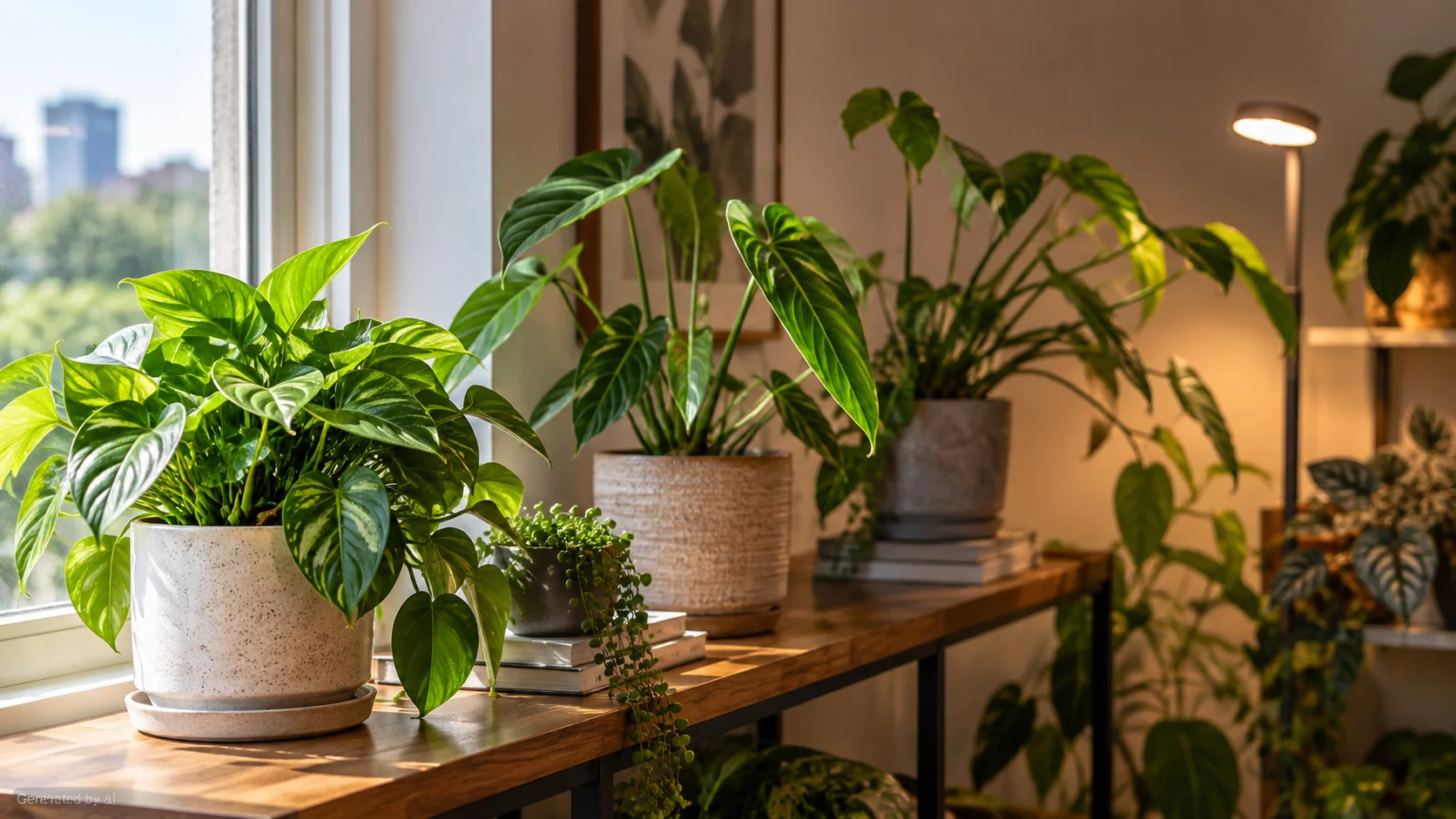
Balconies and patios need their own light check
Outdoor container plants experience light differently from houseplants. An open balcony can become intensely sunny, while the balcony directly above yours may shade the same orientation for much of the day. Patio walls, fences, trees, and neighboring structures can create alternating areas of sun and shade.
Before choosing plants, note when direct sun first reaches the containers and when it disappears. Check at container height rather than judging only from where you normally sit or stand.
Once you understand the available light, you can use those conditions to plan a more purposeful container area. The tea garden herbs and fragrant plants guide shows how light, moisture, space, and growth habit affect a fragrant balcony or patio setup.
Shelves can be darker than they look
The top shelf may have a clear view of the window while lower shelves are shaded by foliage above them. A tall plant can also block smaller pots behind it.
Look from the plant toward the window. A broad, unobstructed view of the sky generally gives you a more useful clue than the overall brightness of the room.
Low light does not mean no light
Some houseplants tolerate lower light better than others, but low light should not be interpreted as a permanently dark hallway or a windowless room. Plants still need usable light for photosynthesis.
How to Check a Plant Location in Five Minutes
Look from plant height
Stand or crouch where the leaves will actually be and look toward the window or open sky.
Look for direct sun
Check whether a visible beam of sunlight reaches the spot and whether the plant casts a defined shadow.
Notice what blocks the light
Trees, buildings, curtains, balcony ceilings, and larger plants can all change the result.
Check again later
A location that is shaded in the morning may receive direct sun later in the afternoon.
Match the plant and keep observing
Compare the location with the plant's normal preference, then watch its growth and make reasonable adjustments when needed.
A distinct shadow often points to stronger light, a soft but visible shadow can suggest more diffuse bright light, and a barely visible shadow suggests a lower-light location. Treat this as a simple comparison tool rather than a precise measurement.
What Your Plant May Be Telling You About the Light
Plant growth can provide useful clues, but no single leaf or symptom proves that light is the problem. Watering, root health, temperature, nutrition, and seasonal growth can create similar changes.
The plant may need more light
- Stems stretch noticeably toward the window.
- Spaces between leaves become unusually large.
- Growth becomes strongly one-sided.
- New growth is smaller or weaker than expected.
- Growth slows during an otherwise active period.
- Some variegated plants produce less variegated growth.
The light may be too intense
- Pale or bleached patches appear after stronger sun exposure.
- Tan or crisp areas occur mainly on the sun-facing side.
- Damage begins soon after a move to much stronger direct light.
- A previously protected plant struggles after sudden exposure.
When practical, give a plant time to adjust when moving it from a dimmer location into substantially stronger direct sun rather than making the full change all at once.
If several symptoms appear at the same time, use the Plant Problems guide to compare light with watering, drainage, root stress, pests, and other common causes before changing several parts of the care routine at once.
Light also affects how quickly a container dries. A plant in brighter, warmer conditions may use water faster, while a lower-light plant may stay moist for longer. The plant watering guide explains why soil moisture and actual growing conditions are more useful than a fixed watering calendar.
Seasonal Light Changes Matter
A plant does not necessarily receive the same light in January and July. The sun's angle and day length change, deciduous trees gain or lose leaves, and balcony overhangs can cast different shadows through the year.
A spot that works beautifully during summer may become too dim in winter. The opposite can happen too: a plant protected by leafy trees in summer may receive more direct window sun after the leaves fall.
Seasonal light changes can also affect watering and other recurring care tasks. The printable plant care checklist provides a simple routine for keeping light, watering, leaves, and other regular plant checks organized.
- Recheck important windows when the season changes.
- Watch for new shadows from balconies, roofs, and nearby buildings.
- Remember that leafless outdoor trees can change winter window exposure.
- Adjust watering when lower light changes how quickly the potting mix dries.
When a Grow Light Makes Sense
A grow light can be useful for a shelf, interior room, shaded apartment, or seasonal period when natural daylight is consistently insufficient.
You do not need to turn every plant corner into a complicated lighting setup. Start with the problem you are trying to solve. Choose lighting intended for plant use, position it according to the fixture manufacturer's instructions, and observe how the plant responds.
- Use a light designed to support plant growth.
- Follow the manufacturer's recommended distance and operating guidance.
- Use a timer when a consistent routine is helpful.
- Watch new growth instead of assuming stronger light is always better.
- Reassess the setup as natural daylight changes through the year.
A decorative lamp can make a room feel bright to you without providing enough useful light for a plant. Judge a supplemental light by the plant's needs and the fixture's intended use rather than visual room brightness alone.
Common Plant-Light Mistakes
Using window direction alone
Trees, buildings, curtains, screens, and balconies can completely change what a particular orientation provides.
Judging the whole room
A room can feel bright to you while a plant deeper inside it receives relatively weak daylight.
Treating low light as darkness
Low-light-tolerant plants still need usable light. A windowless corner is not automatically a suitable low-light position.
Underestimating outdoor light
An outdoor balcony or patio can expose a plant to much stronger light and heat than a bright indoor window.
Ignoring seasonal change
A location that works well in summer may be considerably darker in winter.
Changing too much at once
Moving, repotting, fertilizing, and changing watering at the same time makes it difficult to understand what actually helped.
The Easiest Rule to Remember
Ask what light reaches this exact plant.
Instead of asking only which direction a window faces, look at what light actually reaches the leaves throughout the day. Observe first, match the plant second, and adjust when the plant or the season tells you conditions have changed.
Light is only one part of healthy plant care. For connected beginner guides covering watering, potting mix, repotting, seasonal care, and common plant problems, continue with the Grow Guides for healthy plants.
Plant Light FAQ
Does bright indirect light mean no direct sunlight at all?
Not necessarily. A location may receive a little gentle direct sun and still work well for a plant commonly described as preferring bright indirect light. Intensity, duration, season, and the plant itself all matter.
Is an east-facing window bright indirect light?
It can be. East-facing windows often receive direct morning sun and softer light later, but trees, buildings, curtains, and window size can change the result.
Can a plant live in a room with no windows?
Plants require light. If a room receives essentially no usable natural daylight, suitable supplemental grow lighting will generally be needed.
Is a north-facing window low light?
Not always. A large unobstructed north-facing window may provide useful indirect daylight, while a small north window beneath a porch or facing a nearby building can be much darker.
How far from a window is bright indirect light?
There is no universal distance. Window size, direction, glazing, outdoor obstructions, season, and room layout all affect how quickly available light decreases. Judge the actual plant position rather than relying on one fixed number of feet.
Should I move a leaning plant closer to the window?
Leaning toward the light can be a clue that a plant wants more light, but check the rest of the plant and its normal growth habit first. If you change the location, make a reasonable adjustment and continue observing.
Do plants need less light in winter?
Available natural light often changes in winter, but the answer depends on the plant and location. Rather than deliberately making a plant darker, reassess the spot as the season changes and continue providing light appropriate for that plant.
