
Grow Guides · Container Gardening
Best Potting Mix for Container Plants
For most container plants, start with a lightweight potting mix made for pots—not soil dug from your yard. A good blend holds enough moisture for roots to use while leaving air spaces and letting excess water drain. The right bag depends on what you grow: leafy houseplants, flowering patio pots, herbs, vegetables, succulents, and orchids do not all need the same balance. Here is how to choose a mix, read the ingredients, and adjust it without making container care complicated.
What Is the Best Potting Mix for Container Plants?
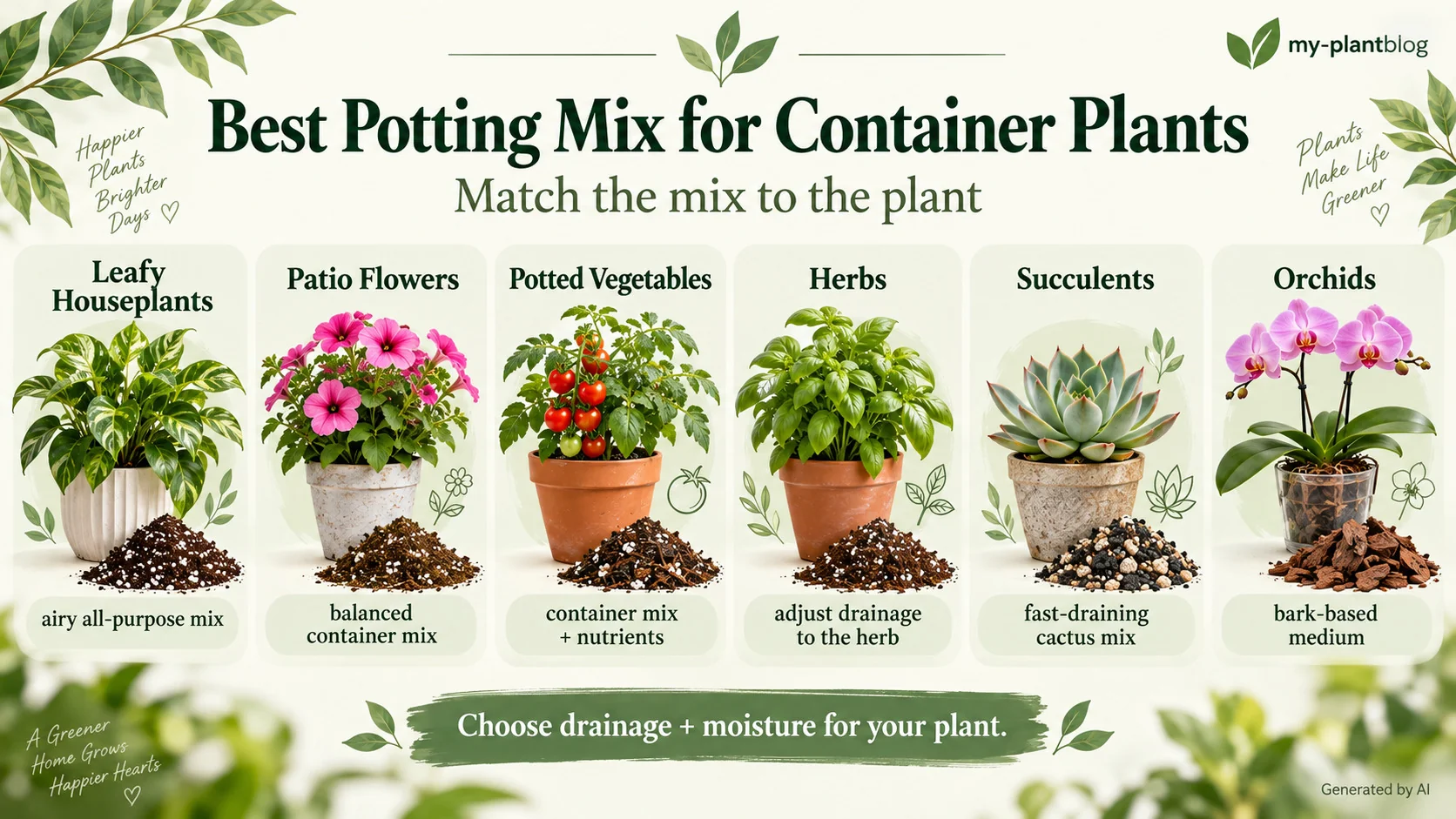
A quality all-purpose container potting mix is a useful starting point for most common potted flowers, leafy houseplants, and many vegetables. Look for a light, springy texture, a moisture-holding base such as coir or peat, and ingredients such as perlite or bark that maintain air space. Choose a specialty mix when the plant needs a notably different root environment.
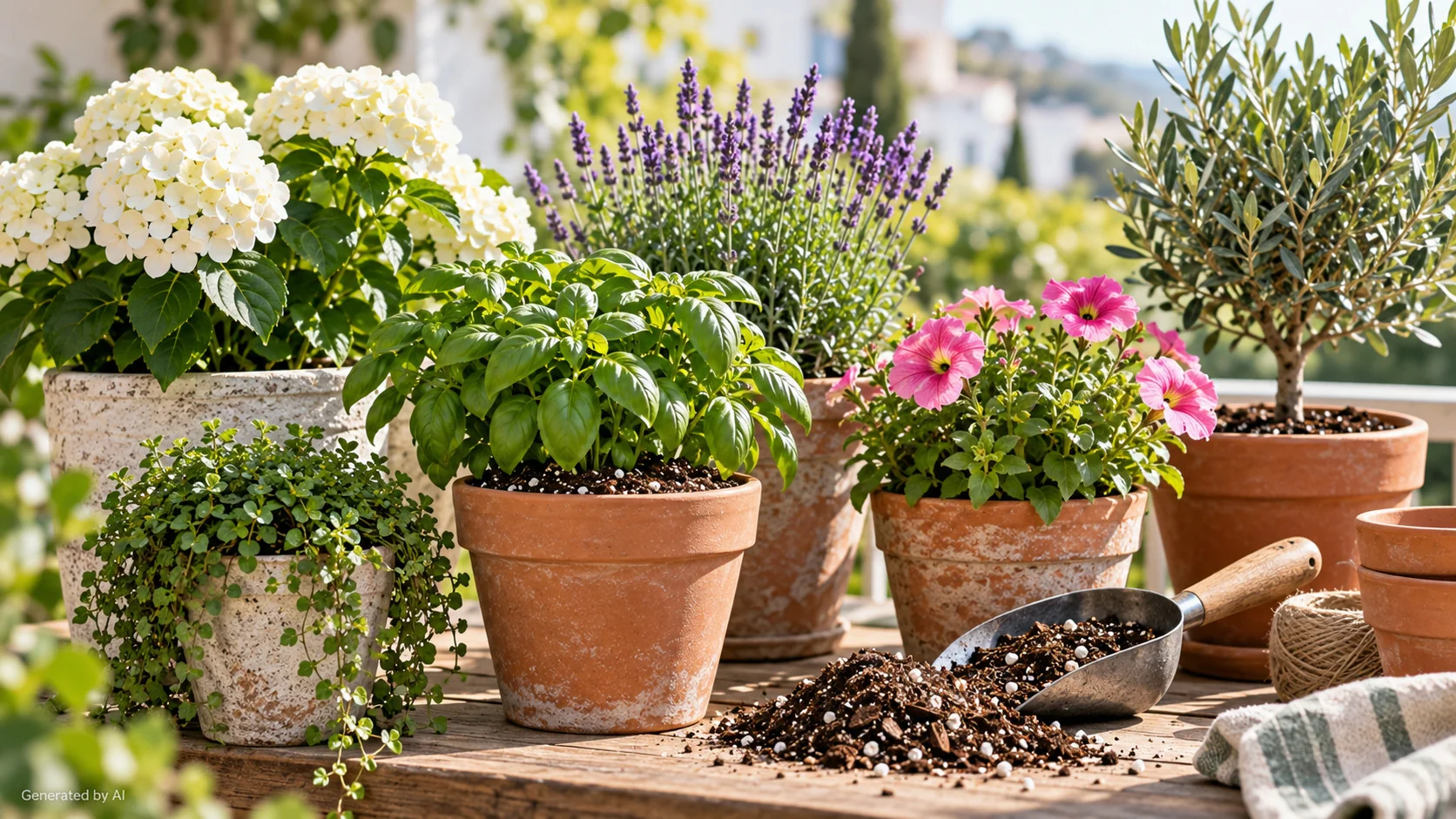
Buy a product labeled for containers or pots. Match how fast it dries to the plant, check whether fertilizer is already included, and make sure the pot has an open drainage hole.
| What you grow | Useful starting mix | What to watch |
|---|---|---|
| Leafy houseplants | Airy all-purpose indoor potting mix | Avoid a dense, persistently wet root zone. |
| Patio flowers and annuals | Quality outdoor container mix | Balance drainage with enough moisture for warm days. |
| Tomatoes and other potted vegetables | Container or vegetable potting mix | Check nutrients and expect regular feeding as plants grow. |
| Most kitchen herbs | Light container mix; extra aeration for dry-loving herbs | Basil and mint have different moisture needs from rosemary or thyme. |
| Cacti and succulents | Fast-draining cactus/succulent mix | A standard moisture-retentive blend may stay wet too long. |
| Epiphytic orchids | Orchid-specific bark-based medium | Ordinary fine potting mix can hold too much moisture around their roots. |
For more plant-care fundamentals, explore the Grow Guides for healthy plants.
What Makes a Good Container Potting Mix?
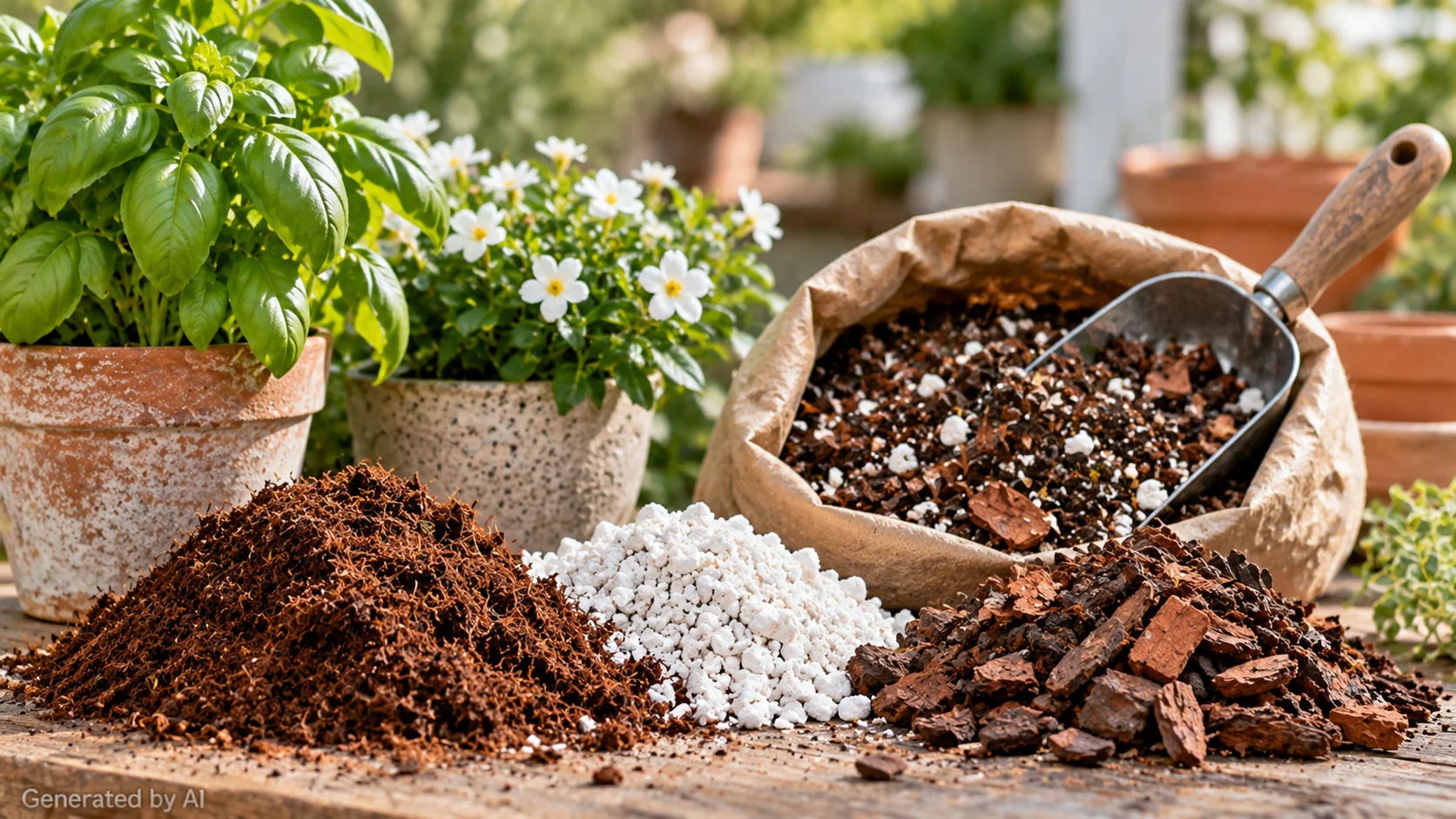
Container roots need water, oxygen, nutrients, and support in a limited space. The ingredient list is more useful than a claim that one bag is “best for every plant.” Here is what common components actually do.
Coir or sphagnum peat
Forms a light, moisture-holding base. Coir is one peat-free alternative; either material needs the rest of the mix to provide sufficient air space.
Perlite or pumice
Creates larger pores that help roots breathe and water move through the pot. Dampen dusty dry ingredients before handling.
Composted bark
Adds structure and air space, especially in chunkier mixes. The particle size matters: orchid bark is not interchangeable with finely milled bark in every recipe.
Compost and fertilizer
Can provide nutrients, but a heavy, compost-rich blend may reduce air space. Read the label so you do not double up on fertilizer right after planting.
For a more detailed explanation of the root environment, see the University of Maryland Extension guide to container growing media.
Potting Mix vs. Garden Soil: Why It Matters
Garden soil belongs in garden beds. In a confined pot, it can pack down, drain poorly, and leave too little oxygen around roots. A container-specific potting mix is designed to hold some water while retaining pore spaces as the plant grows. That is why a bag of topsoil or in-ground planting soil is not an equivalent substitute for a container mix. If you are preparing an in-ground planting area instead, our Garden & Outdoor guides cover the different soil and site considerations.
A gravel layer is not a substitute for drainage holes or an appropriate mix. If the pot lacks an outlet for excess water, use a nursery pot with drainage inside the decorative container and empty collected runoff.
Choose the Mix for Your Plant and Growing Conditions
Indoor foliage plants
For a typical pothos or other common leafy houseplant, begin with an indoor potting mix that holds some moisture without staying soggy. If the mix remains wet for an unusually long time, first check the light, pot size, drainage hole, and watering pattern before adding more amendments.
Outdoor flowers and vegetables
Sunny patio containers face heat and wind, so they often need a blend with both drainage and dependable water retention. Choose a container mix rather than garden soil. Check the fertilizer label: starter nutrients do not necessarily feed a tomato or heavily flowering annual for its full growing season.
Herbs
Many herbs grow well in an airy general-purpose mix. Rosemary and thyme generally benefit from a faster-draining root zone, while basil and mint usually need more consistent moisture. Choose the mix for the particular herb rather than treating all herbs as identical. For more on growing and caring for familiar kitchen herbs, see Herbs & Natural Living.
Succulents and orchids
Use a suitably fast-draining cactus mix for succulents, and a bark-based orchid medium for orchids that naturally grow with highly aerated roots. A regular fine-textured potting mix is not a universal replacement for these specialized media.
Five Checks Before You Buy a Bag
- Read the intended use. Look for “potting mix,” “container,” or the appropriate specialty plant type.
- Feel the bag. A lightweight, loose blend is usually easier to work with than an unusually heavy, saturated, compacted bag.
- Check the ingredients. Look for a balance of water-holding material and aeration components.
- Look for added fertilizer. Note whether it contains a starter charge or controlled-release feed before planning further fertilization.
- Match the environment. A small terracotta pot in wind dries differently from a large plastic pot in a dim room.
If an otherwise suitable mix stays too dense for a plant that needs more air, you can blend in a modest amount of perlite or appropriate bark. Make small adjustments and observe how the planted pot drains and dries; there is no single percentage that suits every species, pot, and climate.
How to Use Fresh Potting Mix
- Choose a clean container with open drainage holes, sized to the plant's actual root ball.
- Lightly pre-moisten dry mix so it wets evenly; do not turn it into mud.
- Place the plant at approximately its previous growing depth and fill around the roots without packing the mix hard.
- Water according to the plant's needs, let excess drain away, and empty the saucer or outer pot.
- Check moisture below the surface over the next several days instead of following a fixed calendar.
Changing the mix affects drying time. Use our guide to how often to water plants to adjust your routine after repotting.
When a Potting Mix Is Not Working
| What you notice | Check first | Useful next step |
|---|---|---|
| Mix stays wet and leaves droop | Moisture deeper down, drainage hole, pot size, light | Pause watering and inspect roots if the plant continues to decline. |
| Water runs off a very dry surface | Whether the center of the root ball is still dry | Rewet gradually and thoroughly; do not assume runoff means the roots are moist. |
| Mix shrinks or becomes compacted | Texture, age, and whether roots are crowded | Consider refreshing the mix at an appropriate repotting time. |
| White crust appears on the surface | Fertilizer use and mineral deposits | Review feeding and water quality before adding more fertilizer. |
If roots are soft or the plant wilts in persistently wet soil, start with our plant problem and root-stress troubleshooting guides. A potting mix change alone will not solve poor light or a pot that traps runoff.
Potting Mix FAQ
Can I use garden soil in containers?
For most ordinary pots, choose a container potting mix instead. Garden soil can become dense and poorly aerated in a small enclosed volume.
Does every container plant need perlite?
No. Perlite can improve air space, but the entire blend matters. Some suitable mixes use bark, pumice, or other structural materials instead.
Is peat-free potting mix a good option?
Yes, a well-formulated peat-free mix can work well. Look at its texture, water retention, aeration, and the plant's requirements rather than judging it by the peat-free label alone.
Should I change potting mix every year?
Not automatically. Refresh or replace it when the structure breaks down, drainage becomes poor, contamination or root disease is suspected, or repotting is otherwise needed.
The Bottom Line
Start with a lightweight container mix, then match drainage and moisture retention to your plant. Check the bag, use a pot with drainage, and learn how quickly the root zone dries. Those three choices are more useful than searching for one perfect recipe for every container.
