
Herbs & Natural Living: Grow, Harvest, and Preserve Herbs at Home
A useful herb garden can begin with a bright windowsill, a sunny balcony, a patio corner, or a few containers near the kitchen. This hub brings together practical guides for choosing beginner-friendly herbs, matching care to each plant, harvesting without overcutting, drying extra leaves, and creating fragrant spaces you will actually enjoy using.
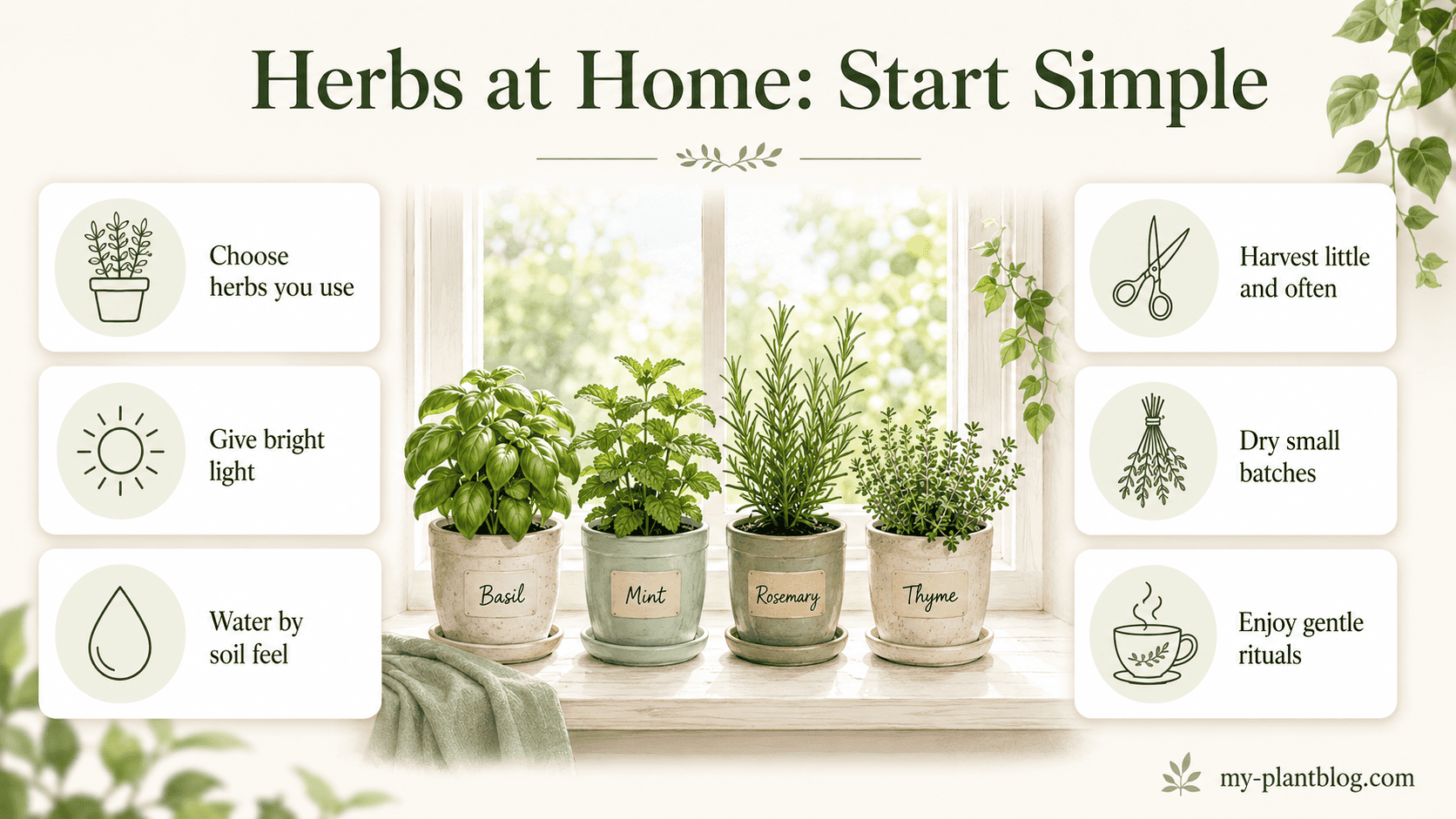
Find the right herb guide
A Simple Way to Start Growing Herbs at Home
You do not need a complicated setup. Most beginner problems become easier to prevent when you make a few good decisions before buying several plants.
Choose herbs you already use
Basil, parsley, chives, mint, thyme, oregano, and rosemary are familiar starting points. Pick plants that already have a place in your cooking or everyday routine rather than collecting herbs only because they look interesting.
Watch the light before choosing the spot
Observe your windowsill, balcony, patio, or porch through the day. Buildings, trees, screens, seasonal changes, and roof overhangs can all reduce the light that actually reaches your plants.
Use containers that drain
For container herbs, drainage holes and a loose potting mix make moisture easier to manage. Avoid keeping herb roots in a constantly waterlogged container.
Check each pot before watering
Herbs growing side by side may dry at different rates. Feel the potting mix and consider the plant, container size, recent heat, wind, and indoor conditions before deciding whether to water.
Choose Herbs You Will Actually Use
The best beginner herb garden is usually built around familiar plants. These guides help you compare easy choices and narrow your first collection to herbs that fit your kitchen, space, and routine.
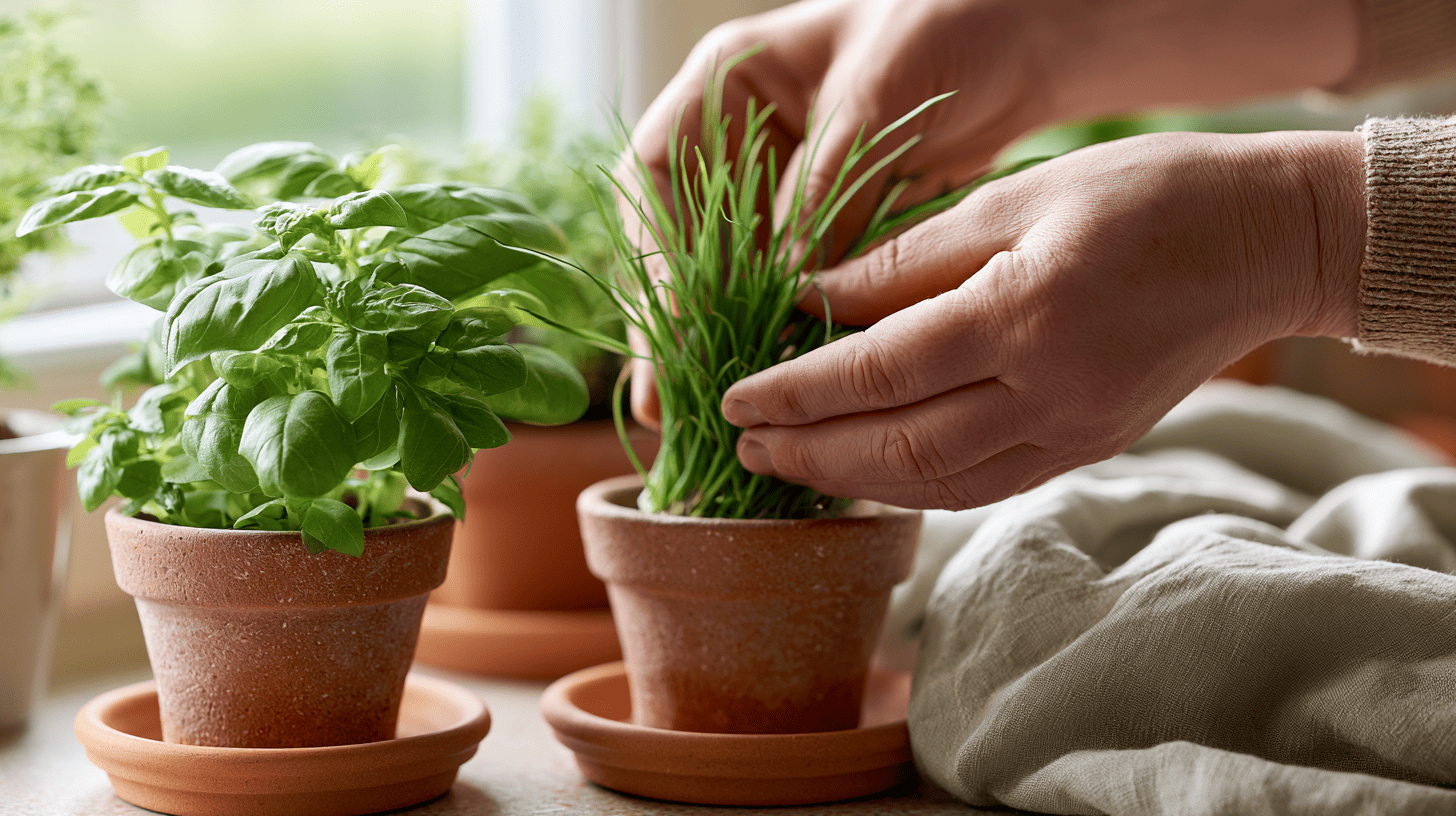
The Best Herbs to Grow at Home for Beginners
Compare approachable herbs for a first home garden and learn the basics of light, drainage, watering, containers, and harvesting without making the setup unnecessarily complicated.
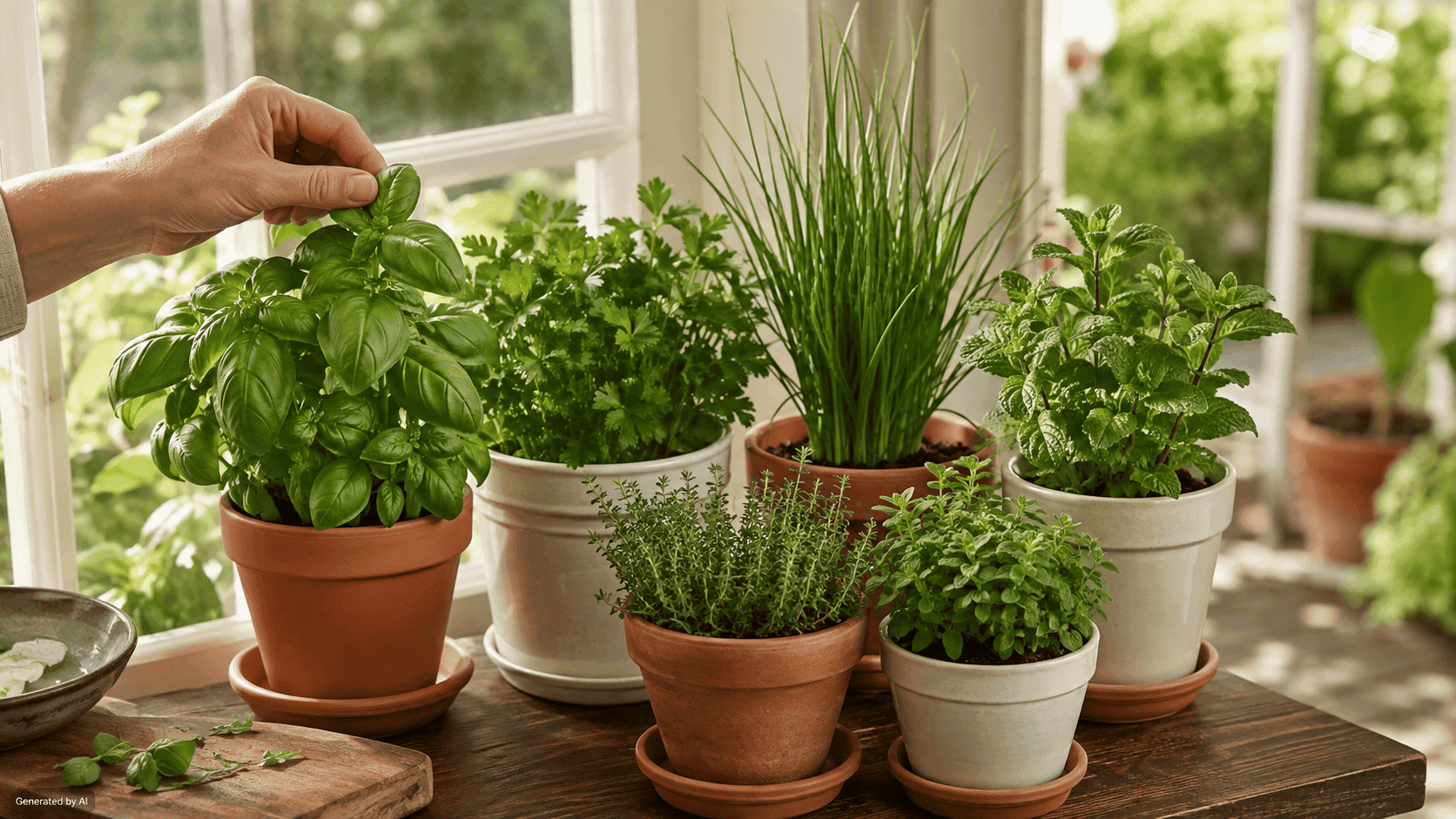
Easy Kitchen Herbs: 6 Practical Picks for Everyday Cooking
Start with basil, parsley, chives, mint, thyme, or oregano and choose the plants that already have a natural place in the meals you prepare most often.
Match Light, Water, and Containers to the Herb
Herbs can share a shelf or patio without sharing the same care routine. Basil and mint generally use moisture differently from rosemary, thyme, and oregano, which is why checking each container individually works better than watering everything on one schedule.
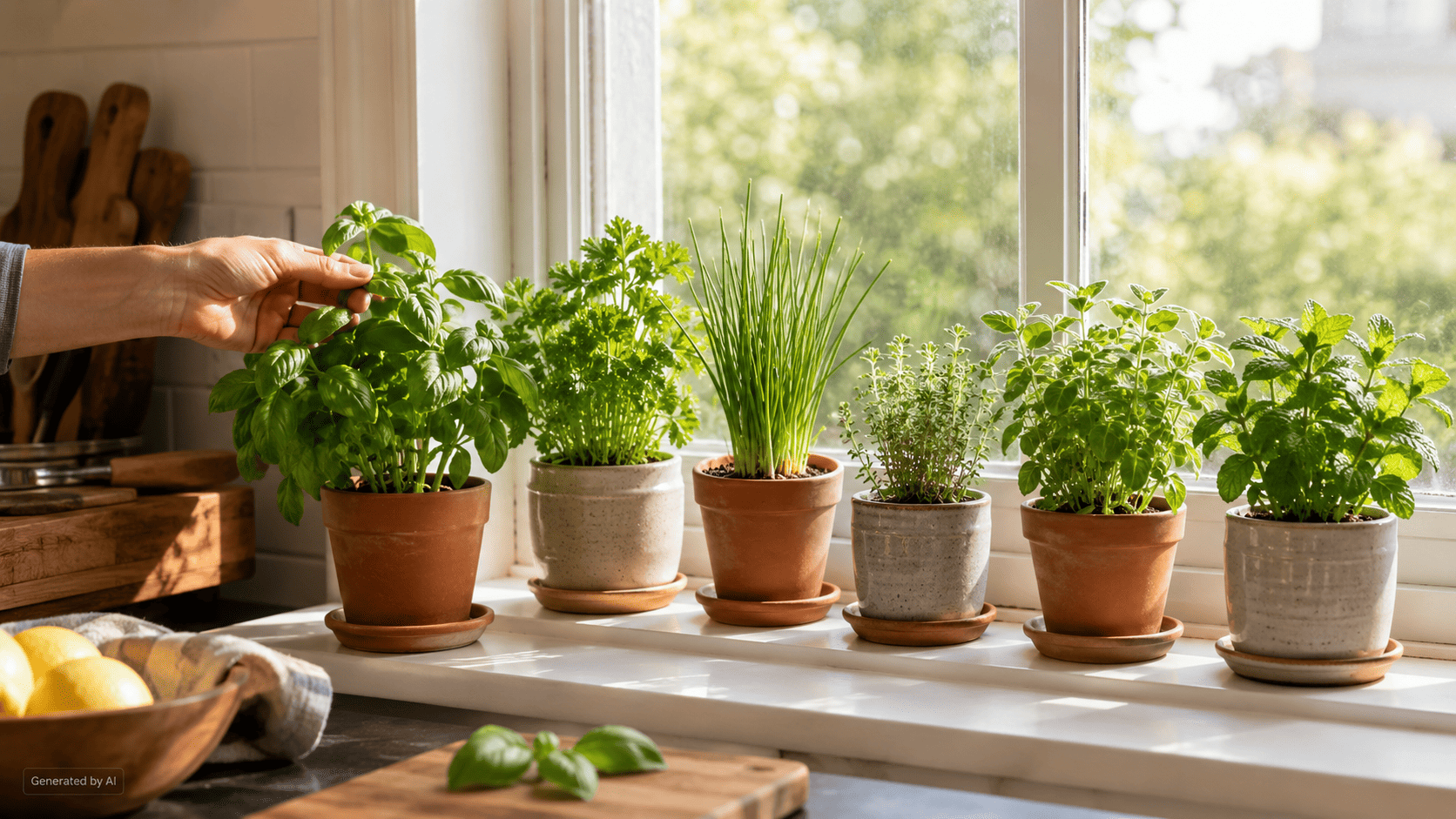
How to Grow Herbs on a Windowsill
Learn how to judge window light, choose manageable herbs, use containers with drainage, and avoid common watering problems in a compact indoor setup.
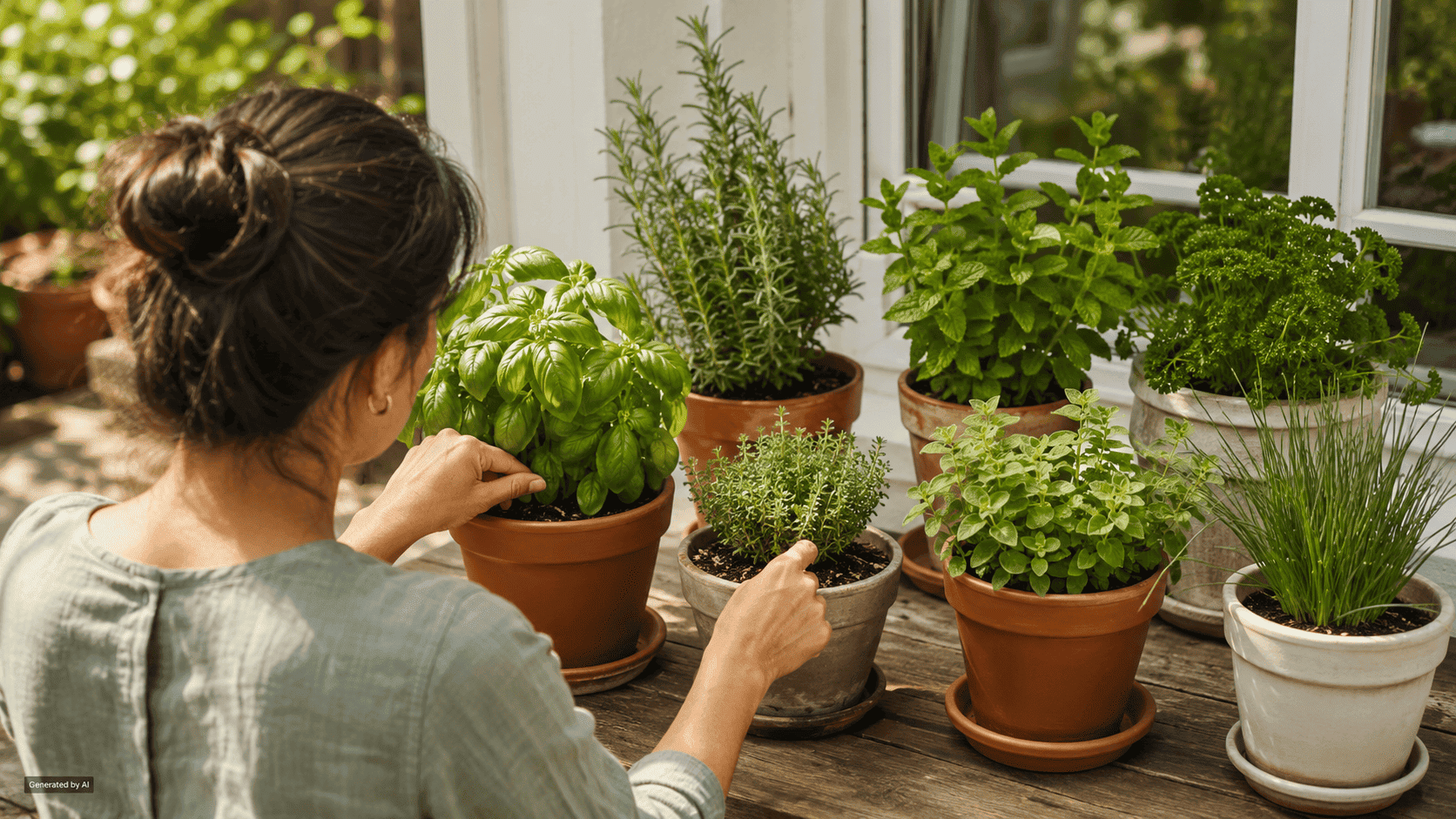
How to Care for Herbs: Basil, Rosemary, Mint & More
See why common kitchen herbs should not all be watered the same way and how separate containers can make light, drainage, and moisture easier to manage.
Feel the potting mix first. Then look at the plant and think about recent weather, indoor heat, container size, and how much sun the pot received. Water when that plant needs it rather than because the calendar says it is time.
Harvest Herbs and Preserve What You Cannot Use Fresh
Once herbs are established and growing actively, small regular harvests can keep many plants useful without stripping away too much healthy foliage. When you have more than you can use fresh, drying is a practical way to preserve part of the harvest.
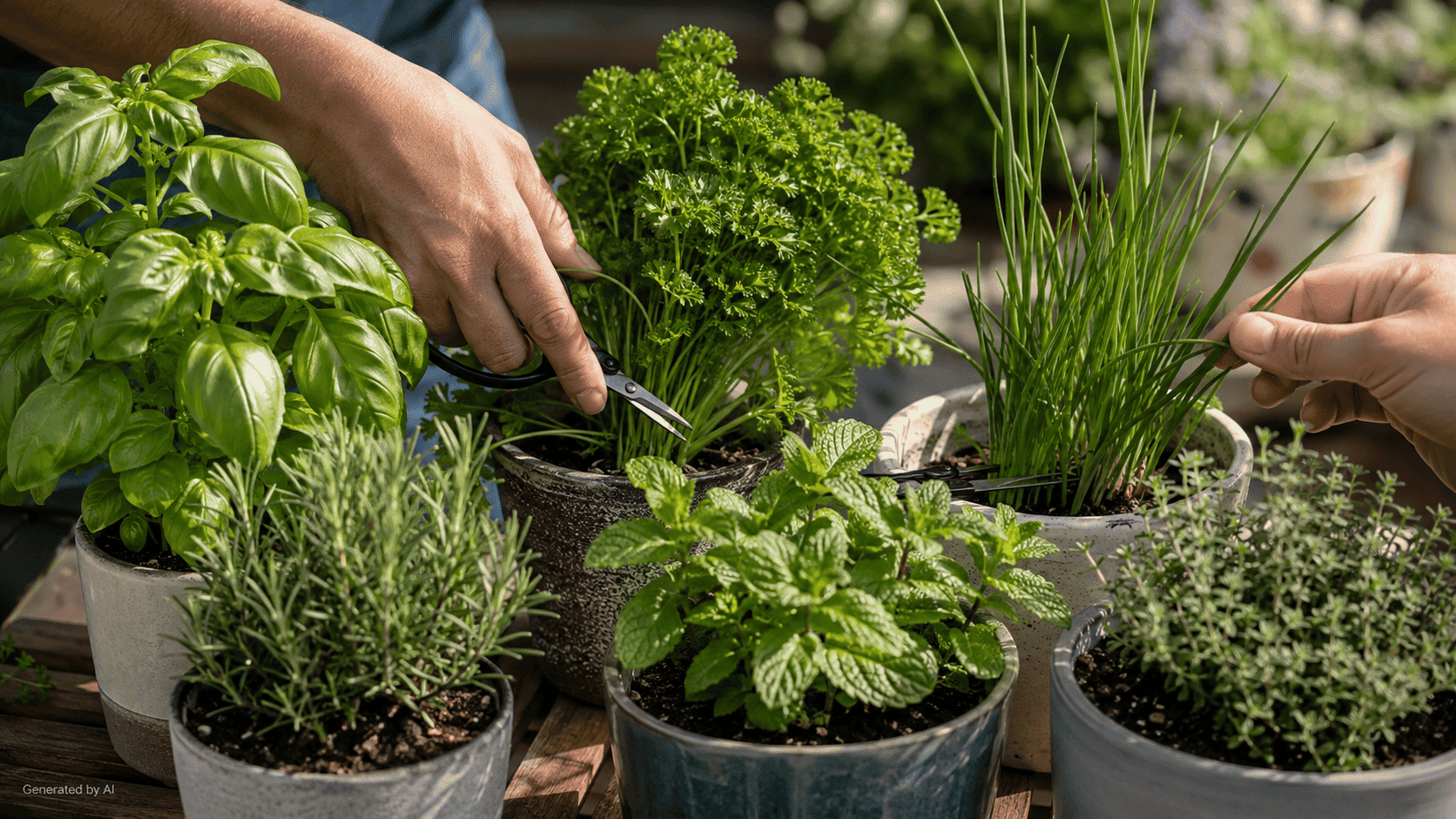
How to Harvest Herbs Without Stunting New Growth
Match the cut to the herb, harvest modest amounts from healthy plants, and leave enough foliage behind for continued growth.
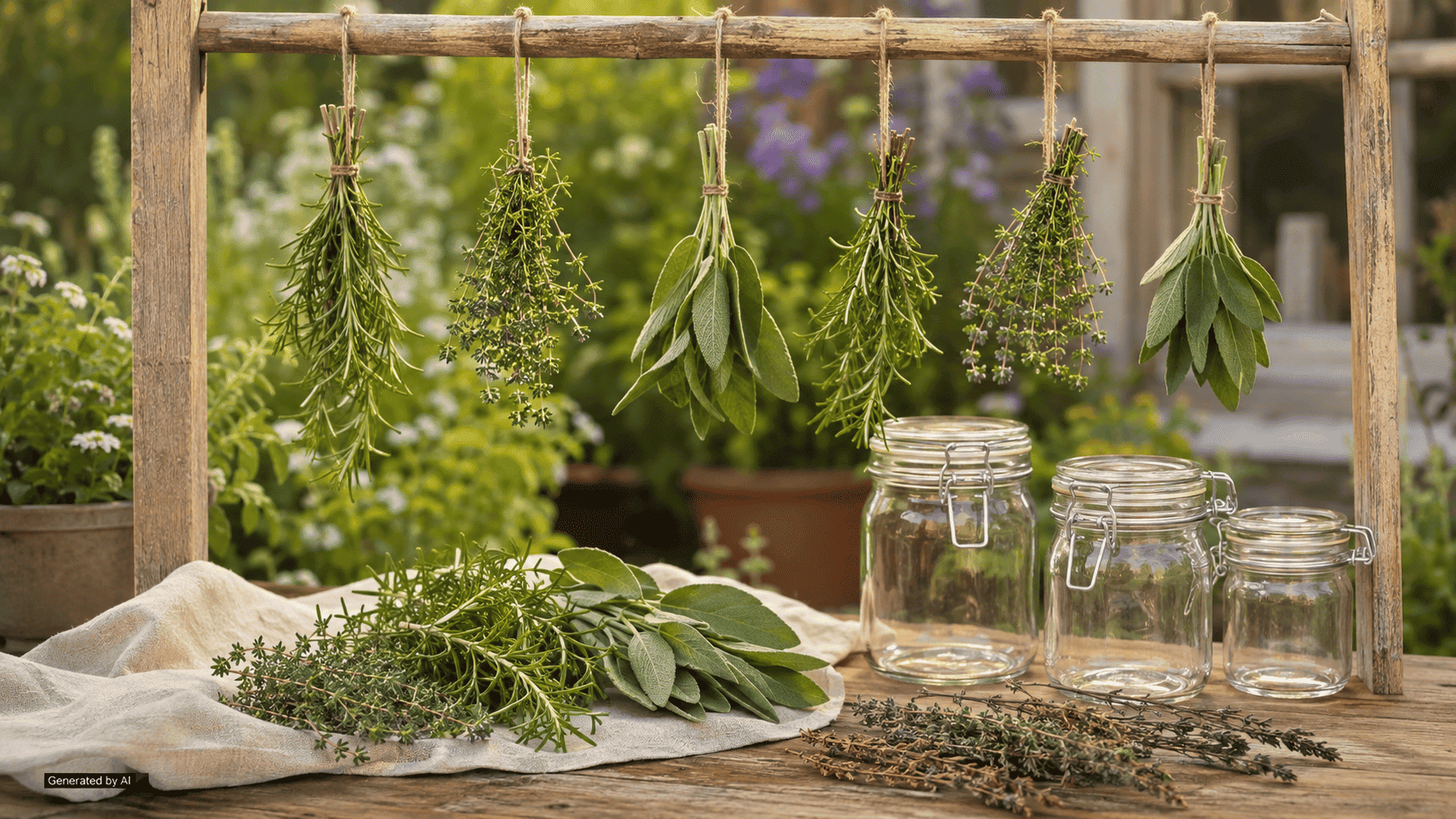
How to Dry and Store Herbs at Home
Compare practical drying methods, recognize when herbs are fully dry, and protect the finished harvest from moisture, heat, and bright light.
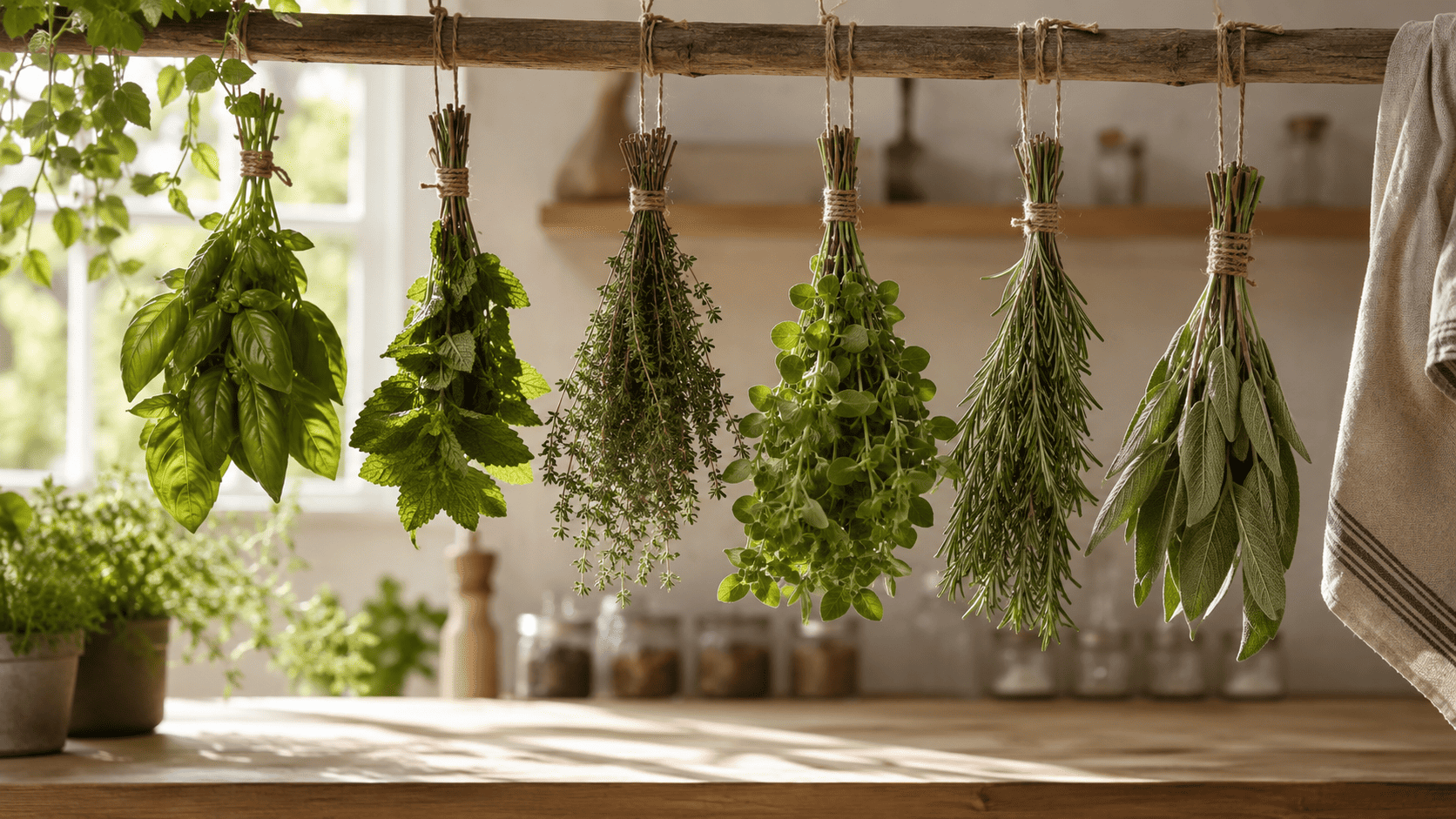
How to Dry Herbs Without Losing Their Flavor
Take a closer look at harvest timing, airflow, gentle drying, and storage choices that can help home-dried herbs retain more of their natural aroma.
Do not seal herbs in an airtight jar while leaves or stems still feel damp, soft, or flexible. Residual moisture can create poor storage conditions and increase the risk of spoilage.
Create a Fragrant Herb Space of Your Own
Not every herb garden needs to focus on maximum harvests. Fragrance, flowers, texture, and the simple routine of tending plants can be good reasons to create a dedicated herb corner. These guides help you build a small aromatic space while respecting the different needs of the plants.
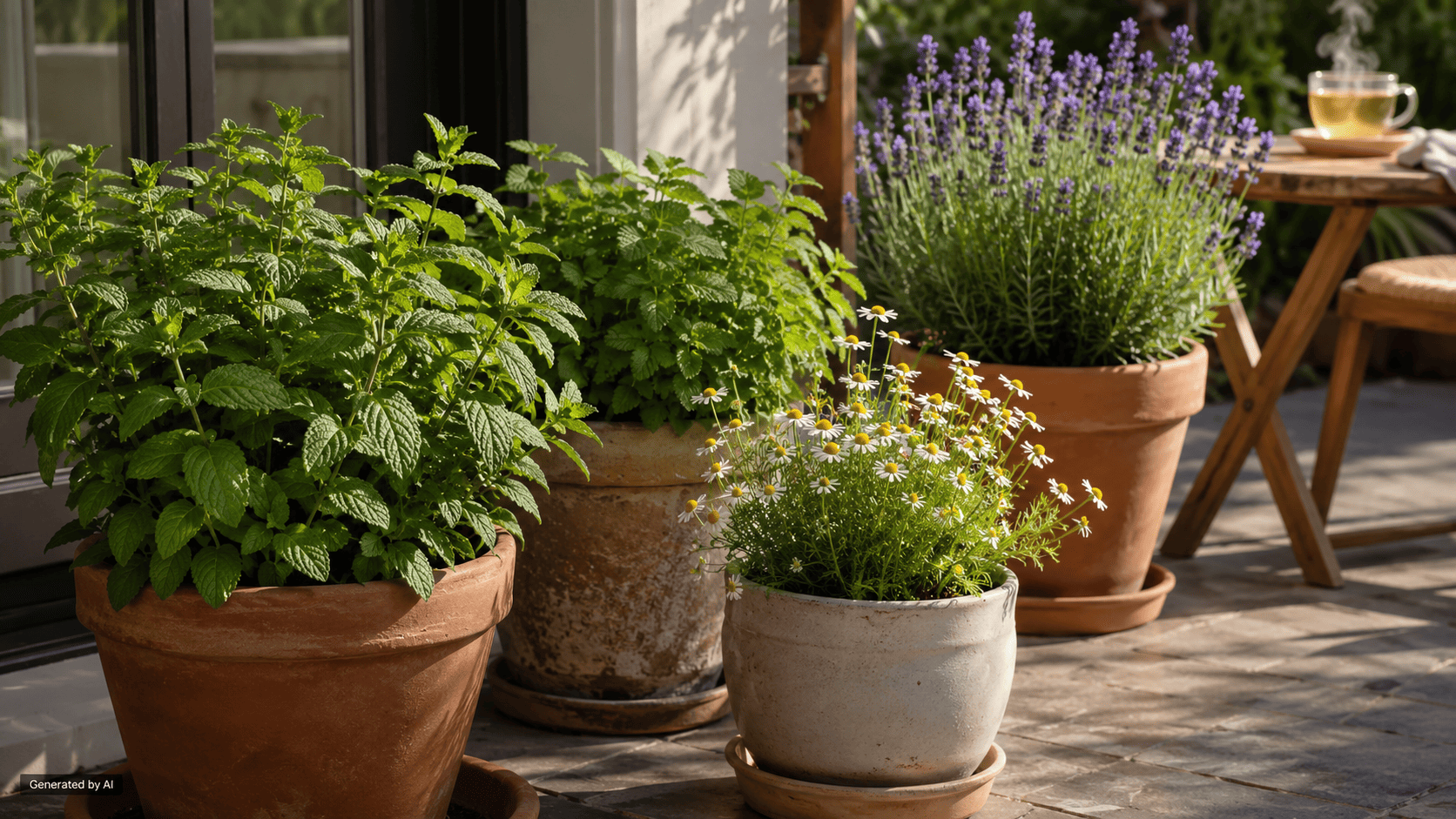
Tea Garden Herbs and Fragrant Plants: Grow a Scented Garden at Home
Plan a fragrant container garden with mint, lemon balm, German chamomile, lavender, and other aromatic plants while giving each herb the conditions it needs.
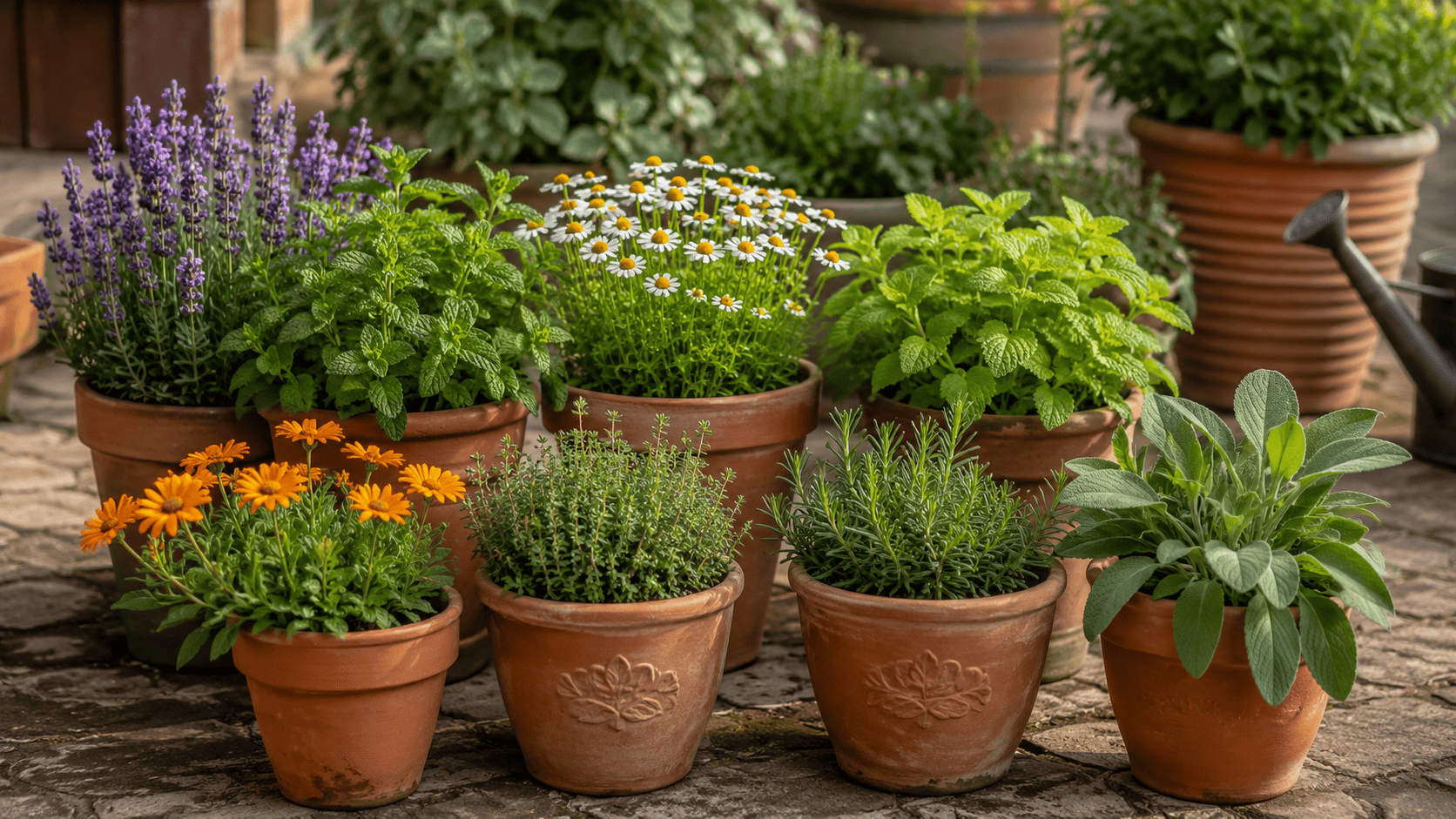
How to Create a Small Healing Herb Garden
Build a compact herb corner around familiar aromatic plants, practical placement, drainage, thoughtful watering, gentle harvesting, and responsible use.
These guides focus on growing, fragrance, harvesting, preservation, and ordinary culinary use. Fresh culinary herbs are not interchangeable with essential oils, extracts, supplements, or other concentrated products, and this hub does not provide medical treatment advice.
Common Herb-Growing Mistakes to Avoid
Most herb problems are easier to understand when you look first at light, moisture, drainage, and the condition of the plant rather than searching for one universal care schedule.
- Watering every herb the same way: containers can dry at very different rates, especially when the herbs have different growth habits and moisture needs.
- Using pots without working drainage: excess water needs a way to leave the root zone.
- Starting with too many plants: a smaller collection makes it easier to notice what each herb is telling you.
- Ignoring actual light: a bright-looking room does not always provide enough useful light for strong herb growth.
- Harvesting stressed or newly planted herbs too heavily: young or weakened plants need enough foliage to continue growing.
- Sealing partly dried herbs in storage jars: herbs should be completely dry before they are packed away.
A Simple Seasonal Rhythm for Homegrown Herbs
Herb care changes with light, temperature, plant growth, and the way you use the harvest. A seasonal rhythm can help you decide what deserves your attention without turning plant care into a rigid calendar.
| Season | Useful focus | Simple next step |
|---|---|---|
| Spring | Start or refresh herbs | Choose a few plants, refresh tired container mix when needed, and observe where your space receives useful light. |
| Summer | Water thoughtfully and harvest regularly | Check containers more often during hot or windy weather and take modest harvests from vigorous plants. |
| Fall | Preserve extra growth | Dry clean, healthy herbs in small batches and label fully dried herbs before storing them. |
| Winter | Keep indoor growing realistic | Prioritize your brightest available location and reduce watering when containers dry more slowly. |
Herbs & Natural Living FAQ
Which herbs are easiest to grow at home?
Basil, parsley, chives, mint, thyme, oregano, and rosemary are familiar starting points, but the easiest choice depends on your light and how you manage watering. Compare them in The Best Herbs to Grow at Home for Beginners.
Can I grow herbs on a windowsill?
Yes, when the window provides enough useful light and the containers drain properly. The windowsill herb guide explains how to judge light, choose manageable herbs, and water small indoor pots.
How often should I water herbs?
Use the condition of the potting mix and the needs of the individual herb rather than a fixed weekly schedule. The herb care guide compares basil, rosemary, mint, thyme, oregano, parsley, and chives.
What should I do with more herbs than I can use fresh?
Drying is one practical option when the herbs are appropriate for culinary use and the plant material is clean and healthy. See How to Dry and Store Herbs at Home for the full process.
Start with one herb you will actually use
A useful herb garden does not need to be large. Choose one or two plants that fit your light and your kitchen, learn how their containers dry, harvest a little at a time, and add more only when the first herbs are growing well.