
When to Repot Houseplants: Signs It's Time to Size Up
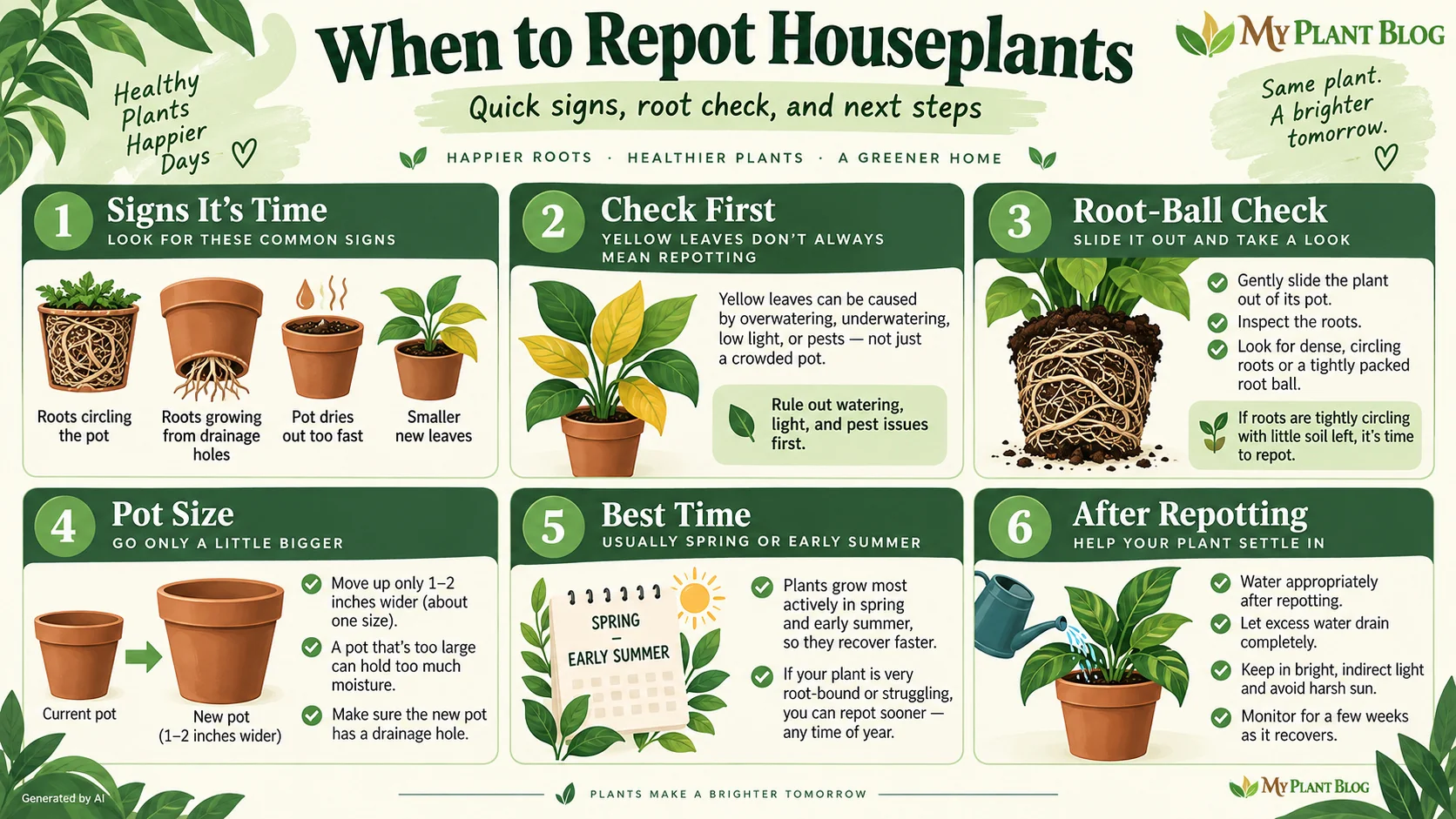
Knowing when to repot houseplants starts with checking their roots, not counting the months since their last repot. A plant may need more room when its roots circle tightly inside the container, grow heavily through drainage holes, or leave so little potting mix that the pot dries unusually fast.
But yellow leaves, drooping stems, and slow growth do not automatically mean the pot is too small. Before choosing a larger container, take a closer look at the root ball, moisture level, and growing conditions.
Repot when the root system is clearly crowded and needs more space. Dense circling roots, numerous roots emerging through drainage holes, and a pot that dries much faster than before are useful clues. Confirm the signs by inspecting the root ball.
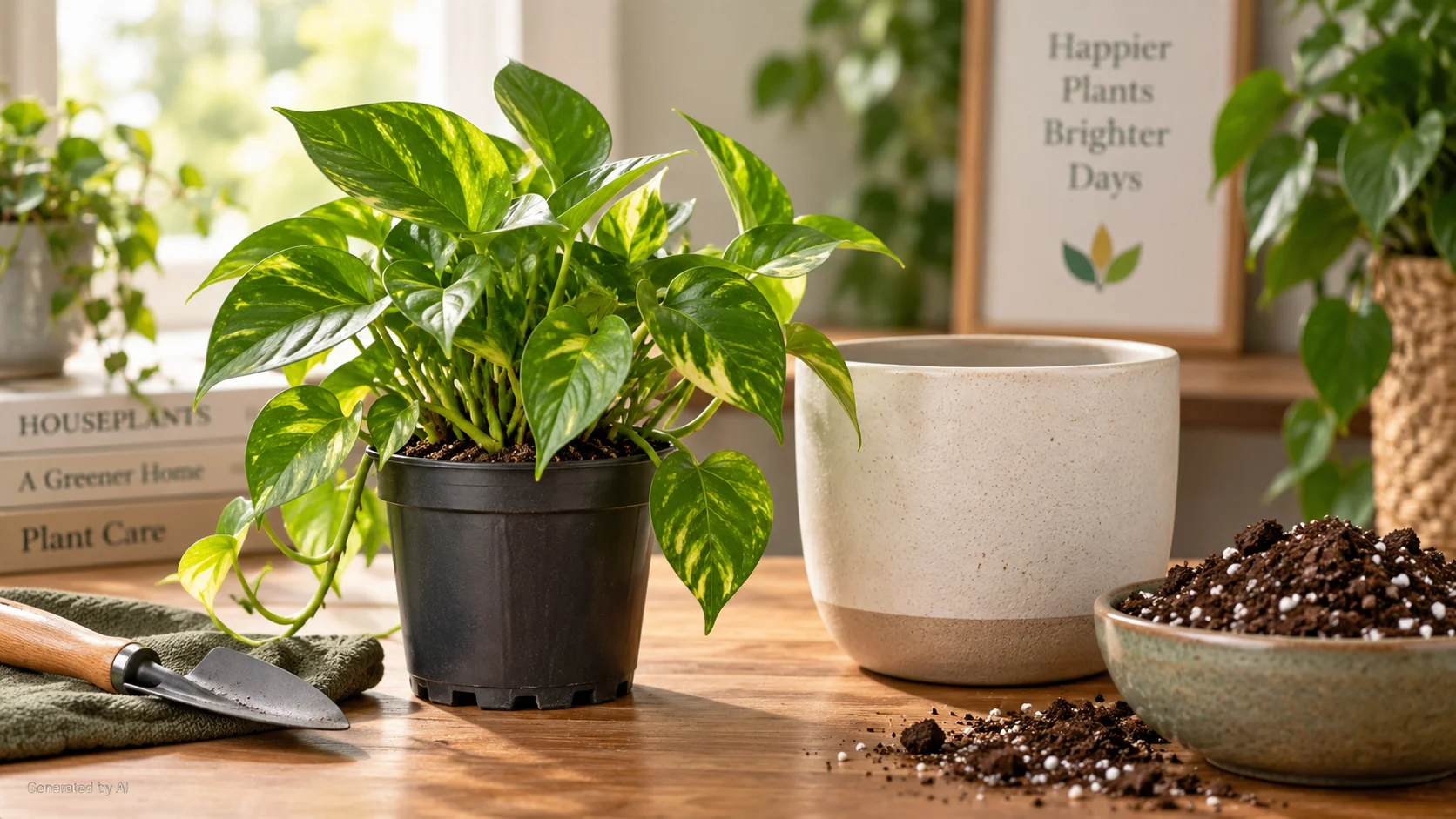
Do Not Repot Houseplants Just Because the Calendar Says So
It is easy to turn repotting into a yearly spring chore. But houseplants do not all grow at the same rate. A vigorous plant may fill its container relatively quickly, while a slower-growing plant may remain comfortable in the same pot for years.
That is why the roots are more useful than the date. If your plant is growing normally, the potting mix is behaving well, and the roots still have space, you do not need to disturb it just because another year has passed.
Repot because your plant needs a change, not because the calendar says it is time.
6 Signs Your Houseplant May Need a Bigger Pot
A single symptom does not always settle the question. The case for repotting becomes stronger when several signs appear together, especially when you can confirm them by inspecting the roots.
| What You Notice | What It May Mean | What to Check |
|---|---|---|
| Many roots through drainage holes | Roots may be running out of space. | Inspect how densely the root ball is filled. |
| Roots circling tightly | The plant may be root-bound. | Look for dense layers of circling roots. |
| Roots across the potting-mix surface | Roots may occupy much of the container. | Check the whole root ball, not just the top. |
| The pot dries much faster than before | Roots may have displaced much of the mix. | Rule out changes in light, heat, and airflow. |
| The plant wilts between normal waterings | The root ball may not retain enough moisture. | Check whether the mix is actually dry. |
| New leaves are unusually small | Limited root space is one possible cause. | Check roots, light, and seasonal growth. |
1. Roots Growing Through Drainage Holes
A single thin root poking through the bottom of a pot does not mean the plant urgently needs a new container. Roots sometimes find their way through an opening even when the rest of the root ball has enough room.
Numerous roots emerging from the drainage holes, together with a densely packed root ball, are a stronger sign that the plant needs more space.
2. A Densely Packed Root Ball
This is one of the most useful checks you can make. Gently slide the plant out and look at the outside and bottom of the root ball.
If you can barely see potting mix because several layers of roots are wrapping tightly around the container, moving up one pot size may help.
3. Roots Visible Across the Surface
A few visible surface roots can be normal for some plants. When the surface is densely covered and the root ball below is also crowded, inspect whether the plant has enough usable growing space.
4. The Pot Suddenly Dries Very Fast
As roots fill a container, less potting mix remains to hold water. A plant that previously stayed moist for several days may begin drying much faster.
Before blaming pot size, consider what else has changed. Brighter light, higher temperatures, lower humidity, and stronger airflow can all affect drying speed.
If watering is the main uncertainty, read our guide to watering your houseplants. It explains why checking the potting mix is more reliable than following a fixed schedule.
5. Wilting Between Normal Waterings
A crowded root system may struggle to retain enough moisture between waterings. However, wilting can also happen when roots are sitting in overly wet mix.
Check the actual moisture level before deciding whether your plant needs water or more root space.
6. Smaller New Leaves or Slower Growth
Restricted root space can contribute to slower growth, but it is not the only explanation. Low light, cooler conditions, seasonal slowdown, and other care issues can cause similar symptoms.
Confirm the root condition before treating reduced growth as a repotting problem.
These Problems Do Not Automatically Mean Your Plant Needs Repotting
A bigger pot is not a universal rescue treatment. Check the likely cause before making a change that could create additional stress.
Yellow Leaves
Yellowing may result from moisture problems, poor light, normal leaf aging, or root stress. Check the mix and roots before sizing up.
If several symptoms appear together, use our guide to common plant problems to narrow down the cause.
Drooping Leaves
Drooping can occur when a plant is dry, but it can also occur when the root zone remains too wet.
Feel the potting mix before watering or repotting.
Wet Potting Mix
If the container already stays wet for a long time, moving the plant into a much larger volume of mix can make moisture management harder.
Check drainage, root health, and whether the mix is appropriate for the plant.
Slow Growth
Houseplants often slow down when light levels drop, particularly during winter.
If the roots still have room, check your plant's light conditions before assuming the container is too small.
If your plant has soggy mix, soft stems, or unhealthy roots, inspect the root system and address the underlying problem. Simply adding more potting mix may make conditions worse.
The 5-Minute Root-Ball Check
If you are unsure whether to repot, a quick inspection is more useful than guessing from the leaves alone.
- Check the potting mix. Notice whether it dries unusually fast, stays wet for too long, or behaves normally.
- Look under the pot. One or two roots are a clue; a heavy mass emerging through the drainage holes is a stronger reason to inspect further.
- Slide the plant out carefully. Support the base of the plant and gently ease the root ball from the container. Avoid pulling hard on the stems.
- Check the root-to-mix ratio. Look for dense circling roots and notice how much potting mix remains visible.
- Make your decision. Move up one pot size if the root system is genuinely crowded. If roots still have usable space, return the plant to its pot and check other care factors.
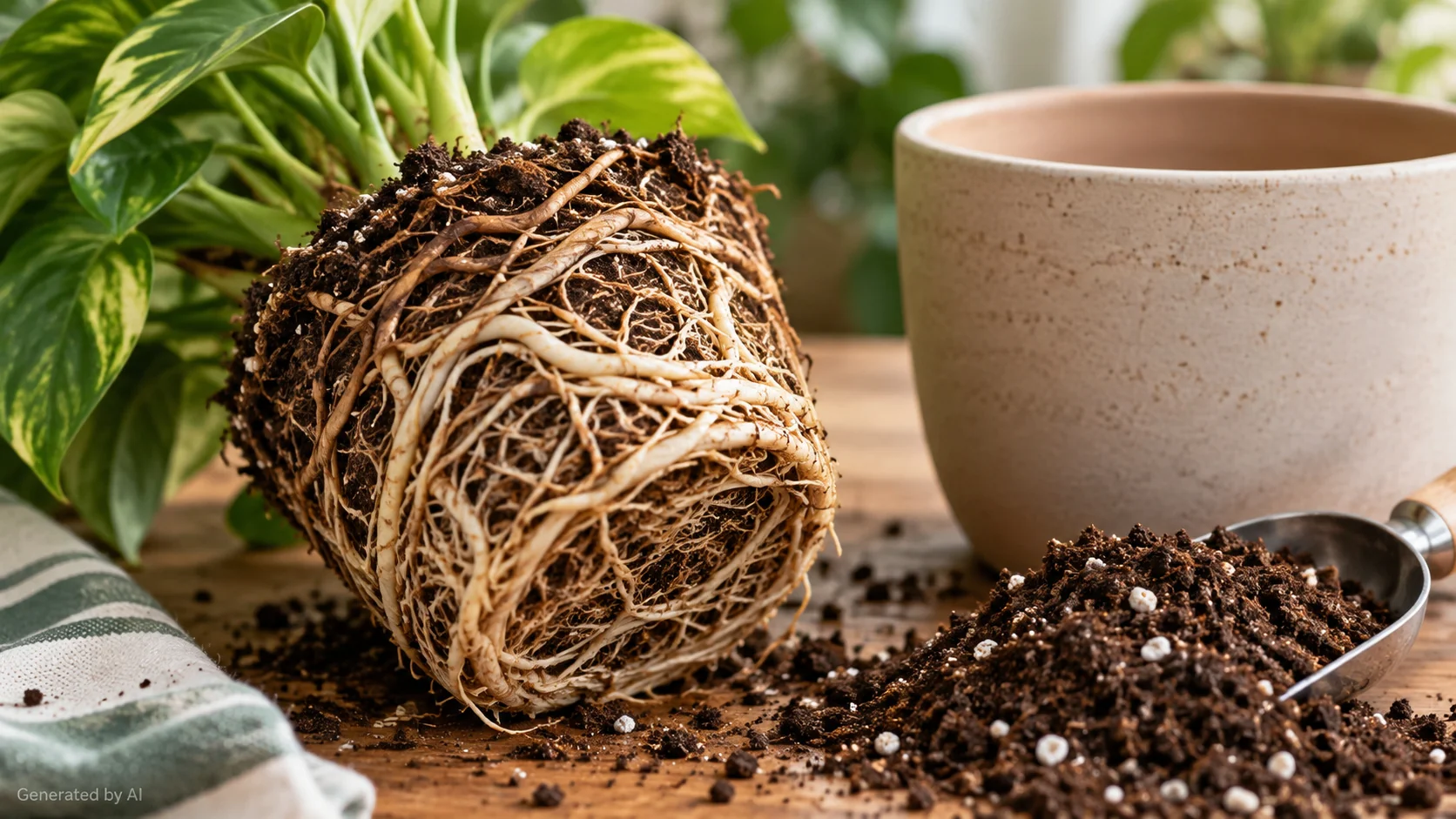
If the plant is healthy, the root system has room, and the mix drains normally, there is no need to disturb it.
How Much Bigger Should the New Pot Be?
Bigger is not automatically better. For many small to medium houseplants, moving to a container roughly 1–2 inches wider than the current pot is a sensible starting point.
This gives the roots room to grow without surrounding a relatively small root ball with an excessive volume of fresh mix.
| Pot Choice | When It Makes Sense | What to Watch |
|---|---|---|
| Same pot | Roots have room; only the mix needs refreshing. | Avoid disturbing healthy roots unnecessarily. |
| One size larger | Roots are clearly crowded and need room. | Choose a pot with working drainage. |
| Much larger pot | Usually unnecessary for a small root ball. | Unused mix may stay wet for too long. |
Choose a Container That Drains
A working drainage hole allows excess water to escape after watering. If you prefer a decorative outer pot, keep the plant in a draining inner container and empty any collected water.
Use a Potting Mix That Fits the Plant
Fresh potting mix should provide an appropriate balance of moisture retention, drainage, and air around the roots.
A tropical foliage plant and a desert cactus do not necessarily need the same mix. For more information about how watering, light, potting mix, and root space work together, explore our plant-care grow guides.
If the root system still fits comfortably, refreshing the top layer of old potting mix may be enough. A full repot into fresh mix can also be useful when the growing medium has deteriorated, even without increasing the container size.
How to Repot a Houseplant Without Overdoing It
Once you have confirmed that repotting is needed, work gently and keep the process simple.
Step 1: Choose the Next Pot Size
Select a clean container that is only slightly larger than the existing pot and has a working drainage hole.
Step 2: Remove the Plant Gently
Ease the root ball out of its old container. If it is stuck, loosen the sides carefully instead of pulling forcefully on the stems.
Step 3: Loosen Tightly Circling Roots
If roots form a dense circle around the outer ball, gently loosen the outer layer where possible so that roots can grow into the fresh mix. Avoid unnecessary damage to healthy roots.
Step 4: Add Suitable Fresh Potting Mix
Add a small amount of fresh mix to the new pot and position the plant. Fill the gaps around the root ball without compacting the medium into a dense mass.
Step 5: Keep the Original Planting Depth
Position the plant at approximately the same depth as before. Avoid burying the stem significantly deeper.
Step 6: Water and Let It Drain
For most common foliage houseplants, water after repotting to settle the mix, then allow excess water to drain away.
Adjust this step for plants that need dry conditions after root disturbance, including some succulents and cacti.
When Is the Best Time to Repot Houseplants?
When you have a choice, spring or early summer is often a convenient time to repot many houseplants. As growth resumes, new roots can begin moving into the fresh potting mix.
But the season alone is not a reason to repot. A healthy plant with enough root space can remain in its current container.
Can You Repot in Fall or Winter?
Yes, if there is a genuine need. A serious root or potting-mix problem does not have to be ignored for months.
If the situation is not urgent and the plant is growing slowly in low winter light, waiting until active growth resumes may make the transition easier.
How to Care for a Houseplant After Repotting
Give your plant time to adjust. Repotting changes the root environment, so avoid making several other major care changes at the same time.
- Keep the light suitable. Return the plant to an appropriate location rather than exposing it suddenly to intense sunlight.
- Check moisture before watering again. The fresh mix and larger container may dry at a different rate from the old pot.
- Let excess water drain. Empty any water collected in the saucer or decorative outer pot.
- Avoid unnecessary fertilizer. Allow the plant to settle, and consider whether the fresh mix already contains nutrients before feeding.
- Watch the new growth. Monitor the leaves, stems, moisture level, and overall condition before making another major adjustment.
Mild temporary stress can occur after repotting. But persistent wilting, soggy potting mix, soft stems, or continued decline deserve a closer look at root health and growing conditions.
Common Repotting Mistakes to Avoid
Repotting Too Soon
A plant that is growing comfortably does not need extra root space simply because another year has passed.
Choosing a Pot That Is Too Large
A very large volume of unused mix can stay wet longer than the plant needs.
Diagnosing From Leaves Alone
Yellowing, drooping, and slow growth have several possible causes. Check the roots before deciding.
Watering Without Checking
A wilted plant in dry mix needs a different response from one sitting in wet mix. Check moisture first.
Your Quick Repotting Decision
Before choosing a new pot, ask yourself these four questions:
- Are the roots densely circling or filling almost all the available space?
- Are many roots emerging through the drainage holes?
- Is the pot drying unusually fast even after accounting for light and heat?
- Is the plant otherwise receiving suitable light, water, and growing conditions?
If the roots are clearly crowded, move up gradually. If roots still have room, investigate the actual cause before repotting.
Frequently Asked Questions
How do I know if my houseplant really needs repotting?
Inspect the root ball. Dense circling roots, numerous roots growing through drainage holes, and unusually fast drying are useful signs that the plant may need more space.
Do roots growing through drainage holes always mean I should repot?
No. One or two roots may simply have found the opening. Check whether the entire root ball is crowded before deciding.
How much larger should the new pot be?
For many small to medium houseplants, a pot around 1–2 inches wider than the current one is a practical starting point. Avoid an unnecessarily large jump.
Should I repot a houseplant with yellow leaves?
Not based on yellow leaves alone. Check moisture, drainage, light, root condition, and recent changes first.
Can I repot houseplants in winter?
Yes, when there is an urgent root or potting-mix problem. If the plant is healthy and the repot is optional, waiting until active growth resumes is often easier.
Do I need a larger pot every time I refresh the potting mix?
No. If the roots have enough room, you can refresh the mix without moving to a larger container.
Look at the Roots Before You Reach for a Bigger Pot
Repotting works best when it solves a real problem.
Check how densely the roots fill the container, how the potting mix behaves between waterings, and whether the plant has actually run out of room.
If the root ball is crowded, move up gradually. If the roots still have space, keep looking for the cause rather than assuming that a bigger pot will fix it.
