
Beginner Garden Planning
How to Plan a Beginner-Friendly Garden Bed
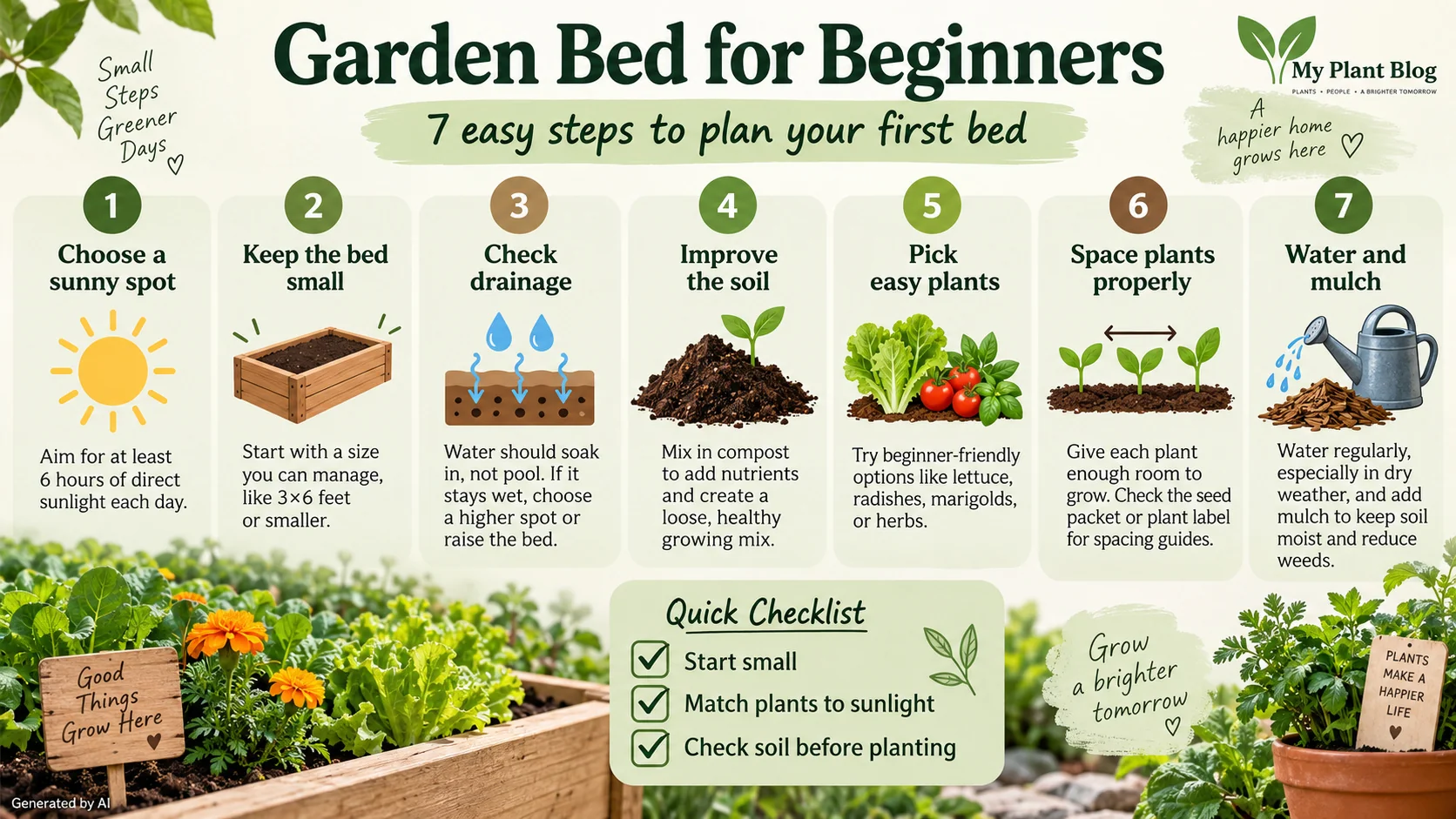
Start with one small garden bed you can reach, water, and care for comfortably. Choose a spot that suits your plants, check the soil and drainage, then plan around mature plant size—not how small seedlings look today. This guide walks you through the decisions in a practical order, whether you want vegetables, herbs, flowers, or a mix.
In this guide
1. Choose the Right Spot Before You Buy Plants
Spend a day or two noticing where sunlight falls. The corner that looks bright in the morning may be shaded by a fence or tree later. Many fruiting vegetables, including tomatoes and peppers, prefer at least six hours of direct sun; a shadier spot may suit leafy greens, parsley, chives, or shade-tolerant flowers instead.
Water access matters just as much. A bed that you pass every day and can reach with a hose or watering can is easier to look after than one tucked out of sight. Avoid spots where water collects for days after rain and areas crowded by large tree roots.
- Watch the site in the morning, at midday, and later in the afternoon.
- Choose a level, reasonably well-drained area near a water source.
- Leave room to stand or kneel beside the bed without stepping on growing soil.
2. Pick a Garden Bed Size and Type You Can Manage
One small bed gives you room to learn without creating a large watering and weeding job. A 3 × 6-foot bed is a comfortable starting point; a 4 × 8-foot bed can also work if you can reach it from both sides. Along a fence or wall, keep the bed narrower because you can reach it from only one side.
| Bed type | When it works well | Tradeoff |
|---|---|---|
| Raised bed | You want a defined area or need to improve a difficult growing zone. | Needs edging materials and enough suitable soil to fill it; it may dry out faster. |
| In-ground bed | Your existing soil is workable and drains reasonably well. | May need more weed removal and soil preparation. |
| Border bed | You have a narrow strip beside a path or fence. | Keep it reachable from the accessible side; watch for wall shade. |
Try this before building: mark the shape on the ground with a hose or string. Walk around it, reach toward the middle, and check whether you can still move past it with a watering can.
3. Understand Your Soil Without Overcomplicating It
Good garden soil holds some moisture but lets excess water drain. Take a handful of slightly moist soil and squeeze it. Soil that forms a soft clump and crumbles when touched is usually easier to work than soil that stays sticky or falls apart like dry dust. This quick check describes texture; it does not replace a nutrient or pH test.
Help it hold moisture
Well-finished compost can improve water and nutrient retention. Watch how quickly the bed dries after watering.
Protect its structure
Work only when the soil is crumbly rather than sticky. Compost and avoiding foot traffic can help improve its structure over time.
Remove established weeds and their roots. For an in-ground bed, loosen compacted soil carefully with a fork when it is workable; add finished compost if needed. Do not automatically add large amounts of fertilizer or lime. A laboratory soil test can guide nutrient and pH corrections, particularly in a vegetable garden.
4. Choose Easy Plants That Match Your Conditions
Pick a purpose for the first bed: a salad harvest, a small herb-and-flower mix, or a patch for pollinators. Three or four compatible plant types are easier to place and maintain than a little of everything.
| Bed conditions | Plants to consider | Keep in mind |
|---|---|---|
| Sunny food bed | Bush beans, Swiss chard, cherry tomatoes with support, basil. | Give large plants their mature spacing; grow cool-season lettuce when weather suits it. |
| Partial shade | Parsley, chives, leaf lettuce, pansies, ferns or heuchera for ornamental beds. | Leafy greens may prefer cooler periods; match ornamentals to your region. |
| Sunny flower bed | Zinnias, calendula, cosmos, marigolds and appropriate native flowers. | Group plants with similar water needs; allow airflow between plants. |
Mint spreads aggressively in open ground, so keep it in a separate container if you want to include it nearby. Rosemary and other Mediterranean herbs often prefer drier conditions than leafy greens or basil; keep these in separate groups or containers when their care needs differ.
For more ideas, use our beginner herb-growing guides to choose herbs you will use and can care for comfortably.
5. Create a Simple Garden Bed Layout
Put plants on top of the bed while they are still in their pots. Check the spacing on each plant label, picturing the full-grown plant instead of the seedling. In a bed viewed from one side, place taller plants behind medium and low plants. In a bed viewed from all sides, taller plants can go near the middle.
Use one compact row of bush beans, an area for Swiss chard, and seasonal lettuce with enough space to harvest from the edges.
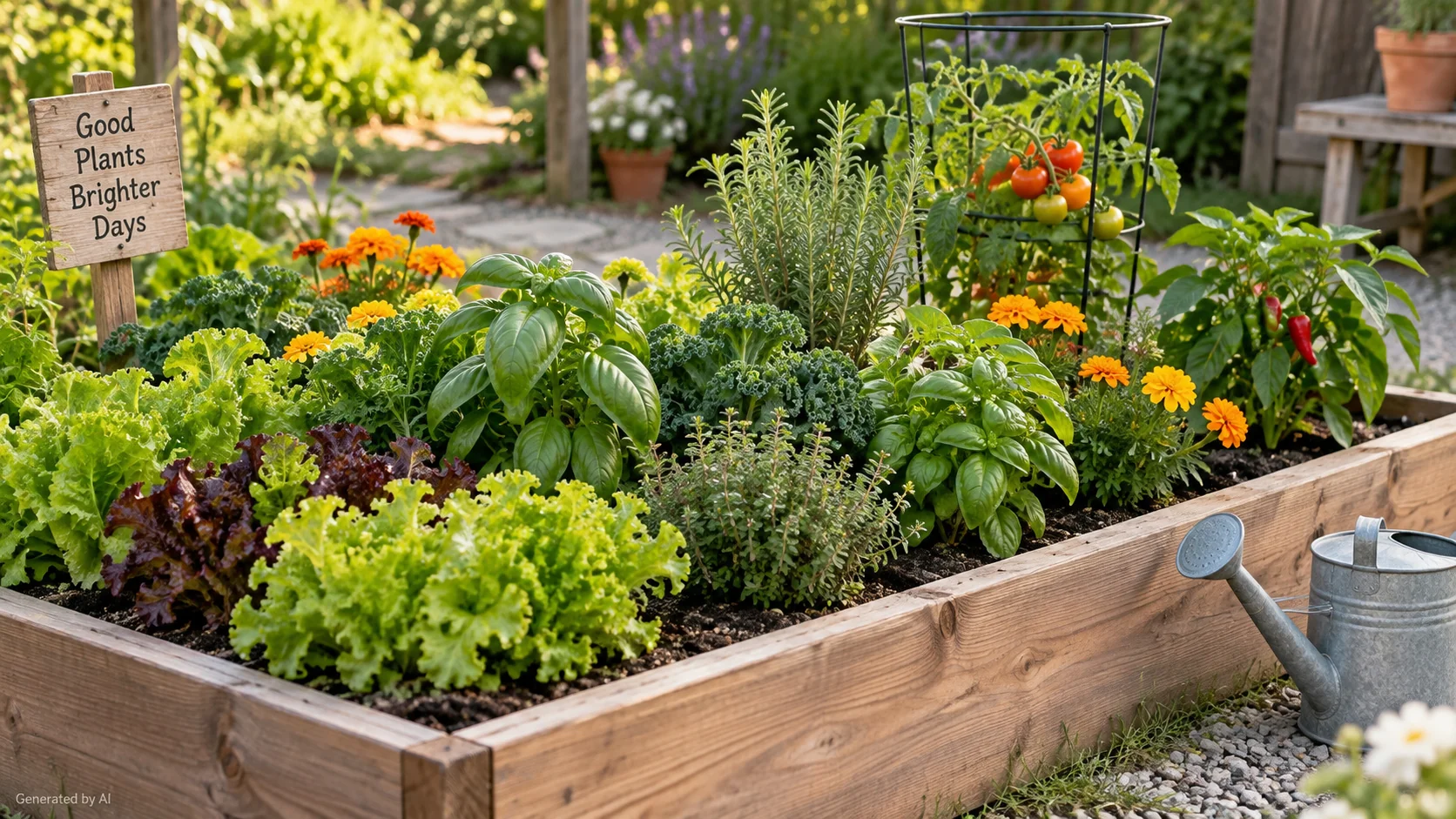
Group basil and parsley with compact calendula or marigolds; keep spreading mint in a nearby pot.
6. Prepare the Bed and Give Roots a Good Start
- Clear: remove weeds and obvious roots, stones, or debris from the planting area.
- Prepare: work only when soil is neither waterlogged nor rock hard. Loosen compacted ground gently and add finished compost if appropriate.
- Position: set pots on the bed first and check mature spacing and access paths.
- Plant: follow seed-packet depth for seeds. Set most transplants at their previous pot depth, unless their instructions say otherwise.
- Water: water the root zone after planting to settle soil around roots, then label seeds and transplants.
Seeds or young plants?
Seeds are affordable for beans, radishes, lettuce, calendula, cosmos, and zinnias when your local growing season is suitable. Young plants are a useful starting point for tomatoes, peppers, herbs, and perennials. Gradually acclimate greenhouse-grown plants to outdoor sunlight and wind before transplanting, and check local frost dates and the seed packet before sowing.
7. Water, Mulch, and Observe During the First Weeks
Newly planted seeds need a consistently moist seed zone while germinating. Transplants need enough moisture to establish, but roots should not sit in soggy soil. Feel the soil an inch or two below the surface and adjust for rain, sun, wind, soil type, and plant size; do not water just because it is a particular day of the week.
As plants establish, water the root zone thoroughly when needed rather than repeatedly wetting just the surface. Once seedlings are sturdy and soil has warmed, add an appropriate layer of clean organic mulch to slow evaporation and suppress weeds. Keep mulch away from plant stems.
If you are unsure when to water, our watering guide for pots and garden beds explains how to adjust your routine to the soil and weather.
Your Beginner Garden Bed Checklist
- I chose a reachable spot with suitable sunlight and nearby water.
- I kept the bed small enough to weed, water, and harvest comfortably.
- I checked drainage and soil texture before adding amendments.
- I picked a few plants with compatible light and moisture needs.
- I arranged plants according to their mature size and labeled them.
- I checked the local planting window and watered after transplanting.
- I will check moisture, manage weeds, and add mulch when appropriate.
Common First-Garden-Bed Mistakes to Avoid
Starting too big
Begin with one bed you can maintain during a busy week. Expand after you know its needs.
Buying plants before checking light
Choose the site first, then buy plants suited to that amount of sun.
Crowding seedlings
Follow mature spacing on plant labels rather than filling every gap on planting day.
Overfeeding or watering by calendar
Check soil and plant needs before adding more fertilizer or water.
If a plant continues to struggle after these basic checks, use our plant problem guides to narrow down symptoms before making more changes.
Beginner Garden Bed FAQ
What size garden bed is best for beginners?
A 3 × 6-foot bed is a manageable first project. A 4 × 8-foot bed can also work when you can reach from both sides. Keep a one-sided border narrower.
Should I start with a raised bed or an in-ground bed?
Choose an in-ground bed if the existing soil is workable and drains well. A raised bed can provide a defined growing area when the ground needs improvement, but you will need materials and suitable fill.
How much sun does a garden bed need?
Many fruiting vegetables need at least six hours of direct sun. Partial-shade beds can work for selected leafy greens, herbs, and ornamentals, depending on local conditions.
Can I mix vegetables, herbs, and flowers?
Yes. Keep the mix small and group plants that need similar light, water, and growing space. Put spreading mint in a separate pot.
Do I need to test my soil?
A laboratory soil test is valuable when growing vegetables, when nutrient or pH conditions are uncertain, or when the site's history raises a contamination concern. Avoid guessing at fertilizer additions.
Start With One Bed, Then Build on What You Learn
Mark out a small space today, watch its sun and drainage, and choose a few plants that truly fit. You do not need to solve the whole yard in one season.
For the next step, browse the Garden & Outdoor guides for ongoing care and seasonal ideas.
