
How Often Should You Water Plants? A Simple Guide
How often should you water plants? Most plants need water when their soil has dried to the level they prefer, not simply because a certain number of days has passed. Many common houseplants may need water roughly once a week, but that is only a starting point. Outdoor pots can dry much faster in summer, while succulents and plants in cooler rooms often need longer breaks.
The easiest way to get it right is to check the soil, notice the weight of the pot, and look at the leaves before reaching for your watering can. This guide will help you build a practical watering routine for indoor plants, balcony containers, and garden beds.
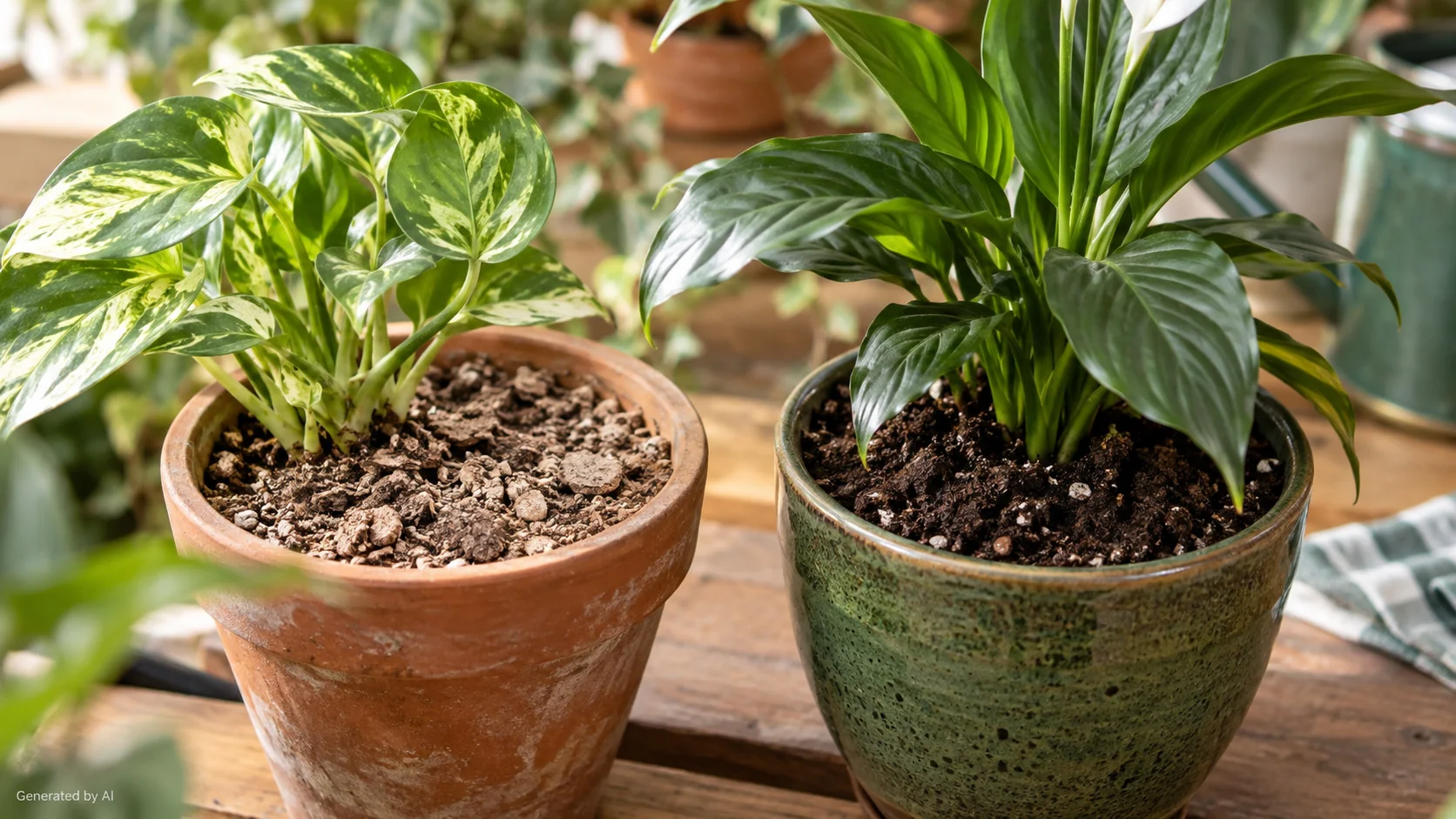
How Often Should You Water Plants? The Quick Answer
The best watering schedule is a checking schedule. You can choose a regular day to look at your plants, but you do not have to water every plant on that day.
Many leafy houseplants are ready for another drink when the top 1–2 inches of potting mix feel dry. Other plants prefer different conditions. Ferns and some moisture-loving tropical plants need more consistent moisture, while many cacti and succulents should dry out more fully.
Check the soil first. If it is still moist at the depth your plant prefers, wait. If it is dry enough, water thoroughly and let excess water drain away.
Watering needs also change with the season. A plant in a bright summer window may dry much faster than the same plant in a cooler room during winter.
Why Fixed Watering Schedules Often Fail
Plants do not use the same amount of water every day. Their needs change with light, temperature, airflow, container size, soil type, and active growth.
Bright and Warm
Plants in bright, warm locations often use water faster. A sunny windowsill or exposed balcony can dry a pot much more quickly than a cooler, shaded position.
Cool and Shaded
Lower light and cooler temperatures often slow growth and water use. The same pot may stay moist for several additional days.
Light and watering are closely connected. If you are unsure whether your houseplant receives enough daylight, our guide to plant light needs explains how window direction, distance from the glass, and seasonal changes affect growing conditions.
Pot Size, Material, and Soil Matter Too
Small pots often dry faster than large containers. Porous terracotta can lose moisture more quickly than plastic or glazed ceramic, while a dense potting mix may remain wet longer than a loose, well-aerated one.
If your container stays soggy for too long or dries unusually fast, the growing medium may be part of the problem. Our plant care Grow Guides include advice on choosing potting mix, checking roots, and deciding when repotting is necessary.
How to Tell When Your Plant Needs Water
You do not need an expensive tool to check most pots. Your finger is a useful first test, especially when you combine it with the weight of the container.
Step 1: Feel the Soil
Push your finger about 1–2 inches into the potting mix. For a very small container, check at a shallower depth. For a larger pot, consider checking deeper with a clean wooden skewer.
Step 2: Notice Whether It Is Dry or Damp
Soil can look dry on the surface while remaining moist underneath. Do not decide whether to water based on surface color alone.
| What You Find | What to Do |
|---|---|
| Soil is clearly damp | Wait and check again later. |
| Surface is dry, but deeper soil is moist | Check the plant's moisture preference. Many leafy houseplants can wait. |
| Soil is dry at the appropriate depth | Water if that level of dryness suits your plant. |
| Soil is dry throughout the pot | Water a thirsty plant thoroughly. For succulents, follow the needs of the particular species. |
Step 3: Lift the Pot
A freshly watered container usually feels heavier than the same container after the mix has dried.
Comparing the weight over time is especially useful for small houseplants, herbs, and balcony pots.
Step 4: Look at the Whole Plant
Drooping leaves can be a clue, but they are not proof of thirst. Plants may also wilt when the soil is too wet and their roots are struggling.
Always combine the appearance of the leaves with a soil check before watering.
How Often Should You Water Different Plants?
Use the following ranges as rough examples for deciding how often to check your plants. They are not fixed watering instructions.
| Plant or Setting | Rough Starting Point | Most Important Check |
|---|---|---|
| Common leafy houseplants | Often around 7–10 days | Feel the upper soil before watering. |
| Cacti and succulents | Often 2–4 weeks or longer | Allow the mix to dry more fully; follow the needs of the species. |
| Moisture-loving tropical plants | Check more frequently | Avoid letting the preferred root zone dry out completely. |
| Outdoor containers in summer | Check daily during hot weather | Look for fast drying from sun and wind. |
| Established garden beds | Often one or two deep waterings weekly | Check rainfall and moisture below the surface. |
Plant species, container size, light, temperature, humidity, soil, and active growth can all change the timing. Check actual soil moisture rather than relying on a fixed number of days.
How Often to Water Indoor Plants
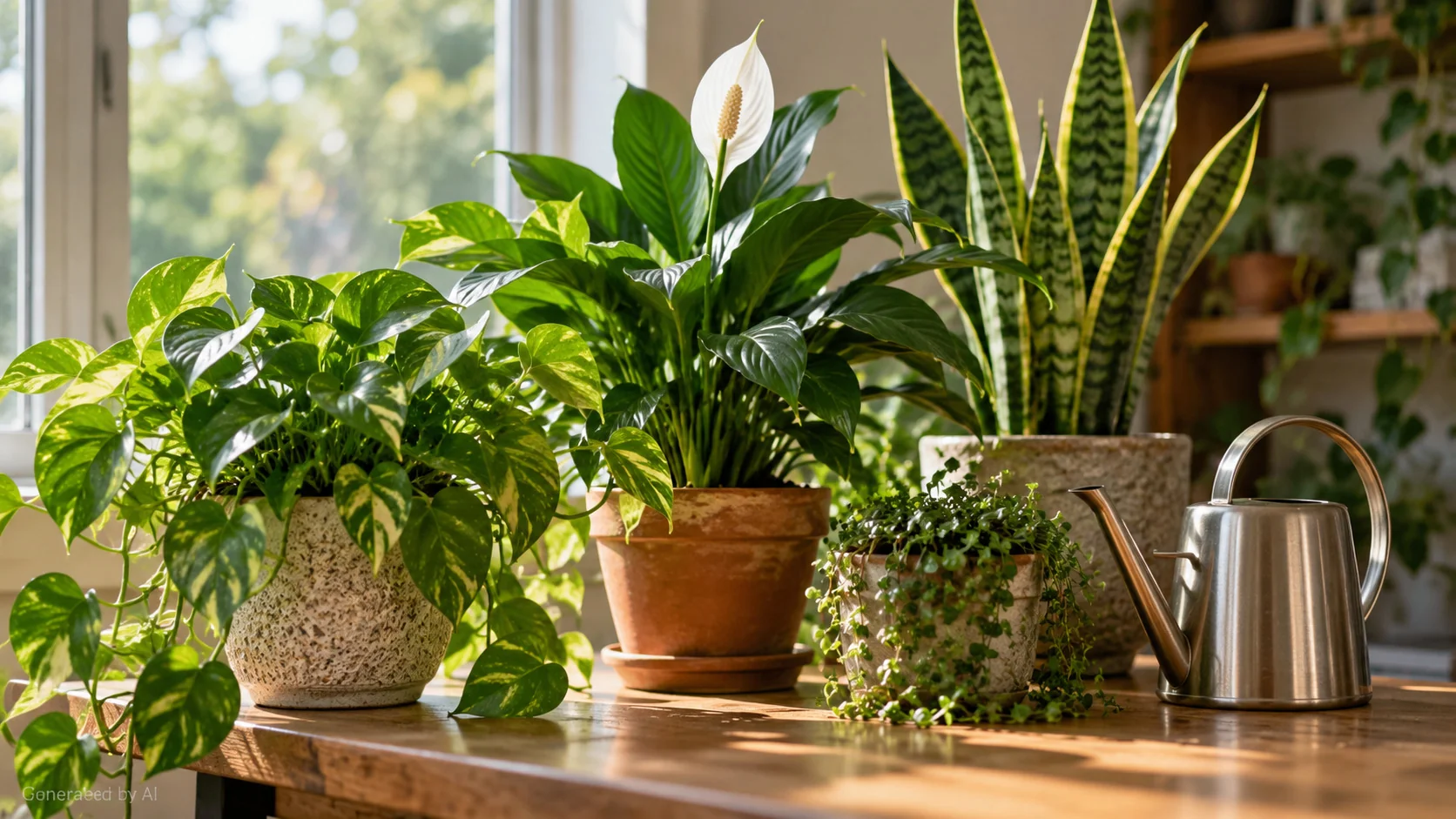
Indoor plants are protected from outdoor wind and rain, but their environment still matters. A pothos next to a bright window may use water faster than one in a shaded corner. A snake plant in a cool bedroom may need much longer between waterings.
For many beginners, checking houseplants once a week is a practical starting habit. Water only those that have dried enough for their species.
🌿 Tropical Houseplants
Many common tropical foliage plants prefer some drying between waterings without becoming bone dry throughout the root ball.
🌵 Cacti and Succulents
These plants generally prefer longer drying periods. Use a suitable fast-draining mix and avoid watering while the root zone is still damp.
Why Houseplants Often Need Less Water in Winter
Many houseplants grow more slowly when daylight decreases. Their potting mix may remain damp for longer, so a routine that worked in summer can lead to overwatering in winter.
Keep checking the soil even if the interval between waterings becomes much longer. Plants under warm grow lights or in unusually dry rooms may behave differently.
For a more detailed seasonal routine, the Grow Guides section linked above also includes How Often to Water Houseplants in Winter.
How Often to Water Outdoor Potted Plants
Outdoor pots can lose moisture quickly because the entire container is exposed to changing weather. Sun, wind, hot surfaces, and small pot sizes all affect how fast the mix dries.
During summer heat, some balcony plants may need daily checks and possibly daily watering. Small containers can dry faster than large planters, while an established plant with a dense root system may use water quickly.
- Check exposed containers more often during heat waves.
- Feel the soil after rain; the root zone may still be dry.
- Water thoroughly rather than wetting only the surface.
- Make sure the drainage holes are not blocked.
- Recheck small pots when strong wind dries the mix quickly.
What About Potted Herbs?
Different herbs do not necessarily want the same watering routine. Basil often appreciates more consistent moisture, while established rosemary and thyme generally prefer a freer-draining growing medium.
If you grow herbs on a balcony or windowsill, explore our herb-growing guides to match watering, light, and container conditions to the herbs you grow.
What If a Pot Dries Out Too Quickly?
If an outdoor pot becomes dry unusually fast every day, check whether roots have filled the container. A larger pot may help when the plant genuinely needs more root space.
Also consider whether the potting mix has become difficult to rewet or the plant is exposed to excessive heat and wind.
How Often Should You Water Garden Beds?
Garden soil behaves differently from potting mix. Established roots may reach deeper moisture, and the ground can hold water longer than a small pot.
For many established garden plants, a thorough watering once or twice a week may be more useful than a small daily splash. But recent rainfall, soil type, weather, and the crop's growth stage all matter.
Sandy Soil
Sandy soil drains quickly and may need water more often, especially during hot, dry weather.
Clay Soil
Clay can retain moisture for longer. Check below the surface so you do not add water to already saturated soil.
Mulched Beds
A suitable layer of mulch can reduce evaporation and keep moisture more consistent. Check the soil beneath it rather than judging by the surface.
Newly planted seedlings and young transplants have smaller root systems than established plants. Check their moisture more often while they establish.
For more advice on garden soil, drainage, seasonal conditions, and outdoor plant care, visit our Garden & Outdoor guides.
Overwatering vs. Underwatering: How to Tell the Difference
It is easy to mistake a waterlogged plant for a thirsty one. The leaves may look similar even when the causes are very different.
Soil moisture is the first clue. Look at the whole plant before deciding what to do next.
| What You Notice | Possible Cause | What to Check |
|---|---|---|
| Drooping leaves and dry soil | Underwatering | Check deeper moisture and water if needed. |
| Drooping leaves and wet soil | Root stress or overwatering | Check drainage and how long the mix stays wet. |
| Yellow leaves and damp soil | Possible excess moisture | Consider light, drainage, and root condition. |
| Crispy edges and a very light pot | Possible water deficit | Check soil moisture before watering. |
| Sour smell or soft, dark roots | Possible root rot | Inspect the root environment and drainage. |
What to Do When Soil Is Too Dry
Water slowly enough for the mix to absorb moisture. If extremely dry potting mix repels water, a short bottom-watering session may help a suitable container absorb moisture more evenly.
Remove the pot once the mix has taken up water, let it drain, and check the root zone again.
What to Do When Soil Stays Too Wet
Stop automatic watering and check that water can leave the pot. Empty standing water from saucers and decorative outer containers.
If the plant continues to decline and the mix remains soggy, inspect the roots. A dense, poorly draining growing medium may need attention, but repotting is not necessary every time a plant has one yellow leaf.
Yellow leaves, drooping stems, and brown tips can have several causes. Check soil moisture, light, roots, and recent changes before making a major adjustment.
If you are unsure which symptom you are seeing, use our Plant Problems guides to investigate drooping leaves, yellowing, root rot, and other common problems.
How Much Water Should You Give a Plant?
Watering frequency and watering amount are connected. A tiny splash every day may moisten only the upper layer while the roots deeper in the pot remain dry.
When a typical potted plant is ready for water, moisten the entire root ball until a little water drains through the holes. Let the excess drain away.
Do not leave ordinary houseplants sitting in water.
Water Thoroughly, Then Allow Drainage
A thorough watering is not the same as overwatering. Problems are more likely when roots remain in excessively wet conditions for too long.
For larger pots, water slowly and evenly so that the mix has time to absorb moisture.
For garden beds, apply enough water to reach the active root zone rather than simply dampening the surface.
What Is the Best Time of Day to Water Plants?
Morning is usually a convenient time to water outdoor plants. It helps replenish moisture before the hottest part of the day and gives wet foliage time to dry.
In very hot weather, water a thirsty plant when it needs water rather than waiting for the next morning. Aim water at the soil around the roots.
Can You Water Plants in the Evening?
Yes. Evening watering can be useful when plants are dry after a hot day. Water near the roots and avoid leaving foliage wet overnight when possible.
What About Indoor Plants?
Indoor plants can usually be watered at different times of day. Morning or early afternoon is a practical routine, but checking moisture matters more than choosing a perfect hour.
A Simple Weekly Watering Routine
You can make watering easier without giving every plant the same schedule. Choose a regular time to inspect your plants, then let their condition decide what happens next.
- Look at the leaves and notice any new changes.
- Check the soil at an appropriate depth.
- Lift smaller pots to compare their weight.
- Think about recent rain, heat, wind, and indoor light.
- Water only plants that have dried enough for their needs.
- Let excess water drain from containers.
- Check outdoor summer pots more often when necessary.
When Should You Water? Your Four-Step Visual Guide
The infographic below brings the most useful watering checks together. Start with the soil, compare the weight of the pot, and look at the leaves. Then decide whether the plant needs water or more time to dry.
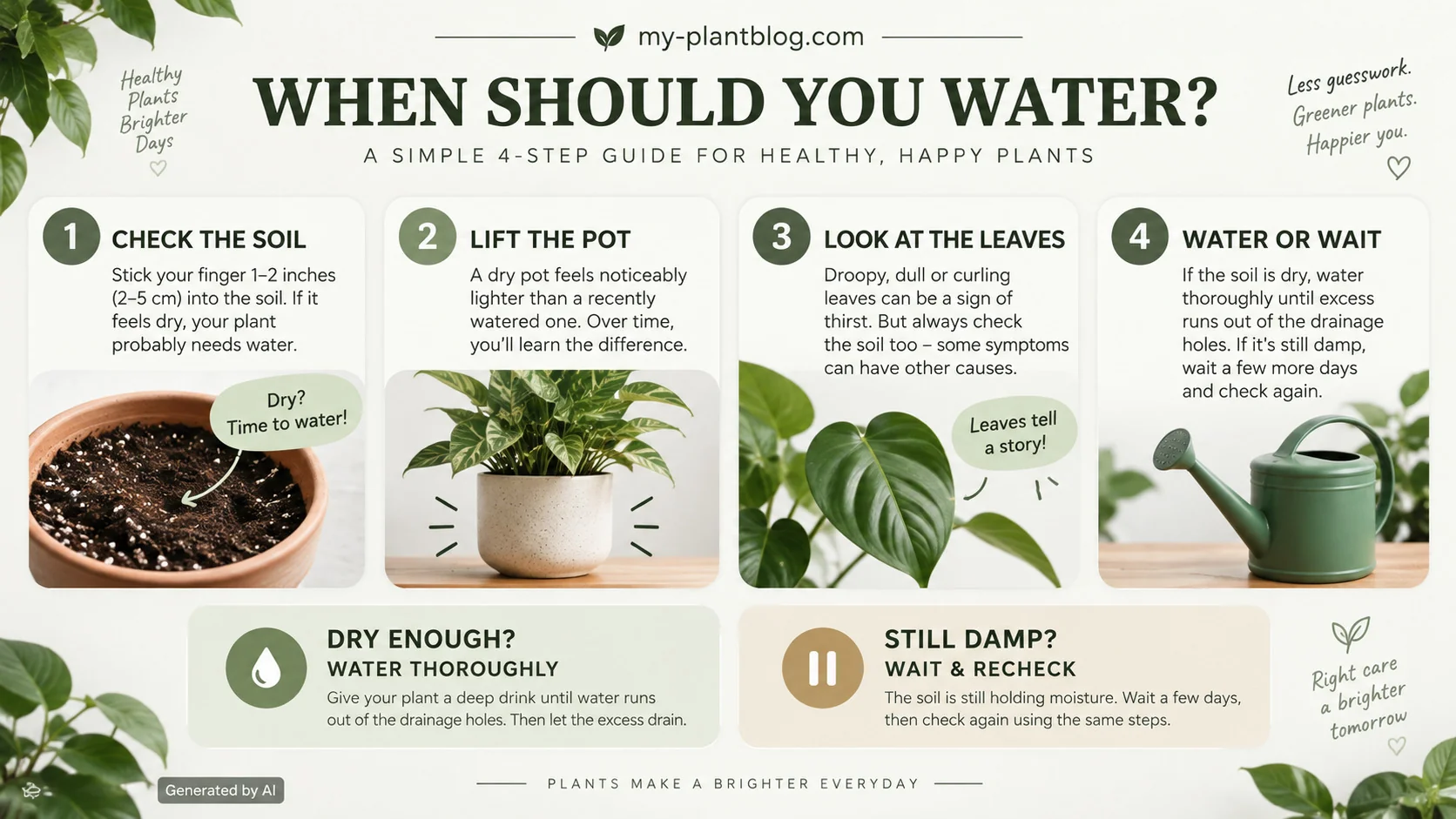
A weekly check is useful for many houseplants. During hot weather, outdoor containers may need attention much more frequently.
If your plants regularly dry out too fast or stay wet too long, watering frequency may not be the only issue. Pot size, growing medium, light, and root health all affect the result.
Common Watering Mistakes to Avoid
Watering Every Plant on the Same Day
Different plants and containers dry at different speeds. Use a shared checking day, not a compulsory watering day.
Giving Tiny Amounts Too Often
Small splashes may fail to reach the full root ball. Water thoroughly when needed, then allow an appropriate drying period.
Ignoring Drainage
A pot without functioning drainage can hold water around the roots for too long. Check drainage holes and decorative outer pots.
Watering Because Leaves Droop
Drooping can happen in both dry and soggy soil. Feel the soil before adding another drink.
Forgetting Seasonal Changes
A routine that works in summer may be too frequent during winter. Adjust according to daylight, growth, and drying time.
Frequently Asked Questions
Should I water my plants every day?
Most indoor plants do not need daily watering. Some outdoor pots may need water every day during hot weather. Check the soil before watering rather than following a fixed schedule.
How often should I water indoor plants?
Many common houseplants may need water roughly every 7–10 days, but light, temperature, species, pot size, and season can change that interval. Check the soil before watering.
Why is my plant drooping even though I watered it?
Drooping can also happen when roots are stressed by waterlogged soil. If the pot is still wet, check drainage and root condition before adding more water.
Should the soil dry completely before watering?
It depends on the plant. Many leafy tropical houseplants prefer only partial drying, while cacti and succulents often need the mix to dry much more fully.
Can I overwater a plant with one thorough watering?
A single thorough watering is generally not a problem for a suitable pot with functioning drainage. Repeatedly watering before the root zone has dried enough is more likely to cause trouble.
Why are my plant's leaves turning yellow?
Yellow leaves can result from excess moisture, dry soil, low light, root stress, nutrient problems, or normal leaf aging. Check soil moisture and drainage before changing your routine.
Build a Watering Routine That Fits Your Plants
You do not need to remember a different watering day for every plant.
Start by checking the soil, looking at the leaves, and noticing how quickly each container dries.
Water thoroughly when needed, allow good drainage, and adjust your routine as the weather and seasons change.
A little observation will usually tell you more than any fixed watering calendar.
