
Fall Fertilizing: Which Plants Need Nutrients Before Winter?
Should you fertilize plants in fall? Sometimes—but many plants need less fertilizer as growth slows. Established perennials, trees, and shrubs often need no extra feeding before winter. Cool-season lawns are a notable exception, while some flowering containers may still benefit from nutrients if they are actively growing.
Before reaching for fertilizer, check the plant, the soil, and your local weather. This guide explains when to feed, when to use compost instead, and when leaving a plant alone is the better choice.
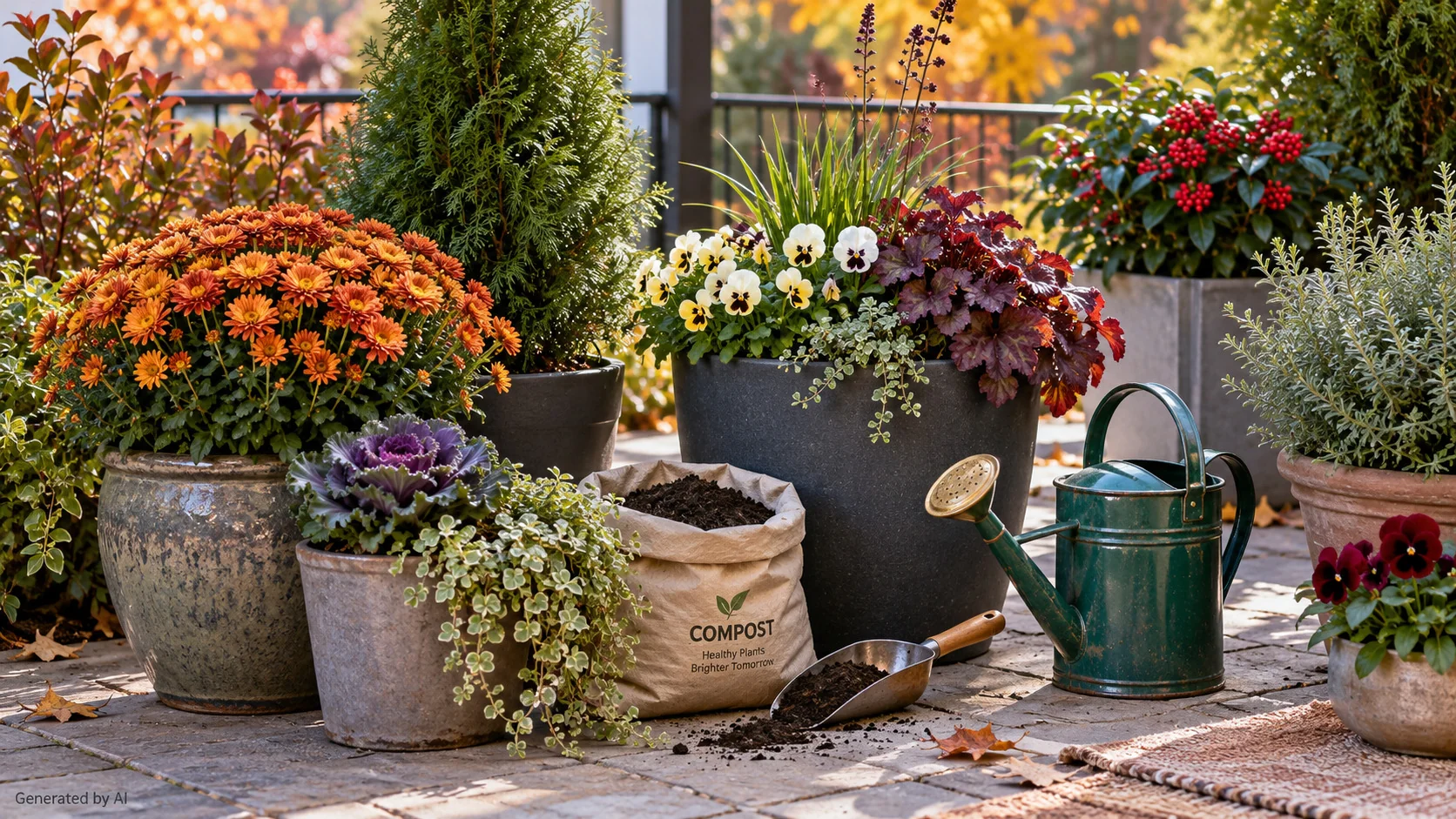
Fertilize only when a plant or lawn has a reason to use the added nutrients. Do not apply a high-nitrogen fertilizer to cold-sensitive or dormant plants just because fall has arrived.
Check for nutrient needs first, and consider compost or mulch when protecting and improving the soil is the main goal.
Fall Fertilizing: A Quick Guide by Plant Type
Not every plant needs the same treatment in autumn. An actively growing lawn is very different from a perennial that has started dying back or a houseplant sitting in a dimmer winter window.
| Plant or area | Typical fall approach | What to check first |
|---|---|---|
| Empty vegetable beds | Add mature compost or protective mulch. Extra fertilizer can usually wait. | Soil test and next season's planting plan. |
| Established perennials | Usually skip strong fertilizer. A light compost topdressing may help the soil. | Growth stage and condition of the soil. |
| Trees and shrubs | Do not fertilize routinely without a diagnosed nutrient need. | Water, planting depth, drainage, and growth history. |
| Cool-season lawns | Fall nitrogen feeding may be appropriate while grass is actively growing. | Grass species, local guidance, and soil test. |
| Warm-season lawns | Avoid late nitrogen applications as grass approaches winter dormancy. | Climate, grass species, and seasonal slowdown. |
| Flowering containers | Modest feeding may help while flowering and active growth continue. | Remaining growing season and fertilizer label. |
| Houseplants | Reduce or pause feeding as growth slows. Adjust for bright grow-light conditions. | New growth, available light, and root health. |
The general advice to avoid nitrogen in fall does not apply equally to all grasses. Cool-season turf can use nitrogen during its fall growing period. Warm-season turf has a different schedule.
Treat lawn fertilizing separately from late-season feeding of shrubs and perennials.
Why Fall Fertilizing Is Different From Spring Feeding
In spring, longer days and warmer conditions encourage many plants to produce new leaves, shoots, and roots. As autumn approaches, many hardy outdoor plants slow their top growth and prepare for winter.
Fertilizer can supply nutrients, but it cannot replace sunlight, healthy roots, or suitable growing conditions. Applying more fertilizer when growth is slowing does not automatically make a plant stronger.
When Should You Stop Fertilizing Before Winter?
There is no universal stopping date. Timing depends on your location, expected frost, the species, and whether the plant is still growing.
For frost-sensitive outdoor plants, avoid strong nitrogen feeding as the growing season approaches its end. Once a plant is dormant, routine fertilizing is generally unnecessary.
- Check whether the plant is producing new growth or naturally entering dormancy.
- Consider your local first-frost forecast rather than relying on a national calendar date.
- Avoid applying fertilizer to frozen, saturated, or runoff-prone soil.
- Follow any plant-specific feeding schedule, including guidance for fall-flowering plants.
If a plant looks weak after summer, first check its moisture, drainage, light, and roots. More fertilizer cannot correct drought damage, root rot, or poor light.
Which Nutrients Matter in Fall?
Fertilizer labels generally list three major nutrients as N-P-K: nitrogen, phosphorus, and potassium. The right formulation depends on the plant and the nutrients already present in its growing medium.
Nitrogen (N)
Supports leafy growth and is especially relevant to actively growing cool-season lawns. Avoid using it indiscriminately to push new, tender growth in plants approaching dormancy.
Phosphorus (P)
Supports essential plant processes, including root development. However, adding phosphorus does not automatically create better roots. Use a soil test before supplementing garden soil.
Potassium (K)
Contributes to water regulation and stress tolerance. It may be useful when levels are low, but an extra fall application is not necessary when the soil already contains enough.
Organic Matter
Mature compost can improve soil structure and contribute nutrients over time. Its exact nutrient content varies, so it is not a precise replacement for a measured fertilizer application when a specific deficiency needs correcting.
For garden beds, trees, shrubs, and lawns, use soil testing and local extension recommendations when deciding whether phosphorus or potassium is needed.
Avoid adding nutrients simply because a product is labeled "fall" or "winterizer."
Should You Use Compost, Mulch, or Fertilizer in Fall?
Autumn soil care is about preparing the growing environment without automatically encouraging another flush of growth. Compost, mulch, and fertilizer do different jobs.
| Material | Main purpose | Good fall use |
|---|---|---|
| Mature compost | Organic matter and gradual nutrient contribution | Topdress suitable garden beds and established plants. |
| Shredded leaves or leaf mold | Soil cover, structure, and organic matter | Protect bare beds and reduce erosion. |
| Straw or bark mulch | Surface protection and moisture moderation | Protect soil around appropriate outdoor plantings. |
| Measured fertilizer | Supply specific plant nutrients | Use when an actively growing plant needs them. |
How to Prepare Garden Soil Before Winter
A modest layer of mature compost is often a practical choice for an established bed. Shredded leaves or other suitable mulch can protect the surface from heavy rain, erosion, and temperature swings.
Keep compost and mulch away from woody trunks and plant crowns. Do not bury the center of perennials beneath a deep, wet layer.
If you are planning an outdoor bed for the next season, explore our outdoor garden care guides for help with soil, drainage, and seasonal maintenance.
Fall Fertilizing Advice by Plant Type
Vegetable and Flower Beds
Vegetable beds and annual flower beds may be depleted after a busy growing season. But an empty bed does not need a heavy fertilizer application just because the harvest is over.
Remove diseased plant material where appropriate, add mature compost if the soil would benefit, and cover bare ground with a suitable mulch.
Save targeted nutrient applications for a soil-test result or the needs of the next crop.
Established Perennials
As many perennials finish flowering, their growth naturally slows. Heavy late-season feeding can be unnecessary, particularly where frost is approaching.
A light compost topdressing may be sufficient for soil maintenance. Keep the crown clear, and avoid covering the plant with wet material that could contribute to rot.
Trees and Shrubs
Healthy, established trees and shrubs do not automatically need fertilizer every fall.
If a shrub has performed poorly, investigate soil moisture, planting depth, drainage, root competition, and light before assuming a nutrient deficiency.
Newly planted woody plants usually benefit more from consistent moisture and appropriate mulching than from aggressive feeding. Keep mulch away from trunks and stems.
Cool-Season and Warm-Season Lawns
Fall can be a valuable feeding period for cool-season grasses such as tall fescue, Kentucky bluegrass, and perennial ryegrass. These grasses often resume active growth as temperatures cool.
Depending on the region and lawn condition, a properly timed nitrogen application may be suitable. Follow a turf-specific recommendation and the product label rather than assuming every fall fertilizer must be low in nitrogen.
Warm-season grasses such as bermudagrass and zoysiagrass have a different growth cycle. Avoid late nitrogen feeding as they prepare for dormancy.
If a soil test identifies a potassium deficiency, follow local turf guidance on whether and when to correct it.
Confirm the grass type, local timing, application rate, and any relevant water-quality restrictions.
Never spread fertilizer onto frozen ground or directly before heavy rain.
Outdoor Containers and Balcony Plants
Potted plants have a limited nutrient supply, and repeated summer watering can remove soluble nutrients.
A healthy flowering annual may still benefit from modest feeding while it is actively producing flowers.
For a perennial container or a tender plant you plan to overwinter, consider whether its growth is slowing. Do not apply a heavy late-season feed just before bringing it indoors.
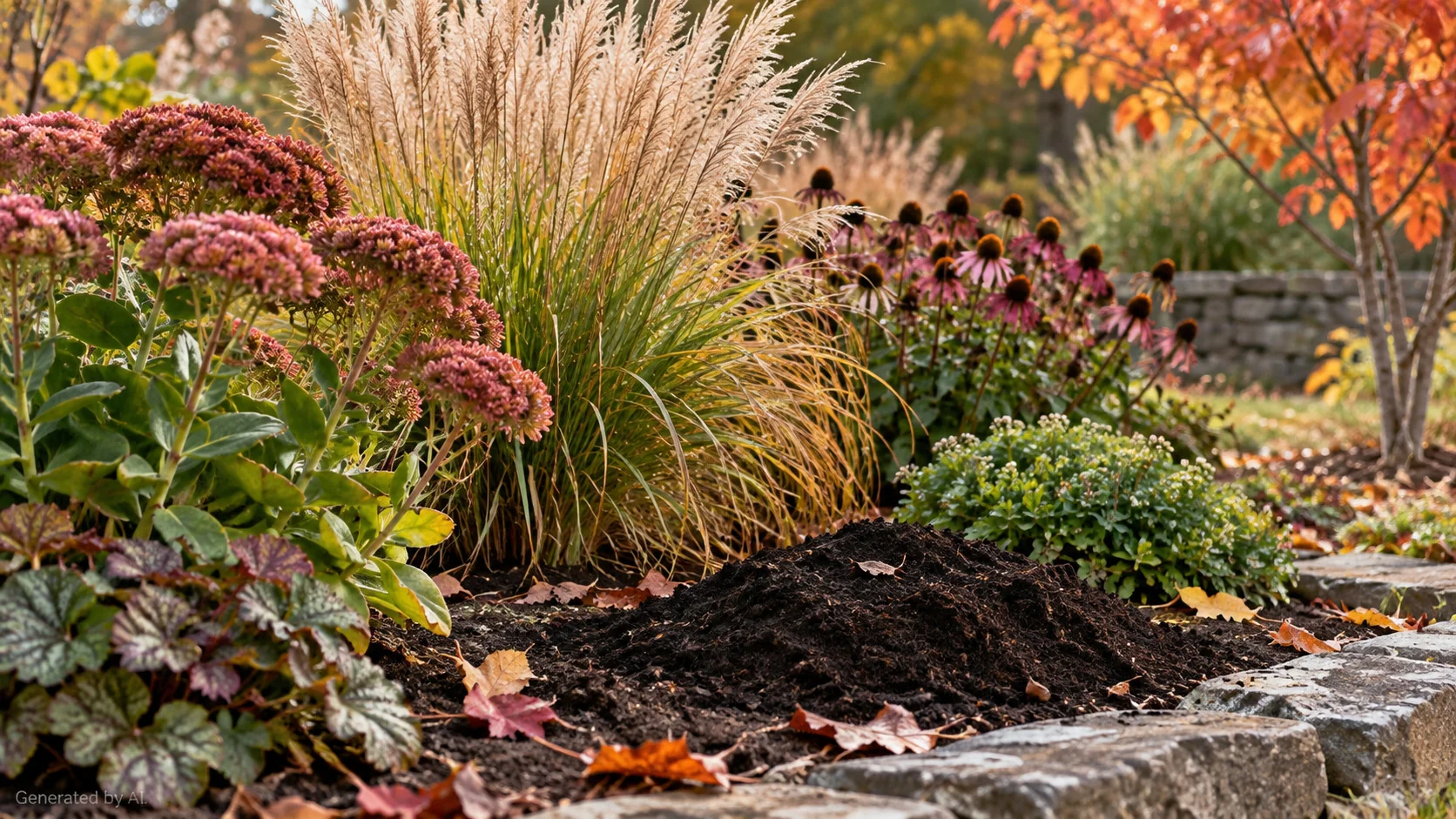
Watering still matters as temperatures change. Our guide to how often to water plants explains how to adjust care to the container, weather, and soil moisture.
Houseplants in Fall
Houseplants do not experience outdoor frost, but many respond to shorter days with slower growth. When available light decreases, their demand for water and nutrients often drops.
Reduce or pause fertilizing when your plant stops producing new growth.
A healthy plant growing actively under adequate grow lights may still need nutrients. Follow its care requirements and avoid exceeding label rates.
Do not treat weak, stretched growth as proof of a nutrient deficiency. First review your plant light needs and adjust watering to the season.
A crust on the potting mix or brown leaf tips can sometimes accompany excess fertilizer salts, although these signs have other possible causes.
Review your feeding rate, water quality, drainage, and root condition before making another change.
Common Fall Fertilizing Mistakes
Using One Feeding Schedule for Every Plant
A cool-season lawn, a deciduous shrub, an indoor tropical plant, and a pot of fall flowers have different nutrient needs. Base your decision on their growth and environment.
Adding Extra Potassium Without Testing
Potassium is important, but more is not always better. Check soil-test recommendations before choosing a high-potassium autumn product.
Feeding a Plant That Is Already Stressed
Yellow leaves, wilting, and slow growth do not necessarily indicate a nutrient shortage. Check moisture, drainage, light, roots, and visible pests first.
If you are unsure of the cause, use our guide to troubleshoot common plant problems before applying fertilizer.
Applying Fertilizer Before Heavy Rain
Fertilizer can be lost through runoff or leaching when conditions are unsuitable.
Avoid applications to frozen, saturated, or otherwise runoff-prone ground, and follow the label and local guidance.
Piling Compost Against Crowns and Trunks
Compost and mulch belong on the surrounding soil, not packed tightly against stems or plant crowns.
Keep those areas clear to reduce moisture-related problems.
Your Fall Fertilizing Checklist
Before feeding a plant or adding another fertilizer to the garden, use this simple decision guide.
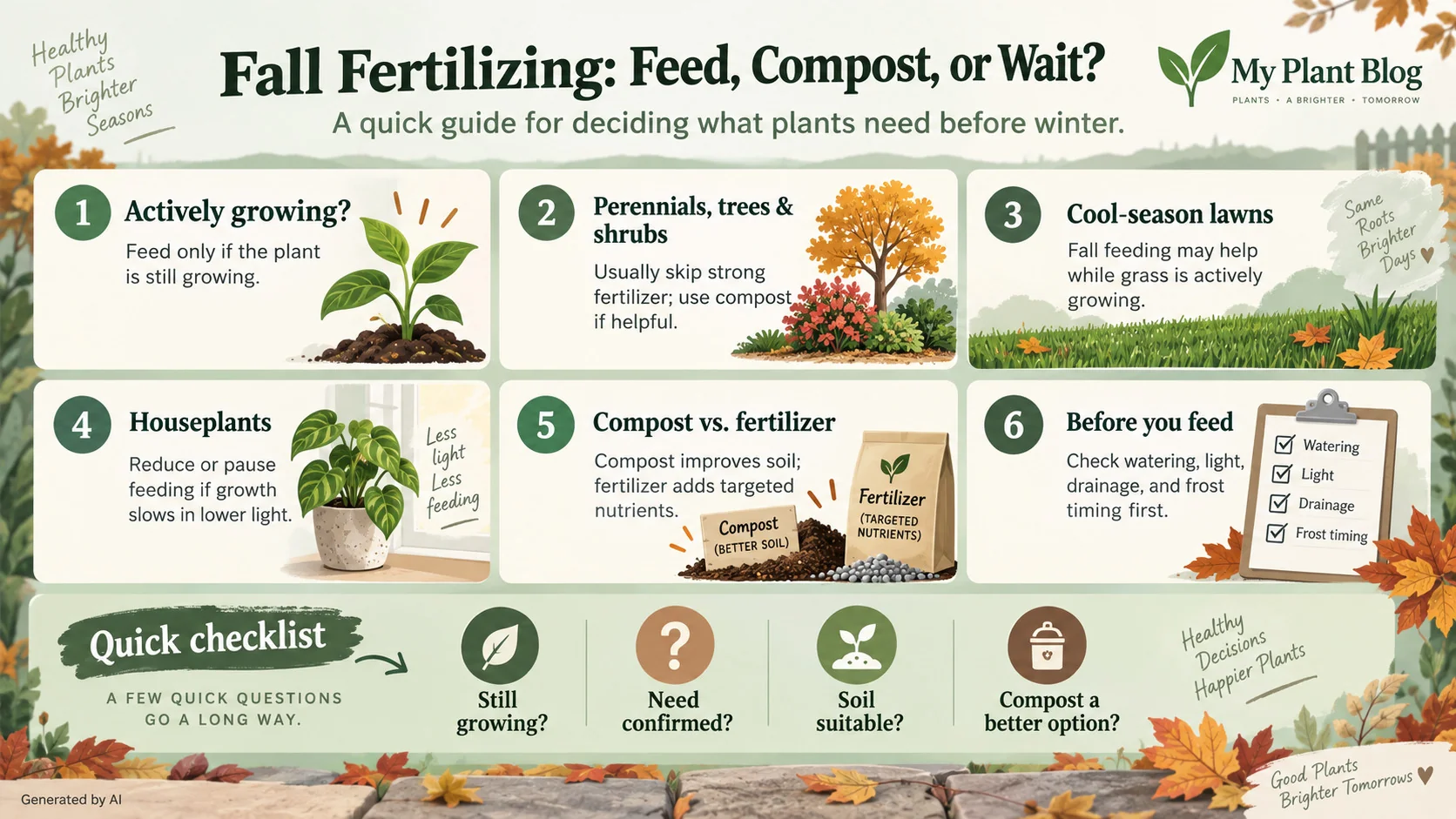
Before You Fertilize
- Is the plant still actively growing?
- Does this plant type benefit from fall feeding?
- Is frost or natural dormancy approaching?
- Have I checked watering, drainage, and light?
- Is there a reason to suspect a nutrient shortage?
- Would compost or protective mulch be more useful?
- Does a soil test recommend phosphorus or potassium?
- Is the soil suitable for an application right now?
- Am I following the correct fertilizer label rate?
- Could waiting until active spring growth be better?
When a healthy plant is naturally slowing down, skipping an unnecessary feeding is usually better than trying to encourage new growth before winter.
Final Thoughts: Feed Only When There Is a Reason
Autumn fertilizing is about matching nutrients to the plant and the season. Some plants are still growing and can benefit from feeding. Many established perennials, trees, and shrubs need little or no added fertilizer.
Healthy soil, sensible watering, and protection from seasonal extremes often matter more than an extra application.
Observe the plant first, use soil testing when appropriate, and let dormant plants rest.
Frequently Asked Questions
Should I fertilize all my plants in fall?
No. Some actively growing plants and cool-season lawns may still need nutrients. Many established outdoor plants and slow-growing houseplants do not need routine fall feeding.
What is the best fertilizer for fall?
There is no single fertilizer for every plant. Use a formulation matched to the species and nutrient need.
Mature compost may be enough for general garden-soil care.
Is it too late to fertilize in October?
That depends on your climate, plant type, and growing conditions.
Some cool-season lawns may still be growing, while many outdoor plants are approaching dormancy. Follow local guidance rather than a fixed date.
Can I fertilize a newly planted perennial?
Usually there is no need for a strong fall fertilizer application.
Focus on appropriate watering and soil care. Follow plant-specific recommendations if a deficiency is confirmed.
Should houseplants be fertilized in winter?
Many houseplants need little or no fertilizer during periods of reduced growth.
Plants that remain actively growing with sufficient light may have different needs.
Plan the Rest of Your Fall Garden Care
Fertilizer is only one part of preparing an outdoor space for winter.
Explore practical guides to watering, soil, garden beds, and seasonal maintenance.
