
How to Harvest Herbs Without Stunting New Growth
Harvesting herbs is more than picking a few leaves for dinner. Where you make the cut and how much growth you remove can affect how quickly basil, mint, parsley, rosemary, thyme, chives, and other herbs recover. Start with a healthy, established plant, use clean scissors or pruning snips, remove a modest amount, and leave plenty of healthy foliage behind. The goal is simple: take what you need while keeping enough leaves and growing points for the plant to continue growing.
In this guide
How Do You Harvest Herbs Without Damaging the Plant?
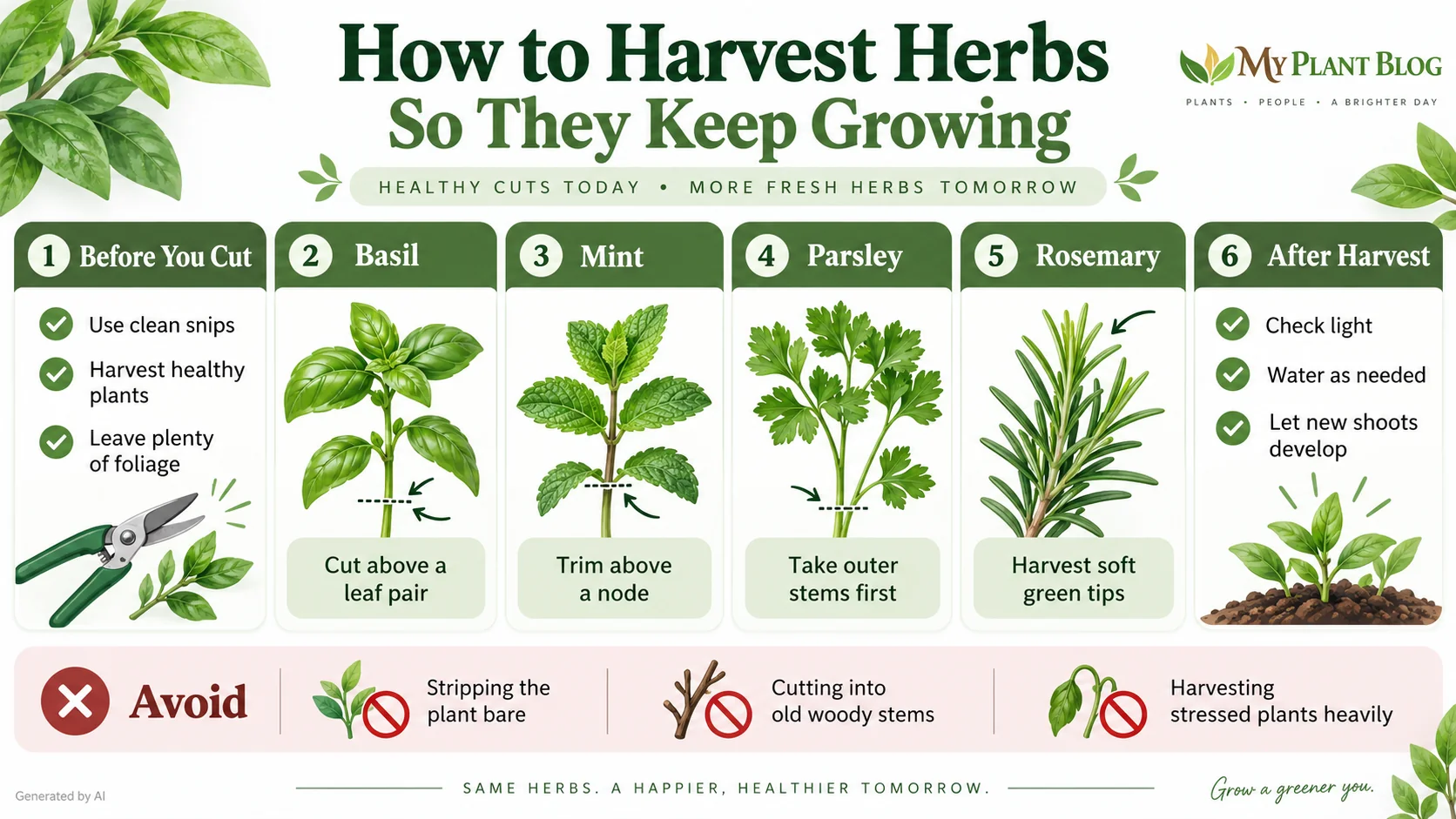
Start with healthy, established growth and make clean cuts rather than tearing stems. On branching herbs such as basil and mint, cut just above a healthy leaf pair or node. On parsley and similar plants that produce individual stems from the crown, take older outer stems first. With woody herbs such as rosemary, concentrate on flexible green growth rather than cutting deeply into old bare wood.
Harvest a little at a time. Leaving plenty of healthy foliage gives the plant enough leaf area to keep producing energy and fresh growth. Recently transplanted, weak, drought-stressed, or otherwise struggling herbs should be harvested more lightly.
Before You Cut: Check the Plant First
A good harvest begins before the scissors touch the plant. Look at the overall condition of the herb and decide whether it is actively growing strongly enough to spare foliage.
- Wait until the plant is established. Very young seedlings and newly transplanted herbs benefit from building roots and foliage before regular harvesting begins.
- Harvest healthy growth. Avoid using diseased, badly damaged, moldy, or heavily pest-infested leaves for culinary purposes.
- Use clean, sharp tools. Sharp scissors or pruning snips make a cleaner cut and reduce crushing or tearing of stems.
- Look for active growing points. On branching herbs, leaves and side shoots near a node help show where new growth can continue after a cut.
- Do not heavily harvest a stressed plant. Heat stress, severe wilting, recent transplanting, or poor growing conditions are reasons to harvest less and solve the underlying problem first.
If an herb is already showing yellow leaves, persistent drooping, sticky foliage, visible pests, or other signs of stress, identify the problem before taking a heavy harvest. The Plant Problems guide helps you check symptoms, soil moisture, light, pests, and recent changes before adjusting the care routine.
For a broader understanding of light, water, potting mix, drainage, roots, and seasonal growth, you can also use the beginner-friendly Grow Guides.
How Much of an Herb Can You Harvest at Once?
There is no single percentage that fits every herb, plant age, season, and growing condition. Fast-growing annual herbs can usually tolerate stronger harvesting than slow-growing woody perennials. A conservative harvest is generally easier on a plant than removing a large amount of foliage at once.
For an established herb, take only part of the usable growth during a routine harvest and leave plenty of healthy leaves behind. Take less from small plants, recently transplanted herbs, slow-growing plants, or herbs recovering from stress.
Removing most of the foliage in one session leaves the plant with less leaf area for continued growth. If you need a large quantity of herbs, harvest from several vigorous plants or spread the harvest over multiple sessions whenever possible.
How to Harvest Common Herbs
Different herbs regrow from different places. Matching the cut to the plant's growth habit is more useful than applying one harvesting method to every herb.
| Herb | Where to cut | What to avoid | Regrowth approach |
|---|---|---|---|
| Basil | Cut a stem just above a healthy leaf pair or node. | Repeatedly stripping only the largest lower leaves. | Leaving the node encourages side shoots and a bushier plant. |
| Mint | Cut stems above a healthy leaf pair, leaving leafy growth below. | Allowing the plant to become very leggy before every harvest. | Regular trimming can encourage compact, branching growth. |
| Parsley | Take mature outer stems close to the base. | Removing the youngest center growth first. | Leave the younger center stems to continue developing. |
| Cilantro | Harvest usable outer stems and leaves while the plant is leafy. | Expecting strong leaf regrowth once the plant has begun bolting. | Regular light harvests can help make use of the leafy stage. |
| Chives | Cut leaves above the base while protecting the crown. | Pulling or damaging the crown and roots. | Healthy clumps can produce fresh leaves from the base. |
| Rosemary | Snip flexible, leafy green tips and young stems. | Cutting deeply into old, bare woody growth. | Light harvesting of green growth is safer for continued growth. |
| Thyme | Trim leafy green shoots and growing tips. | Removing too much old woody structure at once. | Light trimming keeps usable new shoots within reach. |
| Oregano | Cut leafy stems above lower leaves or branching points. | Removing nearly all active green growth in one harvest. | Regular moderate trimming can encourage fresh shoots. |
Where Should You Cut Each Herb?
Basil
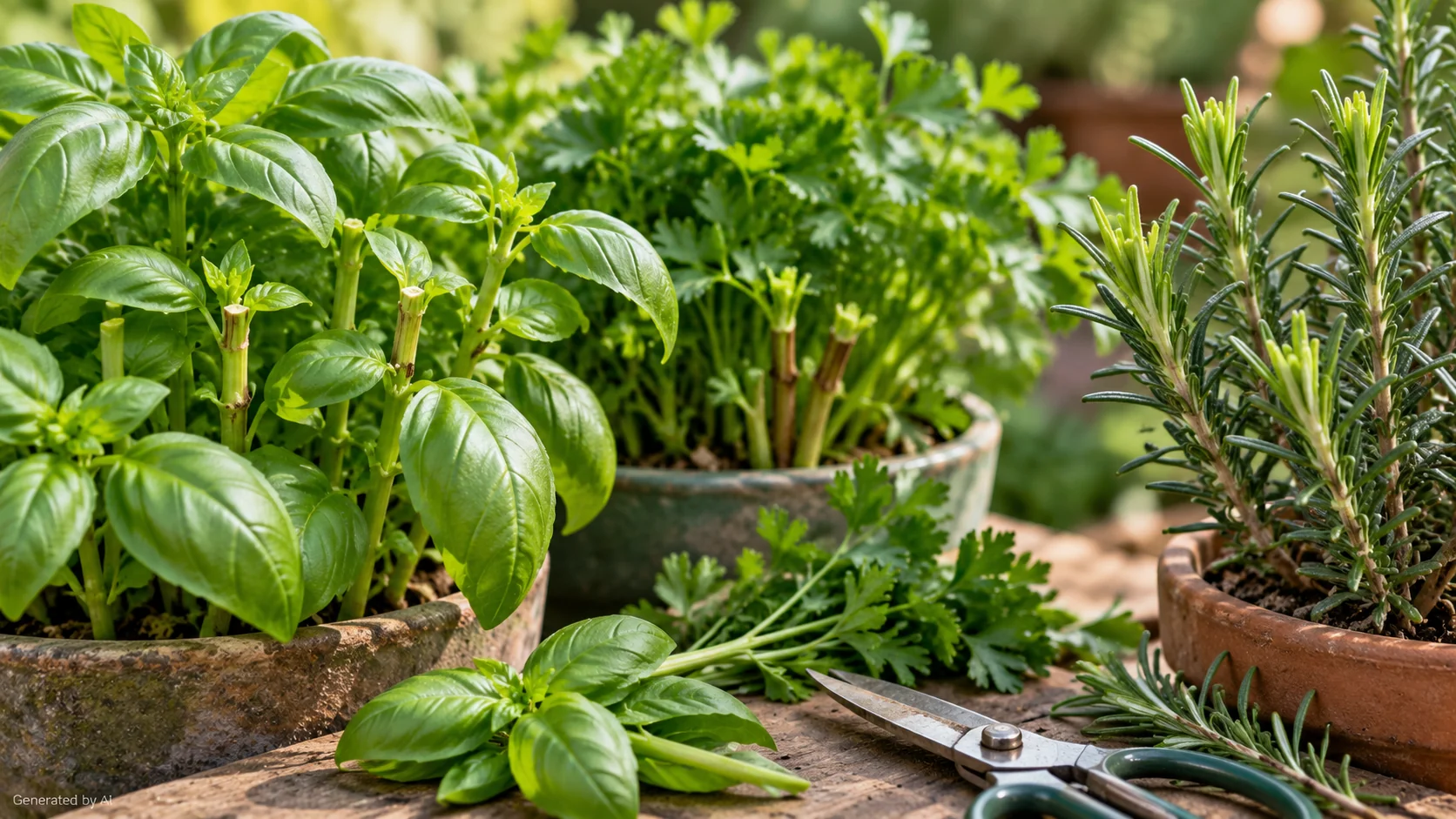
Look along the stem for a point where a pair of leaves meets the stem. Make your cut just above that point rather than removing only individual large leaves from the bottom of the plant.
Leaving the node and lower leaves intact gives the plant growing points from which side shoots can continue.
Mint
Harvest mint by cutting leafy stems above a leaf pair. Instead of taking only scattered leaves, shortening selected stems can help keep the plant from becoming tall and sparse.
Mint can grow vigorously when conditions suit it, but newly planted or stressed mint should still be harvested conservatively.
Parsley
Select mature outer stems and cut them close to the base. Leave the smaller, younger growth in the center so the plant still has developing stems for later harvests.
Constantly taking the youngest center growth can reduce the plant's ability to replace what you have harvested.
Rosemary
Take short pieces from soft, flexible green growth. Avoid making a routine harvest by cutting far back into thick, bare woody stems.
Established rosemary can provide repeated small harvests when you focus on the younger leafy growth.
When Is the Best Time to Harvest Herbs?
A cool, dry morning after surface moisture or dew has dried is a useful general time for harvesting culinary herbs. The plant is less exposed to midday heat, and dry foliage is easier to handle than wet leaves.
You do not need to delay dinner because you missed the ideal morning window. For everyday use, healthy herbs can be harvested when needed. Timing becomes more useful when you are collecting a larger amount for drying or trying to preserve aroma and leaf quality.
The herb is healthy, actively growing, dry enough to handle, and has plenty of foliage left after your planned cut.
The plant is newly transplanted, severely wilted, recovering from pests, producing very little new growth, or already under heat or drought stress.
Should You Harvest Herbs Before They Flower?
When leafy growth is the goal, many culinary herbs are especially useful before heavy flowering begins. Once some herbs shift more energy into flowers and seed, leaf production, texture, and flavor can change.
On herbs such as basil, removing flower buds can help keep the plant focused on leafy growth for longer. Flowers are not automatically a problem, however. If you want flowers for pollinators, seed production, or ornamental value, allow part of the plant to bloom.
A larger herb plant can often be managed so that some stems remain available for culinary harvest while other stems are allowed to flower.
How to Help Herbs Regrow After Harvesting
Correct cutting helps, but regrowth also depends on the conditions the plant receives afterward. Light, available moisture, healthy roots, temperature, and the season all influence how quickly new leaves appear.
- Return the plant to the amount of light appropriate for that herb.
- Check the potting mix rather than automatically watering immediately after every harvest.
- Make sure excess water can drain from containers.
- Give a heavily harvested plant time to produce fresh growth before making another large cut.
- Watch the newest shoots. Healthy new growth is a better signal for the next harvest than a rigid number of days.
If you are unsure when the container actually needs water, use the guide to how often you should water plants. Water use changes with container size, weather, temperature, airflow, active growth, and the plant itself.
Slow, stretched, pale, or weak regrowth can also be a reason to reconsider the growing location. The guide to understanding plant light needs explains the difference between low light, bright indirect light, and full sun and why actual light exposure matters to plant growth.
When several care factors seem uncertain at once, use the Grow Guides for healthy plants to work through watering, light, drainage, potting mix, and root conditions one step at a time.
Common Herb Harvesting Mistakes
Taking too much at once
A plant with very little foliage left has less leaf area available for continued growth. Harvest more conservatively, especially from small or slow-growing plants.
Using the same method for every herb
Basil, parsley, chives, rosemary, and thyme do not grow from identical structures. First identify whether you should cut above a node, remove an outer stem, or take a green shoot.
Harvesting a stressed plant heavily
A plant already struggling with heat, drought, poor light, pests, or damaged roots has less capacity to recover from a severe cut.
Cutting woody herbs too far back
With herbs such as rosemary, routine harvesting should focus on leafy green growth rather than repeatedly cutting into old bare wood.
Waiting until herbs become very leggy
Frequent moderate harvesting can be easier to manage than allowing a branching herb to become tall and sparse before making one major cut.
Following a rigid calendar
Plant size, season, temperature, light, and growth rate all change how quickly an herb is ready for another harvest.
What Should You Do With Extra Herbs?
If your plants are producing more than you can use immediately, avoid taking an unnecessarily large harvest simply because the foliage is available. Harvest what you can use or preserve properly and let the remaining healthy growth continue supporting the plant.
Drying can be useful for suitable culinary herbs, but leaves need to be fully dry before airtight storage. Tender herbs may also be used fresh or preserved by another appropriate method depending on the herb.
For more guidance on choosing, growing, caring for, harvesting, drying, and storing herbs, continue with the Herbs & Natural Living guides. This section brings the main herb-growing and preservation topics together in one place.
Herb Harvesting FAQ
How often can I harvest herbs?
Harvest frequency depends on the herb and how quickly it is actively growing. Fast-growing basil or mint may provide frequent small harvests, while slower woody herbs need a more conservative approach. Look for healthy new growth instead of relying on a fixed weekly schedule.
Should I cut herbs or pull the leaves off?
Clean cuts are usually easier to control. On branching herbs such as basil and mint, cutting a stem above a leaf pair or node can preserve useful growing points. Parsley is better harvested by taking mature outer stems near the base.
How much basil can I harvest at once?
For routine home harvesting, take a moderate amount and leave plenty of healthy foliage on the plant. Small, newly planted, or stressed basil should be harvested more lightly than a large, vigorous plant.
Can I harvest herbs after they flower?
Yes, but flowering can change the amount and character of leafy growth in some herbs. If continued leaf production is your main goal, harvest regularly and manage flower buds on herbs such as basil. Leave flowers when you want blooms, seed, or pollinator value.
Why did my herb stop growing after I harvested it?
The plant may have lost too much foliage, been cut in an unsuitable place, or already been stressed by low light, heat, water problems, root issues, pests, or the season. Check the growing conditions and wait for healthy new growth before harvesting heavily again.
Can I harvest newly planted herbs?
A very light harvest may be possible from a healthy plant, but newly transplanted herbs generally benefit from time to establish roots and fresh growth before regular harvesting begins.
Keep Your Herb Garden Productive
Good harvesting is a balance: make the right cut, take a reasonable amount, and leave the plant with enough healthy growth to recover. Then let new growth, light, moisture, roots, and the season tell you when the next harvest is ready.
If you want to build a stronger herb-care routine from the ground up, browse the complete Herbs & Natural Living section. For broader plant-care fundamentals, continue with the Grow Guides.
