
Plant Watering Guide: How to Read Soil, Pots & Weather
A good watering routine starts with checking the plant, not the calendar. Learn how dry and damp potting mix feel, why drainage and container size matter, how heat and light change drying speed, and why the same plant may need a different watering rhythm when its growing conditions change.
In This Guide
Make Watering Day a Check Day
The most useful watering schedule is a reminder to inspect your plants, not an automatic instruction to pour water into every pot. Check the potting mix, consider the plant's normal moisture preference, look at the container and drainage, and think about what has changed since the last watering.
Check the mix. Read the container. Read the conditions. Then decide whether the plant actually needs water.
This guide focuses on deciding whether a plant needs water right now. If your main question is how frequently different indoor plants, outdoor containers and garden plants generally need checking, see how often you should water plants.
Learn the Difference Between Dry, Damp & Very Wet Potting Mix
The surface of a container is only your first clue. Potting mix can look dry on top while moisture remains farther down around the roots. Instead of judging by color alone, check below the surface and compare what you find with the moisture preference of the plant you are growing.
Loose & Lighter
Drier potting mix generally feels looser and less moist. A movable container may also feel noticeably lighter than it did shortly after watering.
Moisture Is Still Present
Slightly damp potting mix still contains moisture. That does not automatically mean anything is wrong, and it does not automatically mean the plant needs more water.
Pause Before Adding More
If the root zone is still strongly wet, heavy or saturated, adding more water should not be the automatic response. Check drainage and the plant's actual needs first.
Succulents, Mediterranean herbs and many tropical foliage plants do not all prefer the same level of root-zone moisture. Use soil feel as information, then interpret it for the plant you are growing.
The growing medium itself also changes how long moisture remains around the roots. If your mix stays wet for a long time or dries unusually quickly, the guide to choosing the best potting mix for container plants explains moisture retention, aeration and drainage in more detail.
Drainage Is Part of the Watering Decision
For ordinary plant containers, drainage holes give excess water a way to leave the pot. But a drainage hole does not make repeated watering of already-wet potting mix harmless.
- Use standard plant containers with functioning drainage holes.
- Make sure excess water can leave the root zone after watering.
- Do not leave ordinary pots standing in collected saucer water.
- Check blocked drainage when potting mix remains wet much longer than expected.
- Remember that drainage and potting-mix structure work together.
A loose, airy potting mix still needs somewhere for excess water to escape. At the same time, a pot with a drainage hole can remain too wet when the growing medium retains more moisture than the plant currently uses.
Pot Size and Material Change How Fast Moisture Is Lost
The relationship between the plant, its root system, the amount of potting mix and the container affects how quickly the root zone dries. A vigorous plant in a small pot can use available moisture quickly, while a relatively small root system surrounded by a large volume of mix may stay damp for much longer.
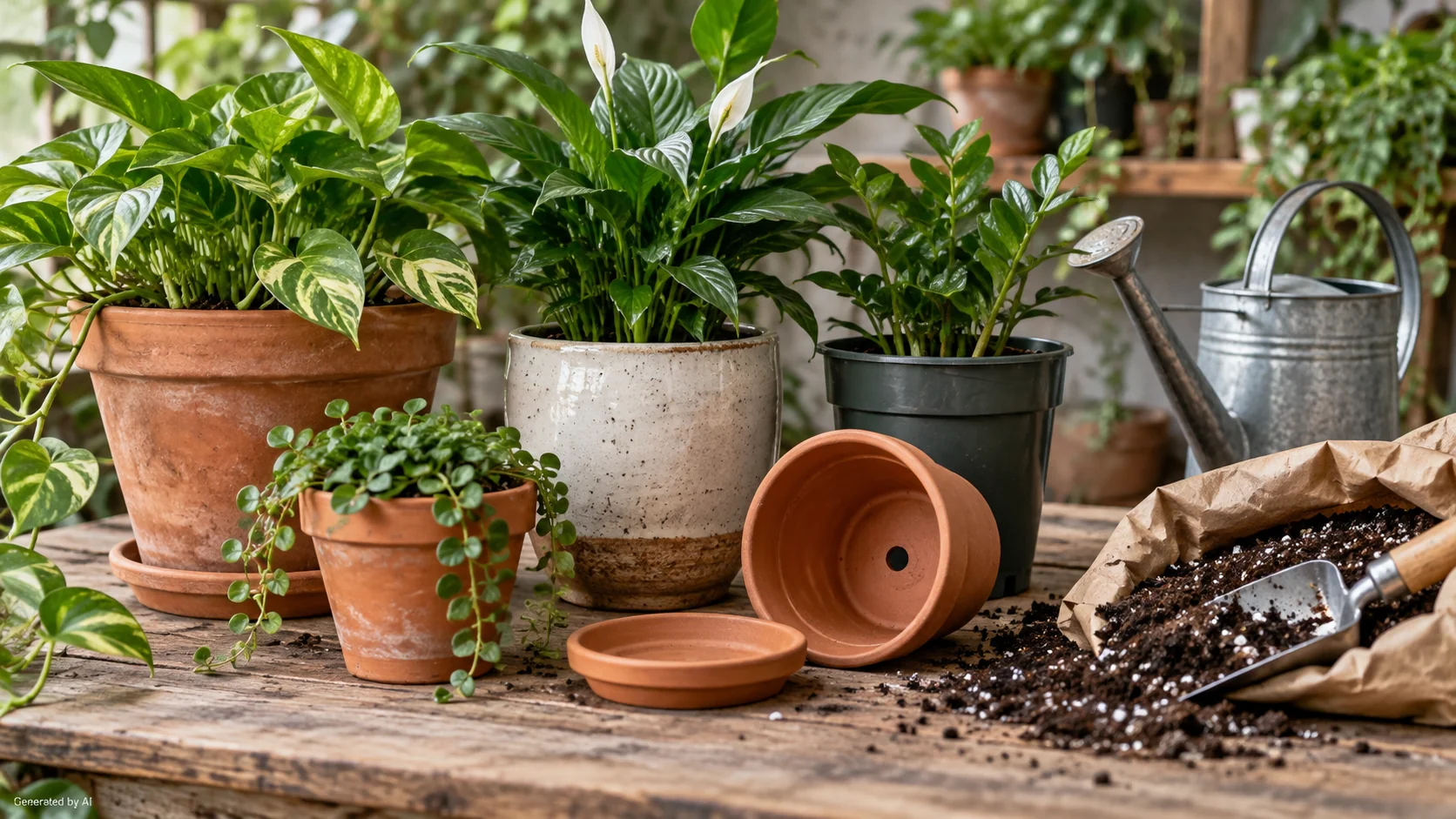
There is less potting mix available as a moisture reserve. Check these pots more often when growth is active or conditions become warm, bright or windy.
A larger volume of unused potting mix may remain damp for longer. Do not automatically continue the plant's previous watering rhythm after moving it into a larger pot.
Container Material Matters Too
Porous materials such as unglazed terracotta can lose moisture differently from less porous plastic or glazed containers. You do not need another rigid rule. Simply include the container itself in your moisture checks.
If a plant suddenly begins drying much faster than it used to, root crowding may be part of the explanation. Before moving the plant into a much larger container, compare the signs in when to repot a houseplant.
Heat, Light, Wind and Season Can Change the Answer
A watering rhythm that worked last month may stop matching the plant after a change in weather, light, temperature, airflow, season or location.
Heat, Sun & Wind
Containers can dry faster during hot, sunny, dry or windy weather. Check them more frequently instead of turning hot weather into an automatic daily-watering rule.
Light & Room Conditions
Lower usable light can slow growth and water use. A brighter position, warm airflow or nearby heating can change the drying pattern again.
Room humidity and root-zone moisture are different clues. A room can feel dry while the potting mix remains moist, so always check the mix before adding water.
If you are unsure how bright the plant's actual position is, Plant Light Needs Explained can help you distinguish direct sun, bright indirect light and lower-light locations.
Outdoor containers deserve extra attention when temperatures rise. The guide to keeping plants healthy during summer heat covers moisture checks and other useful adjustments during hotter, brighter and drier conditions.
Indoor conditions also change with the seasons. During colder and darker months, winter houseplant watering explains why containers may remain moist for longer and why the summer watering rhythm often needs adjusting.
Should You Water, Wait or Investigate?
One clue alone should not make the decision. Combine soil moisture, container weight, drainage and current growing conditions before reaching for the watering can.
| What you find | What it may mean | Best next step |
|---|---|---|
| Mix is dry to the plant's normal threshold and the pot feels lighter | The available moisture reserve may be low | Water if this matches the plant's moisture preference |
| Surface looks dry but the root zone is still damp | Moisture remains below the surface | Wait and check again later |
| Mix is very wet and the pot feels unusually heavy | The root zone has not dried sufficiently | Pause watering and check drainage |
| Plant droops while the mix is very dry | Water shortage may be part of the problem | Check the plant's needs and water if appropriate |
| Plant droops while the mix remains wet | Thirst should not be assumed | Investigate drainage, roots and other stress factors |
| The pot suddenly dries much faster than before | Heat, light, growth or root crowding may have changed | Check what changed before altering the routine |
There is nothing wrong with checking your plants on the same day each week. The mistake is assuming that every check must automatically become a watering.
Plant Watering Guide at a Glance
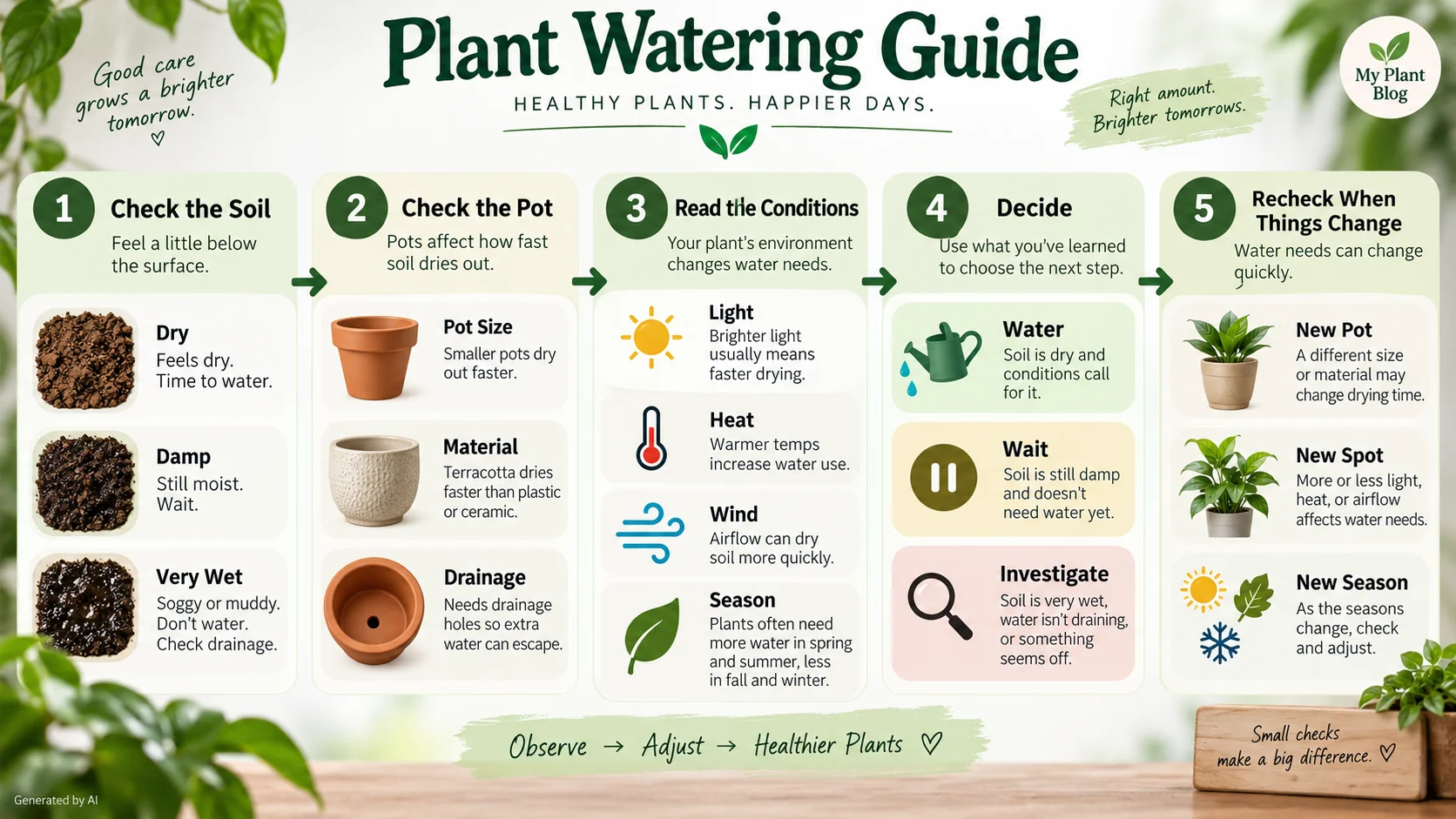
When you are unsure whether a container needs water, use the same order each time: check the soil, check the pot, consider current conditions, decide whether to water or wait, and reassess whenever the plant's environment changes.
A 7-Step Watering Check You Can Use Again and Again
Know the Plant's Preference
Start with the normal moisture needs of the plant rather than using one dryness rule for your entire collection.
Check Below the Surface
Feel the mix below the fast-drying top layer before deciding whether the root zone needs more water.
Notice the Pot's Weight
When a container is safe to lift, the difference between freshly watered and much drier can become another useful clue.
Check Drainage
Make sure excess water can leave a standard container and is not collecting around the pot afterward.
Look at Today's Conditions
Think about heat, sun, wind, seasonal light, indoor heating, active growth and recent location changes.
Water When the Clues Agree
For a standard container with drainage, water when the plant and root zone indicate that moisture is actually needed.
Notice how long that particular container usually takes to move from freshly watered to ready for another watering. Relearn that pattern whenever the plant, pot, light or season changes.
What Common Watering Clues May Be Telling You
| What you notice | What to check next |
|---|---|
| Surface looks dry but the mix below still feels damp | Wait until the plant reaches its appropriate moisture threshold rather than watering from appearance alone. |
| Pot feels unusually light and the mix is dry deeper down | Compare this with the plant's normal moisture preference. |
| Plant is drooping while potting mix remains wet | Do not automatically add more water. Check drainage and root-zone conditions. |
| Container suddenly dries much faster than before | Review heat, light, wind, plant growth, root crowding and pot size. |
| Potting mix remains wet far longer than expected | Review drainage, container size, light, temperature and potting-mix structure. |
Drooping is especially easy to misread because both dry and excessively wet root-zone conditions can be part of the diagnosis. If the leaves suddenly lose firmness, compare the possible causes in why plants droop and what to check first before changing several care factors at once.
If a plant continues to decline while its potting mix remains wet, move from general watering advice to the focused guide on overwatering and root rot.
Plant Watering Questions
Should potting mix be completely dry before I water?
Not for every plant. Different plants have different moisture preferences. Check how far the mix has dried and compare that with the needs of the plant you are growing.
How can I tell whether potting mix is still damp?
Feel below the surface rather than relying only on appearance. Damp mix still feels noticeably moist compared with dry, loose mix. With smaller movable containers, pot weight can become another useful clue over time.
Do drainage holes prevent overwatering?
Drainage holes allow excess water to leave the container, but they do not make repeated watering of already-wet potting mix a good idea. The watering rhythm still needs to match the plant and the actual moisture around its roots.
Do small pots dry out faster?
They often can, especially when a relatively large or actively growing plant occupies a small amount of potting mix. Plant size, pot material, light, heat and airflow also influence drying speed.
Does dry indoor air mean my houseplant needs water?
Not necessarily. Indoor air can feel dry while the root zone remains moist. Check potting-mix moisture separately instead of using room humidity as a substitute for a soil check.
Should I water container plants every day in hot weather?
Hot, dry, sunny or windy conditions can make containers dry more quickly, so check them more often. Whether a particular pot actually needs water still depends on the plant, the container and the moisture remaining in the potting mix.
What if my plant is drooping but the soil is still wet?
Do not automatically add more water. Check drainage, root-zone conditions, light, temperature and recent changes before deciding what the plant needs next.
Check First. Then Water.
Better watering is less about memorizing a perfect schedule and more about learning to read the plant in front of you. Check the root-zone moisture, notice how the container behaves and adjust when light, weather, season, plant growth or pot size changes.
A calendar can remind you to inspect your plants. Let the plant, potting mix and growing conditions decide what happens next.
For more practical guides covering watering, plant light, potting mix, repotting and seasonal plant care, continue with the My Plant Blog Grow Guides.
