
Why Is My Plant Drooping? Check the Soil Before You Water
Drooping leaves do not always mean your plant is thirsty. A houseplant can wilt when its potting mix is bone-dry, but it can also droop when waterlogged roots cannot take up moisture. Before reaching for the watering can, feel the mix below the surface and check whether the pot drains. If the soil is dry, water thoroughly; if it is wet, investigate drainage and root health. If moisture seems normal, look for heat, cold drafts, recent repotting, or pests.
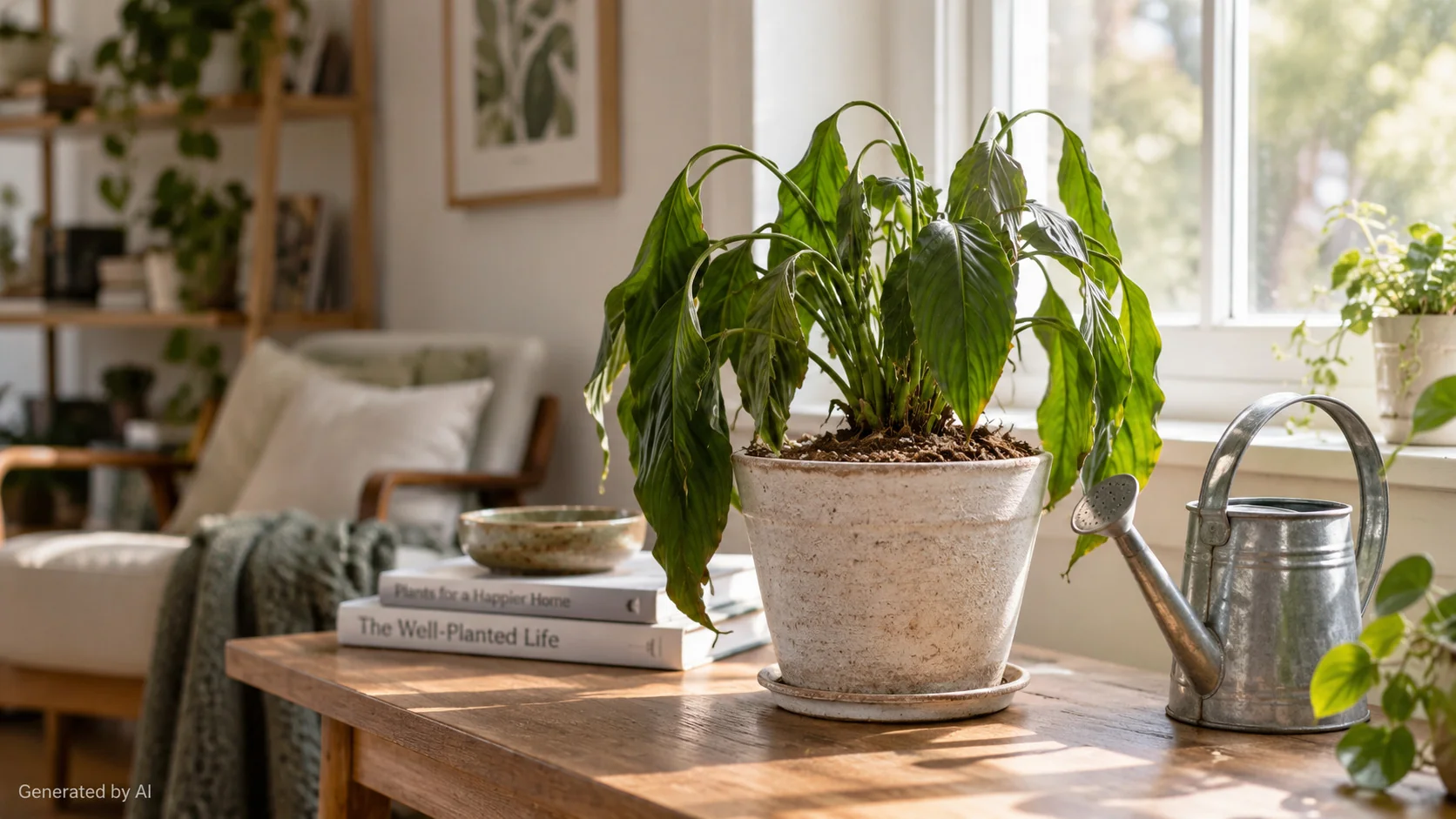
What to Check First When Your Plant Droops
Look at the pot before treating the leaves. These three checks help you avoid giving more water to a plant that is already too wet.
- Feel below the surface. Push a finger or wooden skewer into the potting mix. Check deeper in a large pot; a dry-looking surface can hide wet soil underneath.
- Lift the pot and check drainage. A very light pot suggests dryness; a surprisingly heavy pot may still hold water. Empty the saucer or decorative outer pot if water has collected there.
- Think about the timing. Did drooping start after a hot afternoon, a cold night, watering, moving the plant, or repotting? Check leaves and stems for additional clues.
Drooping Plant Symptoms: A Quick Diagnosis
Use these clues together, not as a diagnosis based on one leaf.
| What you notice | Possible cause | First action |
|---|---|---|
| Dry mix, light pot, limp or crispy leaves | Underwatering | Water the root ball thoroughly and allow it to drain. |
| Wet mix, heavy pot, yellow leaves, or soft stem base | Overwatering or damaged roots | Stop watering, remove standing water, and inspect roots if decline continues. |
| Droops mainly in strong afternoon sun | Heat or excessive light | Check moisture, provide suitable shade, and observe after temperatures ease. |
| Droops after a move or repotting | Environmental or root disturbance | Keep care steady; avoid another unnecessary change. |
| Repeated wilting despite correct watering; densely packed roots | Root-bound plant or compacted mix | Inspect the root ball and container before repotting. |
| Webbing, sticky leaves, or visible insects | Pest stress | Isolate the plant and identify the pest before treatment. |
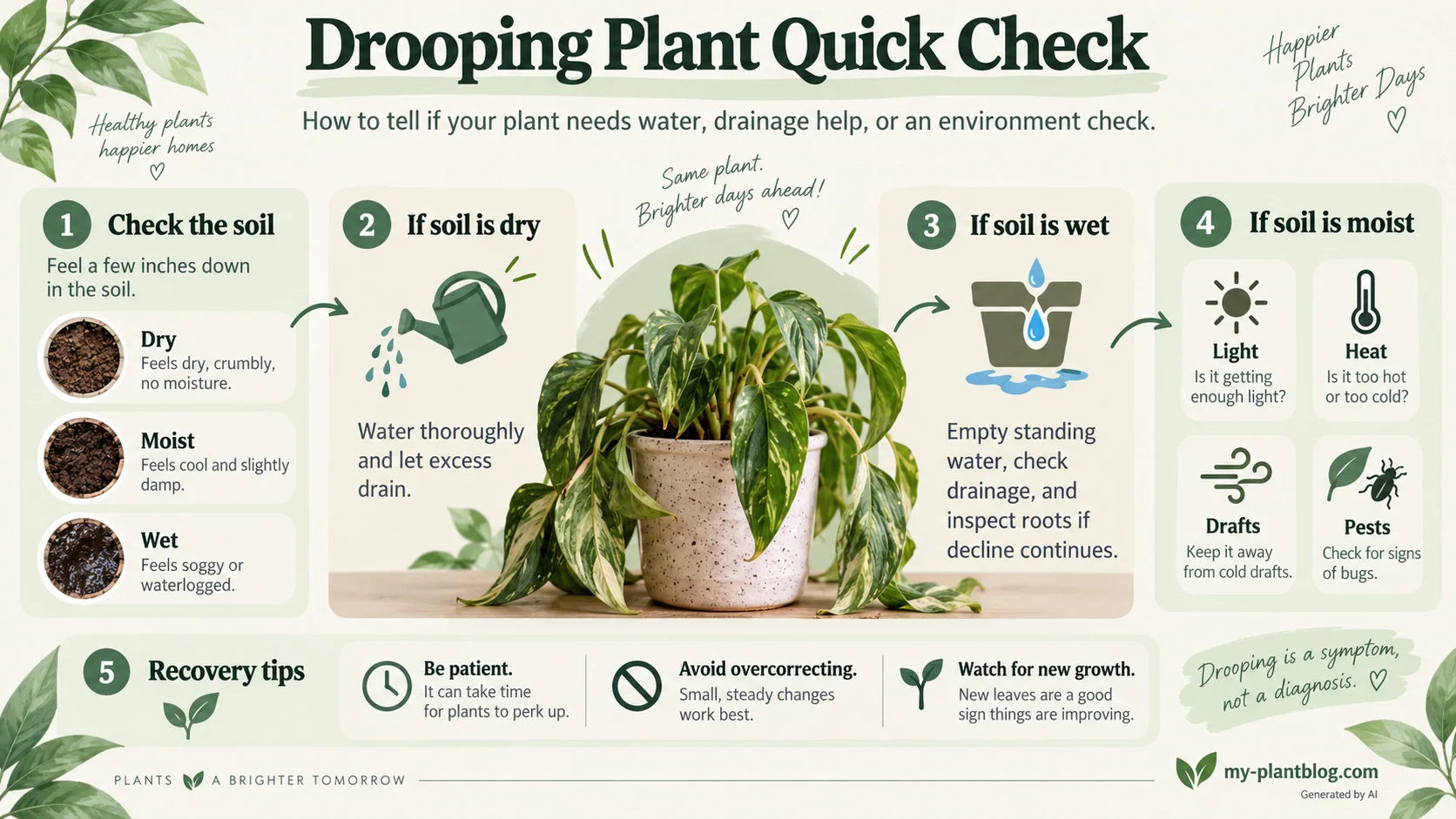
If the Soil Is Dry: Your Plant May Need Water
When the root ball dries too far, roots cannot supply enough water to keep leaves firm. The soil may pull away from the pot's edges, and water may run straight through a very dry mix without soaking it.
How to water a drooping, dry plant
- Check that the container has drainage holes and that its root zone actually feels dry.
- Water slowly until the potting mix is evenly moist and excess water exits the drainage holes.
- If water rushes down the sides of a dry root ball, water gradually in several passes or briefly bottom-water the pot, then let it drain completely.
- Return the plant to an appropriate light level and watch for improvement without repeatedly adding water.
Some plants perk up within hours; others need longer, and badly damaged leaves may never regain their shape. Adjust future watering to the plant, pot, season, and actual soil moisture. For more on moisture checks, see how often to water plants without a fixed schedule.
If the Soil Is Wet: Check Drainage and Roots
Roots need air as well as moisture. When mix stays saturated, roots may be unable to take up enough water; damaged or rotting roots can leave a plant looking thirsty even while its pot is wet.
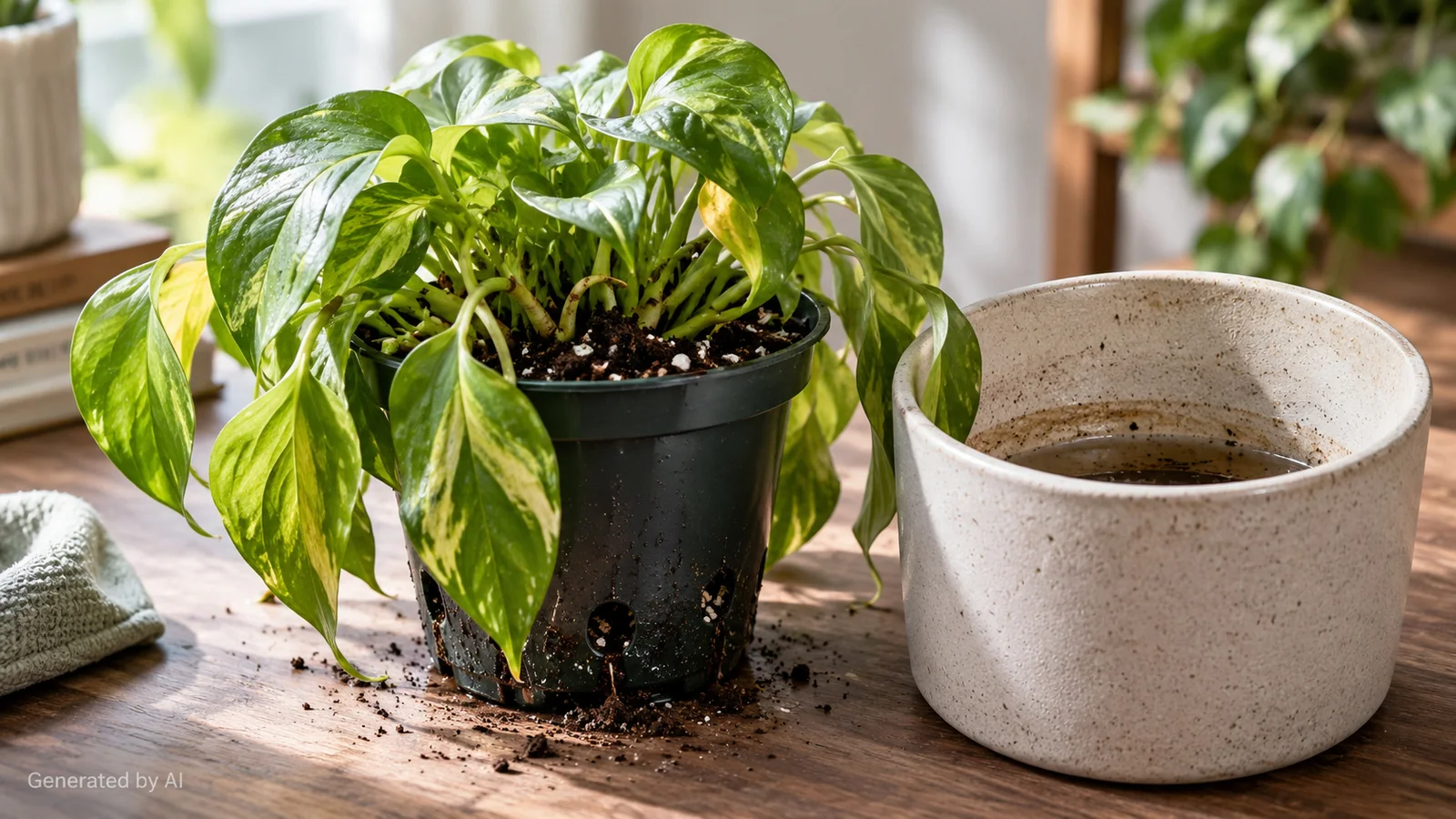
What to do when a plant droops in wet soil
- Do not water again yet. Remove water from the saucer or decorative cachepot and check for blocked drainage holes.
- Check the growing conditions. Low light, an oversized pot, or dense, old potting mix can keep roots wet too long.
- Inspect roots when there are warning signs. Persistent wilting, a soft stem base, sour-smelling mix, or continued yellowing may justify carefully sliding the root ball out for inspection.
- Repot only when needed. If roots are clearly soft and decayed, remove affected tissue with clean tools and use an appropriate, airy mix in a pot with drainage. Leave firm healthy roots intact.
A dim location can keep the mix wet longer. Use the plant light guide to decide whether your houseplant receives suitable daylight before changing its watering routine.
Why Else Do Plant Leaves Droop?
Heat and strong sun
Leaves may lose water faster than roots can replace it on a hot, bright afternoon. Check the mix, then give a shade-loving plant protection from harsh direct sun. If it recovers when conditions cool, do not automatically add water.
Cold drafts or sudden moves
A cold window, open door, air-conditioning vent, or abrupt move can stress sensitive leaves. Move the plant away from extremes and allow time to adjust.
Repotting shock or crowded roots
Disturbing roots can cause temporary drooping. A tightly root-bound plant may dry unusually fast despite regular watering. Examine the roots before choosing a bigger pot.
Pests or damaged stems
Inspect the underside of leaves and new growth for insects, webbing, or sticky residue. Look for broken stems too. Identify the actual problem before using a pesticide or pruning.
For a broader symptom comparison, browse the Plant Problems hub.
How to Help a Drooping Plant Recover
Once you have addressed the likely cause, a steady environment is often more useful than another quick fix.
- Monitor soil moisture at the depth appropriate for the plant rather than watering to a calendar.
- Keep it in suitable light and away from sudden temperature swings.
- Leave healthy leaves in place, even if they have not perked up immediately.
- Wait to fertilize until the plant is stable and actively growing again.
- If root damage was severe or stems keep collapsing, recovery is uncertain; seek species-specific advice.
Check the potting mix, drainage, light, and new growth regularly. In cooler, darker months, many houseplants use less water; in hot or windy conditions, containers can dry faster. Let the plant's actual conditions guide your next watering.
Drooping Plants: Frequently Asked Questions
Why is my plant drooping even though I watered it?
The root ball may not have absorbed the water, or the soil may be staying too wet for healthy root function. Check moisture deeper in the pot and inspect drainage before watering again.
Can an overwatered plant recover?
It may recover if enough healthy roots remain. Stop leaving the pot in standing water, correct drainage, and inspect roots if the plant keeps declining. Recovery depends on how much damage has occurred.
Should I cut off drooping leaves?
Not simply because they droop. Green leaves may recover when the underlying issue is corrected. Remove dead or clearly decaying material with clean tools if needed.
Why does my plant droop during the day and perk up at night?
Heat and strong light can increase water loss during the day. If the plant recovers after temperatures drop, review the light and soil before assuming it needs more water. Some species also change leaf position normally.
The Bottom Line
If your plant is drooping, first decide whether the root ball is dry, persistently wet, or comfortably moist. Match the response to what you find. A thorough watering helps a genuinely dry plant; a waterlogged plant needs drainage and root checks instead. When soil moisture is normal, examine light, temperature, recent changes, and pests.
For the science behind wilting in dry and wet soil, see Iowa State University Extension's houseplant wilting advice.
Still not sure what your plant is telling you?
Use the Grow Guides to check watering, light, potting mix, and root space one step at a time.
