
Plant Care Basics · Light
Plant Light Needs Explained: Find the Right Spot for Your Plants
Bright indirect light means plenty of daylight without prolonged direct sun on the leaves. Low light means weaker daylight—not darkness. Full sun usually means at least six hours of direct outdoor sun. To choose a spot, check what your plant prefers, watch the light at its actual location through the day, and account for distance from the window. Then make one adjustment at a time rather than changing light, water, and fertilizer all at once.
What Do Plant Light Labels Actually Mean?
Plants use light for photosynthesis, which supplies sugars for growth. The amount of usable light depends on intensity, how long it reaches the leaves, and the plant's needs. Labels are starting points, not precise measurements. A window can look bright to us while a shelf farther into the room receives much less light.
| Light label | What it means | Practical starting point |
|---|---|---|
| Low light | Weak but usable daylight; a tolerant plant may grow slowly. | Near an unobstructed north-facing window or a somewhat shaded spot. Never a windowless, unlit corner. |
| Medium light | Moderate indirect daylight, typically less intense than a bright window position. | Close to a window with a modest amount of sky visible, depending on shade and season. |
| Bright indirect light | Strong daylight without extended direct sun hitting the foliage. | Near a bright east-facing window or behind a sheer curtain at a stronger exposure. |
| Direct sun / full sun | Sun rays hit the plant. Outdoors, full sun generally means at least six hours each day. | A suitable sunny window for sun-loving houseplants; an open sunny outdoor position for full-sun plants. |
A simple light check
Look at the plant's exact spot around morning, midday, and late afternoon. A clear, sharp shadow suggests direct sun; a softer shadow can suggest diffused light. This is a rough clue, not a light measurement. A light meter can help when a location is borderline.
Bright indirect light: bright, but not in a harsh sunbeam
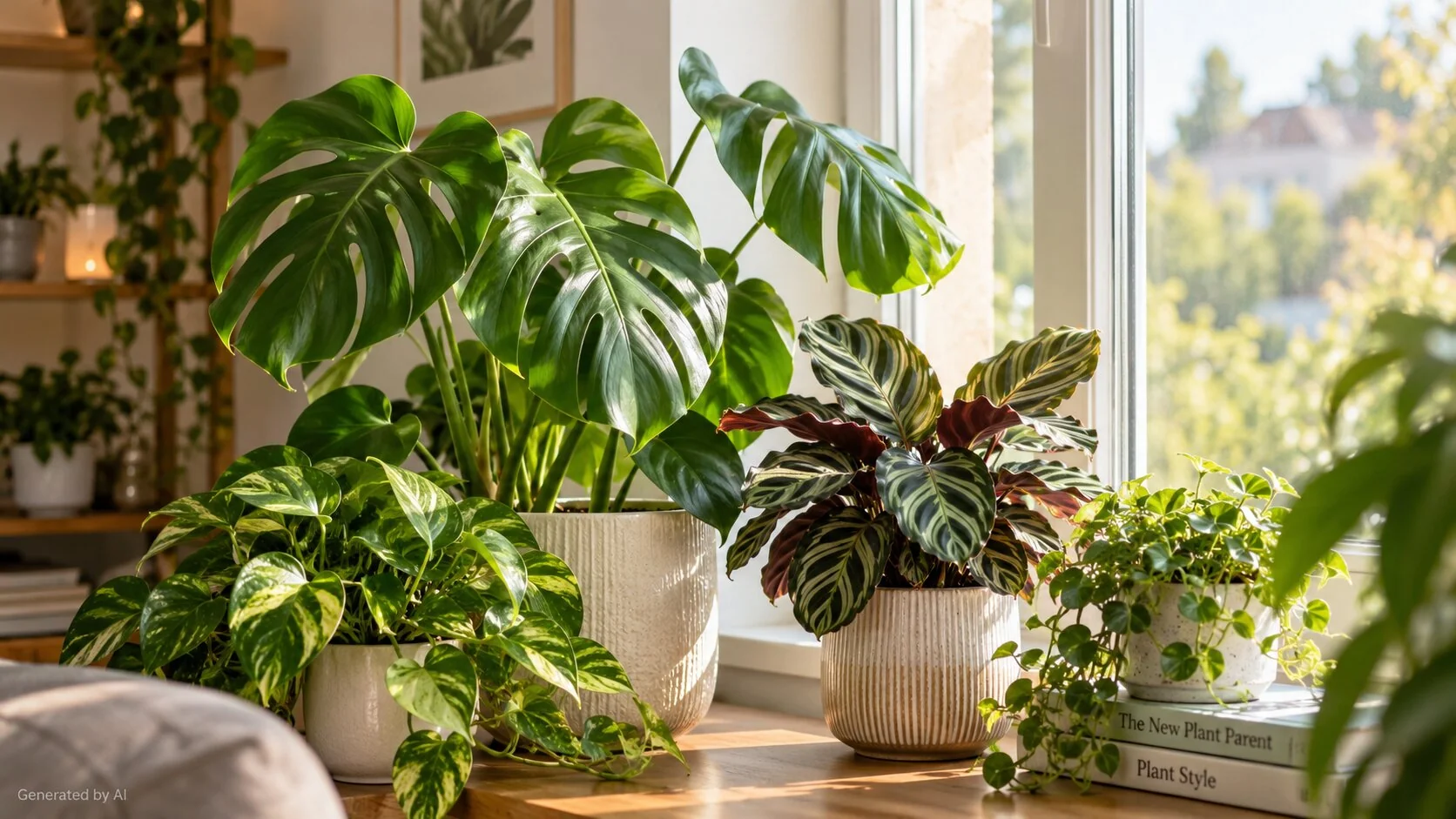
Many tropical foliage plants grow well with bright indirect light. The plant might sit close to a window with an open view of the sky, while a sheer curtain filters intense sun. Gentle early sun may also be tolerated by many species, but follow the individual plant's care needs.
Low light: tolerant does not mean happy in darkness
A low-light-tolerant plant still needs enough light to maintain healthy growth. Stretched stems, smaller new leaves, and a pot that stays moist unusually long can signal that the location is too dim. Move it closer to usable daylight rather than trying to compensate with extra fertilizer.
Full sun: useful for some plants, damaging for others
Rosemary, thyme, tomatoes, peppers, lavender, and many succulents generally need stronger light than shade-adapted foliage plants. Outdoors, full sun typically means six or more hours of direct sun. Indoors, a south- or west-facing windowsill can be hot, and a plant recently moved from shade may need gradual acclimation.
Which Window Is Best for Your Houseplant?
For homes in the Northern Hemisphere, window direction offers a starting point. Actual light also depends on buildings, trees, screens, curtains, overhangs, window size, and season. In the Southern Hemisphere, north- and south-facing exposures generally reverse.
| Window | Usual conditions | What to try |
|---|---|---|
| North | Generally the least direct sun. | Keep low-light-tolerant plants close to the glass; check for outdoor obstructions. |
| East | Gentler morning sun followed by indirect daylight. | A useful first choice for many tropical houseplants. |
| South | Usually strong and long-lasting daylight. | Try sun-loving plants or filter direct rays for sensitive leaves. |
| West | Direct afternoon or evening sun, sometimes intense. | Use for tolerant species; move sensitive foliage out of harsh beams. |
Distance from the glass matters
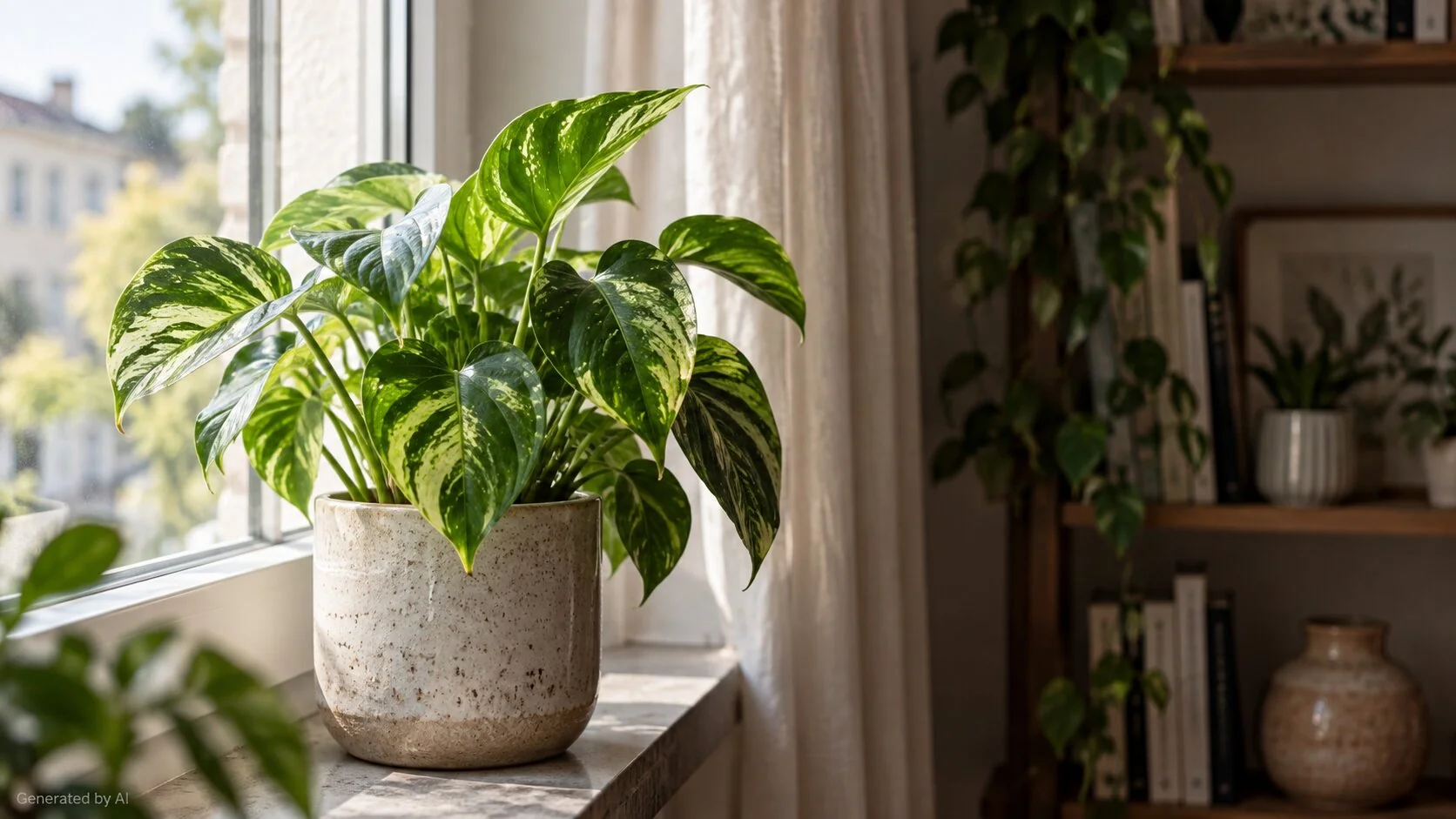
The same room can contain very different light conditions. A plant beside a bright window receives much more useful light than one across the room, even when the room feels bright. Start near the window and move back only when the plant needs less direct exposure or more space.
For a more detailed explanation of indoor light intensity, see Iowa State University Extension's houseplant care guidance.
Is Your Plant Getting Too Little or Too Much Light?
Look for patterns in new growth and check soil moisture before drawing conclusions. The same symptom can have several causes: yellow leaves or drooping, for example, can also signal watering or root trouble.
| What you notice | Possible light issue | What to do next |
|---|---|---|
| Long, weak stems; smaller new leaves | Light may be insufficient. | Compare the plant's recommended light with its current position; move it gradually closer to daylight. |
| Leaning toward the window | Uneven light exposure. | Check overall brightness and rotate the pot periodically if the species tolerates it. |
| Bleached or dry patches after strong sun | Sun scorch is possible. | Filter the rays or move to bright indirect light; existing damaged patches may remain. |
| Wilting in afternoon heat | Heat or intense sun may contribute. | Feel the potting mix first. Check temperature and whether the leaves recover later. |
| Soil stays wet much longer than before | Lower light may reduce water use. | Check drainage, root health, and soil before the next watering. |
If the symptoms persist after adjusting the light, use the Plant Problems symptom guide to check other possible causes rather than assuming every leaf change is sun damage.
How to Find the Right Spot in Four Steps
Read the plant's label
Identify whether it prefers low, medium, bright indirect, or direct light. A fern and a rosemary plant are unlikely to want the same exposure.
Check the actual spot
Observe morning, midday, and afternoon. Notice direct beams, shade, the view of the sky, and distance from the window.
Choose one adjustment
Move closer for inadequate light, or use a sheer curtain for excessive sun. Acclimate plants gradually when moving them into a much brighter position.
Watch new growth
Monitor growth and soil drying over the next few weeks. Act sooner if leaves are actively scorching or the plant shows severe stress.
Remember to reassess watering
A plant in brighter light may use water faster; in a dimmer spot, its pot may stay wet longer. Check the root zone instead of keeping a fixed schedule. The plant watering guide explains how to make that adjustment.
Quick examples by plant type
Begin with strong filtered daylight. Watch for scorched patches in direct afternoon sun.
Give most varieties brighter light, while checking the needs of the exact species and acclimating gradually.
Many culinary herbs need a bright window, but individual species have different moisture needs. For choosing and caring for herbs, see the Herbs & Natural Living guides.
Match full-sun or part-sun labels to the hours of direct exposure on your balcony or patio.
What Changes in Winter—and When Do Grow Lights Help?
Shorter days commonly reduce the total daylight available to indoor plants in winter, even though a lower sun angle may send direct rays deeper through some south-facing windows. Recheck the actual spot as the seasons change. Cooler conditions and slower growth may also change how quickly the potting mix dries.
If an otherwise suitable window no longer provides enough light, try moving the plant closer without letting leaves press against very cold glass. A purpose-made grow light can help when daylight is insufficient. Choose a fixture that covers the plant, follow its recommended height and timing, and observe new growth rather than relying on how bright the lamp appears to your eyes.
For related seasonal care, browse the Grow Guides collection.
Plant Light Checklist: Before You Move the Pot
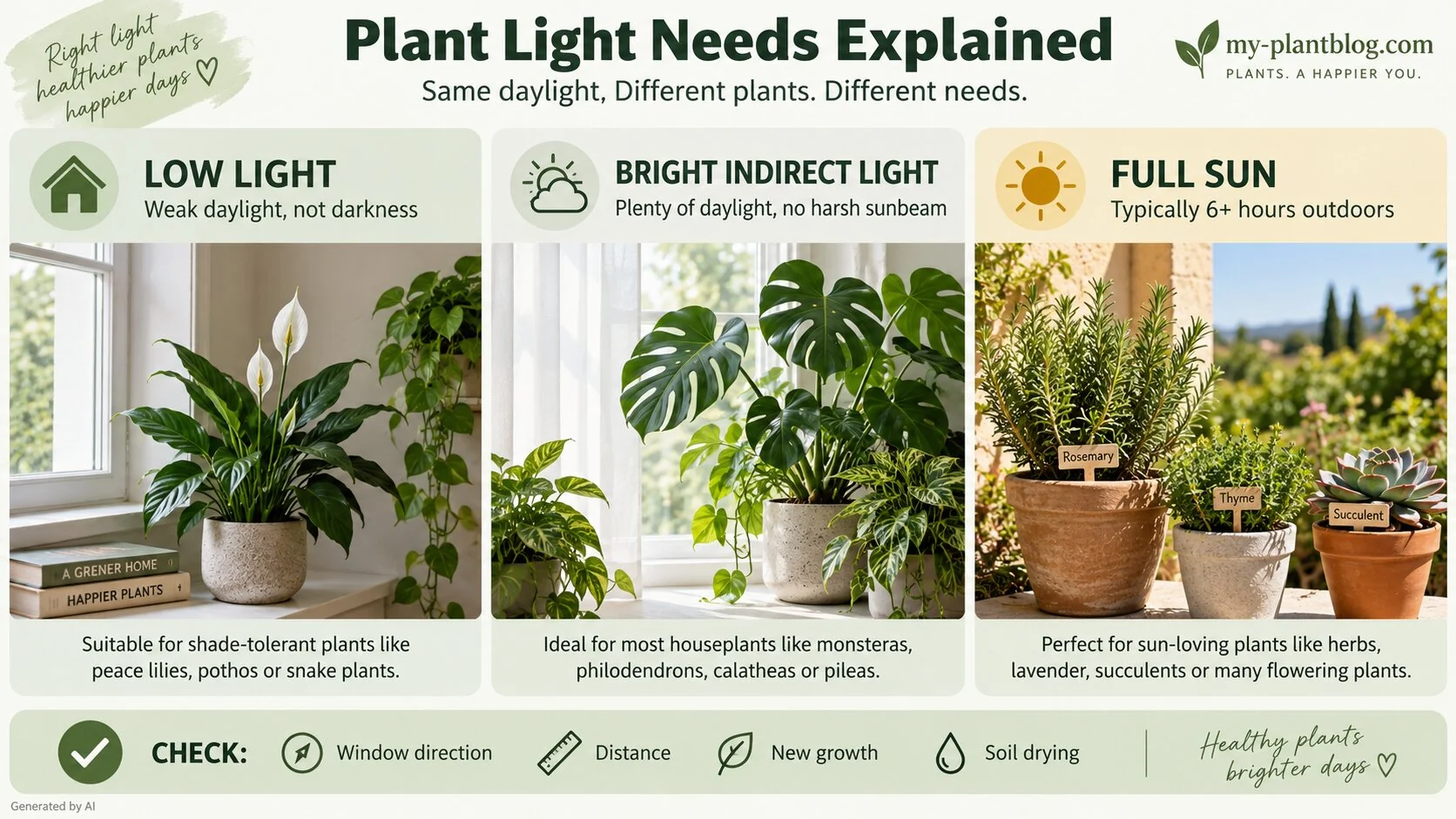
- Identify the plant and its preferred light level.
- Check daylight at the plant's actual position at several times of day.
- Notice direct sun, window direction, curtains, trees, and nearby buildings.
- Look for stretched new growth, scorch, or changes in soil drying time.
- Adjust the position or filter the light; change one factor at a time.
- Recheck the potting mix before watering and reassess the spot each season.
One practical rule to remember
Choose the plant for the light you have—or adjust the light for the plant you want. Start with the window, then use the plant's new growth to judge whether the location is working.
Plant Light Needs: Frequently Asked Questions
Can a plant grow in a room with no window?
Only if it receives enough suitable artificial light. Ordinary room lighting is often inadequate for sustained growth. A properly positioned grow light can provide the needed light.
Does bright indirect light mean no direct sun at all?
Not necessarily. Many plants that prefer bright indirect light can tolerate some gentle morning sun. The important distinction is avoiding more intense direct exposure than that species can handle.
Why is my plant leggy even though the room looks bright?
The plant may be too far from the window or may receive light for too few hours. Check its exact position and compare new growth after improving the light.
Should I move my houseplants in winter?
Sometimes. Shorter days can make a formerly good spot less useful. Reassess daylight and pot moisture, and avoid placing leaves against cold glass or in hot, dry heater airflow.
