
6 Easy Kitchen Herbs to Grow for Everyday Cooking
Want fresh herbs for pasta, salads, soups, or homemade drinks? Start with basil, parsley, chives, mint, thyme, or oregano. These six kitchen herbs can grow in containers on a sunny windowsill, balcony, or patio.
You don't need a large garden or an elaborate setup. Choose two or three herbs you already use, give them enough light, and check each pot before watering. The most important difference is that not every herb likes the same moisture level. This guide will help you choose a practical starter collection and keep it productive.
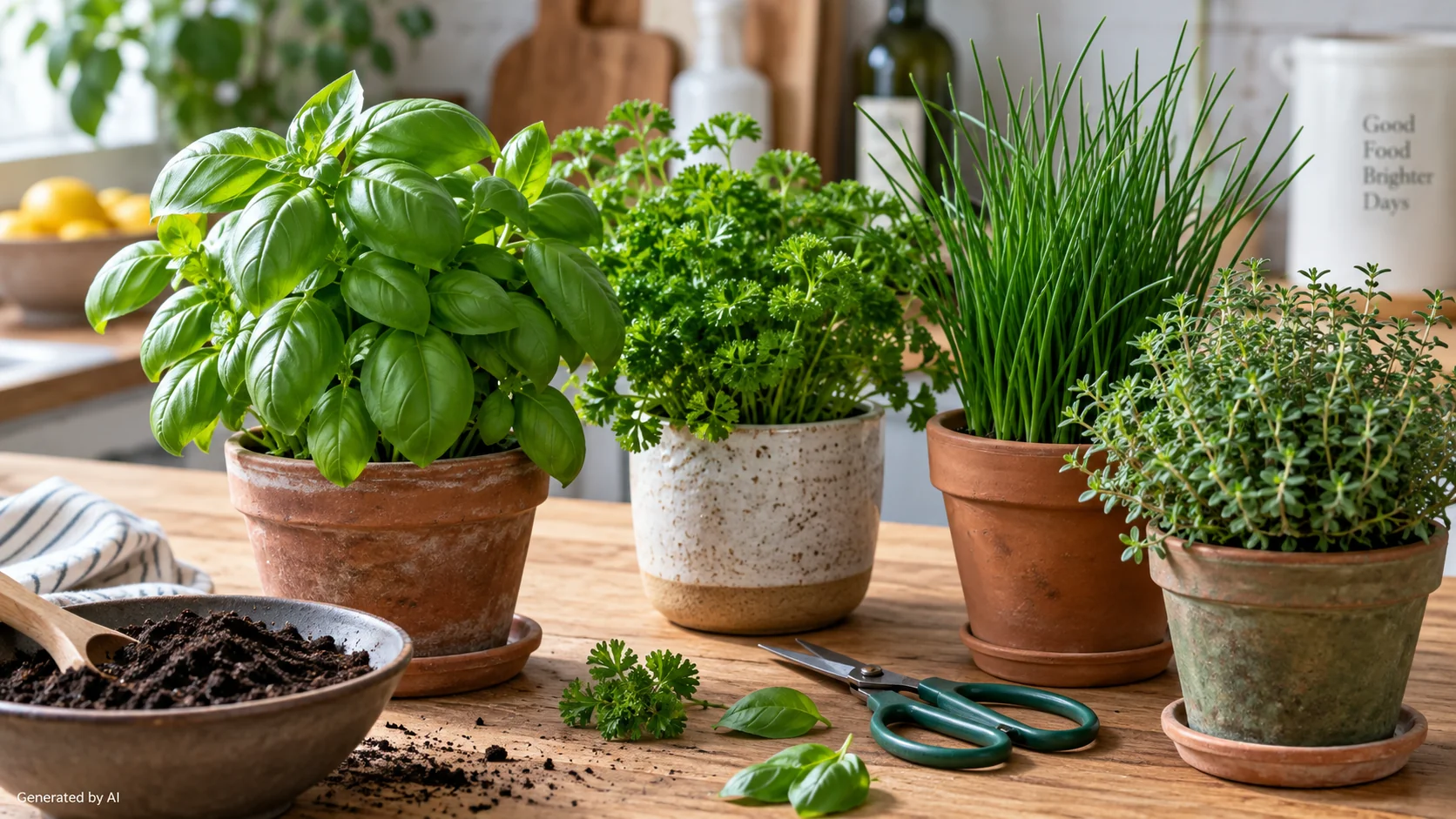
Which Kitchen Herbs Are Easiest to Grow?
Chives, parsley, and mint are approachable choices for a first herb collection, especially if your available light is limited. Basil is a useful choice for a warm, sunny spot.
Thyme and oregano are well suited to bright locations where their potting mix can dry somewhat between waterings. The right choice depends on what you cook, how much light reaches your space, and how you prefer to manage watering.
| Herb | Light | Watering | Kitchen use |
|---|---|---|---|
| Basil | Bright, sunny location | Keep moderately moist, without waterlogging | Pesto, pasta, tomatoes |
| Parsley | Bright light; tolerates some partial shade | Water when the upper mix begins to dry | Salads, soups, sauces |
| Chives | Sun to partial shade | Keep evenly moist, not soggy | Potatoes, eggs, dips |
| Mint | Bright light; some partial shade | Check frequently and avoid letting the pot dry completely | Drinks, salads, desserts |
| Thyme | Plenty of direct sun | Let the upper mix dry between waterings | Roasted vegetables, chicken, stews |
| Oregano | Plenty of direct sun | Allow some drying between waterings | Pizza, tomato sauces, Mediterranean dishes |
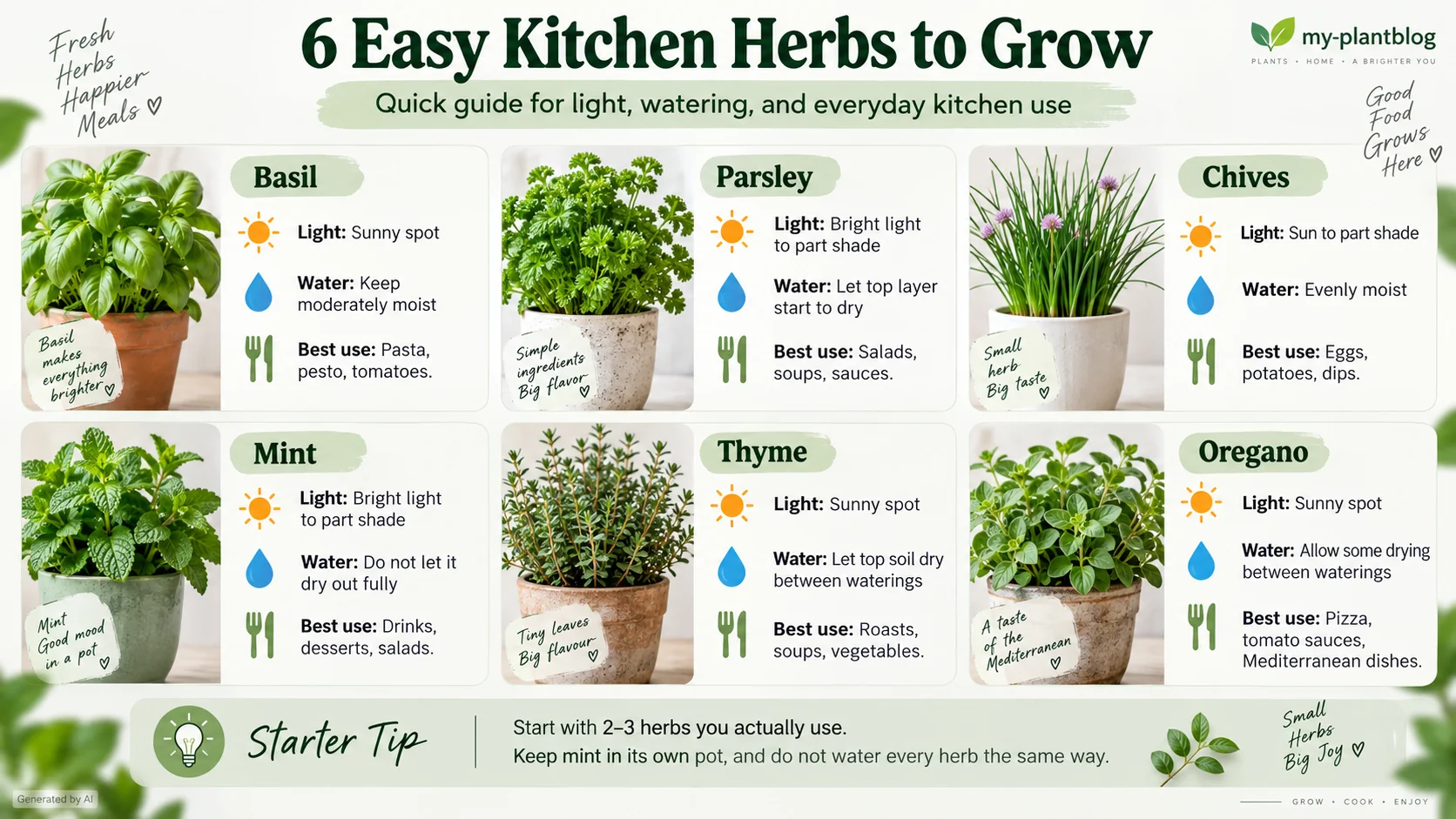
6 Easy Kitchen Herbs for Beginners
Each herb offers a different combination of flavor, growth habit, and care needs. You can grow them individually and expand your collection once you understand how your first pots behave.
Basil: Fresh Flavor for Pasta and Tomatoes
Basil is a natural choice if you make pesto, tomato salad, or pasta. It enjoys warmth and strong light. Give it a container with drainage and water when the upper potting mix begins to dry.
Once the plant is established, pinch stem tips just above a pair of leaves to encourage branching. Take modest harvests so the plant keeps enough foliage to grow.
Best kitchen use: Pesto, caprese salad, and fresh tomato dishes.
Parsley: A Versatile Everyday Herb
Parsley works well in salads, sauces, soups, and vegetable dishes. It can handle some partial shade, although a bright location supports stronger growth.
Keep the mix lightly moist without leaving the pot standing in water. Harvest established plants by removing mature outer stems near the base while allowing younger central growth to continue.
Best kitchen use: Fresh salads, garlic sauces, potatoes, and soups.
Chives: Compact and Easy to Harvest
Chives have a mild onion flavor and take up little room. They are useful on a windowsill, patio, or balcony and tolerate some partial shade.
Keep the potting mix from drying excessively. When the plant is established, cut a small portion of the leaves with clean scissors, leaving enough growth for the clump to recover.
Best kitchen use: Scrambled eggs, baked potatoes, dips, and cream cheese.
Mint: A Vigorous Herb for Drinks and Desserts
Mint is a useful choice for fresh drinks, fruit, and salads. It grows vigorously when it has sufficient light and moisture.
Give mint its own pot so its spreading roots do not crowd neighboring herbs. Check moisture regularly and harvest healthy stem tips to encourage branching.
Best kitchen use: Lemonade, yogurt sauces, fruit salads, and desserts.
Thyme: A Sunny-Spot Herb for Savory Cooking
Thyme has small aromatic leaves that work especially well in roasted and slow-cooked dishes. It prefers strong light and free-draining potting mix.
Allow the upper mix to dry before watering again. Harvest small amounts of tender growth rather than cutting deeply into old, woody stems.
Best kitchen use: Roasted vegetables, chicken, soups, and stews.
Oregano: Ideal for Pizza and Tomato Sauces
Oregano is a useful herb for Mediterranean-style cooking. Give it a sunny position and a container that drains freely.
Let the upper potting mix dry somewhat before watering. Trim healthy growing tips to keep the plant compact, but avoid stripping a weak plant.
Best kitchen use: Pizza, tomato sauces, roasted vegetables, and marinades.
How to Start a Small Kitchen Herb Garden
You don't need an expensive growing system. A few healthy plants, suitable pots, potting mix, and a location with enough light are a practical starting point.
1. Choose the Right Location
Observe how much sunlight reaches your window, balcony, or patio. Most culinary herbs grow best with several hours of strong light. A south- or west-facing window can work well, although nearby buildings, trees, and seasonal changes may reduce the actual light available.
If your herbs develop long, weak stems or unusually small new leaves, review their location. Our guide to understanding plant light needs explains the difference between direct sun and bright indirect light.
2. Choose Pots With Drainage Holes
Select containers that allow excess water to drain. A pot around 6 inches across can be a reasonable starting point for many small nursery herbs, but choose according to the plant's actual root system and expected growth.
Avoid placing a small root ball in a dramatically oversized container. More unused potting mix can remain wet for longer than the roots need.
3. Use Suitable Potting Mix
Use a lightweight, well-draining container potting mix rather than dense garden soil. For thyme and oregano, drainage is especially important.
Plant each herb at approximately the same depth it grew in its nursery pot. Water after planting when needed and allow excess water to drain away.
If you want to understand how drainage, root space, and potting mix work together, explore our beginner-friendly growing guides.
4. Begin With Two or Three Herbs
Choose plants that match your everyday cooking. A sunny kitchen could start with basil, thyme, and oregano. A space with slightly less direct light may be better suited to parsley, chives, and mint.
Keep each plant in its own pot at first. This makes it easier to notice changes in growth and moisture before expanding your collection.
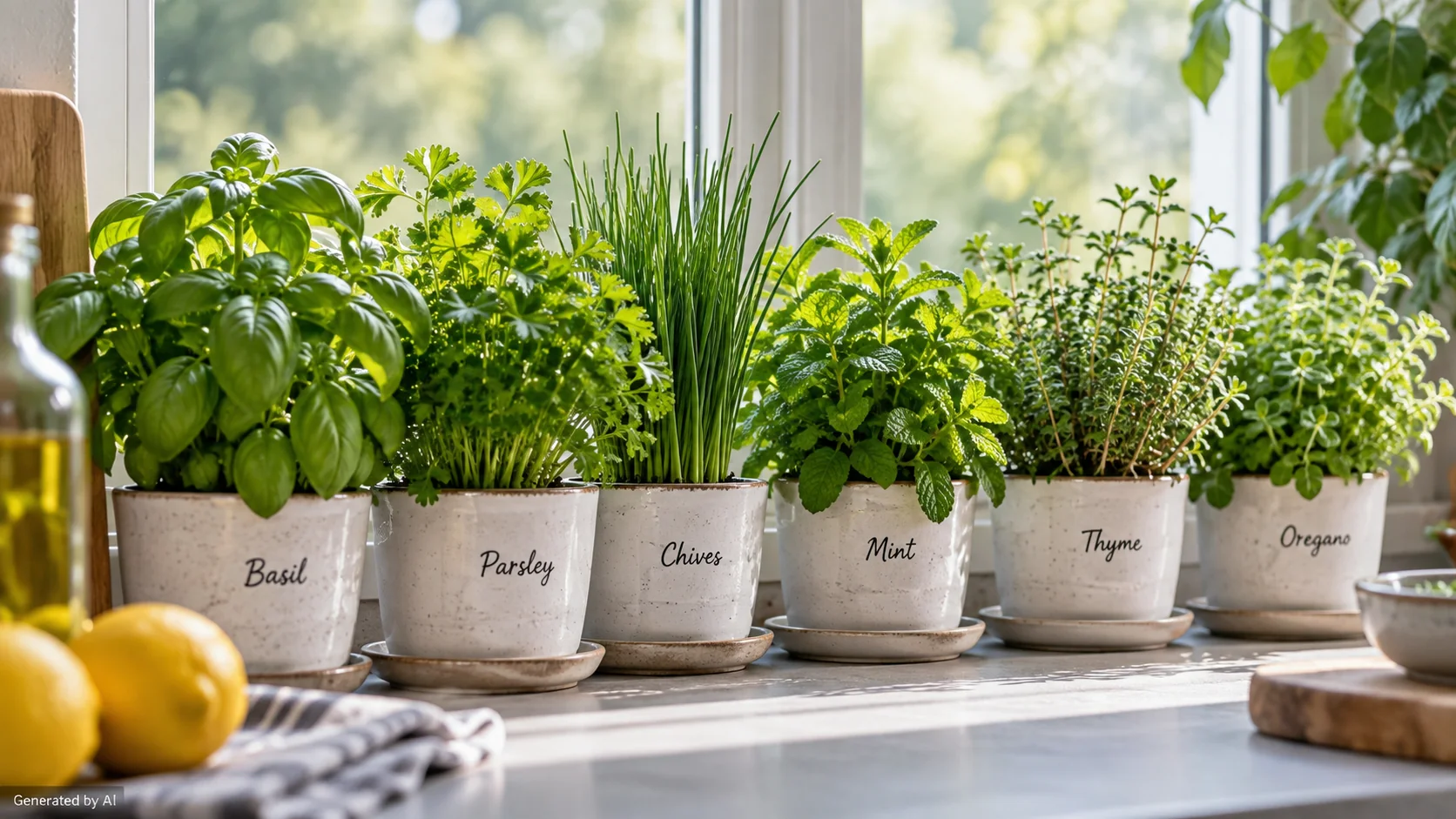
How to Care for Kitchen Herbs
A good herb-care routine begins with observation. Check light, soil moisture, drainage, and new growth before making changes. Avoid treating every herb as though it has the same needs.
Water According to the Herb
Feel the upper potting mix before watering. Basil, parsley, chives, and mint generally need closer moisture monitoring. Thyme and oregano prefer some drying between waterings.
When a plant needs water, water thoroughly enough for excess to drain out. Empty any standing water from the saucer afterward.
For a more detailed explanation, read our guide to checking when plants need water. It explains why light, pot size, season, and soil moisture matter more than a fixed watering schedule.
Adjust Care as the Seasons Change
Pots may dry faster during hot, sunny, or windy weather. In winter, lower light and slower growth often mean that indoor containers remain moist longer.
Check the plant and potting mix instead of keeping the same watering schedule throughout the year.
Feed Only When Necessary
Herbs growing actively in containers may benefit from occasional light feeding, depending on the potting mix and how long they have been growing in it.
Follow the fertilizer label and avoid overfeeding. If growth is weak, check light and root conditions before assuming fertilizer will solve the problem.
How to Harvest and Use Your Kitchen Herbs
Begin harvesting once the plants are established and growing actively. Small, regular harvests are often more useful than removing a large amount of foliage at once.
- Basil: Pinch healthy stem tips above a pair of leaves. Add fresh leaves to pesto or pasta.
- Parsley: Take mature outer stems. Chop the leaves for sauces, salads, or soups.
- Chives: Snip a portion of the leaves with clean scissors. Add them to potatoes, eggs, or dips.
- Mint: Harvest healthy tips. Use fresh leaves in drinks, desserts, or yogurt sauces.
- Thyme: Cut small tender sprigs. Use them in soups, roasted vegetables, or stews.
- Oregano: Snip healthy growing tips. Use fresh or dried leaves in tomato sauces and pizza.
What Should You Do With Extra Herbs?
Use tender herbs such as basil, parsley, chives, and mint fresh when possible. You can also freeze suitable clean herbs for later cooking.
Thyme and oregano are useful choices for drying. Dry clean, healthy plant material completely before sealing it in an airtight container.
Store dried herbs in a cool, dark, dry place to help protect their aroma. For more detailed growing, harvesting, and preserving advice, browse our herb-growing and preservation guides.
Common Kitchen Herb Mistakes to Avoid
Watering Every Pot Together
Different herbs and container sizes have different drying patterns. Check each pot separately.
Choosing a Spot With Too Little Light
A bright-looking room may still provide too little useful light. Watch for stretched, weak growth.
Planting Mint With Other Herbs
Mint spreads vigorously and can crowd neighboring plants. Keep it in its own container.
Harvesting Too Much Too Soon
Newly planted or stressed herbs need foliage to recover. Wait for active growth before taking larger harvests.
Kitchen Herb Growing FAQ
Can I grow kitchen herbs without a garden?
Yes. Basil, parsley, chives, mint, thyme, and oregano can grow in containers on a suitable windowsill, balcony, or patio. Match each plant to the available light and use containers with drainage holes.
Which kitchen herbs are good for a beginner?
Parsley, chives, and mint are useful starter choices. Basil works well in a warm, bright location, while thyme and oregano suit sunny conditions and well-draining mix.
Can basil and mint grow in the same pot?
They can have similar moisture preferences, but separate containers are usually easier to manage. Mint grows vigorously and can crowd the root space of basil.
Do kitchen herbs need direct sunlight?
Most culinary herbs grow best with plenty of light. Basil, thyme, and oregano particularly benefit from sunny positions. Parsley, chives, and mint can tolerate some partial shade, although indoor growth still depends on sufficient light.
Can kitchen herbs grow indoors during winter?
Yes, but lower daylight can slow growth and reduce harvests. Use your brightest suitable window or supplemental grow lighting when necessary. Check soil moisture carefully because pots may dry more slowly in winter.
Start With Herbs You'll Actually Use
A small kitchen herb garden can begin with just two plants. Choose herbs that fit your cooking, place them where they receive enough light, and learn how each container dries.
Once those plants are growing well, add another herb and enjoy fresh flavor in your everyday meals. A small, healthy collection is a useful place to start.
