
How to Grow Herbs on a Windowsill: A Beginner’s Guide
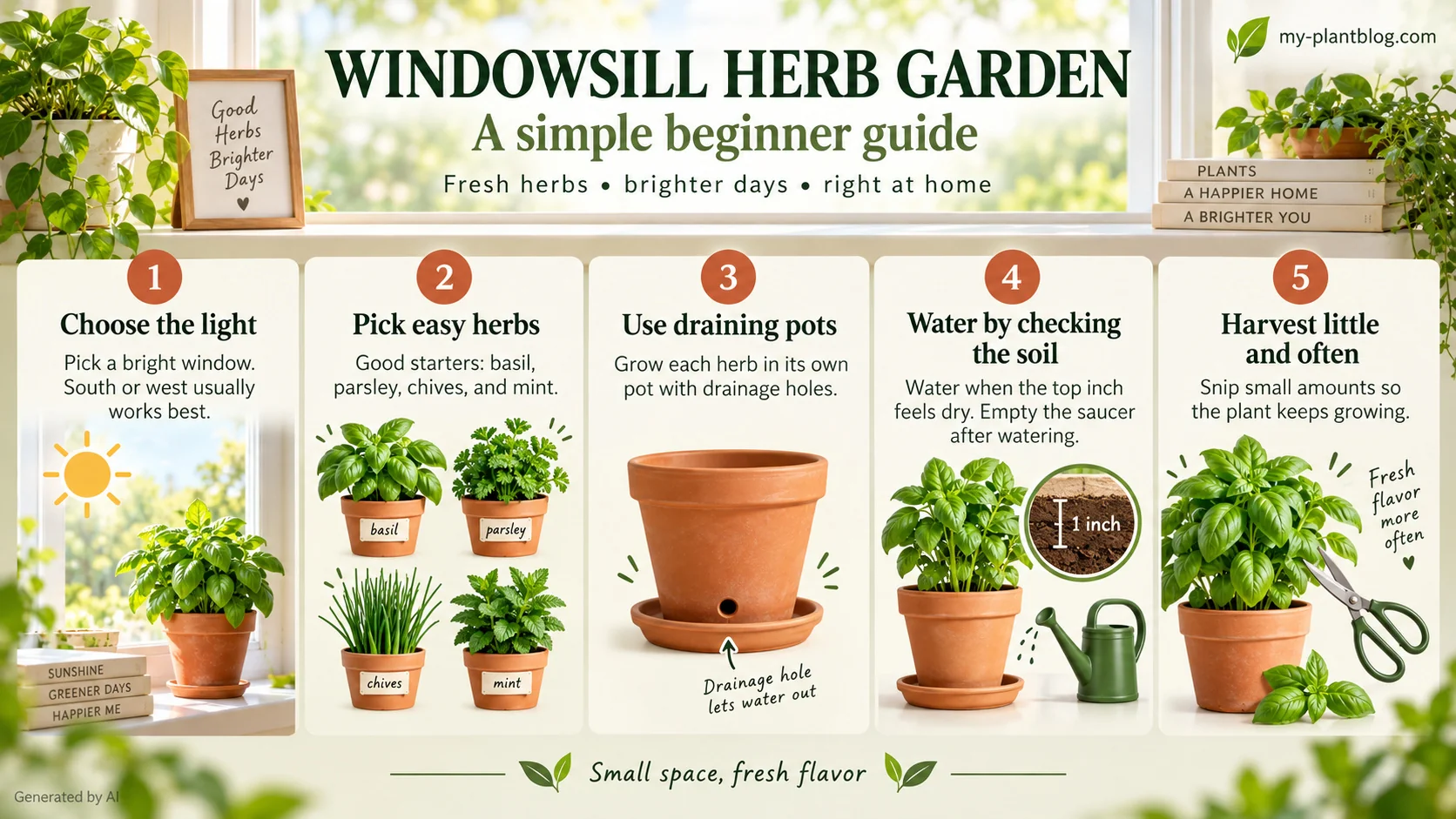
You can grow fresh kitchen herbs on a windowsill without a yard or a complicated indoor garden. Start with two or three herbs you actually cook with, choose the brightest suitable window, and plant each one in a pot with drainage. Check the potting mix before watering and take small harvests once the plants are growing well. The key is matching your herbs to the light you have—not assuming every sunny-looking sill will work for every plant.
Which Herbs Grow Best on a Windowsill?
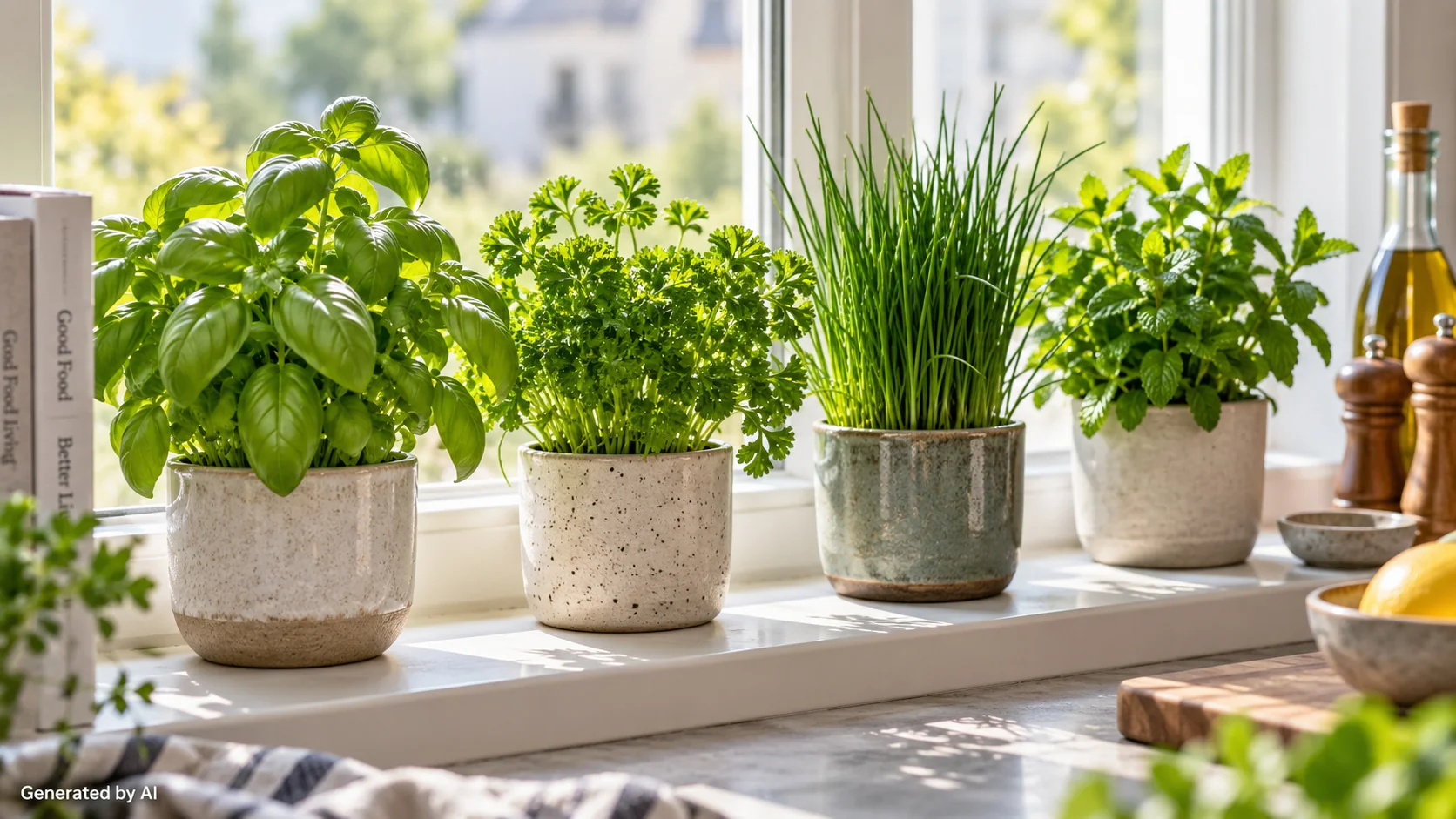
Chives, parsley, and mint are practical first choices for a reasonably bright window. Basil is a good option when you have stronger light and steady warmth. Thyme and rosemary need a particularly sunny spot and a faster-drying potting mix, so they may be less forgiving indoors.
Start with small, healthy plants if you want to cook with your herbs soon. Seeds also work, but germination and early growth require patience and enough light.
| Herb | Light and moisture | Beginner tip |
|---|---|---|
| Chives | Bright window; water when the upper mix starts to dry. | Snip a few leaves and let the clump regrow. |
| Parsley | Bright light; avoid letting the root ball stay completely dry. | Pick outer stems while leaving the center growing. |
| Mint | Bright light; prefers more consistent moisture. | Give it its own pot so it cannot crowd other herbs. |
| Basil | Strong light and warmth; keep the mix lightly moist, not soggy. | Pinch stem tips above leaf pairs once established. |
| Thyme and rosemary | Very bright light; let the mix dry further between waterings. | Keep them separate from moisture-loving herbs. |
Find the Right Window for Your Herbs
In the Northern Hemisphere, a clear south-facing window often gives the strongest light. East-facing windows offer gentler morning sun; west-facing windows can become hot in the afternoon. A north-facing window may not supply enough light for vigorous culinary herbs, particularly in winter. Nearby buildings, trees, curtains, and seasons can change the result.
- Watch the sill for a day: note when direct sunlight reaches the exact spot where the pots will sit.
- Keep herbs close to the glass: a shelf farther into the room can receive much less useful light.
- Check temperature: protect tender basil from cold drafts and avoid pressing leaves against hot or freezing glass.
- Watch for stretching: pale, long, weak stems often indicate that a plant needs more light.
If you're unsure how to read your room, our plant light guide explains window direction, direct sun, and bright indirect light.
Set Up a Simple Windowsill Herb Garden
1. Make sure the sill can hold the pots safely
Measure the available depth and leave space to open the window. A stable tray protects the surface and collects water, but empty it after watering. Keep pots away from edges where they might fall.
2. Choose individual containers with drainage holes
Use a pot only slightly larger than the plant's current root ball. Separate containers make it easier to give mint, basil, and rosemary different amounts of water. A decorative outer pot is fine as long as the inner pot drains and does not sit in standing water.
3. Use an appropriate container potting mix
Choose a fresh, loose mix labeled for container-grown edible plants. Avoid heavy garden soil indoors. A more freely draining mix suits rosemary and thyme; parsley and mint prefer moisture without waterlogging. Follow the plant and mix labels rather than using one recipe for every herb.
If you want to understand how potting mix, drainage, and container size work together, explore our beginner-friendly Grow Guides.
4. Plant at the existing soil level
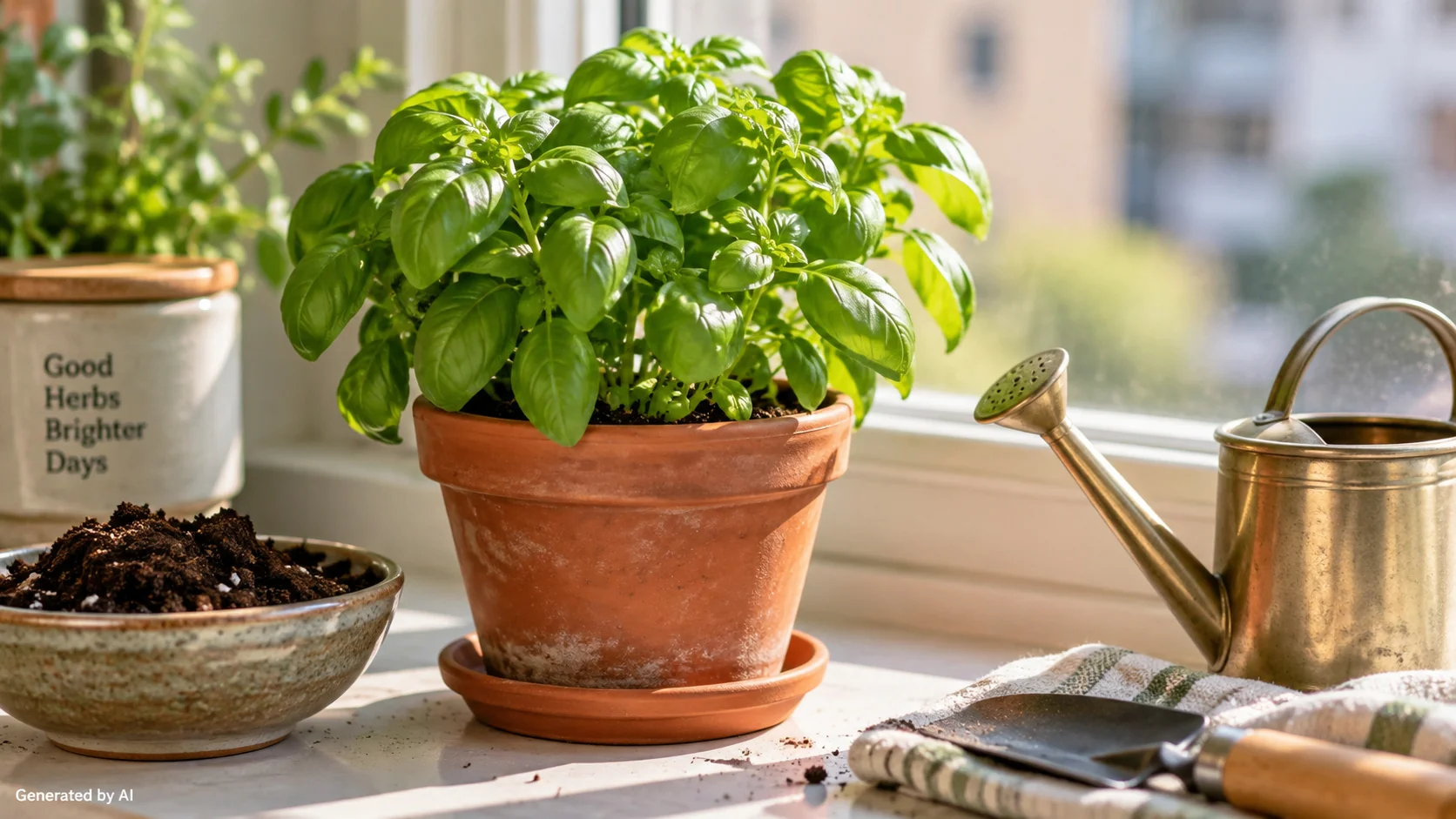
Gently loosen a tightly packed root ball if needed, set the plant at about its previous depth, and fill around the roots. Water until some drains out, then allow the pot to finish draining before placing it on the sill.
How Often Should You Water and Feed Windowsill Herbs?
There is no reliable watering schedule for every windowsill herb. The mix dries at different speeds depending on pot size, light, room temperature, plant growth, and season. Check each pot rather than watering the entire row automatically.
- For basil, parsley, and mint: check the upper layer regularly and water before the whole root ball becomes very dry.
- For rosemary and thyme: let the mix dry more between waterings, while avoiding prolonged severe drought.
- When watering: moisten the root ball thoroughly and let excess water escape. Empty the saucer afterward.
- When growth slows: check less often only if the pot stays damp longer; do not follow the same summer rhythm blindly.
For a more detailed moisture check, see how to tell when a potted plant needs water.
If plants are healthy and growing actively, use a fertilizer suitable for edible container plants according to its label. Do not add extra fertilizer to compensate for weak light or stressed roots.
Harvest Small Amounts So Your Herbs Keep Growing
Wait until newly potted herbs are established and producing healthy new growth. Take only what you need at first, leaving enough foliage for the plant to recover.
Basil and mint
Cut selected stem tips just above a healthy leaf pair to encourage branching. Avoid removing most of the leaves at once.
Parsley and chives
Pick mature outer parsley stems near the base. Snip chive leaves in small batches, leaving some growth in place.
Use clean scissors, and wash harvested culinary herbs before eating. Harvest only plants you can confidently identify as food-safe herbs.
Why Are My Windowsill Herbs Turning Yellow, Drooping, or Getting Leggy?
| What you see | What to check | First action |
|---|---|---|
| Long, pale stems | Weak light or a pot placed too far from the window | Move closer to suitable light; consider a grow light. |
| Yellow leaves and damp mix | Slow drying, poor drainage, or excess water | Pause watering, check drainage, and empty the saucer. |
| Drooping with dry mix | Root ball has dried too far | Water thoroughly and let the pot drain. |
| Crispy or bleached patches | Hot direct sun, dry mix, or contact with hot glass | Check moisture and provide gentler light if needed. |
| Sticky leaves or tiny insects | Pests on stems and leaf undersides | Separate the pot and identify the pest before treating. |
For broader symptom checks, visit the plant problems guide. Change one care factor at a time when possible, so you can see how the herb responds.
Can You Grow Herbs on a Windowsill in Winter?
Yes, but indoor growth may slow as days shorten. Give your herbs the brightest suitable location, keep tender plants away from cold drafts, and check moisture before watering. If herbs continue stretching or stop producing useful new leaves, an appropriately positioned grow light may help. Follow the light manufacturer's instructions for height and daily use.
Do not expect every herb to produce the same harvest in January as in summer. Keeping a smaller collection healthy can be more useful than trying to maintain too many struggling pots.
Your Windowsill Herb Garden Checklist
- Pick two or three culinary herbs you regularly use.
- Observe the actual light at the window before choosing plants.
- Use separate pots with drainage and a stable collecting tray.
- Check each pot's moisture before watering.
- Rotate containers occasionally if growth leans toward the light.
- Harvest modestly from healthy, established plants.
- Recheck the setup when seasons and indoor temperatures change.
Windowsill Herb Garden FAQ
What is the easiest herb to grow indoors?
Chives and parsley are sensible starting points for many bright windows. Mint is another option, but it needs its own pot. The best choice still depends on your actual light and how you water.
Can I grow basil on a north-facing windowsill?
It may survive for a while, but a north-facing window in the Northern Hemisphere often provides too little light for strong growth. A suitable grow light can help if no brighter window is available.
Can I plant all my herbs in one long planter?
You can group herbs with similar needs, but separate pots are easier for beginners. Basil and mint generally need a different moisture rhythm from rosemary and thyme.
Why do grocery-store herb pots die so quickly?
Some contain many crowded plants in a small volume of mix. Inadequate light, drying out, or staying waterlogged can make the problem worse. Choose healthy plants, check the roots and drainage, and give them suitable conditions.
Start With One Window and Two Herbs
Choose a couple of plants that suit your light, give each a draining pot, and learn how quickly the mix dries. Once they are producing healthy new leaves, expand only if you have room. For more ideas, explore our herb-growing and harvesting guides.
