
How to Care for Herbs: Basil, Rosemary, Mint & More
Learning how to care for herbs starts with one simple observation: not every herb needs the same treatment. Basil, mint, and parsley generally appreciate more consistent moisture, while rosemary, thyme, and oregano prefer soil that dries somewhat between waterings. Give each plant enough light, use a pot with drainage, and check the soil before reaching for the watering can.
Whether you grow herbs on a kitchen windowsill, a sunny balcony, or a patio, this guide will help you build a practical routine. You'll learn how to water, feed, prune, and harvest common culinary herbs without relying on a one-size-fits-all schedule.
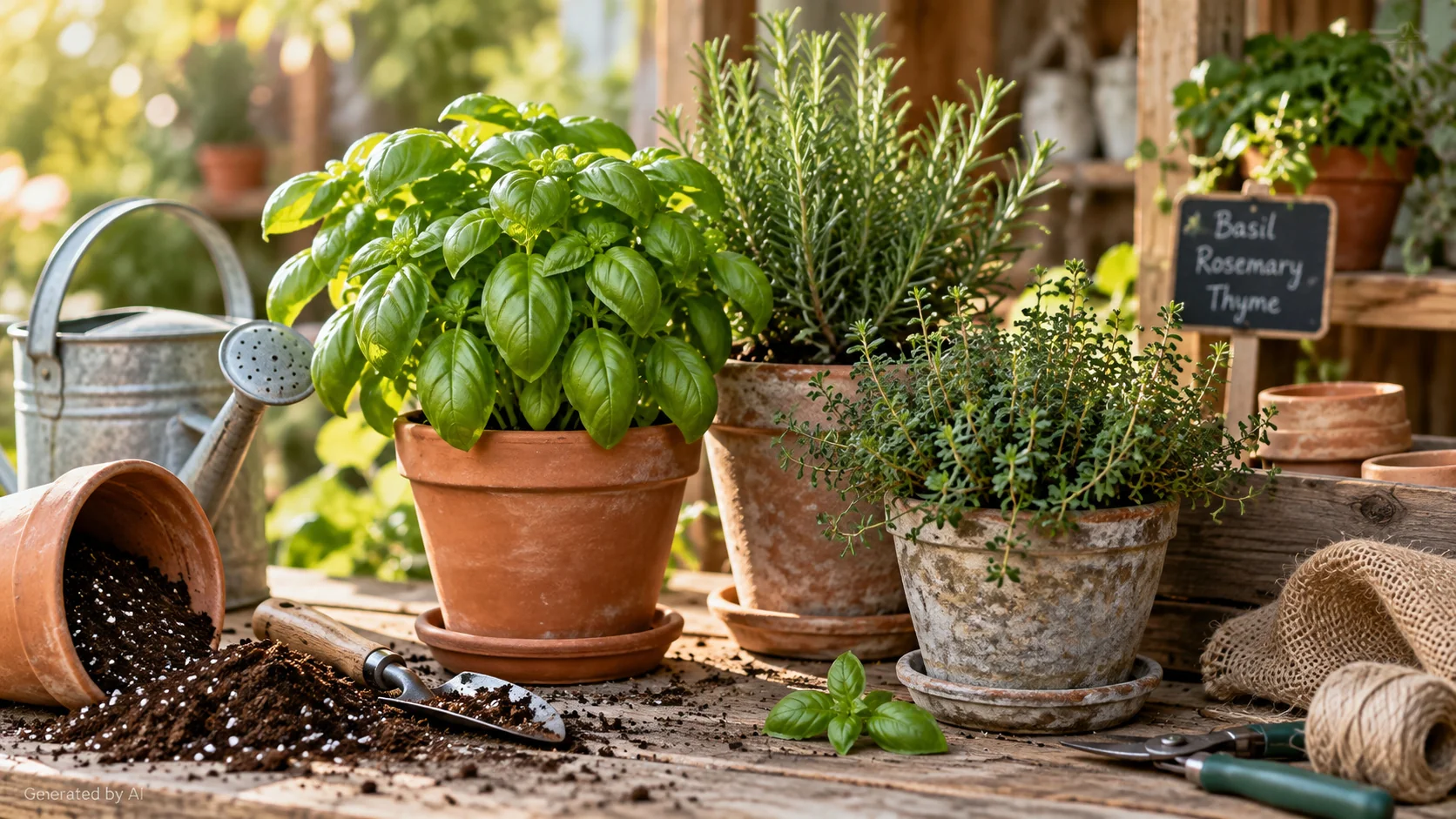
Herb Care at a Glance
Most kitchen herbs grow well when their location, watering routine, and container suit the individual plant. Start with these five care basics.
- Light: Choose a bright location. Many culinary herbs grow best with several hours of direct sun.
- Water: Check each pot rather than watering every herb on the same day.
- Drainage: Use containers with drainage holes and a suitable potting mix.
- Feeding: Fertilize lightly when plants are healthy and actively growing.
- Harvesting: Take modest, regular harvests and leave enough healthy growth for recovery.
How to Care for Different Herbs
Before planting several herbs in one container, compare their growing needs. Herbs can sit next to each other without sharing the same watering routine.
Basil and mint use moisture differently from woody, Mediterranean herbs such as rosemary and thyme. Separate pots make it easier to manage these differences.
| Herb | Light | Watering | Care tip |
|---|---|---|---|
| Basil | Bright light and plenty of sun | Keep evenly moist, not soggy | Pinch growing tips above a pair of leaves. |
| Rosemary | Full sun | Let the upper mix dry between waterings | Prioritize drainage and avoid wet roots. |
| Mint | Sun to partial shade | Maintain relatively consistent moisture | Grow in its own pot to contain spreading roots. |
| Thyme | Full sun | Allow the mix to dry somewhat | Use a free-draining mix and avoid overfeeding. |
| Oregano | Full sun | Let the mix dry somewhat between waterings | Trim leafy stems to encourage fresh growth. |
| Parsley | Sun to partial shade | Water before the root ball dries completely | Pick outer stems and leave the center growing. |
| Chives | Sun to partial shade | Keep moderately moist | Cut leaves near the base as needed. |
How Much Sunlight Do Herbs Need?
Most culinary herbs need strong light to produce healthy, compact growth. A sunny patio or balcony often provides more useful light than a shelf inside the kitchen.
Many herbs grow well with roughly four to six hours of direct sun or more, depending on the species and growing conditions. Rosemary and thyme are particularly well suited to sunny locations. Mint and parsley can tolerate some partial shade, especially in hot climates.
Growing herbs indoors
Place indoor herbs close to a bright window, preferably one with several hours of useful sunlight. A room may look bright to you while the plant receives too little light several feet from the glass.
If stems become long and weak or the plants lean strongly toward the window, consider a brighter position or a suitable grow light.
Move plants gradually when changing from sheltered conditions to strong outdoor sun. Sudden exposure can scorch leaves that have not adapted to direct sunlight.
Unsure whether your windowsill is bright enough? Our guide to plant light needs explains full sun, bright indirect light, window direction, and the signs of insufficient light.
How Often Should You Water Herbs?
There is no reliable weekly watering schedule for every herb. A basil plant on a hot balcony may need water much sooner than a rosemary plant in a larger, free-draining container.
Check the potting mix first. For moisture-loving herbs, water as the surface begins to dry while the root zone still has some moisture.
For rosemary, thyme, and oregano, allow more of the mix to dry between waterings without leaving a stressed plant completely dehydrated.
A simple three-step moisture check
- Feel the soil. Check the surface and slightly below it. Do not judge the entire pot by a dry-looking surface alone.
- Lift the container. A pot often feels noticeably lighter as its mix dries. Compare its weight before and after watering.
- Water when needed. Moisten the root ball thoroughly and let excess water escape through the drainage holes. Empty standing water from the saucer.
Should you water herbs every day?
Not automatically. Small outdoor containers can dry quickly during hot or windy weather, so a daily moisture check may be appropriate.
During cool, cloudy weather or slower winter growth, the same pot may stay moist considerably longer. Indoor heating, container size, and the amount of foliage also affect how quickly the mix dries.
For more detailed guidance on moisture checks, overwatering symptoms, and outdoor containers, see How Often Should You Water Plants?
Choose the Right Pots and Soil for Herbs
Containers should have drainage holes and enough space for the plant's roots. Very small nursery pots can dry quickly, while unnecessarily large pots may retain more moisture than a small root system can use.
What potting mix should you use?
Start with a quality, loose container potting mix rather than heavy garden soil. For Mediterranean herbs, a free-draining blend with suitable mineral components can help reduce prolonged wetness.
Leafy herbs generally benefit from a mix that retains enough moisture without becoming waterlogged. Match the growing medium to the plants you are growing.
When should you repot grocery-store herbs?
Check the roots, drainage, and overall condition first. Grocery-store herbs are sometimes crowded together in small pots.
If roots are densely packed or the container dries unusually fast, moving the plant into a slightly larger pot may help.
Avoid tearing apart a weak plant unnecessarily. If you divide a crowded clump, handle the roots gently and give the transplants time to settle before harvesting.
If you would like to understand how drainage, root space, and different growing media work together, explore our Grow Guides for Healthy Plants.
Do Herbs Need Fertilizer?
Container herbs may benefit from occasional light feeding while growing actively, but they rarely need heavy fertilization.
Follow the fertilizer label and adjust to the plant's condition and growth rate. A modest feeding approach is generally suitable for many culinary herbs.
If your herb is struggling because of soggy soil, poor drainage, or insufficient light, fertilizer is unlikely to solve the underlying problem. Correct the growing conditions first.
How to Harvest Herbs Without Stunting Growth
Harvest healthy plants regularly, but avoid removing too much foliage in one session. Leave enough leaves and growing points for the plant to recover.
Basil and mint
Cut suitable stems just above a healthy pair of leaves when possible. This allows side shoots to develop.
For basil, removing flower buds can help maintain leaf production when that is your goal.
Rosemary, thyme, and oregano
Snip tender, leafy growth rather than cutting deeply into old, bare woody stems. Harvest conservatively from young or slow-growing plants.
Parsley and chives
Pick outer parsley stems while leaving the central growth intact. Cut chive leaves close to the base, allowing new leaves to emerge.
What should you do with extra herbs?
If your plants produce more than you can use fresh, drying is one practical way to preserve part of the harvest.
Harvest clean, healthy foliage, choose a suitable drying method, and make sure the leaves are completely dry before storing them in airtight containers.
Our Herbs & Natural Living collection includes additional guides to harvesting, drying, storing, and using homegrown herbs.
Adjust Herb Care Through the Seasons
Light, temperature, weather, and active growth all influence how quickly herbs use water. Adjust your routine as conditions change.
| Season | What changes? | What should you do? |
|---|---|---|
| Spring | Light and active growth increase. | Check roots, refresh tired mix when needed, and resume appropriate feeding. |
| Summer | Heat and wind can dry pots quickly. | Check moisture more often and protect tender herbs from extreme heat. |
| Fall | Days shorten and temperatures decline. | Harvest usable foliage and plan frost protection for tender plants. |
| Winter | Growth and water use may slow. | Prioritize adequate light, check moisture carefully, and avoid unnecessary feeding. |
Basil is sensitive to cold and frost. Rosemary, thyme, and other perennial herbs vary in cold hardiness by species, variety, and climate.
Potted roots can also be more exposed to freezing temperatures than roots in the ground.
Common Herb Problems and What to Check First
A stressed herb does not always need more water or fertilizer. Use the visible symptoms to decide what to inspect before making changes.
| What you notice | Possible cause | First action |
|---|---|---|
| Yellow leaves and soggy mix | Excess moisture or root stress | Check drainage and allow appropriate drying. |
| Dry, crispy leaves | Underwatering, heat, or sun stress | Check moisture and actual sun exposure. |
| Long, weak stems | Insufficient light or crowded growth | Assess the location and available light. |
| Sticky or distorted new leaves | Possible insect pests | Inspect shoots and leaf undersides closely. |
| Little new growth | Season, light, roots, or another stress factor | Check the growing conditions before feeding. |
If your herb is yellowing, wilting, or showing possible pest damage, use our Plant Problems guides to narrow down the likely cause before choosing a treatment.
Your Simple Herb Care Checklist
You do not need a complicated routine. Use these checks to keep your herbs growing without making several unnecessary changes at once.
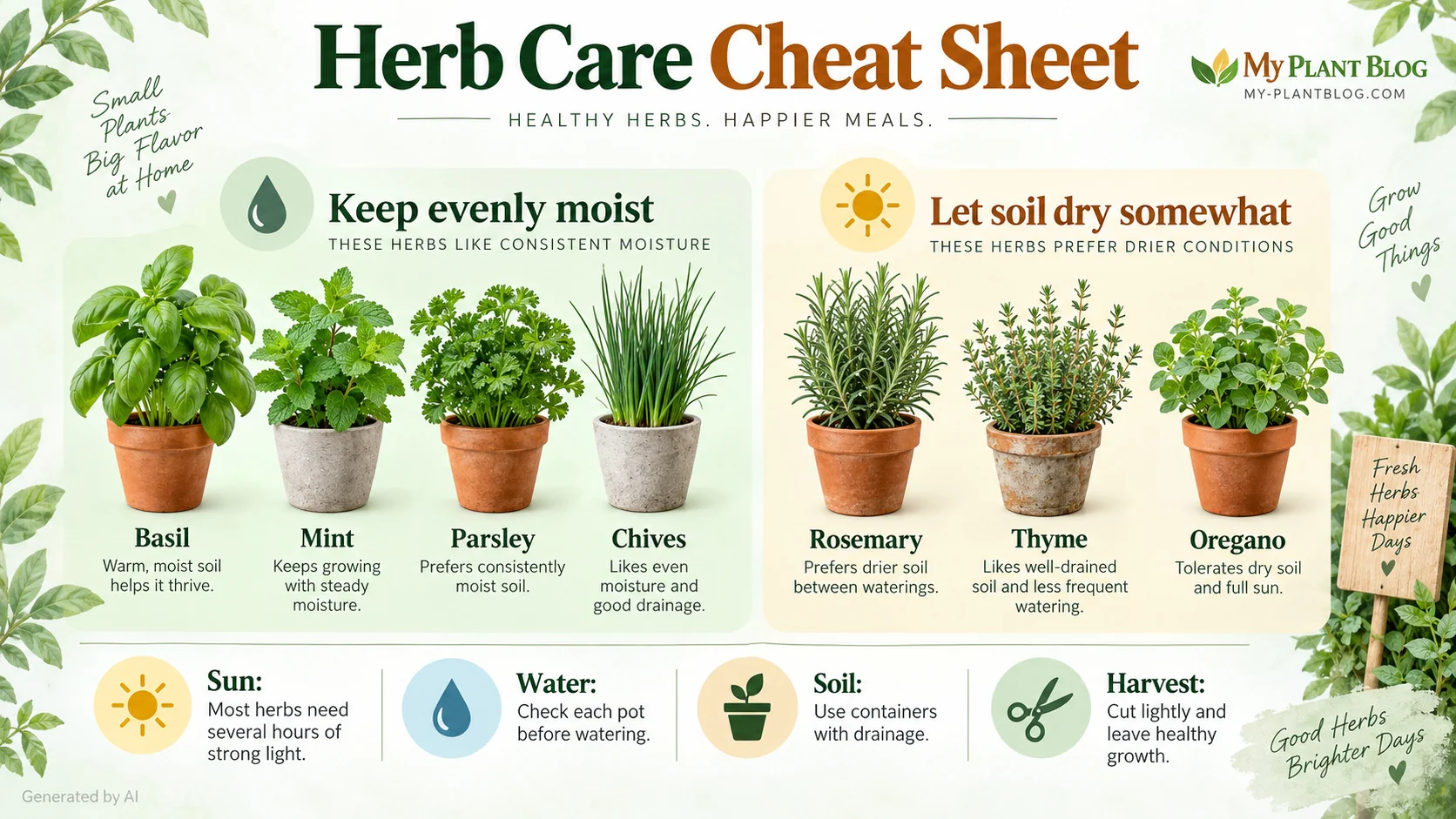
Before you water or harvest
- Identify each herb and its light preference.
- Check the soil before watering individual pots.
- Make sure drainage holes are clear.
- Notice how quickly each container dries.
- Inspect new growth and leaf undersides for pests.
- Harvest modestly from healthy plants.
- Adjust care when light, weather, or growth changes.
Herb Care FAQ
Can basil and rosemary grow together?
They can grow near each other, but separate pots are generally easier to manage. Basil prefers more consistent moisture, while rosemary needs excellent drainage and more drying between waterings.
How do I keep supermarket herbs alive longer?
Give them enough light, check whether the pot drains, and water according to the soil's condition. If the roots are crowded, consider repotting or carefully dividing a healthy plant.
Can herbs grow indoors all year?
Some herbs can grow indoors year-round with sufficient light and suitable temperatures. Growth may slow during winter. A grow light can help where natural daylight is inadequate.
Why does my rosemary keep dying?
Persistently wet soil, poor drainage, low light, and extreme temperature changes are possible causes. Check the root environment and growing conditions before watering or fertilizing again.
Should I remove herb flowers?
It depends on your goal. Removing flower buds from basil can encourage continued leaf production. Leaving flowers can benefit pollinators and allow some herbs to produce seed.
Build a Herb Garden That Fits Your Space
Start with two or three herbs you already use in your kitchen. Choose a suitable location, keep incompatible watering needs in separate containers, and let the plants guide your routine.
Once your herbs are growing well, explore more ideas for choosing, harvesting, drying, and storing homegrown herbs in our Herbs & Natural Living hub.
