
Plant Tracker: Track Watering, Growth, Light & What Helps
A simple plant tracker helps you remember more than the last time you watered. Use it to record potting-mix moisture, new growth, leaf changes, light, fertilizer, repotting, pest clues, and what happened after you changed something. Over time, those short notes can reveal useful patterns and make everyday plant care easier to understand.
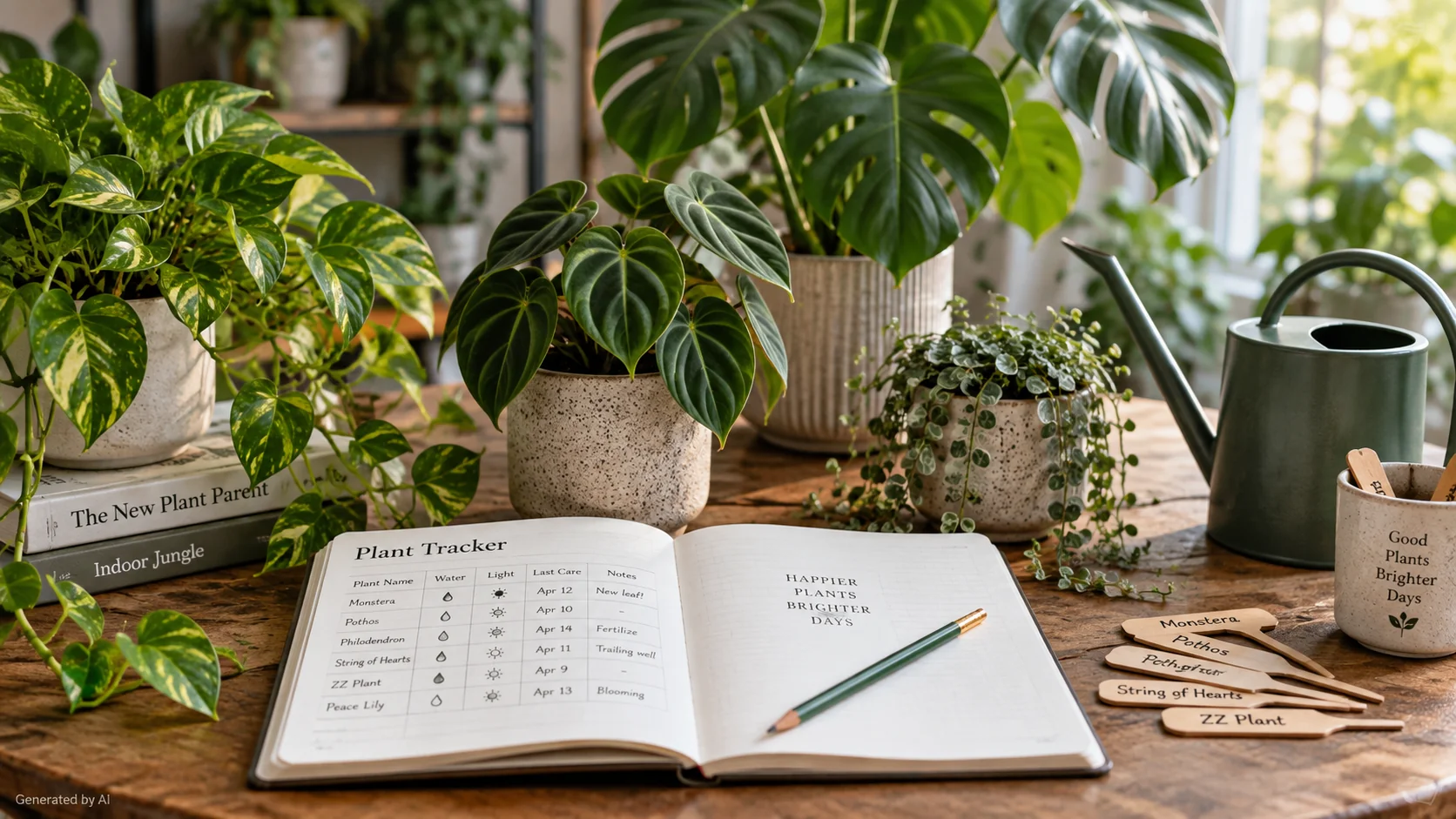
A Plant Tracker Turns Random Care Into Useful Patterns
You water a plant. A few days later, one leaf turns yellow. Then you move the pot closer to a window. A week later you fertilize. Somewhere along the way you notice new growth, another damaged leaf, or tiny speckles on the foliage.
After several weeks, remembering exactly what happened first becomes surprisingly difficult. A plant tracker solves that problem by creating a short history of the plant: what you noticed, what you changed, and what happened afterward.
It also makes troubleshooting more useful. Instead of reacting to one isolated symptom, you can compare that symptom with recent watering, light changes, repotting, fertilizer, or other changes in the plant's growing conditions.
A tracker can remind you to inspect a plant, but it should not automatically tell you to water it. Potting mix, light, temperature, season, container size, root growth, and the plant itself can all change how quickly moisture is used.
If watering is the part you find hardest to judge, the guide to how often plants actually need water explains why checking the soil and the plant is more useful than relying on one fixed watering day.
You can also browse the Plant Care Resources section for more practical plant-care guides and reference tools.
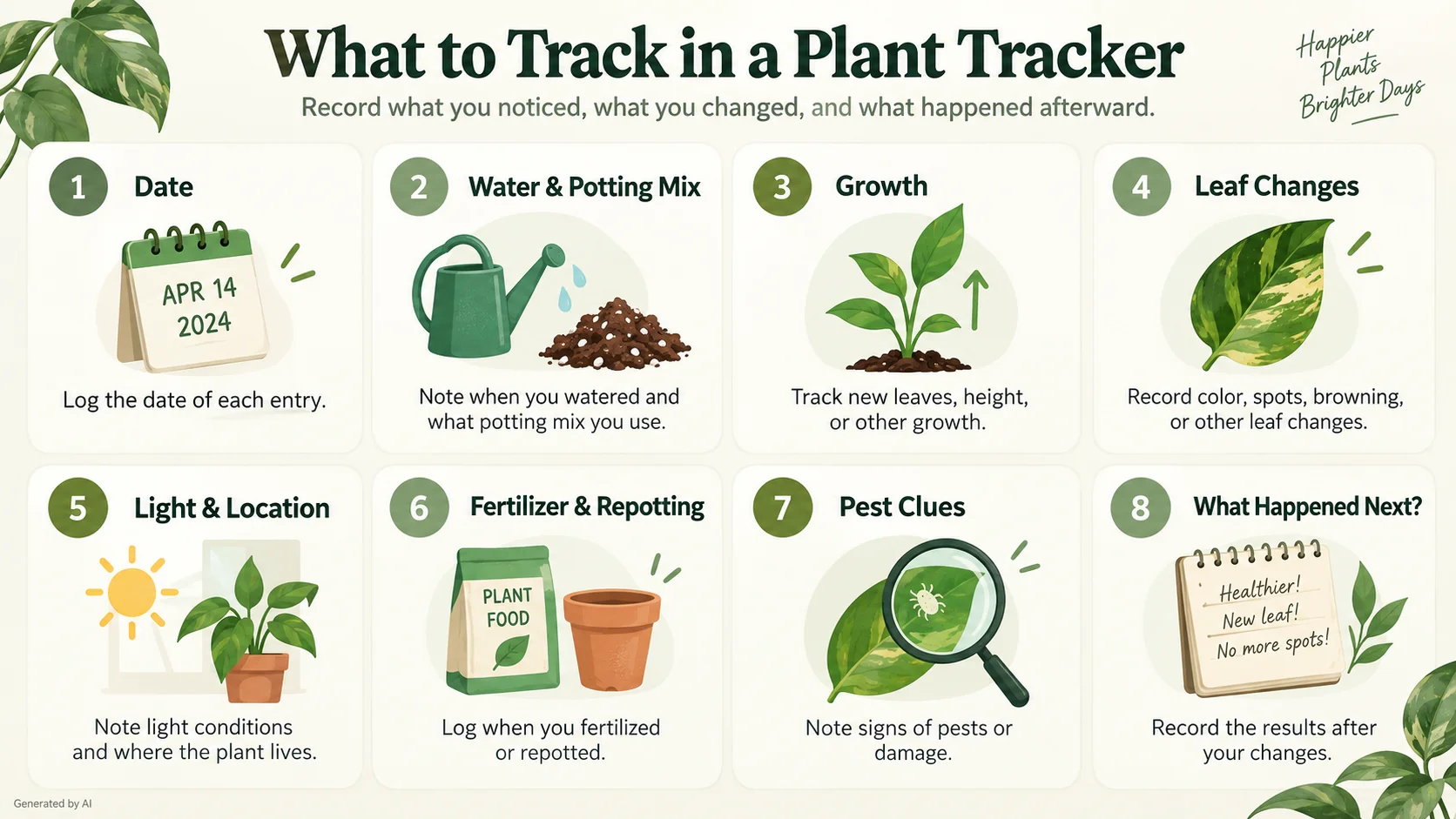
What Should You Track for a Plant?
You do not need to record everything. A short entry you will actually maintain is more useful than a complicated journal you stop updating after a week.
| What to track | What to record | Why it helps |
|---|---|---|
| Date | Date each meaningful observation or care change. | Creates the timeline that makes the rest of the tracker useful. |
| Water & Potting Mix | How moist the mix felt, whether you watered or waited, and unusual changes in drying time. | Shows whether the plant's normal watering pattern is changing. |
| Growth | New leaves, shoots, flowers, stem growth, or noticeably slower growth. | Creates a useful baseline for healthy development. |
| Leaf Changes | Yellowing, brown tips, curling, spots, damage, or texture changes. | Makes it easier to see whether a symptom is isolated or spreading. |
| Light & Location | Moves between windows, shelves, patios, balconies, or other growing positions. | Helps connect later growth or leaf changes with a change in light. |
| Fertilizer & Repotting | Fertilizer dates, products, repotting, container changes, root observations, and potting-mix changes. | Prevents important care events from becoming guesswork later. |
| Pest Clues | Webbing, sticky residue, visible insects, speckling, or cottony material. | Helps you compare whether a suspicious problem is spreading or improving. |
| What Happened Next | The result after enough time has passed to observe the plant. | Turns a list of care tasks into a useful plant-care history. |
Do not stop at “watered,” “fertilized,” or “moved plant.” Return later and record whether the plant stayed stable, declined, produced new growth, or showed another useful change.
A Simple Plant Tracker Template
A useful entry can fit in a single row. You can recreate this layout in a notebook, spreadsheet, printable page, or ordinary digital note.
| Date | What I noticed | What I did | What happened next |
|---|---|---|---|
| May 3 | Potting mix still damp below the surface. | Waited instead of watering. | Checked again three days later. |
| May 6 | Mix drier and pot noticeably lighter. | Watered thoroughly and let excess drain. | Leaves remained firm. |
| May 13 | New leaf opening; no additional yellowing. | No major care change. | Continued observing. |
“One older lower leaf turned yellow” is more useful than “plant is dying.” Specific observations make later comparisons much easier.
How to Use Your Plant Tracker Without Turning It Into Homework
For many plants, one regular weekly check is enough to keep the tracker useful. That does not mean watering, fertilizing, or changing something every week. It simply means looking.
Look at the whole plant
Notice posture, leaf color, new growth, damaged foliage, and anything that looks different from the previous check.
Check the root-zone conditions
Feel the potting mix when appropriate and notice whether the container is drying faster or more slowly than before.
Think about recent changes
Was the plant moved? Did seasonal light change? Was it repotted or fertilized? Did indoor heating, summer heat, or another environmental condition change?
Write down only what matters
A short sentence is enough. A healthy, stable plant does not need a detailed daily diary.
Check the result later
When you make a meaningful change, return after enough time has passed to observe the plant and record what happened.
A plant that dries quickly during brighter months may behave very differently when indoor light and growth slow in winter. If the same container starts staying moist much longer, compare your notes with the winter houseplant watering guide .
Track Watering Conditions, Not Just Watering Dates
A date alone tells you when water was added. It does not tell you whether the plant actually needed it.
Add one short observation whenever it is useful:
- Top layer dry but potting mix still slightly moist deeper down.
- Container noticeably lighter than at the previous check.
- Potting mix still damp, so watering was skipped.
- Container dried much faster after several warm, bright days.
- Water drained normally from the container.
Over time, those observations help you understand how that particular plant behaves in that particular pot and location.
For a broader explanation of moisture, container size, season, light, weather, and active growth, read How Often Should You Water Plants?
If the watering pattern changes noticeably, look at the rest of the root environment too. The guide to choosing the right potting mix explains how drainage, aeration, and moisture retention affect a container.
If roots have filled the container or drying behavior has changed after a long period in the same pot, check the signs in When to Repot Houseplants before automatically moving the plant into a larger container.
If the potting mix remains wet for much longer than expected and the plant develops yellowing, soft growth, an unpleasant smell, or root problems, do not automatically add more water. Review the guide to overwatering and root rot and check the entire root-zone situation.
Leaf and Growth Changes Become More Useful With a Timeline
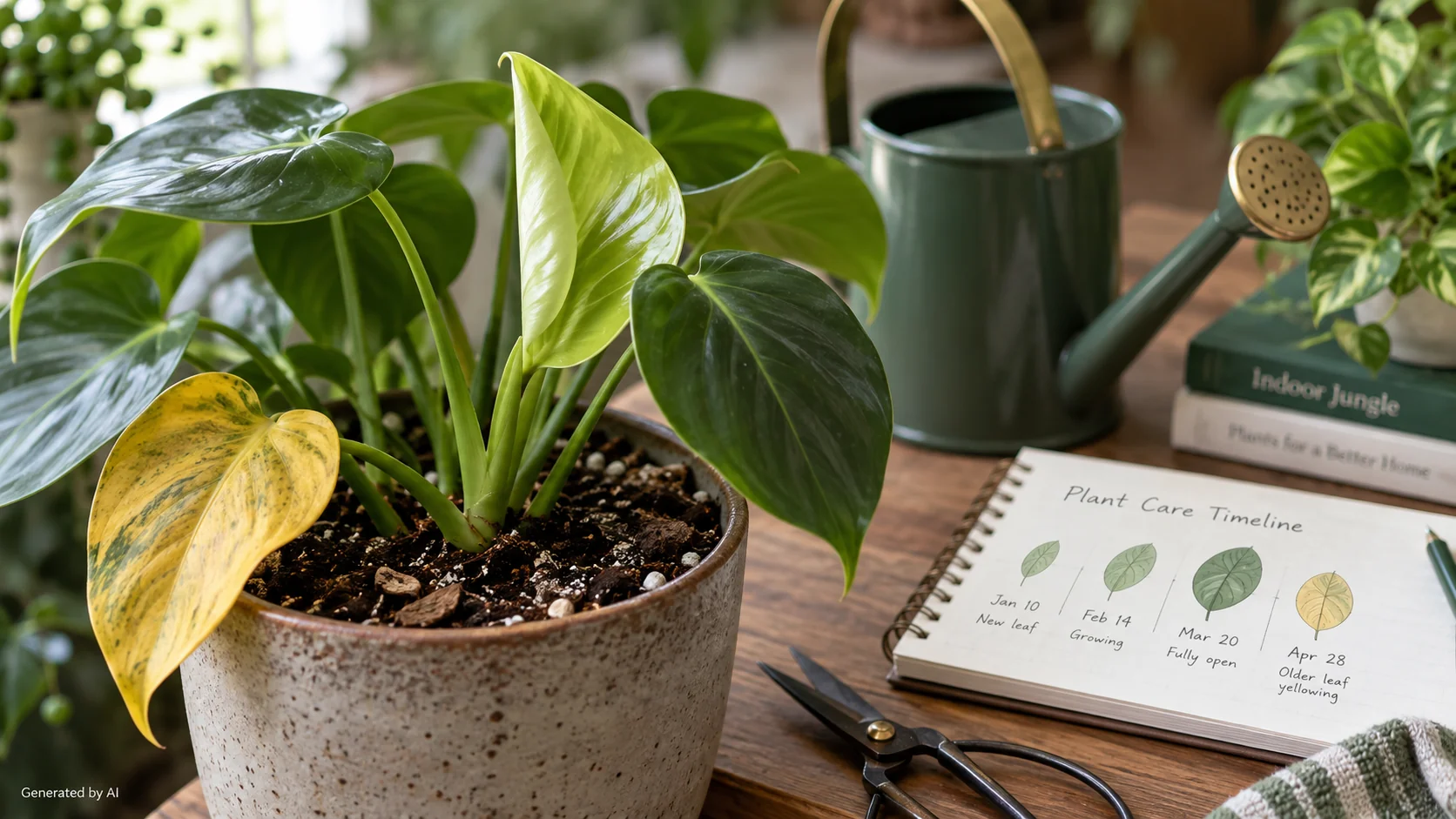
A single yellow leaf, curled edge, or smaller new leaf rarely explains the whole problem. A tracker gives the symptom context.
Too Vague
Yellow leaf.
More Useful
One older lower leaf yellow. Potting mix still damp five days after watering. No additional yellow leaves yet.
Next Check
Compare whether the symptom remains isolated, spreads to other leaves, or changes after the root zone dries.
If yellowing, drooping, brown tips, wet soil, or other symptoms continue, use the Plant Problems guides to start with the visible clue rather than assuming one symptom proves the cause.
Track Healthy Changes Too
New leaves, fresh shoots, stronger stems, and steady growth create a useful baseline for what the plant looks like when conditions are working well.
Record Light Changes at the Same Time
Plants can receive very different amounts of usable daylight after a move, even within the same room. Seasonal changes can alter the same location too.
- Moved closer to the window.
- Moved back from strong afternoon sun.
- Growth leaning strongly toward one side.
- New growth smaller than earlier growth.
- Seasonal daylight noticeably reduced.
- Plant moved indoors from a patio or balcony.
The Plant Light Needs Explained guide can help you compare direct sun, bright indirect light, lower-light locations, window direction, and distance from a window.
Track Fertilizer and Pest Clues Without Guessing
Fertilizer
Fertilizer is worth recording because it is easy to forget when a product was last used. Keep the entry simple: date, product, and application according to the current product directions.
Do not turn the tracker into a universal fertilizing calendar. Different plants, potting mixes, seasons, light levels, and growth stages can call for different approaches.
Pest Clues
When something looks suspicious, record what you can actually see before jumping to a diagnosis.
- Fine webbing between leaves or stems.
- Sticky residue.
- Small insects on leaf undersides.
- Cottony-looking material around stems or leaf joints.
- Unusual pale speckling or damaged patches.
- Small flying insects around the potting mix.
A photograph can be useful when you want to compare whether a problem is spreading or improving. If you notice insects, webbing, sticky residue, cottony patches, or unexplained leaf damage, compare those observations with the guide to common houseplant pests .
A plant tracker records clues and timing; it does not diagnose a pest or disease by itself. If you use a pesticide, follow the current product label, approved uses, directions, and precautions.
Do Not Just Track What You Did — Track What Happened Next
This is what turns a simple plant-care record into something genuinely useful.
If you record only actions, you end up with a maintenance history:
Watered. Fertilized. Moved plant. Repotted.
When you also record what happened afterward, you begin building a care history that can help reveal patterns.
Moved Closer to a Window
Later observation: New growth appears sturdier and the plant is leaning less strongly toward the window.
Waited Longer Before Watering
Later observation: The potting mix no longer remains very wet for several days between checks.
Protected From Stronger Sun
Later observation: No additional pale or crisp patches have appeared on new foliage.
If you change watering, light, fertilizer, potting mix, and container size at the same time, it becomes much harder to know what mattered. Start with the clearest clue, make a sensible adjustment, record it, and keep observing.
Common Plant Tracker Mistakes
Tracking Too Much
If every entry feels like paperwork, the tracker will probably be abandoned. Short observations are enough.
Turning Check Day Into Watering Day
A reminder to inspect the plant is not an instruction to automatically water it.
Recording Only Problems
Healthy new growth creates a useful baseline for comparing future changes.
Changing Everything at Once
Multiple simultaneous changes make it difficult to identify which adjustment was useful.
Writing Diagnoses Instead of Observations
“Three yellow lower leaves” is more useful than immediately writing “overwatered” before checking the rest of the plant and its growing conditions.
Never Recording the Result
The most useful information often appears days or weeks after the original care change.
Plant Tracker FAQ
What should I include in a plant tracker?
Start with the plant name, date, watering or potting-mix observations, growth, leaf changes, light or location changes, fertilizer, pest clues, major care changes, and what happened afterward.
How often should I update a plant tracker?
A weekly overview is a practical routine for many plants. Add extra entries when you water, fertilize, repot, move the plant, notice a problem, or see an important change.
Should I record every time I water?
It can be useful, especially while you are learning a plant's drying pattern. Record the condition of the potting mix before watering as well as the date so the entry has more meaning.
Can I use the same tracker for houseplants and outdoor containers?
Yes. The basic categories work for both. Outdoor containers can respond much faster to sun, heat, wind, rainfall, and seasonal weather changes, so they may need more frequent observations.
Can a plant tracker diagnose a pest or disease?
No. A tracker records clues and timing. It can make patterns easier to see, but identification should still be based on the plant, symptoms, growing conditions, and reliable guidance.
Do I need a plant tracker app?
No. A notebook, spreadsheet, printable page, or ordinary digital note can work. The most useful plant tracker is the one you will actually keep updating.
Observe, Record, Change One Thing and Check Again
A plant tracker does not need to make plant care more complicated. Its job is simply to help you remember what happened. Over time, those short notes can show how a plant responds to watering, light, seasonal changes, repotting, fertilizer, pests, and everyday care in your own growing space.
Do not just record what you did. Come back later and write down what happened next.
Browse more Plant Care Resources or use the Plant Problems hub when your notes reveal a symptom that deserves a closer look.
