
Tea Garden Herbs and Fragrant Plants: Grow a Scented Garden at Home
A tea garden can be as simple as a few pots of mint, lemon balm, German chamomile, lavender, and lemon verbena. The key is not to force every herb into the same container. Match plants to the light you actually have, give spreading herbs enough space, group plants with similar moisture needs, and place the garden somewhere you will notice and enjoy it. This guide shows you how to create a small, fragrant tea garden on a balcony, patio, windowsill, or near the kitchen without turning it into a complicated collection.
In this guide
What Is a Tea Garden?
A tea garden is a small collection of herbs and fragrant plants chosen for their aroma, flowers, foliage, and possible culinary or infusion use. It does not need to be a traditional garden bed. A few separate containers beside a kitchen door, on a sunny balcony, or along a patio can work just as well.
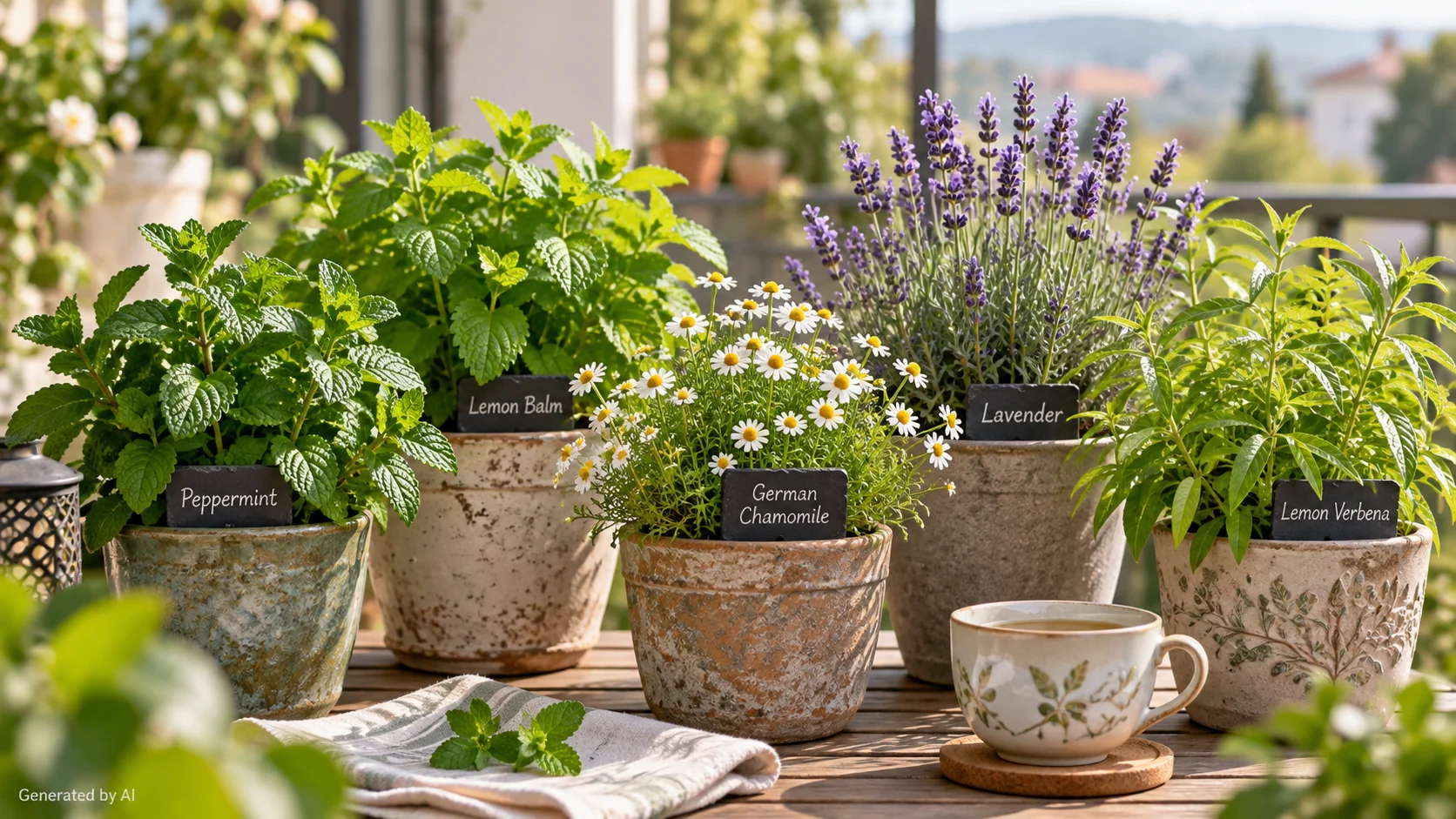
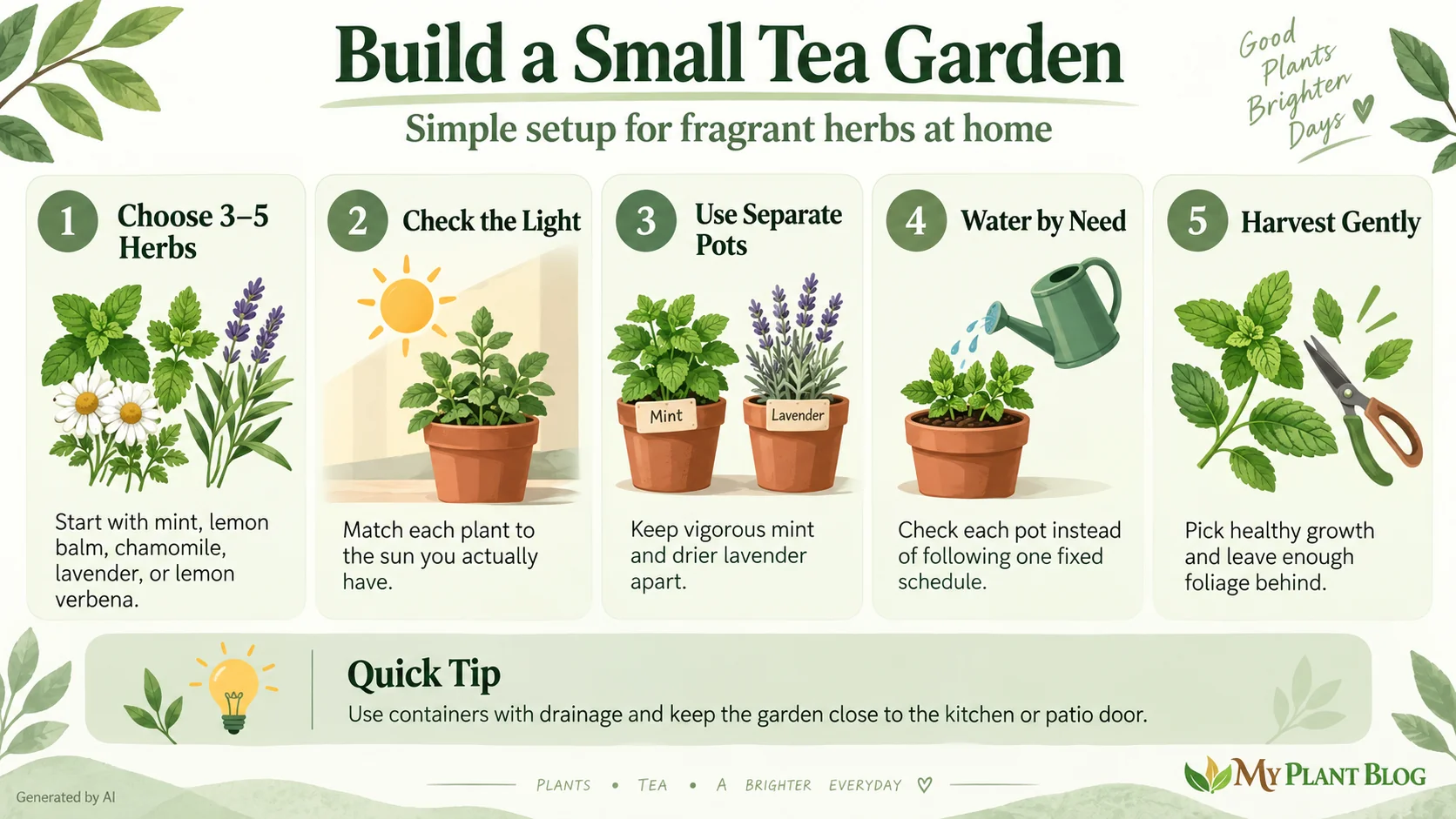
For beginners, the easiest approach is to start with three to five plants rather than trying to grow every possible tea herb at once. Mint, lemon balm, German chamomile, lavender, and lemon verbena give you different scents and growth habits, which makes them a useful starter group. If you are still deciding which herbs fit your space, compare the best herbs to grow at home for beginners before building a larger collection.
Pick two or three herbs you genuinely like, grow them in separate containers at first, and learn how quickly each pot dries. You can add more plants after you understand the conditions in your space.
Five Useful Tea Garden Herbs and Fragrant Plants
Choose plants for their growing needs first and their appearance second. A beautiful combination can become difficult to manage if one plant wants consistently moist soil while another prefers to dry more between waterings.
| Plant | Why grow it | Light | Moisture | Container note |
|---|---|---|---|---|
| Mint | Fresh fragrance, vigorous growth, and many varieties | Bright light to sun, depending on climate and location | Prefers more consistent moisture | Best in its own pot because it spreads quickly |
| Lemon balm | Soft lemon fragrance and lush green foliage | Sun to partial shade | Moderate moisture | Give it room and trim before it becomes crowded |
| German chamomile | Small daisy-like flowers and a light apple-like scent | Bright, sunny position | Moderate moisture with good drainage | A wider pot gives the airy plant room to grow |
| Lavender | Strong fragrance, flowers, and attractive silvery foliage | Plenty of direct sun | Allow the mix to dry more between waterings | Use excellent drainage and avoid constantly wet soil |
| Lemon verbena | Intense lemon fragrance and elegant foliage | Bright sun and warmth | Water when needed but avoid waterlogged soil | Useful as a separate feature plant in a larger pot |
Grow plants from correctly identified sources and verify that the exact species and plant material are appropriate for culinary use before consuming them. Essential oils, extracts, ornamental plants, and fresh culinary herbs are not interchangeable.
How to Plan a Small Tea Garden
You do not need a formal garden design. A good beginner tea garden starts with the conditions you already have and then matches plants to those conditions.
Observe the location
Watch the space during the day. Notice when direct sunlight arrives, how hot the area becomes, whether wind dries the pots quickly, and whether nearby buildings or trees create shade.
Start with a few plants
Three to five plants are enough for a useful starter garden. A smaller collection makes it easier to understand how each herb responds to your light and watering routine.
Separate different needs
Do not combine plants simply because they look good together. Mint and lavender, for example, are easier to manage separately because their preferred moisture conditions differ.
Keep it easy to reach
A tea garden near the kitchen, patio door, balcony entrance, or favorite sitting area is easier to check, water, smell, and harvest than one hidden at the far end of the yard.
Give Tea Garden Herbs Enough Light
Light is one of the first things to check before choosing your herbs. Lavender generally needs a much sunnier position than a mint plant can tolerate, and indoor herbs may receive far less useful light than a bright-looking room suggests.
Observe the actual location rather than relying only on labels such as “sunny” or “bright.” Window direction, distance from the glass, seasonal changes, buildings, trees, and balcony roofs can all change the amount of useful light that reaches a plant.
If you are unsure how to judge your location, the plant light guide explains full sun, bright indirect light, lower light, and the effect of window direction in more detail.
Growing indoors can work too, but the distance from the glass matters. The guide to growing herbs on a windowsill is especially useful if your tea garden has to fit into a compact indoor space.
- Place lavender in one of the brightest, sunniest suitable positions.
- Give chamomile good light and enough airflow around the plant.
- Keep indoor herbs close enough to a window to receive useful daylight.
- Watch for stretching, weak growth, scorching, or unusually fast drying.
- Recheck the location when the season changes.
Do Not Water Every Tea Herb the Same Way
One of the easiest mistakes is treating a group of herb pots as if they were one plant. Containers can dry at very different rates even when they stand beside each other.
Mint generally appreciates more consistent moisture, while lavender is much less forgiving of a pot that remains wet for too long. Container size, pot material, wind, heat, root growth, and the amount of sunlight all affect drying speed.
Feel the potting mix before reaching for the watering can. Check each container separately and water according to what that plant and its root zone actually need.
Basil, rosemary, mint, thyme, and other herbs can respond very differently to the same watering routine. The guide to caring for common herbs explains how light, drainage, containers, and moisture work together for different herb types.
Use Containers to Make the Garden Easier to Control
Containers are particularly useful for a small tea garden because they let you adjust soil moisture, drainage, position, and space for each plant individually.
Mint is the obvious example because it can spread rapidly. Lemon balm can also become vigorous when conditions suit it. Separate containers make both plants easier to control.
Lavender benefits from excellent drainage and should not be trapped in a constantly damp mixed planter simply because another herb beside it needs more frequent watering.
What Every Container Needs
- Working drainage holes.
- A container size appropriate for the mature plant.
- Potting mix intended for container growing.
- Enough room for air to move around the foliage.
- A saucer or surface that does not leave roots standing in runoff.
Harvest Tea Garden Herbs Without Stripping the Plant
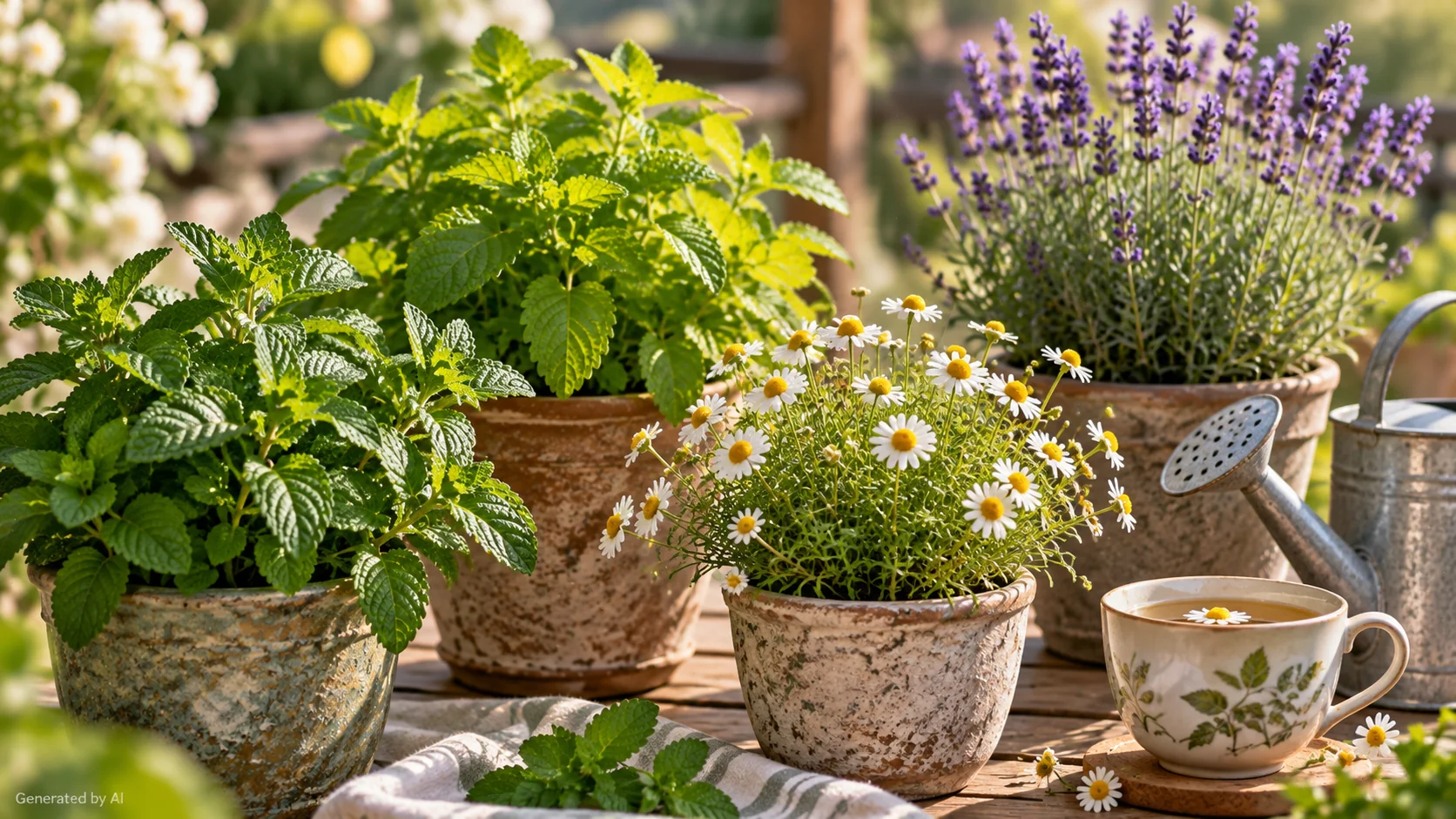
Start harvesting only after a plant is established and growing actively. Take modest amounts of healthy foliage or flowers and leave enough growth behind for the plant to continue photosynthesizing and producing new shoots.
Different herbs respond to cutting in different ways. For more detail on where and how much to cut, see how to harvest herbs without stunting new growth .
Use clean scissors or pruning snips where a clean cut is appropriate. Avoid harvesting material that is diseased, heavily damaged, dirty, moldy, or recently treated with a product that is not intended for edible crops.
Preserve Extra Herbs Only After They Are Fully Dry
If your plants produce more healthy material than you can use fresh, drying can help preserve part of the harvest. Airflow, complete drying, and correct storage matter because herbs should not be sealed away while they still contain noticeable moisture.
The complete guide to drying and storing herbs at home explains practical drying methods and how to protect dried herbs from moisture, heat, and bright light.
This article focuses on growing fragrant herbs. A plant being commonly grown in a tea garden does not mean that every preparation, quantity, extract, or concentrated product is suitable for every person. Verify plant identity and appropriate food use before consuming homegrown herbs.
Common Tea Garden Mistakes
- Putting every herb in one planter: attractive plants can still have incompatible moisture and space needs.
- Planting mint without containment: vigorous stems and runners can quickly crowd nearby plants.
- Using pots without drainage: excess water needs a reliable way to leave the root zone.
- Choosing fragrance before growing conditions: first match the plant to the light and moisture available.
- Watering every container on a fixed schedule: check each pot instead.
- Starting with too many herbs: a small collection is easier to understand and maintain.
- Assuming every aromatic plant is edible: verify the species and intended culinary use first.
A Simple Five-Pot Tea Garden Layout
If you want an uncomplicated starting point, use separate containers rather than trying to design one large mixed planter.
Mint
Give vigorous mint its own container and check moisture regularly.
Lemon Balm
Keep it accessible so you can trim the plant and enjoy the lemony foliage.
Chamomile
Choose a bright location and give the airy growth enough room around it.
Lavender
Place it in the sunny, well-drained part of the group and avoid keeping the root zone constantly wet.
Lemon Verbena
Use it as a fragrant feature plant in a warm, bright location with reliable drainage.
If space is limited, start with mint, chamomile, and one lemon-scented herb. A smaller healthy garden is more useful than a crowded planter that is difficult to water correctly.
Tea Garden Herbs FAQ
What are good herbs for a beginner tea garden?
Mint, lemon balm, German chamomile, lavender, and lemon verbena are useful plants to compare because they provide different scents, flowers, growth habits, and moisture needs. You do not need all of them; starting with two or three plants is often easier.
Can I grow a tea garden in containers?
Yes. Containers can make a small tea garden easier to manage because you can control drainage, watering, soil, and placement for each plant separately.
Can mint and lavender grow in the same pot?
Separate containers are usually easier. Mint tends to prefer more consistent moisture and grows vigorously, while lavender benefits from excellent drainage and a drier root zone between waterings.
How much sun does a tea garden need?
It depends on the plants. Lavender and many sun-loving herbs need a bright position with direct sun, while other herbs can tolerate less intense conditions. Choose the plants after observing the actual light in your growing space.
Can I grow tea garden herbs indoors?
Some herbs can grow indoors when they receive enough useful light. Place them close to a suitable window and watch growth and soil drying rather than assuming that a bright-looking room automatically provides enough light.
What should I do with extra harvested herbs?
Use clean, healthy herbs fresh when practical, or dry suitable culinary herbs in small batches. Make sure they are completely dry before storing them in a closed container.
Build Your Tea Garden One Plant at a Time
Start with a few plants that suit the light and space you already have. Give spreading herbs their own room, keep drainage reliable, check each pot before watering, and expand only after the first plants are growing well.
For more guides on choosing, growing, caring for, harvesting, and preserving herbs, continue with Herbs & Natural Living .
