
Weak Plant Growth: A Step-by-Step Rescue Plan for Slow, Pale or Leggy Plants
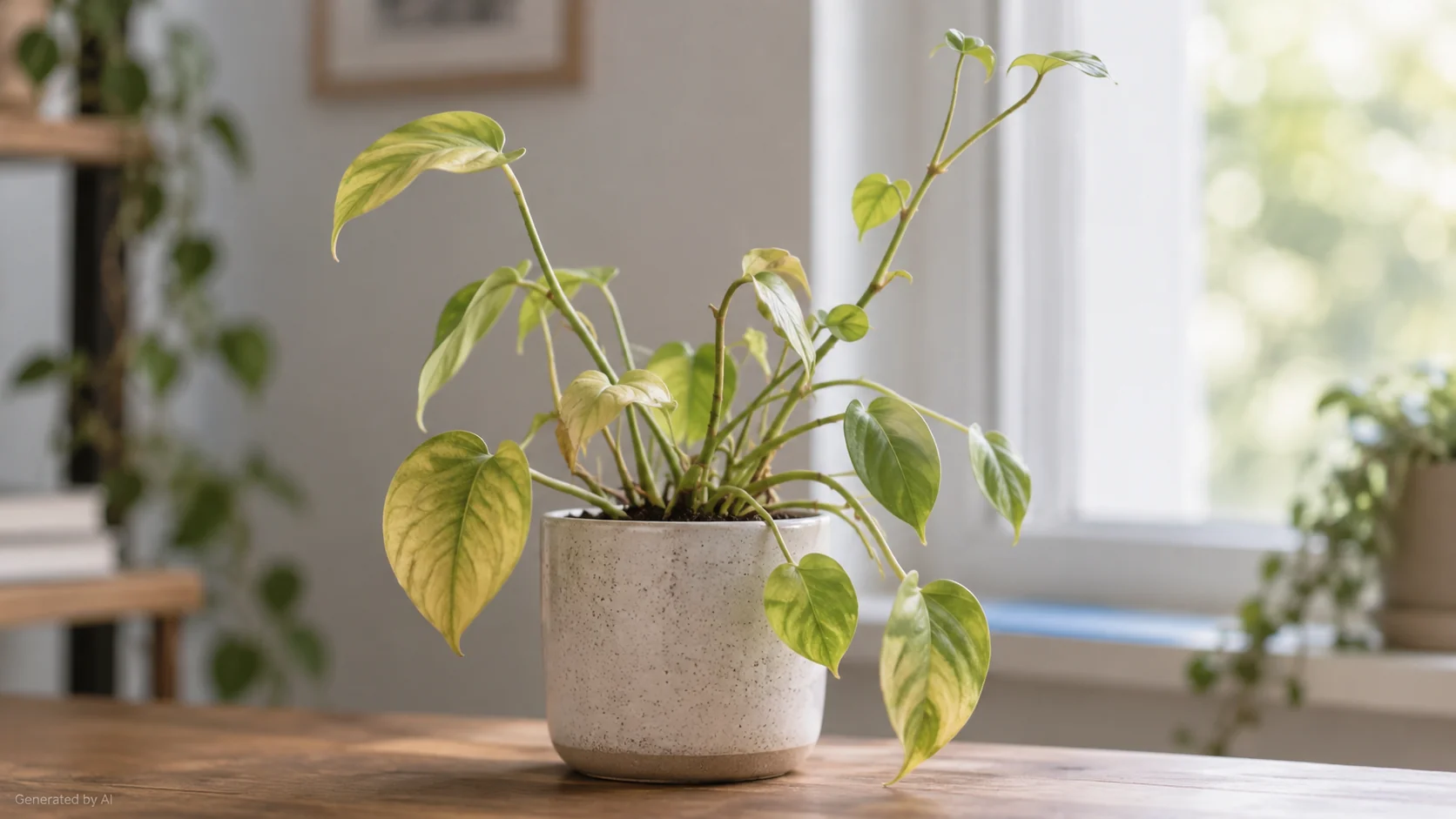
Weak plant growth is usually a clue that one part of the growing environment is limiting the plant. Slow growth, pale new leaves, long stems, small leaves or a plant that seems stuck can be connected to light, watering, root health, potting mix, pests, temperature or feeding. Start with the conditions you can check easily—especially light and soil moisture—before fertilizing, repotting or making several changes at once.
Weak Plant Growth: What Should You Check First?
Do not start by trying to force faster growth. First identify what the plant is actually showing. The newest leaves and stems are usually more useful than old damage because they reflect the plant's current growing conditions.
| What you notice | Possible explanation | What to check first |
|---|---|---|
| Long, thin stems with wide gaps between leaves | Not enough usable light is a common cause | Actual daylight at the plant's location |
| Small new leaves | Low light, root stress, inconsistent moisture or limited root space | Light, soil moisture and root condition |
| Pale or yellowing growth | Light, root stress, watering or nutrient availability may be involved | Check moisture and light before feeding |
| No visible new growth | Seasonal slowdown, naturally slow growth or environmental stress | Season, temperature and light |
| Weak growth with constantly wet soil | Poor drainage or root stress | Drying time, drainage and root condition |
| Weak or distorted new shoots | Pests or another stress affecting tender growth | Leaf undersides, stems and growing tips |
If you move the plant, repot it, fertilize it and change the watering routine on the same day, it becomes difficult to tell what actually helped. Correct the clearest problem first and then watch the next growth.
In This Rescue Guide
When Slow Plant Growth Can Be Normal
A plant that grows slowly is not automatically unhealthy. Some plants naturally produce new growth slowly, and many houseplants reduce their growth when daylight becomes weaker. Plants can also pause after repotting, moving to a new location or another major change.
Snake plants, ZZ plants, many succulents and cacti can go for long periods without obvious new leaves. Fast-growing herbs, pothos, seedlings and many summer container plants usually make changes easier to notice.
Outdoor plants have their own rhythms as well. Seedlings may pause after transplanting, while newly planted perennials and shrubs may put considerable energy into root establishment before producing obvious top growth.
Old damaged leaves usually do not return to perfect condition. New leaves, shoots and stems are better indicators of whether the plant's current conditions are improving.
Check Light Before Reaching for Fertilizer
If the plant is becoming long, thin, pale or strongly angled toward a window, light should be one of your first checks. A plant can sometimes remain alive in a dim location while producing increasingly weak growth.
Long spaces between leaves, smaller new leaves and stems stretching toward the brightest direction are useful clues. A room can look bright to you while the plant itself receives much less useful daylight several feet away from the window.
If you are unsure how much light the location actually provides, the plant light needs guide explains low light, bright indirect light, direct sun, window direction and why distance from a window matters.
Move the plant gradually toward a more suitable light source rather than suddenly exposing shade-grown foliage to intense direct sun.
Light may still be involved, but also check moisture, root health and recent feeding before assuming the plant has a nutrient deficiency.
Check Watering and Drainage Before Adding More Water
Both dry roots and roots that remain wet for too long can reduce healthy growth. That is why a weak plant should not automatically receive another drink.
Check the potting mix before watering. The surface can look dry while the lower root zone is still moist. Container size, light, temperature, airflow and season all change how quickly a pot dries.
The guide to how often to water plants explains why soil moisture and growing conditions are more useful than following a rigid watering calendar.
Soil Stays Damp for Days
Yellowing leaves, limp growth, a heavy pot, a musty smell or wilting while the soil is still wet can point toward root-zone stress.
If this pattern matches your plant, check the guide to overwatering and root rot before watering again.
The Root Ball Dries Very Quickly
Small pots, active growth, warm weather and crowded roots can cause a container to dry quickly. Dry mix pulling away from the pot edge and leaves that recover after watering are useful clues.
Water thoroughly when the plant actually needs it, then allow excess water to drain rather than giving frequent shallow splashes.
If yellow leaves are one of the main symptoms, compare the pattern with the yellow leaves troubleshooting guide before assuming fertilizer is the answer.
Check Root Space, Pot Size and Potting Mix
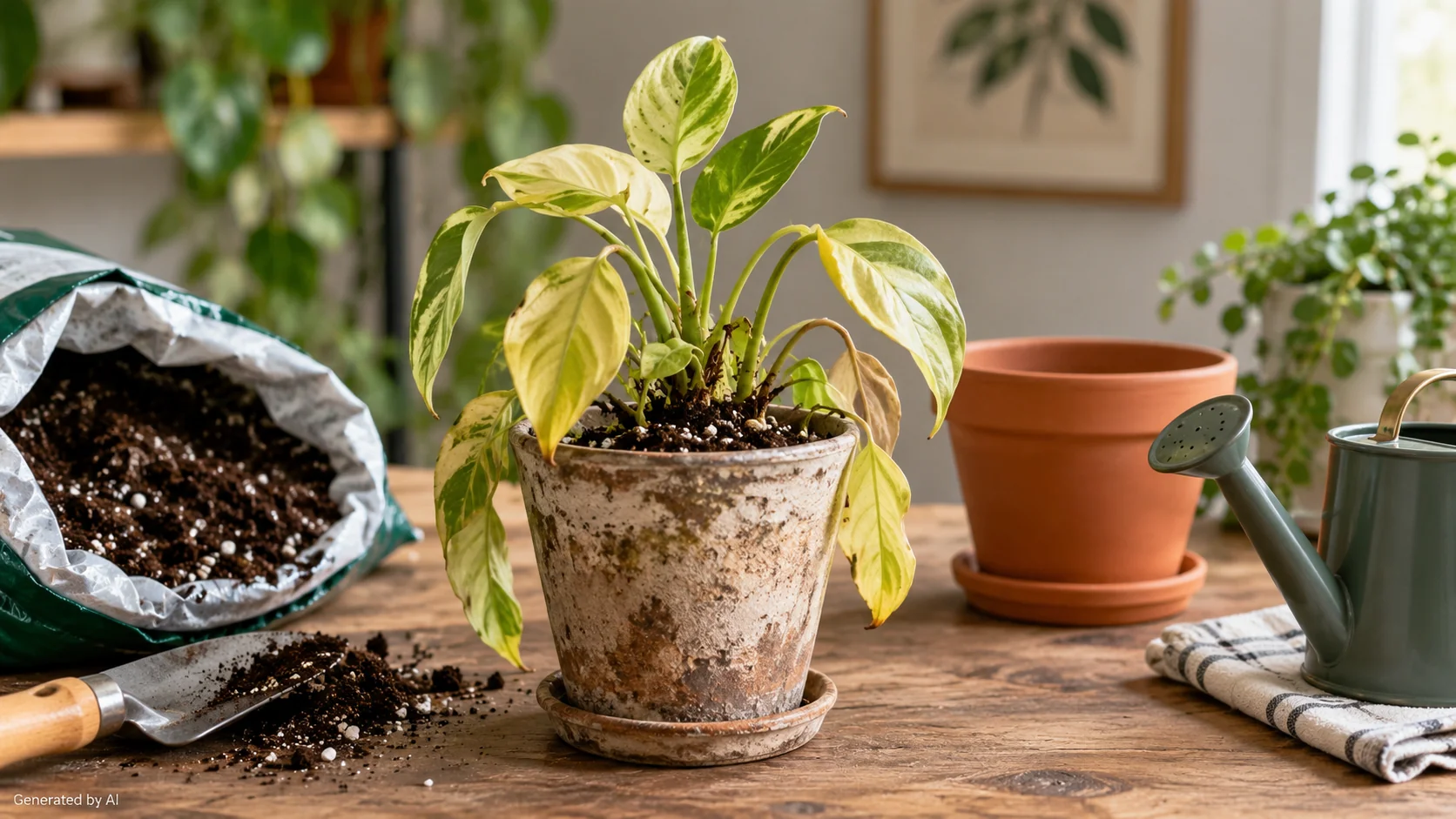
When light and watering look reasonable, the next clues may be below the soil surface. Roots need moisture, oxygen and enough usable space. Problems can develop when roots are severely crowded, the growing medium becomes dense, drainage is poor or a small root system sits inside a much larger volume of wet potting mix.
| Root-zone clue | What it may mean | Next step |
|---|---|---|
| Many tightly circling roots | The plant may be root-bound | Consider moving up gradually in pot size |
| Pot suddenly dries much faster | Roots may occupy most of the container | Inspect the root ball before repotting |
| Mix remains wet for a long time | Pot may be oversized, mix too dense or drainage poor | Check drainage and potting-mix structure |
| Old mix is dense or difficult to wet evenly | The physical structure may have deteriorated | Consider refreshing the growing medium when appropriate |
Do not repot only because a plant is growing slowly. First inspect the root ball and compare the symptoms with the guide to when to repot houseplants.
If the growing medium itself seems dense, stays wet too long or dries unpredictably, the guide to choosing potting mix for container plants explains how drainage, aeration and moisture retention affect the root zone.
Inspect New Growth for Pests
Pests are not the first explanation for every slow-growing plant, but they deserve a closer look when new leaves are distorted, sticky, speckled or unusually weak.
Check leaf undersides, stems, leaf joints and the newest growing tips. Look for webbing, sticky residue, cottony patches, small insects, tiny dark flies or repeated damage around tender new growth.
If you notice these signs, the tiny bugs on houseplants guide can help you compare fungus gnats, mealybugs, spider mites, scale and other common pest clues before choosing a response.
Weak growth alone does not prove that insects or mites are present. Look for visible signs before adding sprays or other treatments to an already stressed plant.
Fertilize Only When the Plant Can Use the Nutrients
Fertilizer can support active growth, but it cannot replace adequate light, healthy roots or a workable moisture balance. Feeding a stressed plant more heavily is therefore not a reliable rescue strategy.
Consider feeding when the plant is actively growing, receives suitable light, has a healthy root system and is not sitting in persistently wet soil. Follow the fertilizer label for the plant and product you are using rather than assuming that a stronger dose will produce faster recovery.
If a plant is pale and stretched in low light, improving the light is generally more useful than immediately adding fertilizer. If the roots are unhealthy, address the root-zone problem first.
A Step-by-Step Rescue Plan for Weak Plant Growth
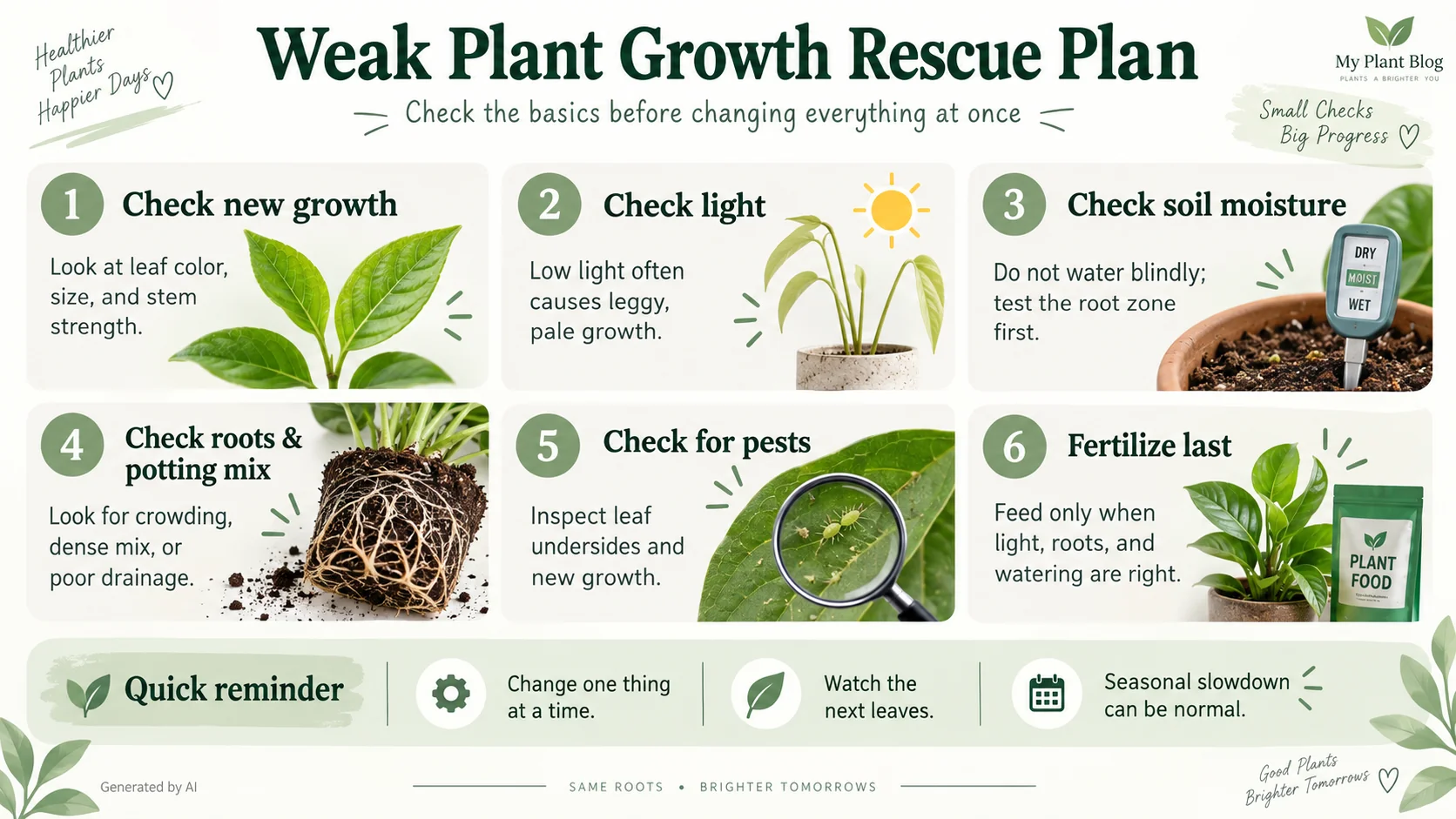
Work through these checks in order. You may find the likely cause before reaching the final step.
Look at the Newest Growth
Compare new leaves with older ones. Notice leaf size, color, spacing, shape and stem strength.
Check the Actual Light
Look at the plant's position throughout the day rather than judging the brightness of the room as a whole.
Check Soil Moisture
Do not water because the plant looks tired. Check whether the root zone is actually dry or still moist.
Check Drainage and Pot Size
Make sure excess water can escape and that the container is not dramatically larger than the root system.
Inspect Roots When the Clues Justify It
Check the root ball if the pot stays wet unusually long, dries unusually fast or the plant keeps declining despite reasonable care.
Inspect New Growth for Pests
Look closely around stems, growing tips and leaf undersides before assuming the problem is nutritional.
Feed Only When the Basics Are Right
Use fertilizer as part of normal active growth, not as a substitute for light, drainage or healthy roots.
Give the Plant Time to Respond
Watch the next leaves and shoots. Fast-growing plants may show a change sooner than naturally slow-growing species, so judge the direction of new growth rather than expecting an overnight transformation.
Weak Plant Growth Rescue Checklist
- Compare the newest leaves and stems with older growth.
- Check whether the current season naturally slows the plant.
- Look at the actual amount of useful light reaching the plant.
- Check soil moisture before watering again.
- Make sure excess water can leave the container.
- Check whether the pot is much too large or roots are severely crowded.
- Inspect new leaves and stems for pests.
- Review the structure and condition of the potting mix.
- Do not use heavy fertilizer as an emergency treatment.
- Make the clearest correction first and monitor new growth.
Common Mistakes When Trying to Rescue a Weak Plant
Fertilizing Before Checking Light
Extra nutrients do not correct an unsuitable light level. Check the plant's location first, especially when growth is pale or stretched.
Watering Every Time the Plant Looks Tired
Drooping can occur with both dry and overly wet roots. Always check the potting mix before adding water.
Repotting Into a Much Larger Container
More pot space is not always better. An oversized volume of unused mix can remain wet around a relatively small root system.
Moving the Plant Repeatedly
Frequent relocation changes light and temperature and makes it harder to judge whether the previous adjustment was working.
Expecting Old Leaves to Recover
Existing damage may remain visible even after conditions improve. Watch new growth for signs of progress.
Pruning Too Much at Once
Remove dead, badly damaged or diseased material when necessary, but avoid stripping a stressed plant of healthy green foliage without a clear reason.
Frequently Asked Questions About Weak Plant Growth
Why is my plant growing slowly but still alive?
Slow growth can be normal for the species, during darker seasons or after a major change such as repotting or relocation. If the plant otherwise looks stable, check the season and light before trying to force faster growth. Pale, tiny or stretched new leaves deserve a closer look at light, moisture and root health.
What does leggy plant growth mean?
Leggy growth describes long, thin stems with wider spaces between leaves. Insufficient usable light is a common cause, especially when the plant also leans strongly toward a window. Improve the light gradually before deciding whether pruning is necessary.
Should I fertilize a weak plant?
Not automatically. Fertilizer is most useful when the plant is actively growing and already has suitable light, healthy roots and an appropriate moisture balance. Correct obvious environmental problems first.
Should I repot a plant that is not growing?
Repot when the root system or potting mix gives you a reason. Dense circling roots, unusually fast drying or deteriorated potting mix may justify repotting. Slow growth caused by low light or seasonal slowdown does not automatically require a larger pot.
Can pale leaves become green again?
It depends on the cause and the condition of the leaf. Existing damaged or yellowed leaves may not regain their original appearance. Use the color and size of the next leaves as a better indicator of whether conditions have improved.
How long does a weak plant take to recover?
There is no single recovery time. Species, season, severity of stress and the underlying cause all matter. Fast-growing plants may show better new growth sooner, while naturally slow growers can take much longer. Focus on the quality of new growth rather than a fixed deadline.
Give the Plant Better Conditions—Then Watch the Next Growth
Weak plant growth is rarely solved by doing everything at once. Start with the newest growth, check light and moisture, then move to roots, potting mix, pests and feeding only when the clues point in that direction.
If your plant has other symptoms such as yellow leaves, brown tips, drooping stems, wet soil or visible pests, use the Plant Problems troubleshooting hub to choose the next focused guide.
