
Plant Problems · Troubleshooting
Yellow Leaves on Plants: 7 Causes and What to Do
Yellow leaves on plants can be caused by too much water, dry soil, inadequate light, root problems, pests, nutrient issues, or simply an aging leaf. The fastest way to narrow it down is to check the soil before watering and notice which leaves are turning yellow. One older yellow leaf is often harmless; yellowing that spreads, comes with wilting, or affects new growth deserves a closer look.
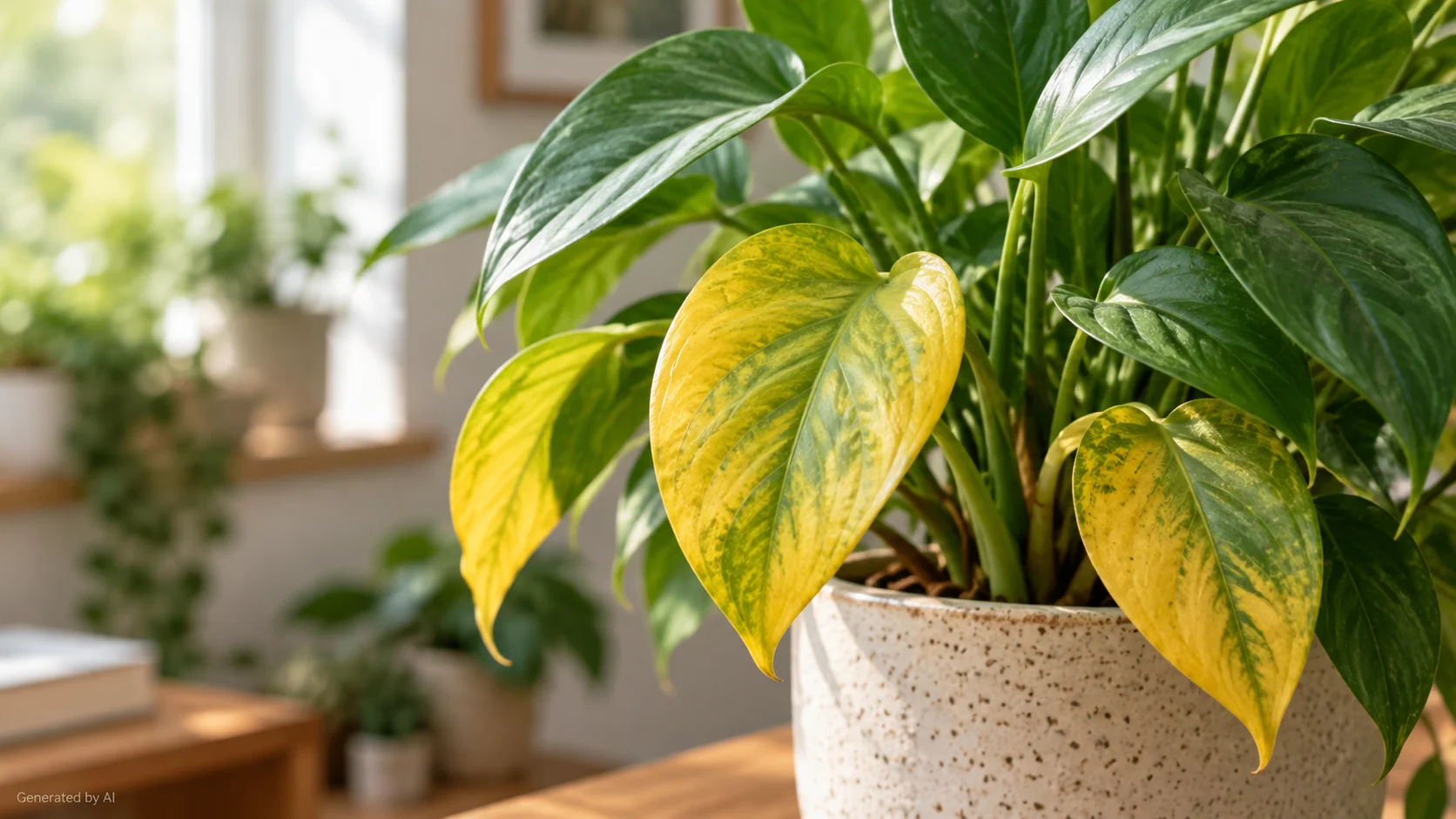
What the Yellowing Pattern Can Tell You
A yellow leaf alone cannot identify the cause. Match its appearance with the soil, roots, growth, and recent changes. Use this table as a starting point, not as a final diagnosis.
| What you see | Possible cause | What to check first |
|---|---|---|
| Several soft yellow leaves; damp soil | Overwatering or poor drainage | Moisture deeper in the pot, drain holes, standing water |
| Yellowing with crispy edges; very dry soil | Underwatering or heat stress | Root-ball moisture, pot weight, recent heat |
| Older lower leaves yellow; slow, stretched growth | Low light, natural aging, or nutrient stress | Available daylight and whether new growth is healthy |
| New leaves pale or yellow between green veins | Possible nutrient or pH-related issue | Plant species, feeding history, root condition |
| Fine pale specks, webbing, or sticky leaves | Possible insect or mite damage | Undersides of leaves and new shoots |
| Yellowing and wilting despite wet soil | Root stress or root rot | Drainage, soil smell, roots if the decline continues |
For a broader symptom-by-symptom overview, visit our Plant Problems guide.
7 Common Reasons Plant Leaves Turn Yellow
Overwatering and Poor Drainage
Soil that stays wet for too long leaves less air around the roots. Leaves may become yellow and soft, and the plant can wilt even though the mix is damp. Check the drainage holes and empty any water collected in a decorative pot or saucer.
What to do: Do not water again until the mix reaches the appropriate moisture level for your plant. If it remains soggy and the plant worsens, inspect the roots. For a practical routine, see how to tell when your plant needs water.
Underwatering
Dry soil can also cause yellow leaves, often alongside drooping, curling, or crisp edges. The pot may feel much lighter than usual, and the mix may pull away from its sides.
What to do: If the root ball is dry and the species needs water, moisten it evenly and allow excess water to drain. Recheck the mix before the next watering.
Too Little or Too Much Light
Low light may cause pale older leaves, weak growth, and soil that dries slowly. Abrupt exposure to strong direct sun may produce bleached or scorched areas instead.
What to do: Match the location to the species and make gradual changes. Our plant light guide explains bright indirect light, low light, and direct sun.
Old Leaves Reaching the End of Their Life
A few of the oldest leaves may yellow and drop while the plant continues to produce healthy growth. This can be normal, especially after a seasonal change or a move.
What to do: Watch for spreading yellowing. Remove a fully yellow leaf with clean snips if you prefer, but avoid treating an otherwise healthy plant unnecessarily.
Root Stress or Unsuitable Potting Mix
Compacted mix, poor drainage, a severely crowded root ball, or decaying roots can interfere with water and nutrient uptake. Yellowing plus persistent wilting in wet soil warrants attention.
What to do: Examine the root ball if symptoms continue. Healthy roots are generally firm; rotten roots tend to be soft and dark. Remove clearly decayed material with clean tools and use an appropriately draining mix if repotting is needed. Our guides to potting mix and repotting explain the next steps.
Nutrient Imbalance
Low nutrients can cause pale leaves, especially during active growth. Yellowing between green veins may suggest a different imbalance, but watering, root health, or soil pH can create similar patterns.
What to do: Correct watering and light issues first. If a healthy, actively growing plant has not been fed for a long time, follow a suitable fertilizer label; do not apply extra fertilizer to rescue damaged roots.
Cause 7: Pests or Environmental Shock
Spider mites, scale, aphids, and other sap-feeding pests can discolor foliage. Cold drafts, a recent move, and sudden changes in temperature or humidity can also trigger yellowing or leaf drop. Check leaf undersides for webbing, speckling, sticky residue, and visible insects. Isolate a plant with a suspected infestation while you identify the pest and choose a species-appropriate treatment.
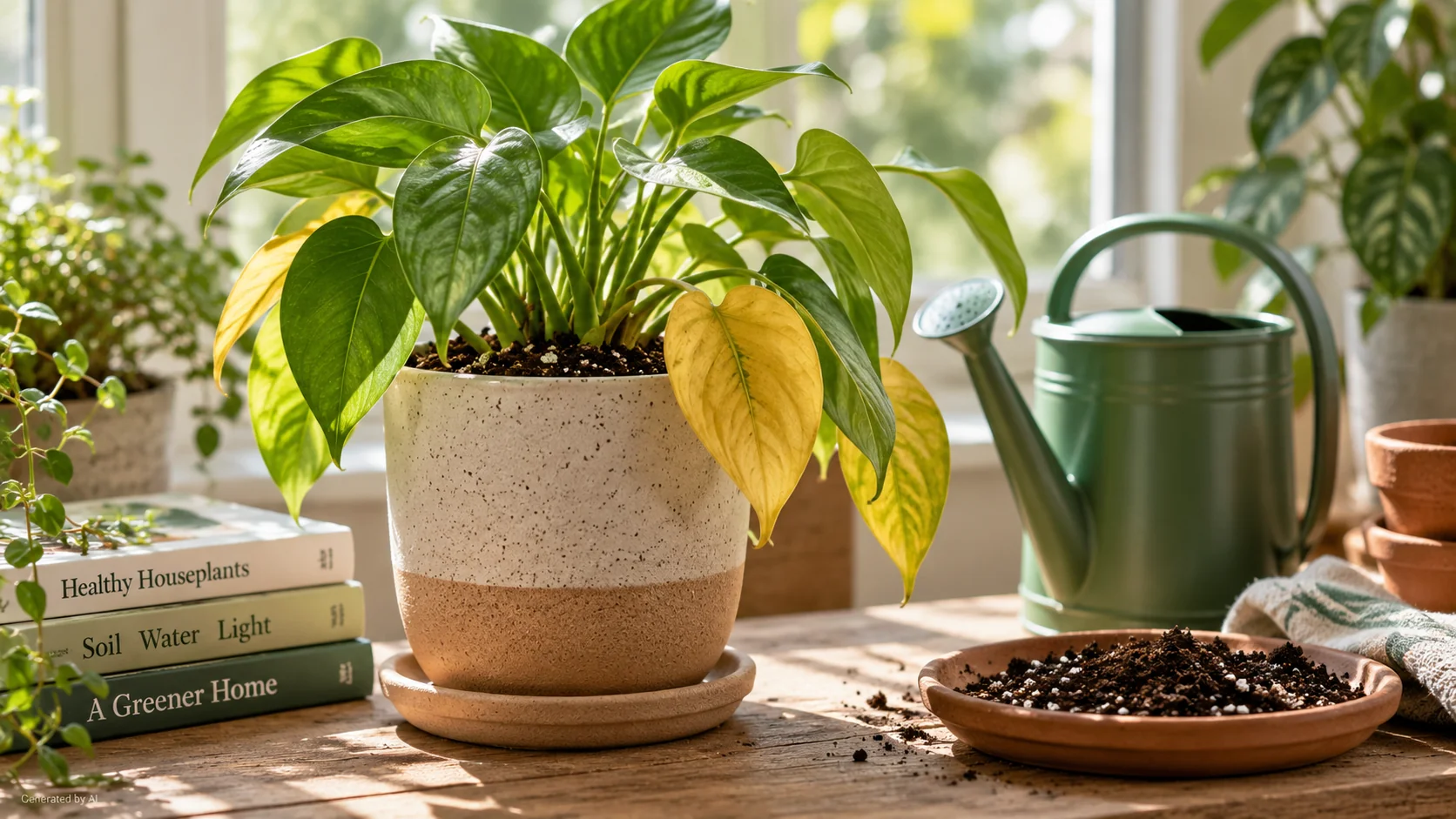
How to Help a Plant With Yellow Leaves: A Simple Rescue Plan
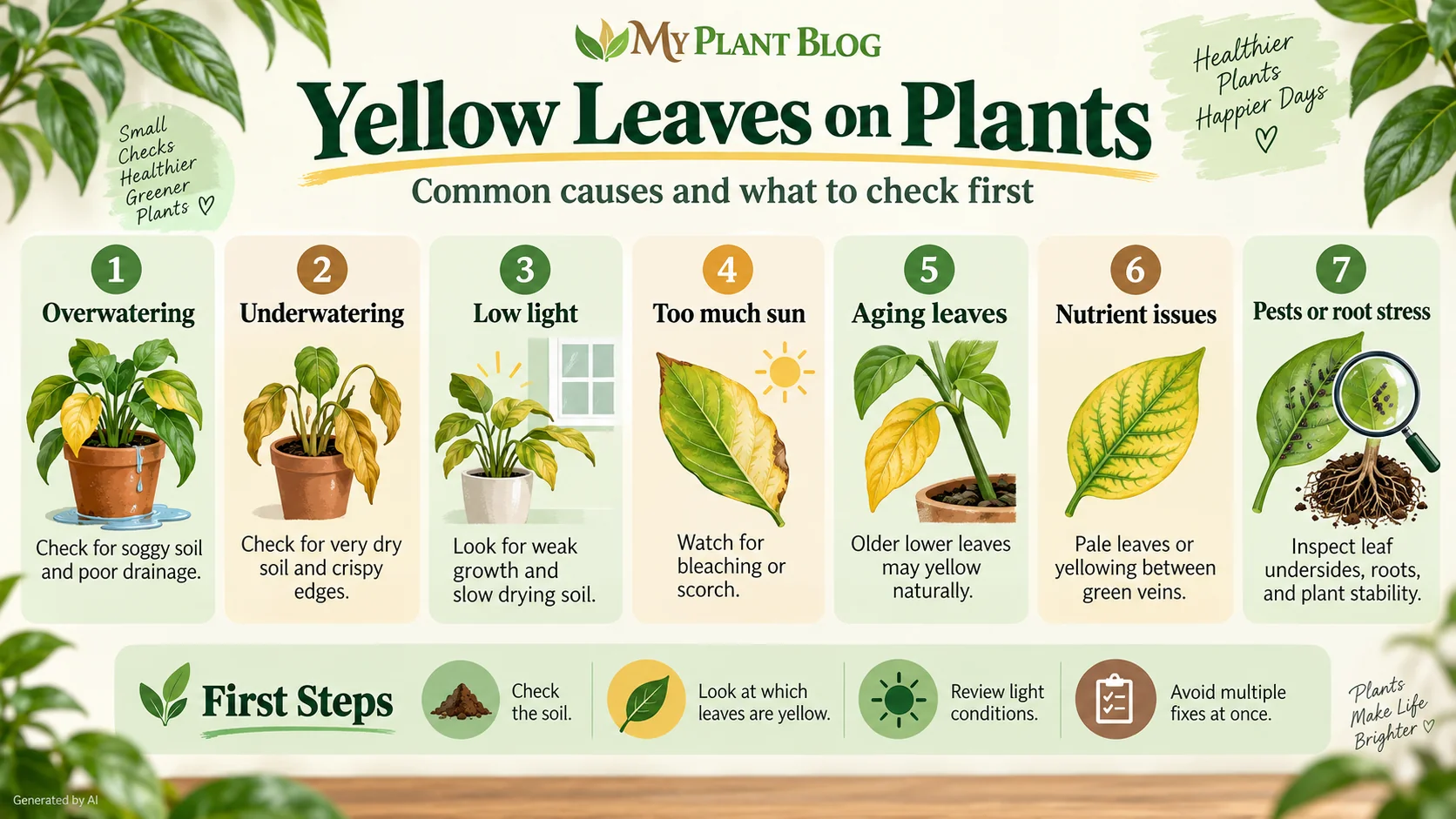
- Check moisture at root depth. The surface can be dry while the lower pot is still wet. Use a finger or wooden skewer, where practical, and lift the pot to judge its weight.
- Confirm drainage. Check for open drain holes and empty any collected water. Do not water again automatically just because leaves are yellow.
- Inspect leaves and stems. Look under leaves and around new growth for insects, webbing, unusual spotting, or soft stems.
- Consider light and recent changes. Think about a move, a colder window, seasonal light loss, fertilizer, or an unusually hot week.
- Make the most relevant correction. Water a truly dry plant; let overly wet mix approach the plant's preferred moisture range; improve light gradually; address identified pests. Avoid doing everything at once.
- Watch the new growth. A leaf that has turned fully yellow usually will not turn green again. Look instead for stable leaves, healthy new growth, and a normal watering rhythm.
How to Prevent Yellow Leaves From Coming Back
- Check each plant's moisture needs instead of watering every pot on the same day.
- Use a container with working drainage and a potting mix suited to the species.
- Keep plants in suitable light, adjusting gradually when the seasons change.
- Inspect leaf undersides regularly so small pest problems are easier to spot.
- Feed only as appropriate for the plant and its active growth; more is not always better.
- Pay attention to new leaves and the overall trend rather than reacting to one blemish.
Keep an eye on the overall trend. Stable leaves and healthy new growth tell you more than one old yellow leaf.
Yellow Leaves on Plants: FAQ
Should I cut yellow leaves off my plant?
You can remove a fully yellow or dead leaf with clean snips. If a leaf is still partly green, leaving it briefly is usually fine unless it is diseased or badly damaged. Removing leaves does not correct the underlying cause.
Can yellow leaves turn green again?
A fully yellow leaf generally will not return to its original green color. Some mild discoloration can improve if the problem is caught early, but healthier new growth is a more useful sign of recovery.
Do yellow leaves always mean overwatering?
No. Dry soil, low light, damaged roots, nutrient issues, pests, sudden changes, and ordinary leaf aging may produce similar symptoms. Check moisture and the yellowing pattern before deciding what to change.
Why are only the bottom leaves turning yellow?
The oldest leaves may naturally age, but low light, root stress, or nutrient shortage can also affect lower foliage. If new growth remains healthy and yellowing is limited, observe before taking major action.
Further Reading
For additional evidence-based symptom guidance, see University of Maryland Extension: Yellowing Leaves on Indoor Plants and UC IPM: Houseplant Problems.
One good check is better than five rushed fixes.
Begin with the soil, note which leaves are affected, and choose one sensible next step. A clear diagnosis makes it easier to give the plant the care it actually needs.
