
Gardening Tools for Beginners: The Essential Starter Kit
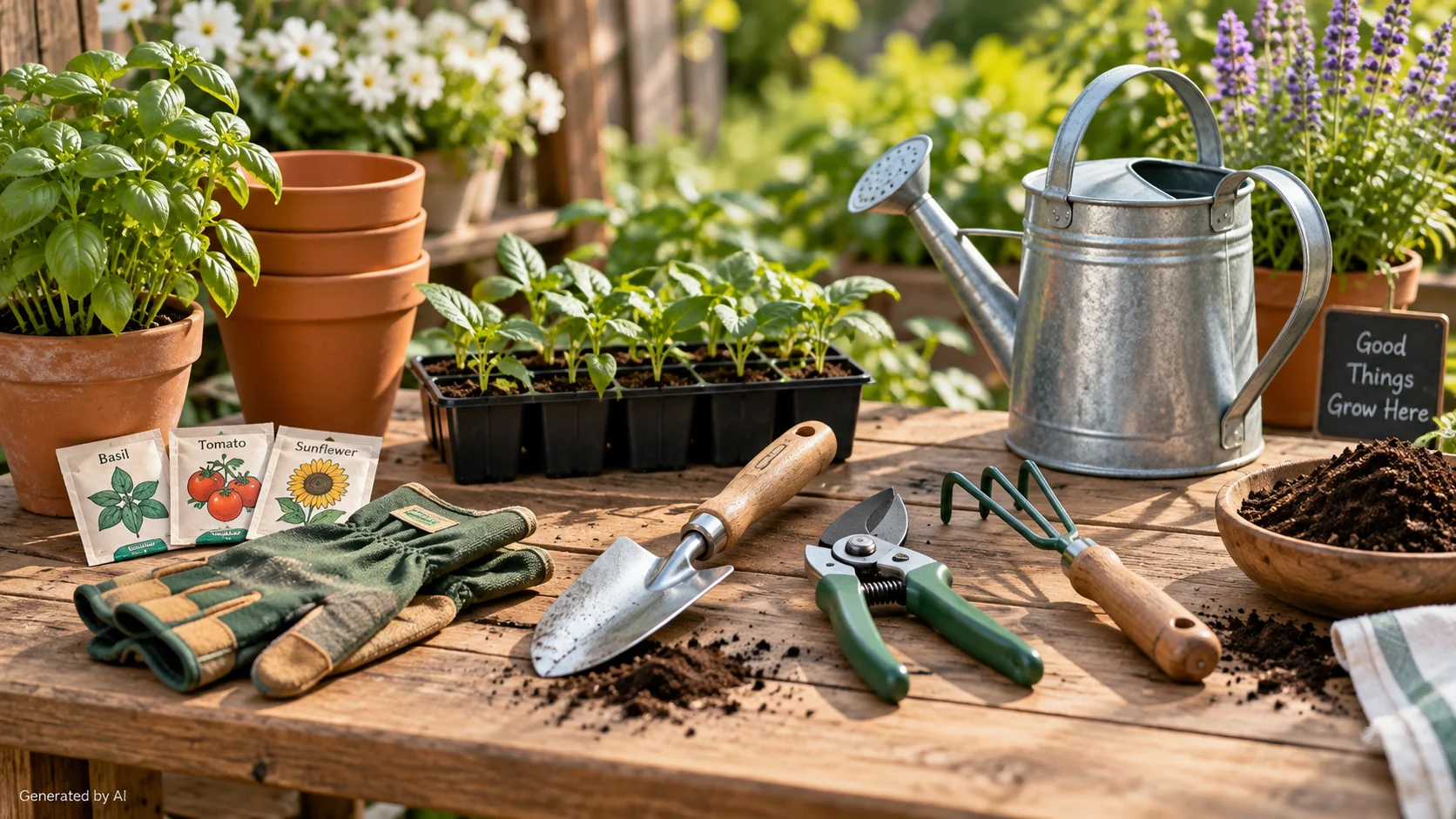
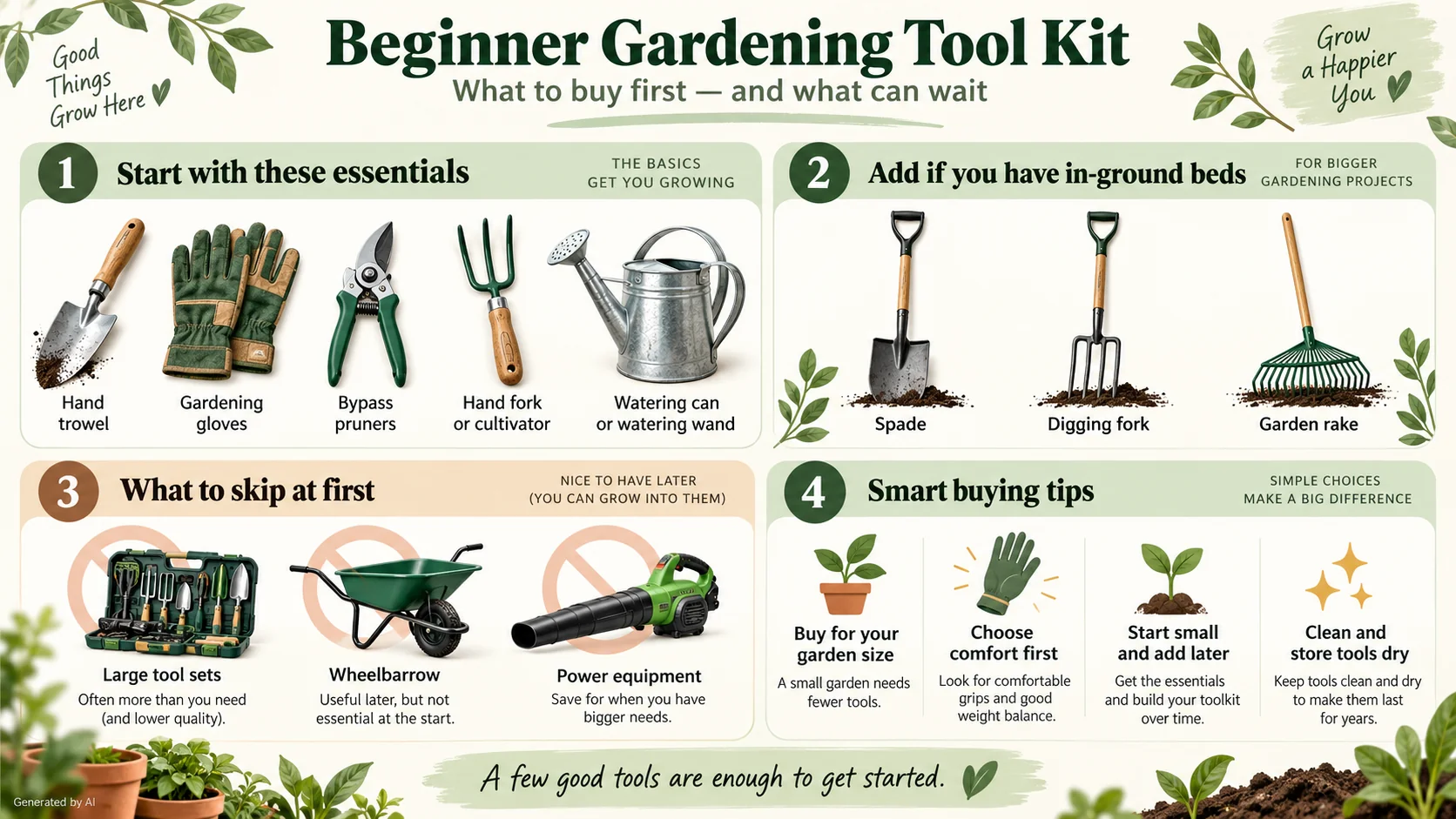
You do not need a shed full of equipment to start gardening. For most beginners, a hand trowel, bypass pruners, gardening gloves, a watering can or hose attachment, and a hand fork will handle the everyday jobs. If you are working in an in-ground garden, add a spade, digging fork, and rake as you actually need them. Starting with a small, useful toolkit saves money, reduces clutter, and helps you learn which tools genuinely fit the way you garden.
What Gardening Tools Does a Beginner Really Need?
Start with tools that solve jobs you will perform repeatedly: planting, loosening soil, trimming plants, watering, and protecting your hands. A large prepacked tool set may look convenient, but many beginners end up using only a few pieces.
| Tool | Main use | Beginner priority |
|---|---|---|
| Hand trowel | Planting, transplanting, scooping potting mix | Start here |
| Gardening gloves | Protecting hands while planting, weeding, and handling soil | Start here |
| Bypass pruners | Deadheading, harvesting, trimming stems and light growth | Start here |
| Hand fork or cultivator | Loosening surface soil and working around plants | Very useful |
| Watering can or watering wand | Controlled watering | Essential |
| Spade | Digging planting holes and working garden beds | For in-ground gardens |
| Digging fork | Loosening compacted or heavier soil | Useful when needed |
| Garden rake | Leveling soil and moving light garden debris | Useful for larger beds |
If you are still deciding how to organize your first outdoor growing area, the Garden & Outdoor guides can help you think about sunlight, soil, drainage, watering access, and the amount of maintenance your space will realistically need.
8 Essential Gardening Tools for Beginners
1. Hand Trowel
A hand trowel is one of the most useful tools in a beginner garden. It works well for planting seedlings, moving small plants, scooping compost or potting mix, and making planting holes in containers and raised beds.
Look for a trowel with a strong connection between the blade and handle. The handle should feel comfortable in your hand, and the blade should not flex easily when you press it into firm soil.
2. Gardening Gloves
Gardening gloves make routine jobs more comfortable and help protect your hands from rough soil, splinters, minor scratches, and irritating plant material. Fit matters more than appearance. Gloves that are too large can make small planting jobs surprisingly awkward.
Light, flexible gloves are practical for planting and weeding. Tougher gloves are more useful when handling thorny or coarse material. One pair does not necessarily have to handle every gardening job.
3. Bypass Pruning Shears
Pruning shears are useful for deadheading flowers, harvesting herbs and vegetables, removing damaged growth, and making small pruning cuts.
For living stems, bypass pruners are a practical general-purpose choice because the two blades pass one another to make a relatively clean cut. Choose pruners that fit your hand comfortably and have a locking mechanism that is easy to use.
If you plan to use your pruners regularly for basil, rosemary, mint, thyme, or other culinary plants, the Herbs & Natural Living guides cover practical herb growing, care, harvesting, and storage in more detail.
4. Hand Fork or Hand Cultivator
A hand fork or small cultivator is useful for loosening the upper layer of soil, breaking apart small clumps, working around established plants, and removing shallow weeds.
This is particularly useful in raised beds and containers, where a full-size garden fork may be unnecessary.
5. Watering Can, Hose, or Watering Wand
Your best watering tool depends on the size of your garden. A small watering can may be perfect for balcony pots, while several raised beds are easier to manage with a hose and watering wand.
Whatever you choose, aim for controlled water delivery rather than blasting soil away from roots or seedlings. Your watering tool should make it easy to reach the soil around the plant.
The tool is only part of the routine. Our guide to how often you should water plants explains why soil moisture, container size, light, weather, and season matter more than watering on a fixed calendar.
6. Garden Spade
If you are gardening directly in the ground, a spade becomes useful for making planting holes, edging beds, dividing some established plants, and moving small amounts of soil.
Container gardeners usually do not need one immediately. This is a good example of why your garden type should determine what you buy.
7. Digging Fork
A digging fork is useful when soil needs loosening rather than simply scooping. Its tines can work through heavier ground and help loosen compacted areas with less soil turning than a spade.
If your first garden consists of a few pots or a small raised bed filled with loose growing medium, you can usually wait before buying one.
8. Garden Rake
A garden rake becomes useful when you prepare larger beds, level loosened soil, break down small surface clumps, or spread material across a wider area.
For a balcony or a single small raised bed, it may spend more time in storage than in your hands. Add it when your growing area becomes large enough to make it genuinely useful.
Choose Your Tools Based on the Garden You Actually Have
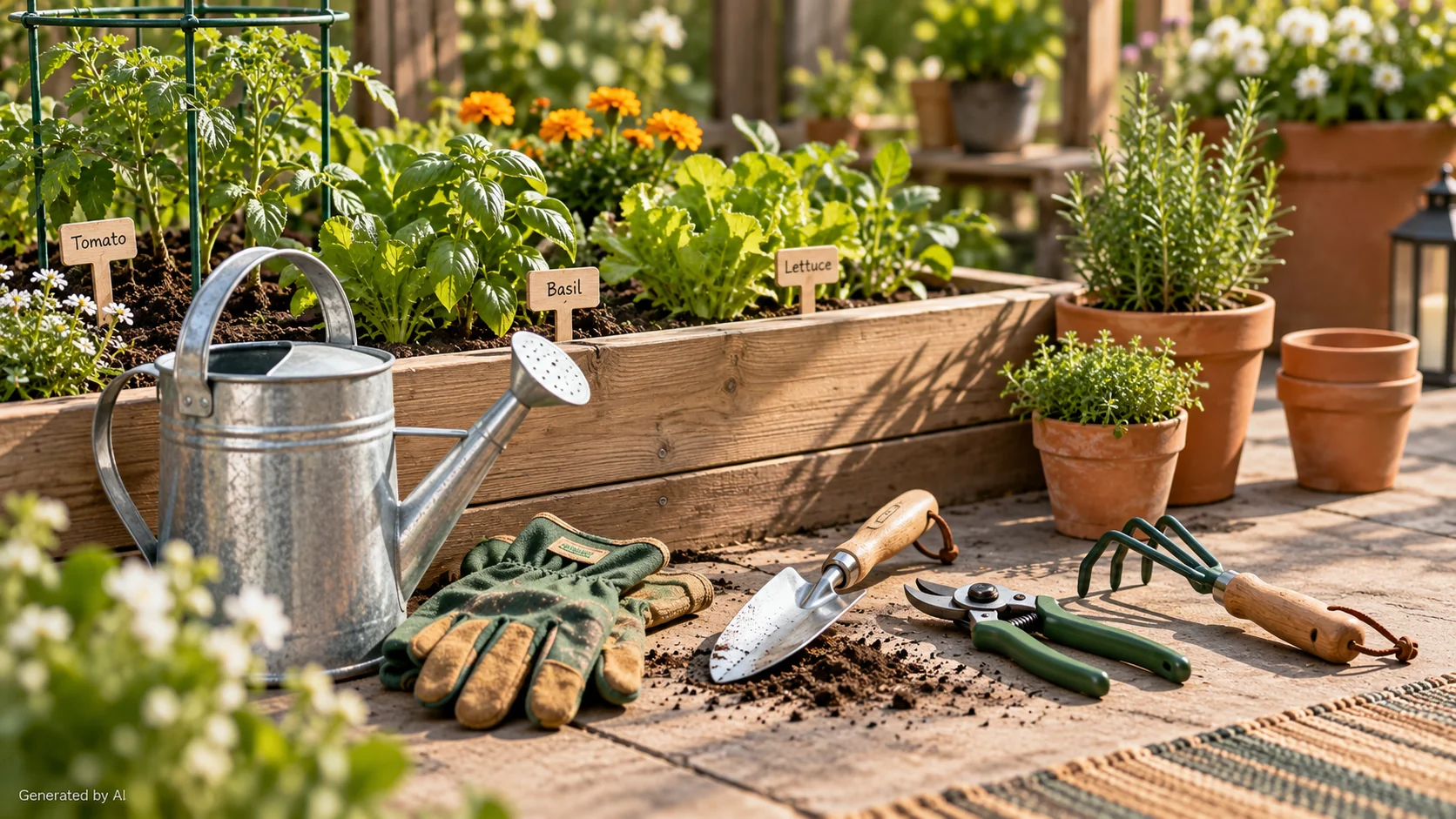
A beginner with six containers does not need the same equipment as someone preparing a new in-ground vegetable bed. Before buying tools, look at the space you will actually maintain.
Containers & Balcony Pots
Keep the toolkit compact. A hand trowel, gloves, pruners, small hand fork, and watering can will cover most routine jobs.
Raised Beds
Start with hand tools and a convenient watering system. A small cultivator is often more useful than heavy full-size digging equipment.
In-Ground Garden
Add a spade, digging fork, and rake when you need to prepare soil, create beds, or maintain a larger growing area.
Tool choice should also follow the conditions of the space. Before planting a new bed or filling a patio with containers, observe where direct sun actually falls during the day. If you are unsure how to evaluate that, the guide Plant Light Needs Explained provides a useful starting point for understanding sun and light exposure.
What to Look for When Buying Beginner Garden Tools
Beginners do not need professional equipment for every task, but the cheapest tool is not always the least expensive choice in the long run. A small number of comfortable, sturdy tools is usually more useful than a large set filled with items you rarely touch.
Choose Comfort Before Extra Features
Hold a tool before buying it when possible. The handle should feel natural, the weight should be manageable, and you should not need to grip excessively hard to control it.
Check the Connection Between Handle and Tool Head
Trowels, forks, rakes, and spades experience leverage every time they enter the soil. A weak connection between the handle and working end can become the first failure point.
Buy for the Job, Not for the Number of Pieces
A 20-piece kit is not automatically better value than five useful tools. Ask whether you can name a regular job for each item. If you cannot, you probably do not need it yet.
Consider Storage
Tools last longer when you can keep them dry and organized. If you have only a balcony or small patio, compact hand tools may be far more practical than several long-handled tools.
Garden Tools Beginners Can Usually Skip at First
Specialized tools are not bad. They simply make more sense when you have a specific, repeated job for them.
| Tool or equipment | Why you can often wait | When it may become useful |
|---|---|---|
| Large multi-piece tool sets | You may use only a few pieces regularly. | When the included tools match your actual garden tasks. |
| Wheelbarrow | Unnecessary for most small gardens and balconies. | When regularly moving soil, compost, mulch, or garden debris. |
| Large hoe | Can be excessive for containers and small raised beds. | When maintaining larger open beds with recurring weeds. |
| Power equipment | It adds cost, storage needs, maintenance, and complexity. | When the size of your garden creates a real need for it. |
| Highly specialized planting tools | A trowel often handles the same occasional job. | When the specialist task becomes frequent enough to justify one. |
How to Make Your Garden Tools Last Longer
Basic maintenance matters even with inexpensive tools. Soil and moisture left on metal parts encourage corrosion, while dull or damaged cutting tools become harder to control.
- Remove soil from trowels, forks, spades, and rakes after use.
- Let wet tools dry before putting them into closed storage.
- Keep pruning blades clean and reasonably sharp.
- Inspect handles and joints periodically for cracks or looseness.
- Store sharp tools so the cutting edges cannot be accidentally grabbed.
- Clean cutting tools before moving from diseased plant material to healthy plants.
A simple habit of cleaning and drying tools after gardening is often more useful than owning a large collection of expensive equipment.
Beginner Gardening Tool Checklist
Use this checklist before your first shopping trip. You do not need every item immediately.
- Hand trowel for planting and transplanting
- Comfortable gardening gloves
- Bypass pruning shears for light cutting and harvesting
- Hand fork or cultivator for loosening surface soil
- Watering can, hose nozzle, or watering wand suited to your space
- Spade if you are gardening directly in the ground
- Digging fork if your soil needs regular loosening
- Garden rake if you maintain larger beds
- Dry, safe storage space for your tools
Put them to work on one manageable part of your garden instead of trying to change everything at once. The Garden & Outdoor section provides a broader path through garden planning, watering, seasonal care, soil, and outdoor growing.
Your Tools Are Only Part of Good Plant Care
The right equipment makes gardening easier, but plants still depend on the basics: suitable light, water, drainage, soil or potting mix, enough root space, and care that changes with the season.
If you are new to plant care as well as gardening, the My Plant Blog Grow Guides explain watering, light, potting mix, drainage, root space, and seasonal care one practical topic at a time.
That approach also helps prevent a common beginner mistake: trying to solve every plant problem by buying another product or tool. Observe the plant and growing conditions first, then decide what action is actually needed.
Gardening Tools for Beginners: Frequently Asked Questions
What are the five most important gardening tools for beginners?
For a small beginner garden, start with a hand trowel, gardening gloves, bypass pruners, a hand fork or cultivator, and a watering can or suitable hose attachment. Larger in-ground gardens may also need a spade, digging fork, and rake.
Should beginners buy a gardening tool set?
A tool set can be convenient if the pieces are sturdy and you will genuinely use them. However, buying a few individual tools often gives you more control over quality, size, comfort, and the tools that actually fit your garden.
What tools do I need for a raised bed?
Most raised-bed gardeners can start with a hand trowel, hand fork or cultivator, gloves, pruners, and a watering tool. Full-size digging equipment may not be necessary unless you also maintain in-ground areas.
What gardening tools do I need for containers?
Container gardening requires very little equipment. A hand trowel, small hand fork, pruners, gloves, and watering can will cover most routine planting and maintenance jobs.
Are expensive garden tools worth buying?
Not every tool needs to be expensive. Prioritize comfort, durability, and suitability for the job. It often makes more sense to buy a few dependable tools than a large collection of inexpensive tools you rarely use.
Do beginners need power garden tools?
Usually not for basic planting and plant care. Power equipment becomes useful when your garden size or a repeated maintenance task justifies the additional cost, storage, and upkeep.
Start With Fewer Tools and Add What You Actually Need
The best beginner gardening toolkit is not the one with the most pieces. It is the one that matches your space and the jobs you perform regularly.
Start with a trowel, gloves, pruners, a hand fork, and a practical way to water. Add a spade, digging fork, rake, or other larger equipment only when your garden gives you a clear reason to use it.
This keeps the first season simpler, leaves more of your budget for plants and soil, and helps you learn which tools genuinely make gardening easier for you.
