
Printable Plant Care Checklist: A Simple Routine for Houseplants, Containers & Gardens
Use this practical plant care checklist to keep everyday care simple, spot problems earlier, and know what to check before you water, repot, fertilize, move, harvest, or troubleshoot a plant. The goal is not to follow a rigid schedule. It is to build a short, repeatable routine based on what each plant actually needs.
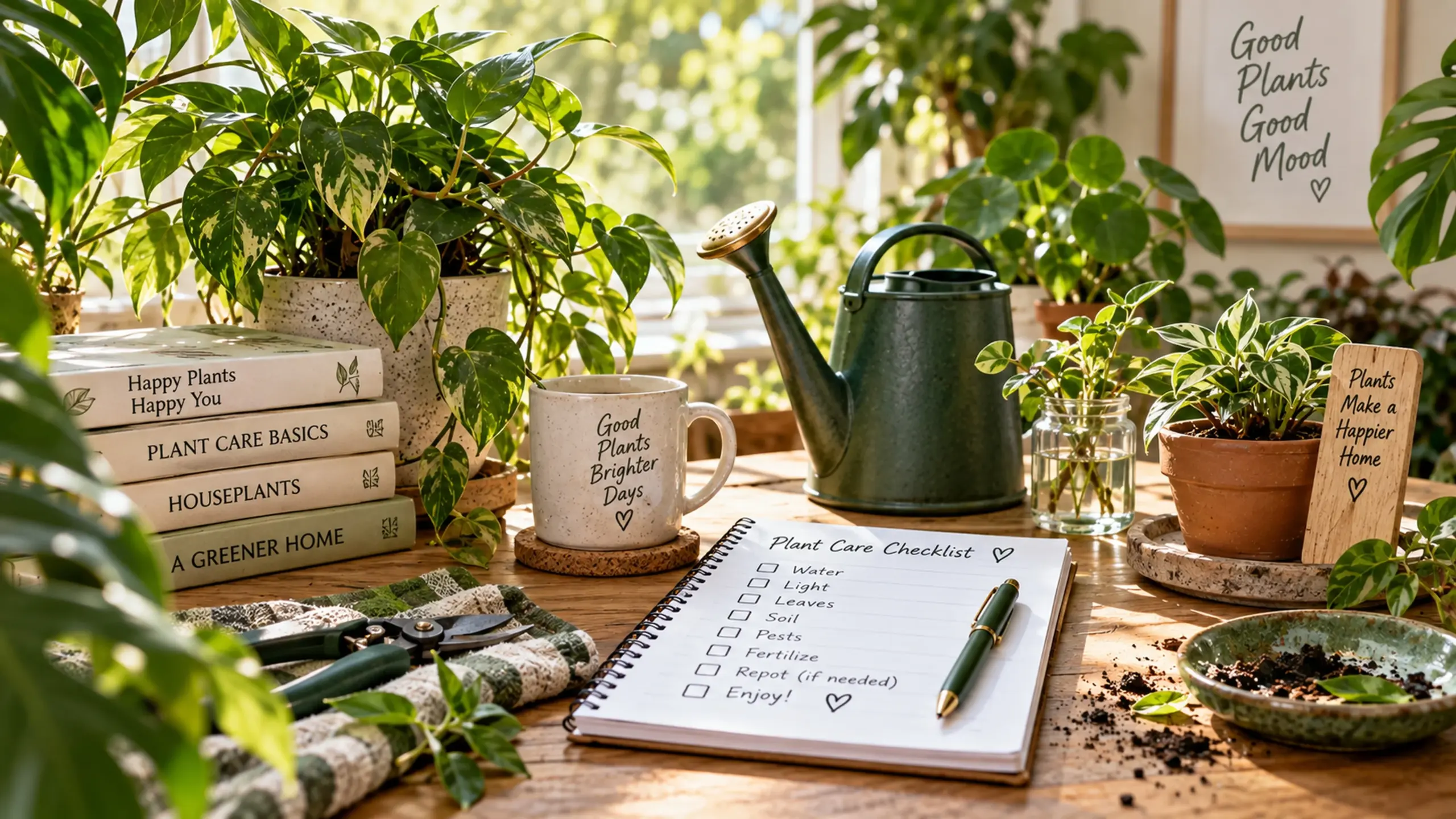
How to Use This Printable Plant Care Checklist
Think of your plant-care day as a check day rather than an automatic watering day. Walk through your plants, look at the leaves, feel the potting mix, notice the light and check for anything that has changed.
Some plants may need water. Others may be perfectly fine. Outdoor containers may need attention more often during hot or windy weather, while indoor plants can dry much more slowly during winter.
Avoid changing watering, light, fertilizer, pot size and location all at once. One sensible adjustment at a time makes it much easier to understand how the plant responds.
Weekly Plant Care Checklist
A short weekly check is enough for many indoor plant collections. It does not mean every task below needs to be performed every week. The checklist simply helps you notice what actually needs attention.
Water & Soil
- Feel the potting mix before watering.
- Lift smaller pots and notice whether they feel unusually light.
- Check whether the soil is staying wet for too long.
- Empty standing water from saucers or cachepots.
- Check drainage holes for obvious blockage.
- For outdoor pots, consider recent heat, wind and rain.
Light & Location
- Notice how much useful daylight reaches the plant.
- Look for stretched or strongly leaning growth.
- Check leaves for faded, scorched or crispy patches.
- Consider whether the season has changed the light level.
- Watch for heaters, cold windows or strong drafts.
- Move plants gradually when a location change is needed.
Leaves & Growth
- Look at both new and older leaves.
- Check leaf undersides and stems for pests.
- Notice yellowing, drooping, brown tips or unusual spots.
- Remove fully dead leaves when appropriate.
- Look for new growth rather than expecting constant fast growth.
- Write down meaningful changes instead of relying on memory.
If you are unsure when to water, the guide to how often you should water plants explains how soil moisture, pot size, drainage, light, weather and active growth affect drying time. A fixed weekly watering day is less reliable than checking the plant and potting mix first.
Weak, stretched or strongly leaning growth is a reason to look at the plant's actual location before reaching for fertilizer. Plant light needs explained covers bright indirect light, low light, full sun and why distance from a window matters.
Monthly Plant Care Checklist
Once a month, take a slightly closer look at the parts of plant care that do not need weekly attention. Roots, potting mix, supports and general growth patterns are easier to judge when you compare them over time.
| What to check | What to look for | What to do if needed |
|---|---|---|
| Root space | Very fast drying, roots through drainage holes or dense circling roots. | Inspect the root ball before automatically moving to a larger pot. |
| Potting mix | Compaction, poor drainage or mix that remains wet unusually long. | Review drainage, container size and the structure of the growing medium. |
| Leaves | Dust, dead foliage, sticky residue, webbing or tiny insects. | Clean or inspect further depending on what you find. |
| Growth | New leaves, weak growth, leaning stems or long gaps between leaves. | Recheck light, season, root space and overall growing conditions. |
| Supports | Loose stakes, tight ties or climbing growth without support. | Adjust supports gently before stems become damaged. |
| Feeding | Whether the plant is healthy and actively growing. | Follow the plant and fertilizer instructions rather than feeding a stressed plant automatically. |
If your monthly check raises questions about roots, container size, drainage or growing medium, the Grow Guides bring together dedicated guidance on potting mix, repotting, watering, light, winter care and vacation care.
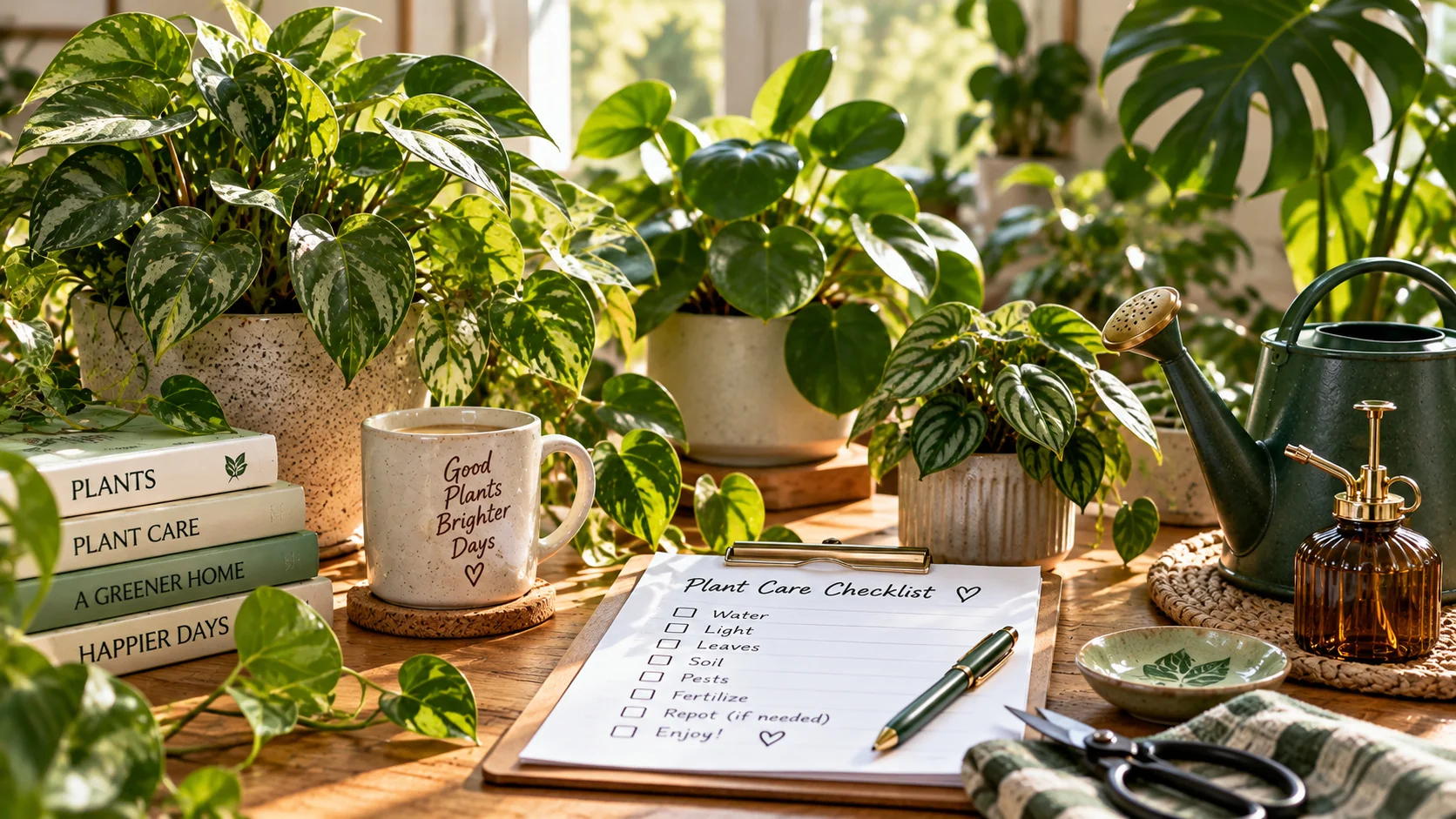
Seasonal Plant Care Checklist
Your routine should change through the year. Light, temperature, active growth, wind and evaporation all affect how quickly a plant uses water and how much attention it needs.
| Season | Main checks | Typical adjustment |
|---|---|---|
| Spring | New growth, roots, potting mix, changing light and outdoor transitions. | Increase checks as active growth returns and consider repotting only where it is genuinely needed. |
| Summer | Fast-drying pots, heat, stronger sun, wind and outdoor containers. | Check moisture more often and protect sensitive plants from excessive heat or sudden intense sun. |
| Fall | Slower growth, cooler nights and shorter days. | Expect drying times to change and avoid continuing a summer watering routine automatically. |
| Winter | Lower light, cold windows, heated rooms and slowly drying potting mix. | Check carefully before watering and pay particular attention to low-light and overwatering problems. |
Outdoor plants and containers react especially strongly to changes in sun, rain, wind and temperature. The Garden & Outdoor guides cover seasonal care, outdoor watering, soil, drainage and practical routines for beds and containers.
Fit the Routine to Your Plant Collection
A useful checklist should adapt to the plants you actually grow. Houseplants, outdoor containers, garden beds and herbs do not all need the same routine.
Houseplants
Pay close attention to usable window light, potting-mix drying time, drainage, indoor temperature and pests hiding on leaves and stems. Indoor conditions can change significantly between summer and winter, even when the plant stays in the same room.
Containers & Garden Plants
Weather matters more outdoors. Heat, strong sun, wind and rainfall can change moisture conditions quickly, especially in smaller containers. Check current conditions instead of assuming yesterday's routine still fits.
Kitchen Herbs
Herbs growing beside one another may still have different light, moisture and harvesting needs. If herbs are an important part of your collection, Herbs & Natural Living covers growing, caring for, harvesting and preserving useful herbs at home.
A Mixed Collection
Grouping plants can make your care round easier, but avoid turning the whole group into a single watering schedule. Use one checklist for observation, then make the final decision plant by plant.
What to Do When the Checklist Finds a Problem
The checklist is designed to help you notice changes early. It is not meant to diagnose every problem by itself. Begin with the clearest clue and avoid several major care changes at the same time.
| What you notice | Check first | Best next step |
|---|---|---|
| Yellow leaves | Soil moisture, drainage, light and whether old or new leaves are affected. | Avoid adding more water until you know whether the potting mix is actually dry. |
| Drooping | Whether the soil is dry, damp or still very wet. | Do not assume every drooping plant is thirsty. |
| Brown or crispy edges | Watering consistency, heat, direct sun and dry indoor conditions. | Look for a pattern before trimming leaves or changing several care factors. |
| Sticky leaves or tiny insects | Leaf undersides, stems, new growth and nearby plants. | Identify the problem before choosing a treatment. |
| Weak or stretched growth | Actual light level and distance from the window. | Improve growing conditions before automatically adding fertilizer. |
| Soil stays wet for many days | Drainage, pot size, potting mix, roots, light and temperature. | Pause automatic watering and find out why drying is unusually slow. |
Watering, repotting, fertilizing, moving and treating a plant on the same day can make the original problem harder to identify. Start with the clearest clue and give the plant time to respond whenever possible.
When a plant already shows symptoms such as yellow leaves, brown tips, drooping growth, soggy soil or visible pests, continue with the Plant Problems guide to narrow down the likely cause before making a bigger change.
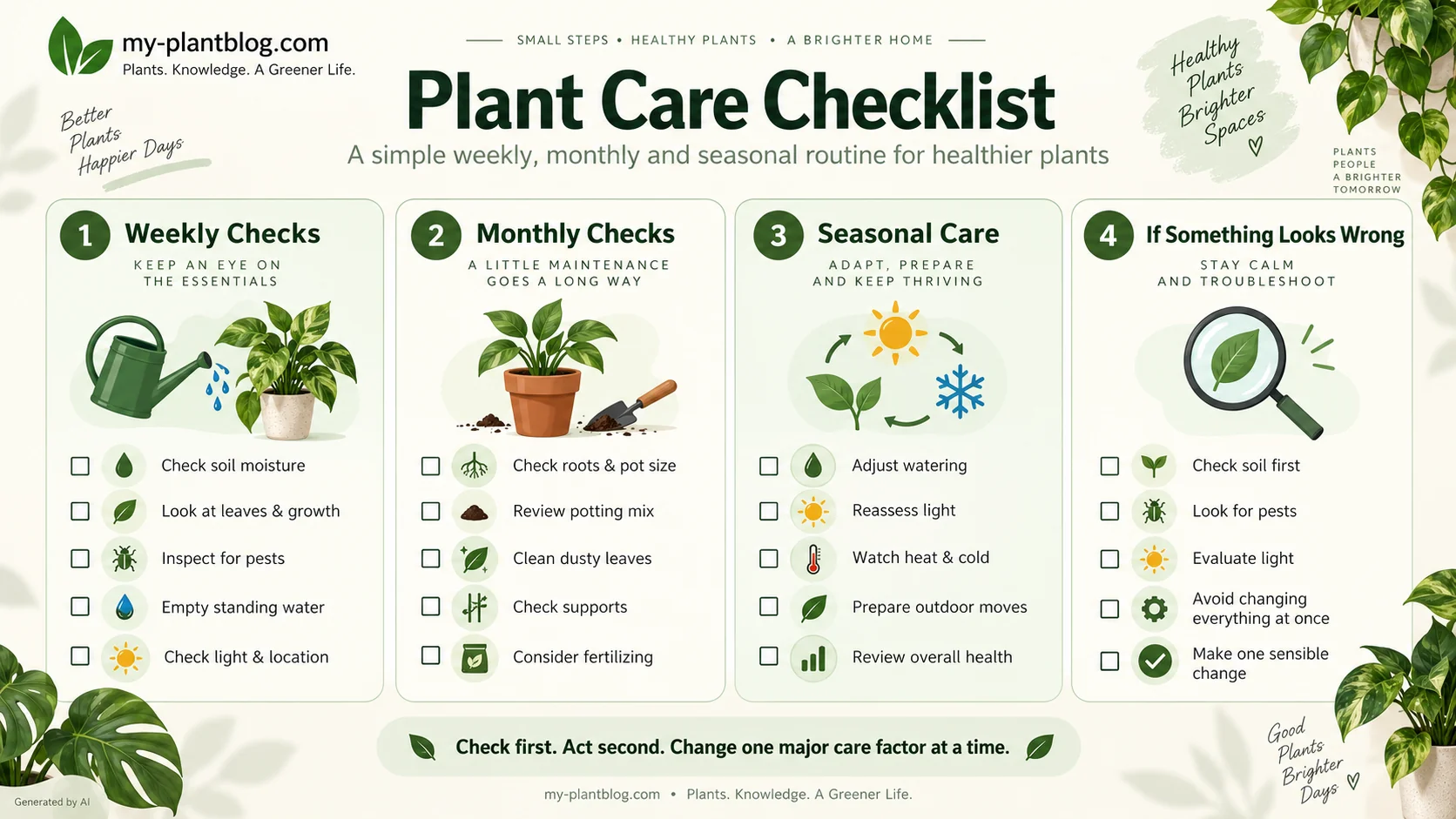
Printable Plant Care Quick Checklist
Use this compact version when you want a fast plant-care round. You can print the page directly from your browser or save it as a PDF.
- Look at the entire plant before changing anything.
- Check the potting mix before watering.
- Notice whether the pot feels lighter or heavier than usual.
- Empty standing water from saucers or decorative pots.
- Check that drainage is working.
- Look at the actual light reaching the plant.
- Check new and older leaves for color changes or damage.
- Inspect leaf undersides and stems for pests.
- Look for new growth and unusual stretching or leaning.
- Consider recent heat, cold, wind, rain or seasonal changes.
- Check roots or repot only when there is a reason.
- Feed only when appropriate for the plant and its growth stage.
- Remove fully dead plant material when useful.
- Record meaningful changes or treatments.
- Change one major care factor at a time whenever possible.
A healthy plant may need no action at all when you check it. Observation is part of plant care too.
Plant Care Checklist FAQ
How often should I use a plant care checklist?
For many houseplants, a weekly observation round is practical. Outdoor containers may need moisture checks much more often during hot, sunny or windy weather. The checklist is for checking conditions, not automatically performing every task.
Should I water all my plants on the same day?
No. You can check them on the same day, but water only the plants whose soil and growing conditions indicate that they need it.
What should I check first when a plant looks unhealthy?
Look at the whole plant, check the potting mix and drainage, evaluate the light, inspect for pests and think about recent changes. Avoid making several major changes at once.
Should fertilizing be part of a weekly routine?
Usually not. Fertilizer frequency depends on the plant, product, season and growth stage. Feeding should not be used as an automatic response to a stressed plant.
Can I print this plant care checklist?
Yes. Use your browser's print function to print the page or save it as a PDF. The print layout removes unnecessary screen styling and keeps the checklist sections easy to read.
Keep Plant Care Simple
You do not need to perform every possible plant-care task every week. Check the plant, understand what changed and choose the smallest useful next step.
A steady routine built around observation is usually more useful than reacting to every small change. Check first, act second, and give the plant time to show you whether the adjustment helped.
