
Tiny Bugs on Houseplants: How to Identify and Treat Them
Noticed tiny bugs on your houseplants? Start by checking where they appear. Small dark flies around the potting mix may be fungus gnats, while fine webbing and pale leaf speckles can point to spider mites. White cottony clusters suggest mealybugs, and sticky leaves may indicate aphids or scale insects.
The right treatment depends on the pest. Before reaching for a spray, move the affected plant away from your other houseplants, inspect its leaves and soil, and match the symptoms to the identification guide below.
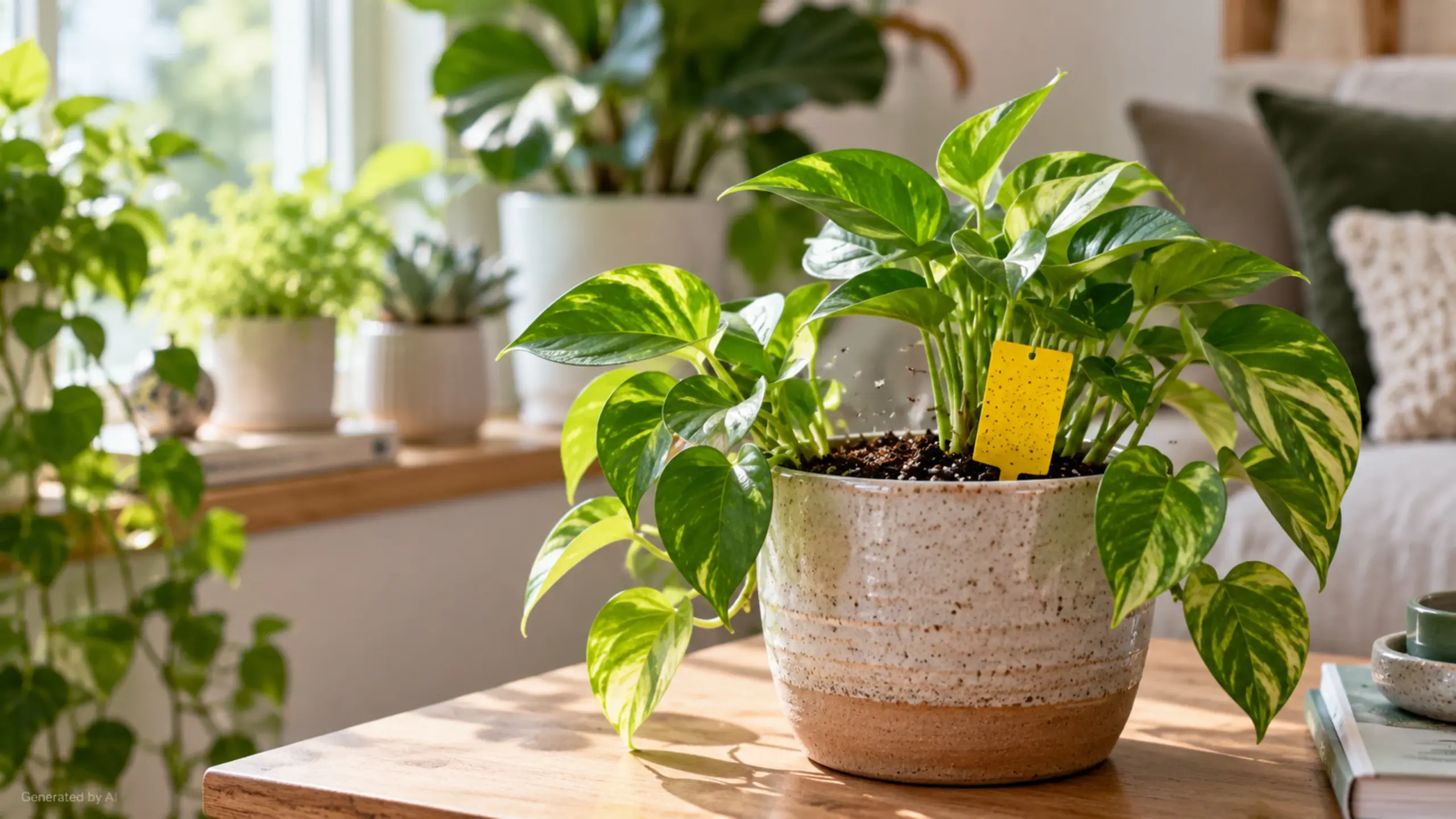
What Are the Tiny Bugs on My Houseplant?
Most common houseplant pests leave recognizable clues. Their color matters, but their location, movement, and the damage they leave behind are often more useful for identifying them.
Flying over soil: check for fungus gnats. Fine webbing: check for spider mites. Cottony white clumps: look for mealybugs. Silvery leaf damage: investigate thrips. Sticky leaves and clusters of insects: inspect for aphids, scale, or whiteflies.
Not every small creature in potting soil is harmful. Springtails, for example, usually feed on fungi and decaying organic matter rather than healthy houseplants.
Tiny Houseplant Bugs: Identification Chart
Use this chart to narrow down the possibilities. A clue can point you toward a pest, but look for a combination of signs before treating your plant.
| Possible pest | What it looks like | Where to look | What to do first |
|---|---|---|---|
| Fungus gnats | Small, dark, mosquito-like flies | Moist soil and around pots | Check watering and monitor adults with yellow sticky traps. |
| Spider mites | Minute moving specks; sometimes fine webbing | Leaf undersides and stem joints | Isolate the plant and gently rinse suitable foliage. |
| Mealybugs | White, cottony or powdery clusters | Leaf joints, stems, and sheltered areas | Remove visible insects and inspect hidden crevices. |
| Thrips | Very small, slender insects; pale or dark | Leaves, buds, and new growth | Inspect for silvery streaks and tiny dark droppings. |
| Aphids | Small, soft-bodied insects, often green or black | Tender shoots and new growth | Wash off small colonies where the plant tolerates it. |
| Scale insects | Small brown, tan, or pale bumps | Stems, leaf veins, and undersides | Check whether the bumps are attached insects. |
| Whiteflies | Tiny, white, moth-like insects | Mostly leaf undersides | Check for adults taking flight and immature stages below leaves. |
| Springtails | Very small pale or gray creatures that often jump | Moist potting mix and saucers | Check soil moisture; treatment is usually unnecessary. |
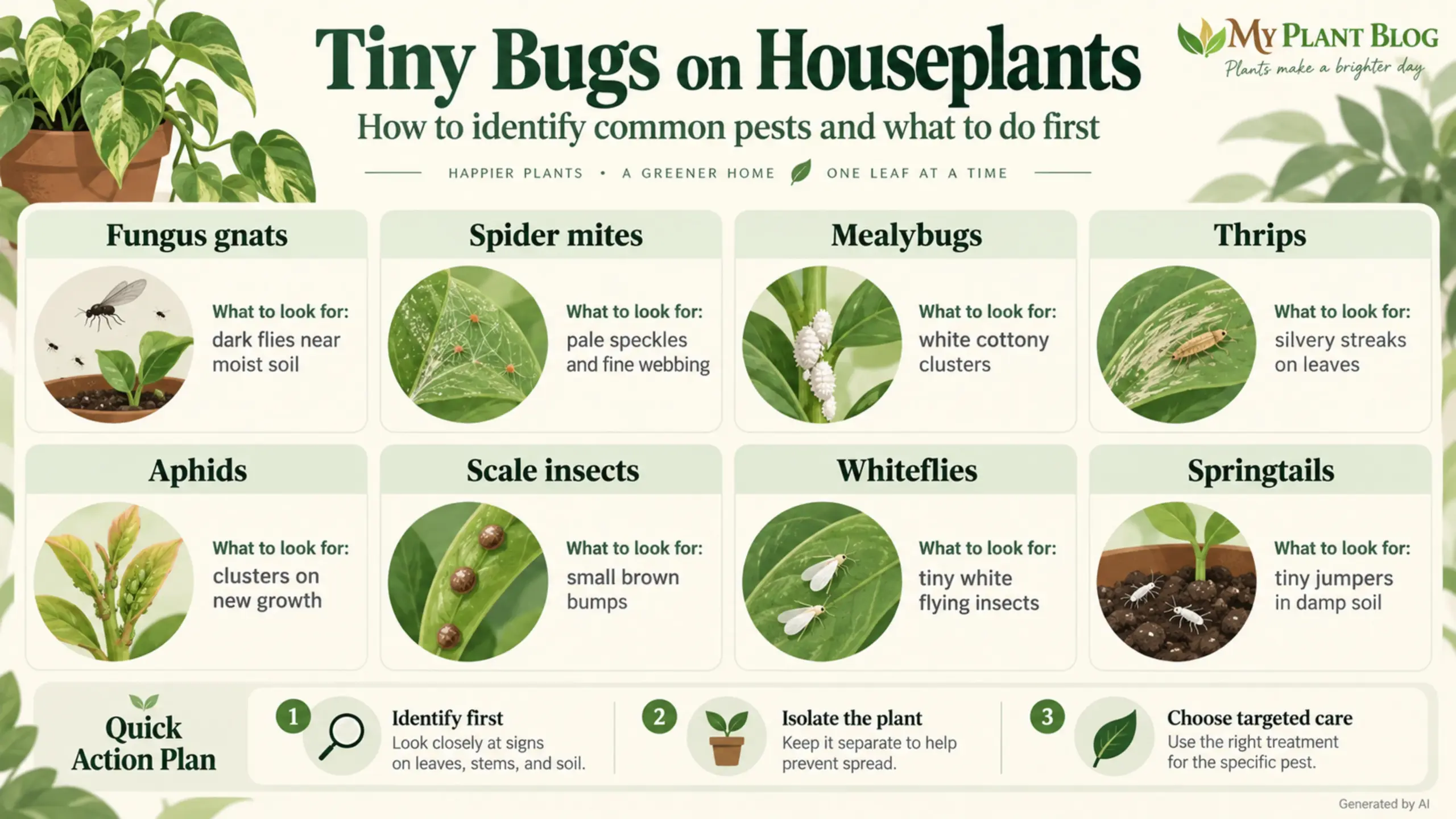
A phone camera with a macro setting or a small magnifying glass can help distinguish insects from soil particles, mineral residue, and old leaf damage.
What to Do First When You Find Bugs
Finding a few insects does not mean you need to replace the soil, prune the plant, and spray everything at once. A careful inspection gives you a better starting point.
- Separate the affected plant. Move it away from nearby houseplants if you suspect a spreading pest.
- Inspect both sides of the leaves. Pay special attention to leaf undersides, new growth, stems, and tight leaf joints.
- Check the potting mix. Look for insects moving on the surface, small flies rising from the pot, and unusually persistent moisture.
- Look for feeding damage. Sticky residue, pale speckles, silvery patches, distorted leaves, and fine webbing offer useful clues.
- Choose a targeted response. Remove visible pests when practical, correct care conditions if needed, and use a labeled treatment only when appropriate.
Do not spray every plant simply because you noticed a few moving specks. Some soil organisms are harmless, and unnecessary treatments can damage sensitive foliage.
Common Houseplant Pests and How to Recognize Them
1. Fungus Gnats: Tiny Black Flies Around the Soil
Fungus gnats are small, dark flies commonly found around moist potting mix. You may notice them when you water a plant or disturb the soil surface.
Their larvae live in the growing medium and generally feed on fungi and decaying organic material. Adults are mainly a nuisance. High larval populations can affect vulnerable seedlings or weakened roots.
What helps: Check whether the potting mix is staying wet longer than the plant needs. Improve drainage where necessary and allow the surface to dry appropriately between waterings.
Yellow sticky traps can help capture and monitor adult gnats, but they do not eliminate larvae living in the soil.
For persistent infestations, consider a product containing Bacillus thuringiensis israelensis (Bti) that is specifically labeled for fungus gnat larvae and its intended use.
If moisture management is difficult, our guide to checking soil moisture before watering explains how to adjust your routine without relying on a rigid calendar.
2. Spider Mites: Tiny Specks and Fine Webbing
Spider mites are extremely small arachnids. Early damage often looks like tiny pale dots scattered across the leaf surface, known as stippling.
As an infestation develops, leaves may look dull or bronzed. Fine webbing can appear around leaf joints and on the undersides of leaves, although webbing may be absent during an early infestation.
What helps: Isolate the plant, remove heavily infested foliage if appropriate, and rinse affected leaves gently if the plant tolerates washing. Pay particular attention to the undersides.
If the population persists, use a houseplant product labeled for spider mites, following its instructions. More than one treatment may be necessary.
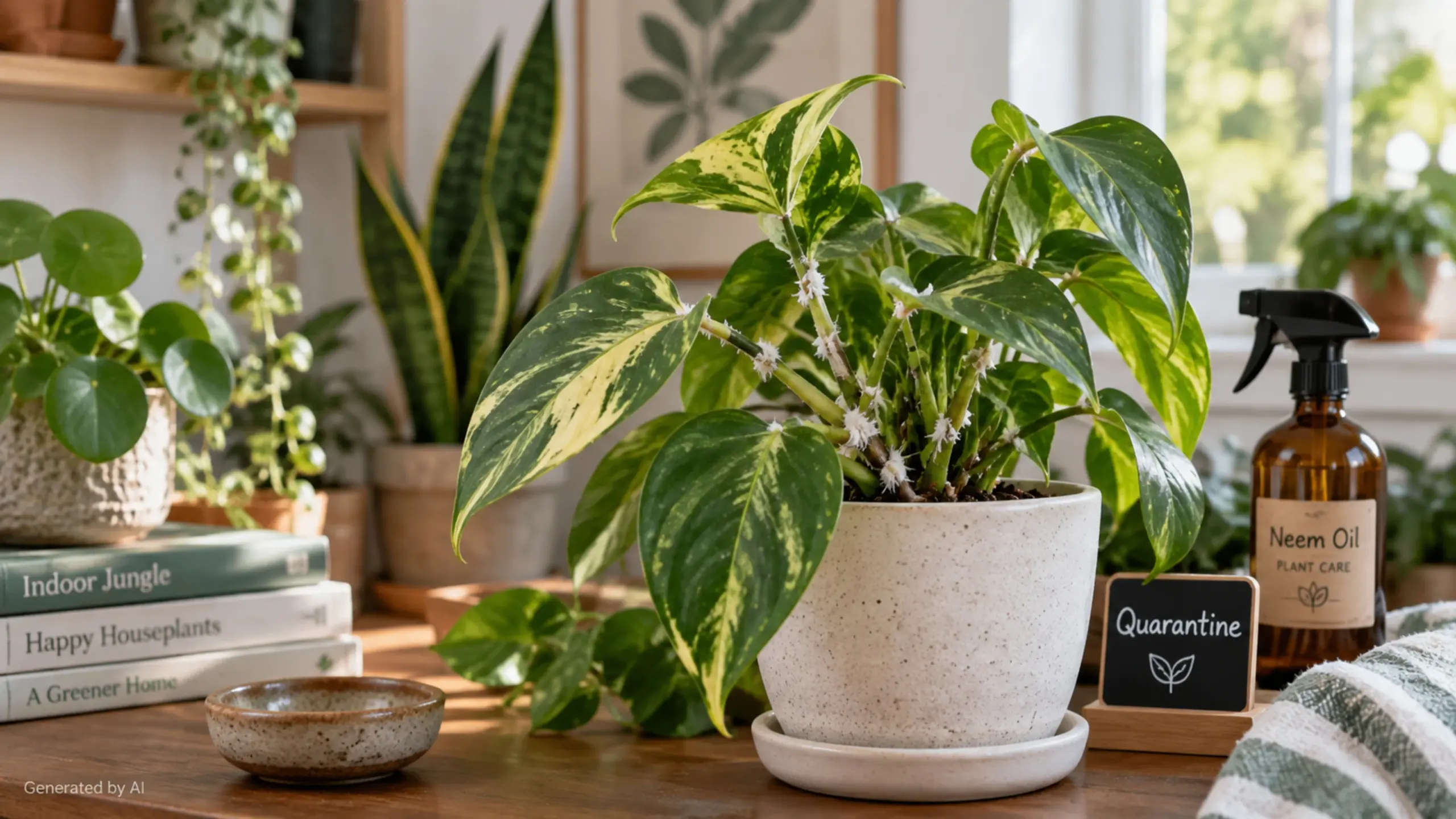
3. Mealybugs: White Cottony Clusters
Mealybugs are soft-bodied insects covered in a white, waxy coating. They often gather where leaves meet stems, around new growth, and in other protected areas.
They feed on plant sap and may cause yellowing, distorted growth, and sticky honeydew.
What helps: Remove small numbers of visible insects using a soft swab. A little rubbing alcohol on a swab can be used to spot-treat some infestations, but test a small area first and avoid sensitive plant tissue.
Continue checking concealed areas for newly emerging insects. Where necessary, use a labeled houseplant insecticide suitable for mealybugs.
4. Thrips: Slender Insects and Silvery Leaf Damage
Thrips are narrow insects that can be difficult to recognize without magnification. Some are pale, while others are yellow-brown or dark.
Their feeding can leave silvery patches, fine streaks, distorted new growth, and small dark specks of droppings.
What helps: Isolate the plant and inspect new growth and leaf undersides. Remove badly damaged foliage when appropriate.
Sticky monitoring cards can help reveal adults. For an established infestation, use a suitable labeled treatment and continue monitoring because different life stages may be present.
5. Aphids: Small Bugs Clustered on New Growth
Aphids often gather on soft shoots, buds, and young leaves. They can be green, black, brown, yellow, or other colors.
Their feeding may cause curled or distorted growth. Sticky honeydew is another useful clue.
What helps: A gentle stream of water can remove many aphids from suitable plants. Small colonies may also be removed manually. Check the plant again as new growth develops.
6. Scale Insects: Brown Bumps on Stems and Leaves
Scale insects can look like tiny brown, tan, or pale bumps attached to stems and leaf veins. Many remain stationary once established.
Some species produce sticky honeydew, while others do not. A heavily affected plant may develop yellow leaves or weak growth.
What helps: Remove a few insects carefully by hand and inspect nearby stems. Severe infestations may need repeated treatment.
Products often work better on young, mobile scale insects than on adults protected by their covering.
7. Whiteflies: Tiny White Insects That Fly Up
Whiteflies resemble miniature white moths. Adults may fly up when the plant is disturbed. Their immature stages are commonly found on the undersides of leaves.
Feeding can cause yellowing and sticky residue.
What helps: Isolate the plant, inspect leaf undersides, and use sticky traps to monitor flying adults.
A product labeled for whiteflies may help with persistent infestations, but monitoring is important because immature stages can remain on the foliage.
How to Get Rid of Tiny Bugs on Houseplants
Once you have identified the likely pest, start with the least disruptive option that is suitable for your plant and the severity of the infestation.
Start With Physical Removal
Light infestations often respond to wiping, careful hand removal, or rinsing suitable foliage. These methods are especially useful for visible aphids and small mealybug colonies.
Keep water pressure gentle. Plants with delicate, fuzzy, or easily damaged foliage may not tolerate washing well.
Use Insecticidal Soap Only When Appropriate
Commercial insecticidal soap can help manage certain soft-bodied insects and mites when the product is labeled for the target pest and plant.
Do not substitute ordinary dish detergent. Household cleaning formulas are not designed for plant pest control and can injure leaves.
Test a small section first, follow the label, and avoid spraying a plant in strong direct sunlight or when heat increases the risk of foliage damage.
Match Soil Treatments to Soil Pests
Fungus gnat larvae live in the potting mix. Leaf sprays and adult sticky traps alone will not adequately address them.
Address unnecessary soil moisture first. If a larval treatment is needed, choose one that is specifically labeled for the problem.
Always follow current product-label directions, including indoor-use restrictions, protective measures, application intervals, and precautions involving pets and children.
Do not assume that natural or homemade sprays are automatically safe.
Keep Checking After Treatment
A single treatment may remove visible adults without addressing eggs or immature insects. Follow the product's recommended reapplication schedule when necessary, and inspect the plant regularly for fresh activity.
Older leaf damage usually will not disappear. Look for healthier new growth and fewer living pests when judging whether your approach is working.
Tiny White Bugs in Houseplant Soil: Are They Harmful?
Small white or gray creatures that jump when you disturb moist soil may be springtails. They feed mainly on fungi and decaying organic matter and usually cause little or no damage to healthy houseplants.
Their presence is often associated with a consistently damp growing medium. If you see large numbers, check whether your watering routine and pot drainage suit the plant.
Do not let a moisture-loving plant dry out completely just to reduce springtails. Adjust watering according to the plant's actual needs.
If the creatures do not jump, appear attached to roots, or accompany unexplained plant decline, do not assume they are springtails. Take a close-up photo and seek a more specific identification before treating the soil.
What If the Potting Mix Stays Wet for Too Long?
When a container remains soggy for days, the problem may extend beyond the insects you can see. Check whether excess water can escape and whether the growing medium suits the plant.
An overly dense mix or an oversized container can keep the root zone wet longer than expected. However, repotting is not necessary for every minor pest problem.
If you need to assess the growing medium, our plant care guides covering potting mix, drainage, and repotting explain how to evaluate the root environment before making a larger change.
How to Prevent Houseplant Bugs From Coming Back
Prevention starts with regular inspections and care conditions that suit each plant. No routine can guarantee a pest-free collection, but a few simple habits help you notice problems early.
- Inspect new plants: Check leaves, stems, and soil before bringing them into your collection.
- Keep new arrivals separate: Observe them away from established plants for a few weeks.
- Check leaf undersides: A brief inspection during regular care can reveal pests before damage spreads.
- Water according to soil moisture: Avoid keeping ordinary houseplant mixes unnecessarily wet.
- Remove dead material: Clear fallen leaves and decaying debris from pots when appropriate.
- Monitor nearby plants: When one plant has a confirmed infestation, inspect its neighbors for similar symptoms.
Match Light and Watering to Your Plant
Light affects how quickly a houseplant grows and uses water. A plant in a dim room may need less frequent watering than the same plant in a brighter location.
If the soil stays damp much longer than expected, check whether the plant receives an appropriate amount of daylight. Our guide to understanding plant light needs helps you assess the location before changing your care routine.
The aim is not to create a complicated treatment routine. Learn what a healthy plant normally looks like and investigate changes when they appear.
Frequently Asked Questions
What are the tiny black bugs flying around my houseplant?
Small dark flies that rise from damp potting mix may be fungus gnats. Check whether the soil stays wet for long periods. Yellow sticky traps can help monitor adults, but larvae live in the soil.
Are tiny white bugs on houseplants always mealybugs?
No. White cottony clusters on leaves and stems may indicate mealybugs, but small white insects that fly when disturbed may be whiteflies. Tiny jumping creatures in soil may be springtails. Location and movement help distinguish them.
Can I use dish soap to kill houseplant pests?
Ordinary dish soap is not a reliable substitute for a labeled insecticidal soap. Some household detergents can damage plant tissue. Use a product intended for the pest and plant, following its directions.
Do I need to repot a plant with tiny bugs?
Not automatically. Many leaf pests can be managed without disturbing the roots. If the problem involves persistently wet or deteriorating potting mix, assess drainage and the root environment before deciding whether fresh mix is needed.
How do I know if a pest treatment worked?
Look for fewer living insects, reduced activity on monitoring traps, and healthy new growth. Existing spots or damaged leaves may remain visible after the infestation is controlled. Continue checking for newly emerging pests.
Further Reading and Expert Resources
For detailed pest identification and management guidance, see the University of Minnesota Extension's indoor plant insect guide and Colorado State University's houseplant pest guide .
Identify First, Treat Second
Tiny bugs on houseplants are easier to manage when you know what you are looking at. Start with the insect's location, appearance, and the damage it leaves behind.
If your plant has yellowing, drooping, or other symptoms that are not clearly caused by insects, explore our plant problem guides to check other possible causes.
Make one sensible adjustment, keep observing, and give your plant time to respond.
