
Houseplant Pests: How to Identify Common Bugs and Treat Them
The most common houseplant pests include spider mites, mealybugs, scale insects, fungus gnats, aphids, thrips, and whiteflies. The fastest way to deal with them is to identify the pattern first: webbing, sticky leaves, white cottony clusters, brown bumps, silvery damage, or small flies around the soil. Isolate the affected plant, inspect it closely, remove visible pests where possible, and then match the treatment to the pest instead of spraying everything at once.
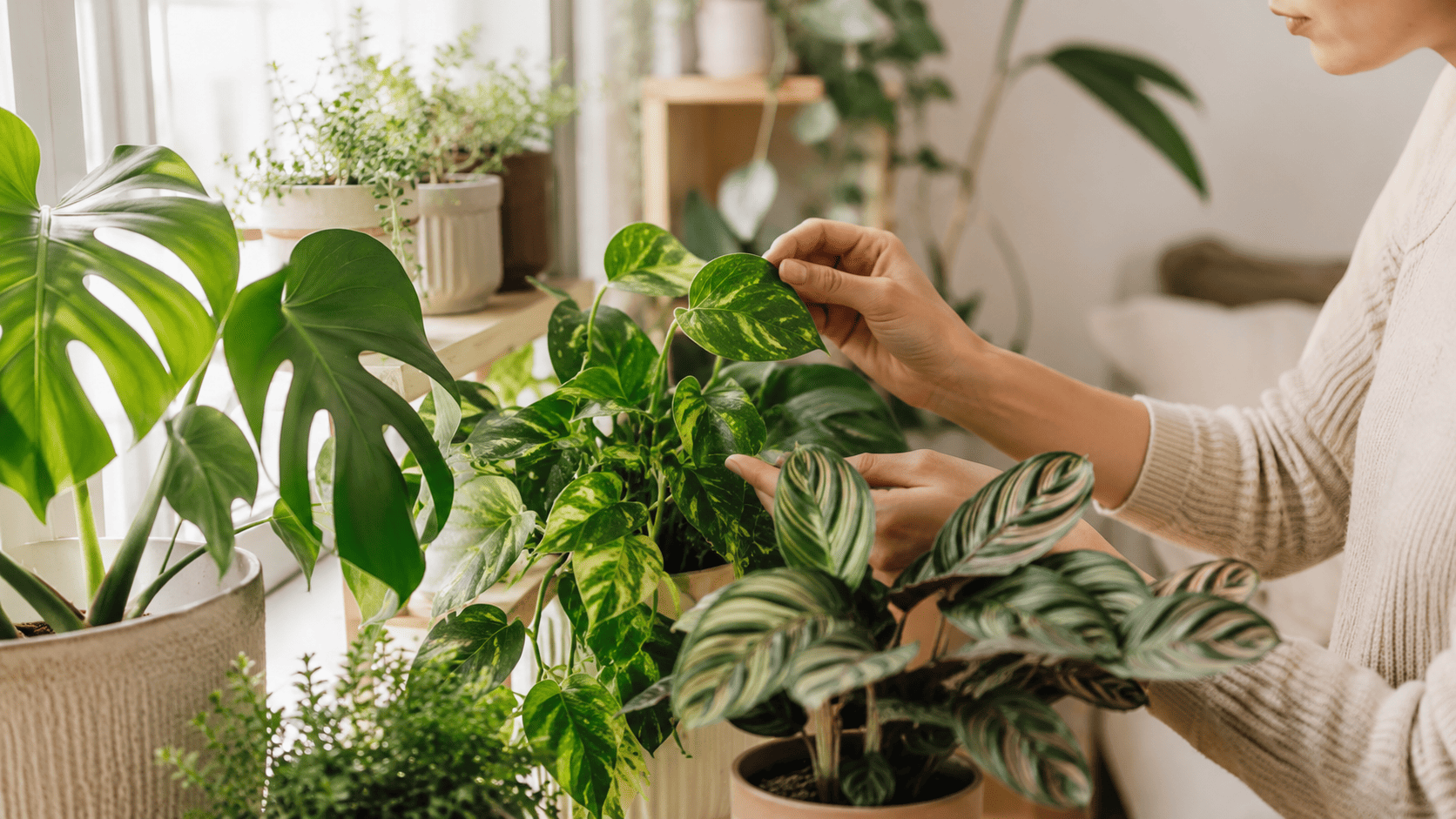
Quick Houseplant Pest Identification
You often notice the damage before you notice the pest itself. Instead of starting with a product, start with what you can actually see.
| What you notice | Likely pest | Where to check | First useful step |
|---|---|---|---|
| Fine webbing and pale speckling | Spider mites | Leaf undersides and between stems | Isolate the plant and rinse foliage thoroughly |
| White cottony clusters | Mealybugs | Leaf joints, stems, new growth | Remove visible clusters and inspect hidden crevices |
| Brown or tan raised bumps | Scale insects | Stems, leaf veins, leaf undersides | Remove visible scale where practical and recheck closely |
| Tiny dark flies around the pot | Fungus gnats | Soil surface and damp potting mix | Check soil moisture and reduce unnecessary watering |
| Clusters of soft insects on new growth | Aphids | New shoots, buds, tender stems | Rinse or remove visible colonies |
| Silvery streaks, distorted leaves, dark specks | Thrips | Leaves, new growth, flowers | Isolate immediately and inspect the newest growth |
| Small white insects that flutter when disturbed | Whiteflies | Leaf undersides | Isolate and inspect neighboring plants |
Where to Look for Houseplant Pests First
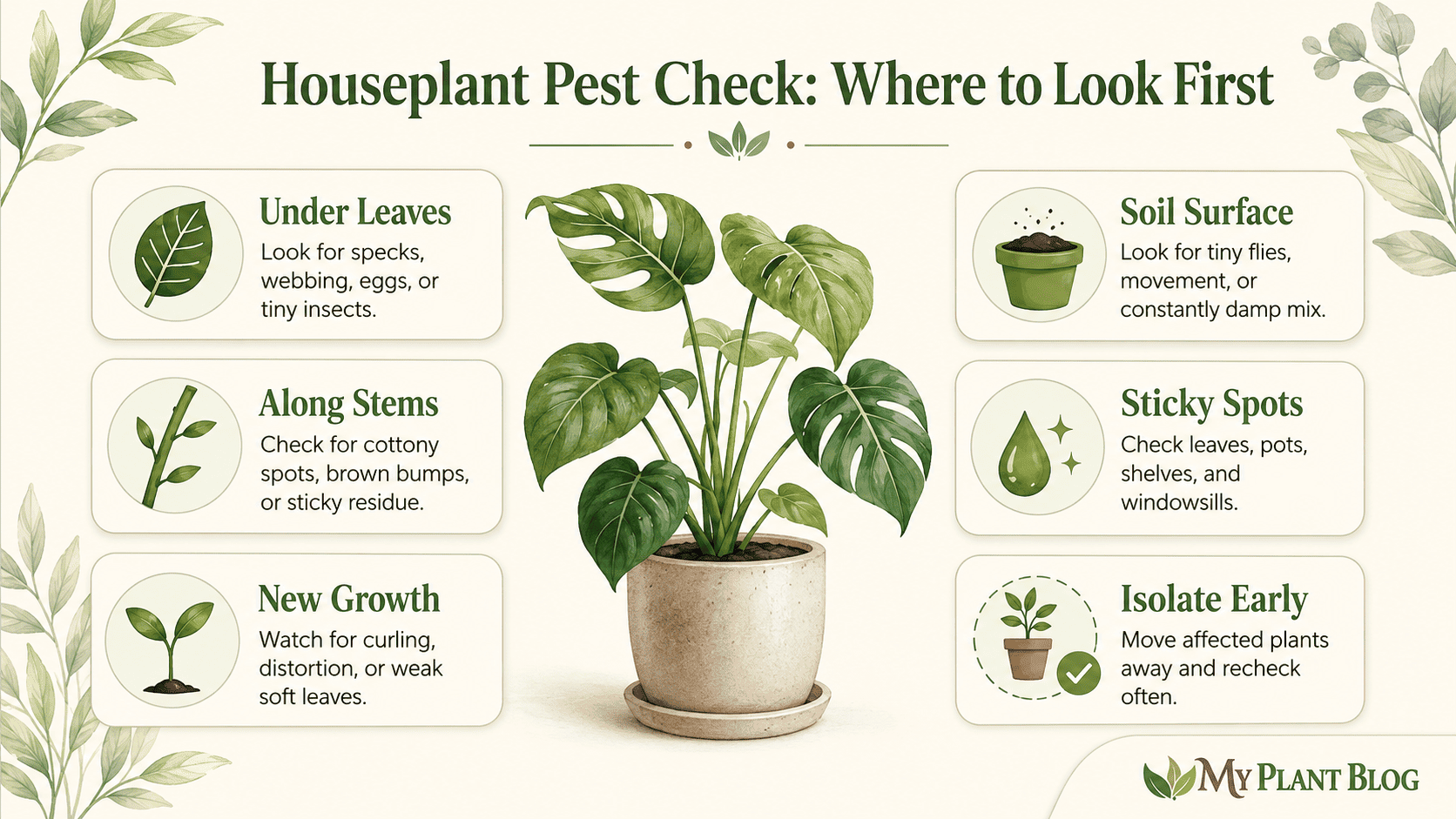
Most pests do not sit on the most visible part of the plant. Turn the pot slowly and inspect protected areas where insects and mites can feed without being disturbed.
Under the leaves
Spider mites, whiteflies, aphids, thrips, and other small pests often gather on leaf undersides. Check several leaves from different parts of the plant.
Leaf joints and stems
Mealybugs and scale often hide where leaves meet stems, around nodes, or in narrow crevices that are easy to overlook.
New growth
Tender new leaves can show pest pressure quickly. Look for curling, distortion, stickiness, scarring, or unusually weak growth.
The soil surface
Tiny dark flies walking or hovering above moist potting mix are often fungus gnats. Soil moisture is an important clue.
The pot and saucer
Check the rim, drainage holes, cachepot, saucer, support stakes, and nearby shelf or windowsill. Pests and sticky honeydew can appear beyond the leaves.
Nearby plants
If leaves from several plants touch each other, inspect those plants too. Some pests can move easily through a crowded plant collection.
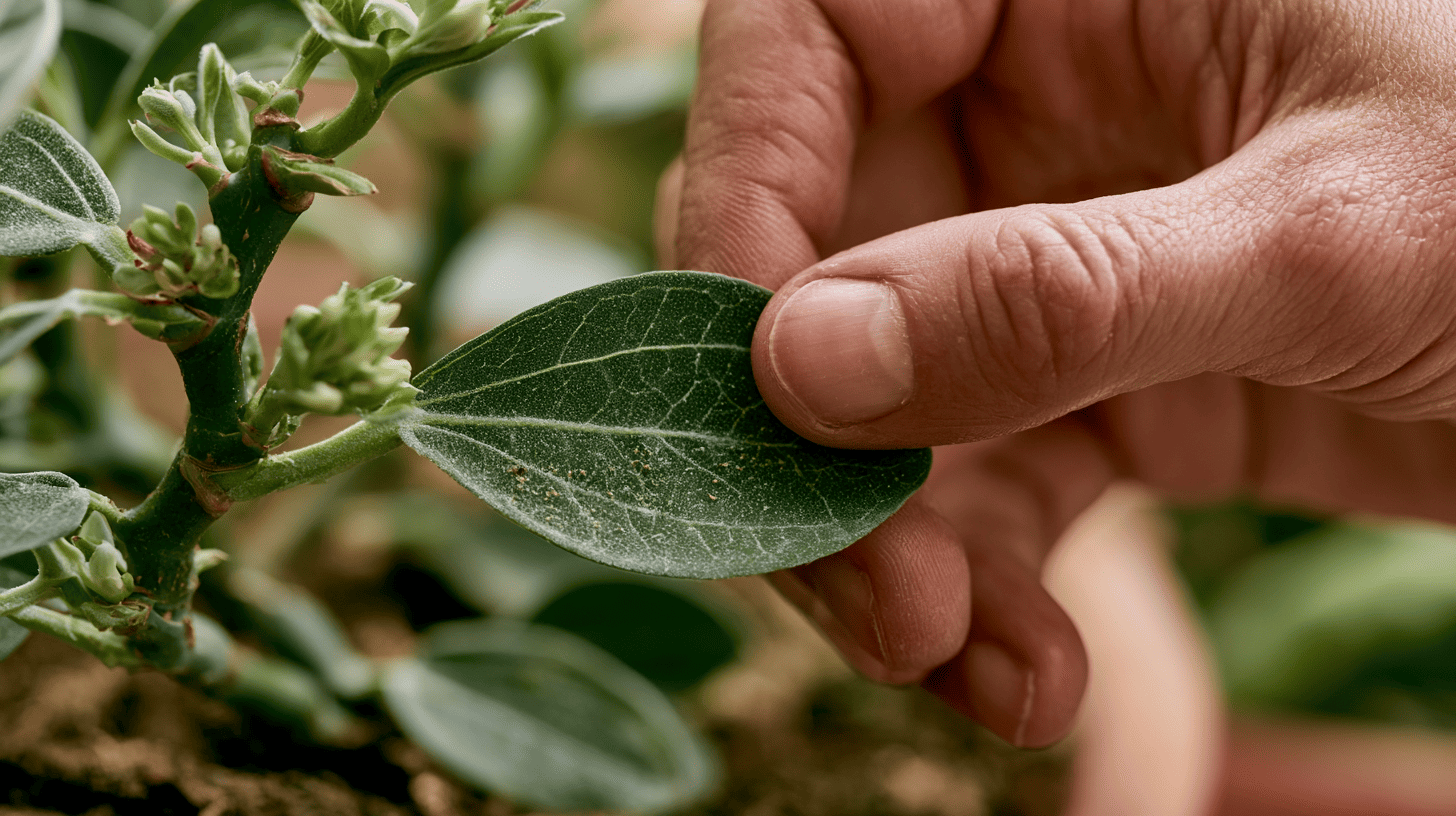
The Most Common Houseplant Pests
Spider Mites
Spider mites are extremely small and can look like moving specks rather than obvious pests. Fine webbing is one of the easiest clues, especially when leaves also develop pale stippling, a dusty appearance, or faded patches.
Check the undersides of leaves and the spaces between stems. A useful inspection trick is to hold a white sheet of paper beneath a leaf and tap the leaf gently. Moving dots on the paper can make a small infestation easier to notice.
Start by isolating the plant and thoroughly rinsing sturdy foliage, especially the leaf undersides. Continue checking because one rinse may reduce the population without eliminating every life stage.
Mealybugs
Mealybugs usually look like small white cottony or waxy clusters. They often hide at leaf joints, along stems, around new growth, and inside tight crevices.
Small infestations are easier to handle when visible pests are removed early. Inspect the plant again every few days because hidden mealybugs can reappear after the first cleaning.
Scale Insects
Scale insects are easy to mistake for part of the plant because many look like small brown or tan bumps attached to stems or leaves. Soft scale may also produce sticky honeydew.
Look closely at stems, leaf veins, and leaf undersides. If only a small number are present, physical removal can reduce the infestation, followed by repeated inspection for newly visible pests.
Fungus Gnats
Fungus gnats are small dark flies commonly seen around moist potting mix. The adult flies are the part you notice, but the moisture level of the growing medium is often the more useful clue.
Check whether the potting mix remains wet for long periods, whether water sits in a saucer or cachepot, and whether drainage is working properly. Your watering routine should follow the soil and plant rather than a fixed calendar.
Yellow sticky traps can help monitor flying adults, but they do not correct constantly wet potting mix by themselves.
Aphids
Aphids are soft-bodied pests that often gather around tender shoots, buds, and new leaves. They may be green, yellow, brown, black, or other colors, depending on the species.
Sticky residue and curled new growth can be clues. On a small infestation, rinsing or removing visible clusters can be a practical first step.
Thrips
Thrips can be difficult to notice directly. Their damage is often easier to spot: silvery or pale scarring, distorted new leaves, and tiny dark specks on damaged areas.
Isolate a suspected plant promptly and inspect new growth carefully. Thrips may require repeated monitoring and targeted treatment because different life stages can be present at the same time.
Whiteflies
Whiteflies are small pale insects that often rest on the undersides of leaves. When an affected plant is disturbed, adults may flutter upward.
Inspect nearby plants as well, remove badly affected leaves when appropriate, and continue monitoring the undersides of new foliage.
What to Do First When You Find Pests
- Isolate the plant. Move it away from other houseplants while you identify the problem.
- Identify the pattern. Look at leaves, stems, soil, new growth, and the pot rather than relying on one damaged leaf.
- Remove what you can. Rinse, wipe, prune, or manually remove visible pests when this is suitable for the plant.
- Match the response to the pest. Fungus gnats require attention to the growing medium. Spider mites live mainly on foliage. Scale and mealybugs often hide on stems and leaf joints.
- Recheck repeatedly. One cleaning or treatment rarely tells you that every pest or life stage is gone.
Houseplant Pest Treatment Guide
| Pest | Useful first response | Keep checking |
|---|---|---|
| Spider mites | Isolate and rinse leaf undersides thoroughly | New speckling, moving dots, and fresh webbing |
| Mealybugs | Remove visible clusters and clean hidden leaf joints | Fresh cottony spots around stems and new growth |
| Scale | Remove visible scale where practical | New bumps, sticky leaves, and crawlers |
| Fungus gnats | Correct excessive soil moisture and improve drainage | Adult numbers and how long the mix stays wet |
| Aphids | Rinse or remove colonies from tender growth | Curled leaves, sticky residue, and new colonies |
| Thrips | Isolate and use a treatment labeled for thrips when needed | Fresh silvery damage and distorted new growth |
| Whiteflies | Isolate, inspect leaf undersides, and remove heavily affected foliage if appropriate | Adults flying up and new immature stages under leaves |
Insecticidal soap and horticultural oils can be useful for some pests when the product label includes the plant and pest you are treating. They are not universal solutions, and plant sensitivity varies.
Yellow Leaves or Drooping? The Problem May Not Be Pests
A damaged or declining plant does not automatically have insects or mites. Watering problems, low light, root stress, temperature changes, and normal leaf aging can create symptoms that look surprisingly similar.
If leaves are yellow but you cannot find webbing, sticky residue, insects, cottony clusters, scarring, or unusual bumps, use the yellow leaves diagnosis guide before applying a pest treatment.
If the plant is wilting, check the potting mix first. Both dry roots and waterlogged roots can cause a plant to sag. The drooping and wilting guide can help you tell the difference.
Wet soil, yellow leaves, soft stems, a musty smell, or continued wilting can also point toward overwatering and root rot rather than an insect problem.
How to Prevent Houseplant Pests From Spreading
Inspect New Plants Before Mixing Them Into Your Collection
Look under the leaves, along stems, around new growth, and at the soil before a new plant joins the rest of your collection. Keep it separate while you continue checking if you notice anything suspicious.
Give Plants Enough Space to Inspect Them
A packed shelf makes pests harder to notice and gives crawling pests easy access to neighboring leaves. A little space also makes routine inspection easier.
Remove Dead Material
Clear dead leaves and plant debris from the soil surface. A clean pot is easier to monitor and gives fungus gnats less decaying organic material around the surface.
Avoid Keeping Potting Mix Constantly Wet
Water according to the plant, container, light, season, and actual soil moisture. Constantly damp mix is especially useful to fungus gnats and can also create root problems.
Check Plants That Have Been Outdoors
Before outdoor plants come back inside, inspect leaves, stems, pot rims, and the soil surface carefully. Remove dead material and avoid placing an unchecked plant directly beside your indoor collection.
Keep Leaves Easy to Inspect
Dust and residue can hide early signs of pests. Gently cleaning suitable foliage from time to time makes webbing, sticky residue, scarring, and moving pests easier to notice.
Weekly Houseplant Pest Checklist
A quick inspection once a week is easier than dealing with a large infestation. Check more often when you have recently added plants or are actively treating a problem.
- Look under several leaves.
- Inspect leaf joints and stems.
- Check tender new growth for distortion.
- Look for fine webbing.
- Notice sticky leaves or surfaces below the plant.
- Check for white cottony clusters.
- Look for brown or tan raised bumps.
- Watch for silvery scarring or tiny dark specks.
- Check the soil surface for small flies.
- Notice whether the potting mix stays wet for too long.
- Remove dead leaves from the pot.
- Isolate plants with a confirmed or strongly suspected infestation.
- Recheck treated plants every few days.
Common Houseplant Pest Mistakes
Treating Before Identifying
A random spray can miss the real problem. Fungus gnats are connected to the growing medium, while spider mites and whiteflies are mainly found on foliage. Start with identification.
Only Checking the Top of the Leaves
Many pests spend most of their time beneath leaves or inside protected stem joints. A plant can look clean from above while pests remain underneath.
Watering a Stressed Plant Automatically
Drooping or yellow leaves do not always mean thirst. Check the soil first. Additional water can make a wet-root problem worse and can encourage fungus gnats.
Expecting One Treatment to Finish the Job
Hidden pests and different life stages may remain after the visible population has been reduced. Monitoring is part of treatment.
Using Homemade Sprays Too Aggressively
Concentrated soaps, oils, alcohol mixtures, or other homemade treatments can damage sensitive foliage. A product labeled for plant pest control gives you clearer instructions about safe use and application.
Treating Every Nearby Plant Without Checking It
Inspect neighboring plants carefully, but do not assume every plant needs the same treatment. Unnecessary spraying can add stress without solving anything.
When an Infested Plant May Not Be Worth Saving
Many houseplant pest problems can be managed when they are caught early. A heavily infested plant is a different situation, especially when pests repeatedly spread to valuable nearby plants or the plant continues to decline despite appropriate treatment.
Consider the size and value of the plant, how severe the infestation is, how many other plants are at risk, and whether you can realistically keep the plant isolated while continuing treatment.
If you decide to discard a severely infested plant, bag it before carrying it through areas where other plants are kept. Do not place infested plant material into indoor compost.
Houseplant Pests FAQ
What are the most common houseplant pests?
Common houseplant pests include spider mites, mealybugs, scale insects, fungus gnats, aphids, thrips, and whiteflies. The easiest way to identify them is by combining visible pests with the damage pattern and the part of the plant where they appear.
What should I do first when I find pests on a houseplant?
Isolate the affected plant, inspect leaves, stems, soil, and new growth, identify the likely pest, and remove visible pests where practical. Then choose a treatment that matches the pest rather than using a general spray automatically.
How often should I check my houseplants for pests?
A quick weekly inspection works well as a routine for many plant collections. Check more frequently when you bring home a new plant, move outdoor plants indoors, or are monitoring an active infestation.
Why are there tiny black flies around my houseplant soil?
Tiny dark flies around moist potting mix are often fungus gnats. Check how long the growing medium stays wet, improve drainage where necessary, remove dead plant material, and adjust watering to the needs of the plant.
Do sticky houseplant leaves mean pests?
Sticky leaves can be honeydew produced by sap-feeding pests such as aphids, mealybugs, or soft scale. Inspect stems, leaf joints, new growth, and leaf undersides before deciding on a treatment.
Should I throw away a houseplant with pests?
Not automatically. Small infestations are often manageable. Discarding may become practical when an infestation is severe, the plant is declining badly, or it repeatedly exposes a larger plant collection to pests.
Not Sure Whether It Is Really a Pest?
Sticky leaves, webbing, insects, or cottony clusters point toward pests. Yellowing, drooping, or weak growth without visible pest evidence can have many other causes.
Use the Plant Problems guides to compare watering, root, light, and pest symptoms before changing several parts of your care routine at once.
