
Overwatering and Root Rot: How to Save Your Plant
Is your houseplant drooping even though the soil is still wet? Overwatering may be the problem. When potting mix stays soggy, roots lose access to oxygen and can eventually begin to rot. The first step is to stop watering, check the drainage, and assess the soil before making another change.
Root rot does not always mean your plant is beyond saving. If healthy roots remain, removing damaged tissue and improving the growing conditions may give it a chance to recover. This guide walks you through the signs, a practical root check, and the next steps for an overwatered houseplant.
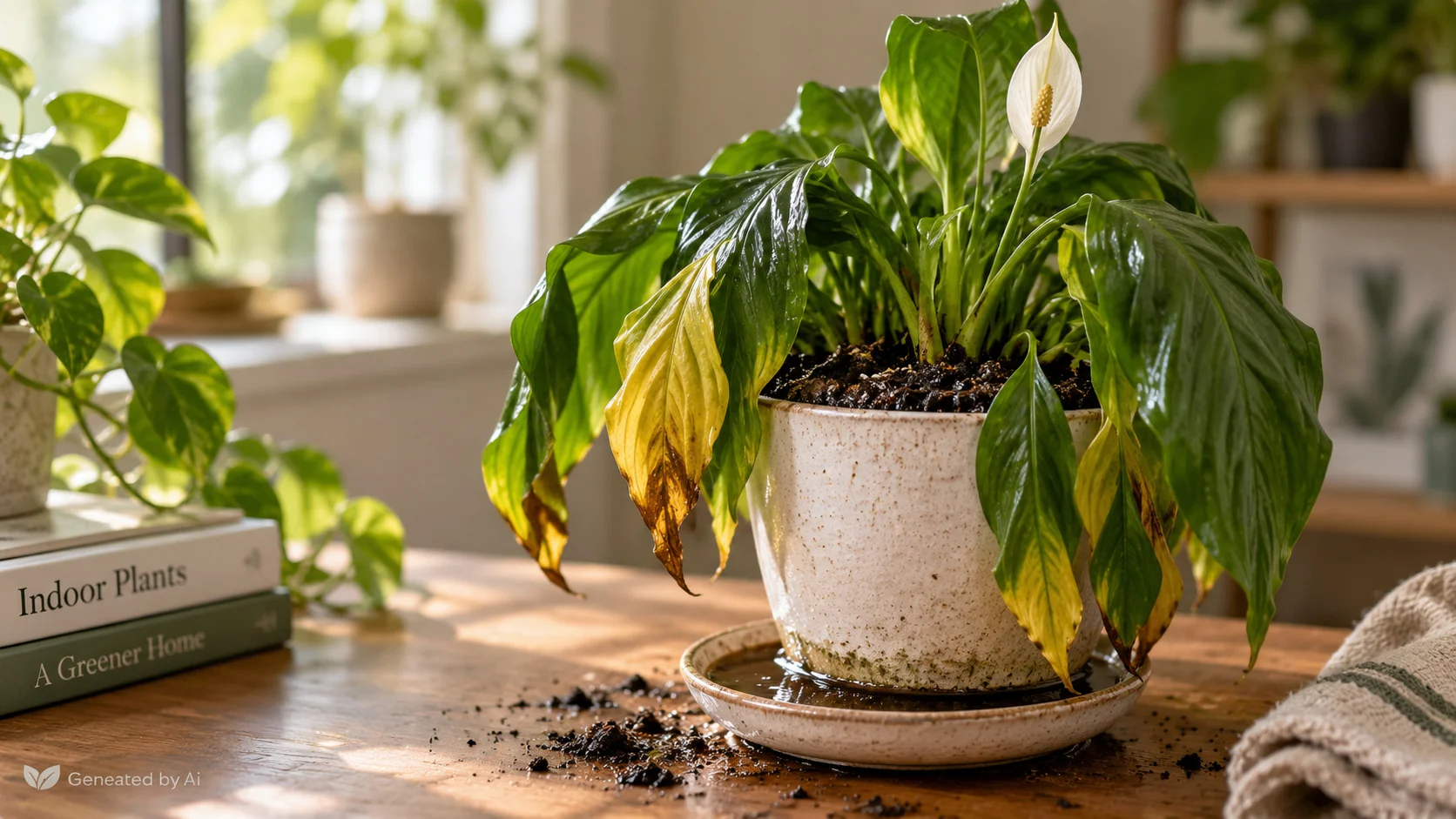
What to Do First if Your Plant Is Overwatered
If your plant looks unhappy and the potting mix is wet, do not automatically give it more water. Start with these simple checks.
- Pause watering. Check whether the soil is still damp beneath the surface.
- Empty the saucer or decorative pot. Never leave a typical houseplant sitting in collected water.
- Check the drainage holes. Make sure water can escape from the container.
- Look for warning signs. Widespread yellowing, persistent wilting, soft stems, or a sour smell deserve closer attention.
- Inspect the roots if necessary. If the plant continues to decline or you suspect rot, gently remove it from the pot and examine the root system.
Wet soil alone does not prove root rot. An overwatered plant may have healthy roots, while a plant with actual root rot has damaged root tissue. The right response depends on what you find.
What Is Root Rot, and How Does Overwatering Cause It?
Healthy roots need both water and oxygen. When the potting mix remains saturated for too long, water fills the spaces that would normally contain air. Roots become stressed and may start to die.
Prolonged wet conditions can also favor organisms associated with root rot, including certain fungi and fungus-like pathogens. Once enough roots are damaged, the plant struggles to absorb the moisture and nutrients it needs.
That explains one of the most confusing symptoms: a plant can wilt even when its soil is wet. The problem may not be a lack of water in the pot. It may be that damaged roots can no longer supply enough water to the leaves.
Similar symptoms can have several causes. For help distinguishing watering stress from light problems, pests, and other common issues, explore our Plant Problems guide.
A thorough watering is usually appropriate for a plant in a well-draining container when it actually needs water. Repeated watering before the root zone dries sufficiently, poor drainage, and unsuitable potting mix are often the bigger problems.
Signs of Overwatering and Root Rot
No single leaf symptom can confirm root rot. Look at the whole plant, the soil, and the roots rather than relying on one yellow leaf or a little drooping.
| What you notice | What it may mean | What to check |
|---|---|---|
| Soil stays wet for a long time | Slow drying or poor drainage | Pot size, drainage holes, light, and potting mix |
| Leaves turn yellow | Watering stress, root damage, or another care issue | Soil moisture and whether yellowing is spreading |
| Plant wilts in wet soil | Roots may be unable to take up enough water | Drainage and root condition |
| Stems become soft near the base | Possible advanced tissue damage | Stem firmness and the root system |
| Potting mix smells sour or rotten | Unhealthy, persistently wet root conditions | Roots and old growing medium |
| Roots are mushy or fall apart | Significant root deterioration | How many firm, healthy roots remain |
Fungus gnats can also appear around consistently damp soil, but their presence alone does not diagnose root rot. Likewise, a little mold on the soil surface does not necessarily mean the roots are infected.
Overwatering vs. Underwatering: How to Tell the Difference
Both too much and too little water can cause drooping, slow growth, and leaf loss. Before you react, check the moisture below the surface.
Wet Soil and Limp Growth
The pot feels heavy, the mix remains damp, and the plant may have yellowing leaves or soft tissue.
Next step: Check drainage. If the plant is declining, examine the roots before watering again.
Dry Soil and a Light Pot
The mix feels dry deeper down, the container is unusually light, and leaf edges may be crispy.
Next step: Rehydrate the potting mix thoroughly if the plant needs water, then allow excess water to drain.
If you are unsure when a plant actually needs another drink, see our guide on how often you should water plants. It explains how to use soil moisture, container weight, and changing conditions instead of a rigid schedule.
How to Check Whether Your Plant Has Root Rot
If the soil is wet but the plant is stable, begin by improving drainage and observing it. If wilting worsens, stems soften, or the pot smells rotten, a closer root inspection becomes more useful.
Step 1: Remove the Plant Gently
Support the plant near the base and carefully slide the root ball out of its pot. Squeeze a flexible nursery pot or gently loosen the edge of the mix if needed. Avoid pulling hard on the stems.
Step 2: Examine the Roots
Healthy roots are generally firm. Many are light-colored, although naturally darker roots can also be healthy. Root color alone is not a reliable diagnosis.
Rotten roots are often dark, soft, slimy, or mushy. Some may break apart easily or lose their outer layer when handled.
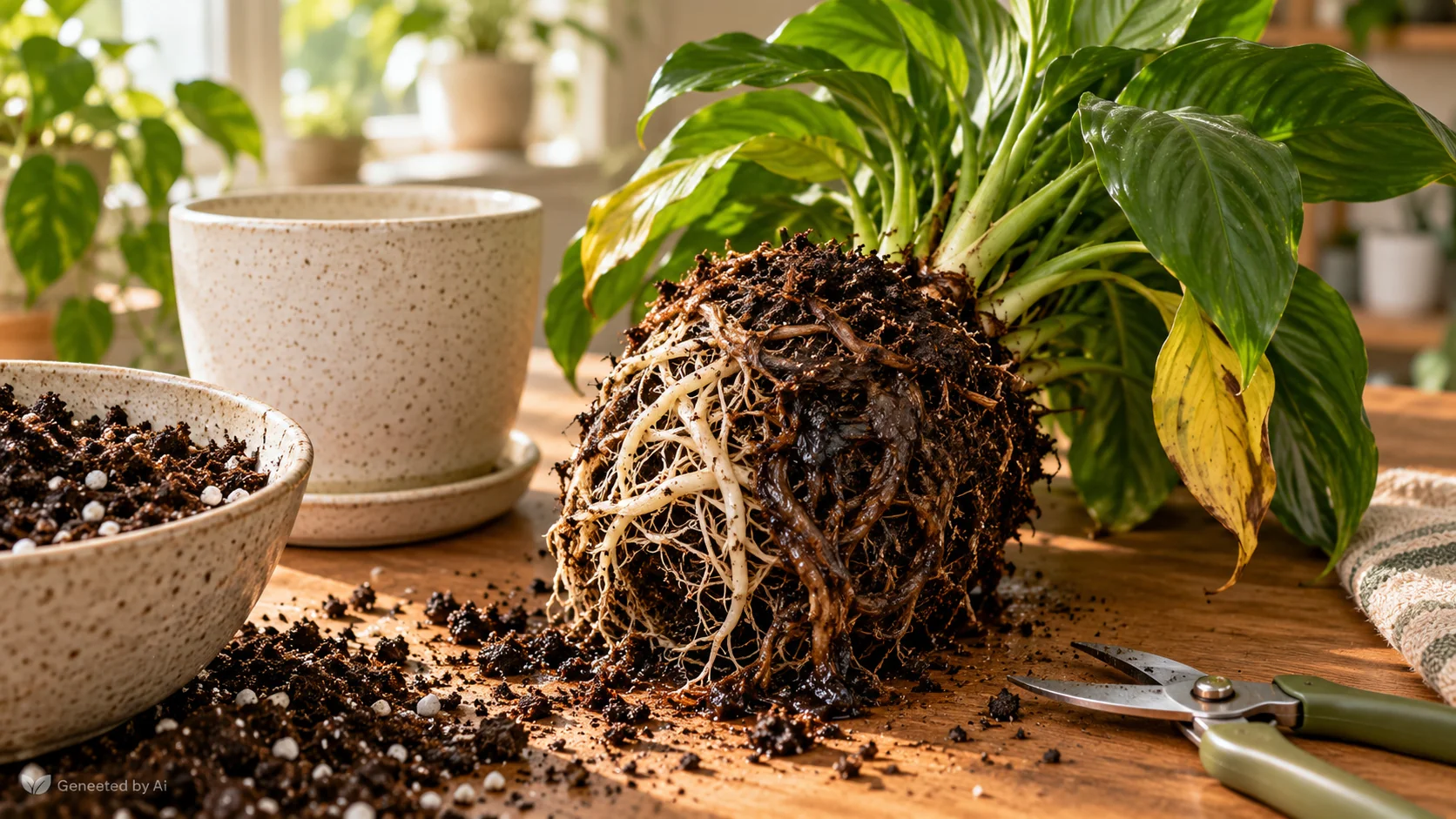
Step 3: Assess How Much Damage Is Present
A few damaged roots are different from an almost completely collapsed root system. Check whether firm roots remain and whether the crown and lower stem are still healthy.
Firm roots with no foul smell are encouraging. Extensive mushy roots or a soft, blackened stem base suggest more serious damage. The more healthy tissue remains, the better the opportunity for recovery.
How to Save an Overwatered Plant With Root Rot
Once you know what the roots look like, choose the least disruptive treatment that addresses the actual problem. Not every overwatered plant needs repotting.
If the Roots Are Still Healthy
- Stop watering until the root zone has dried sufficiently for that plant.
- Empty standing water and clear blocked drainage holes.
- Keep the plant in suitable light, away from temperature extremes.
- Monitor the plant before changing its soil or pot unnecessarily.
If the mix is severely compacted or stays saturated despite improved drainage, replacing it with a more suitable growing medium may be necessary.
If Some Roots Are Rotten
- Remove affected potting mix. Gently loosen and discard contaminated or broken-down mix. Handle surviving roots carefully.
- Trim dead roots. Use clean, sharp scissors or pruning snips to remove clearly mushy or rotten portions. Avoid cutting healthy roots unnecessarily.
- Use a clean container. Clean and disinfect a reused pot appropriately, and make sure it has functioning drainage holes.
- Repot into fresh mix. Choose a growing medium with the moisture retention and air spaces your plant species needs.
- Avoid an oversized pot. Select a container appropriate for the remaining roots. Do not move a small damaged root system into a very large pot.
- Settle the plant and monitor moisture. Water only as appropriate for the new mix and plant; never leave the container standing in excess water.
Potting mix, drainage, and root space work together. If you need help choosing a suitable medium or deciding whether to change pot size, explore our Grow Guides on potting mix and repotting.
If Most Roots or the Stem Base Have Rotted
Recovery may not be possible when the majority of the root system has collapsed or the crown is badly damaged. If healthy stem tissue remains, some species can be propagated from cuttings.
Take cuttings only from healthy, firm tissue. Propagation methods vary by plant species. Severely diseased plants should be discarded rather than placed close to healthy plants.
Hydrogen peroxide, cinnamon, or a fungicide is not a substitute for correcting drainage, removing decayed tissue, and using suitable potting mix. Do not apply chemical treatments without an identified problem and an appropriate labeled product.
Aftercare: Helping Your Plant Recover
Root recovery takes time. Even after the original problem has been corrected, damaged leaves may not regain their former appearance. Watch the plant's new growth and overall stability.
Keep Care Steady
- Provide suitable light for the species.
- Check moisture before every watering.
- Let extra water drain freely.
- Look for new, healthy growth.
Do Not Add More Stress
- Do not fertilize immediately to force growth.
- Do not water on a rigid schedule.
- Do not move the plant repeatedly.
- Do not repot it again without a clear reason.
How Long Does Recovery Take?
There is no reliable universal recovery time. The extent of root damage, plant species, light, temperature, and season all affect how quickly new roots and leaves can develop.
Some plants stabilize relatively quickly, while others may need several weeks or longer to show clear new growth. Continued collapse or spreading stem rot is a warning that recovery may not be progressing.
How to Prevent Overwatering and Root Rot
Prevention starts with the environment around the roots. A suitable potting mix, good drainage, and a flexible watering routine make it easier to maintain healthy plants.
1. Check Soil Moisture Before Watering
Feel the potting mix below the surface. For many common houseplants, checking the top inch or two can be a useful starting point, but the appropriate drying depth depends on the species.
Succulents generally prefer more drying between waterings than moisture-loving tropical houseplants. Learn the needs of your particular plant rather than following a fixed calendar.
2. Choose a Suitable Potting Mix
Potting mix should hold enough moisture for the plant while providing air spaces around the roots. A heavy, compacted mix may stay wet too long, especially in a large container.
Commercial mixes formulated for houseplants can be a practical starting point. Orchids, many succulents, and other specialized plants may require different media.
3. Use a Pot With Drainage Holes
Drainage holes allow excess water to leave the container. If you use a decorative outer pot, lift out the nursery pot and remove any collected water after watering.
4. Adjust Watering to the Season and Light
A houseplant in a dim winter room may use much less water than the same plant in bright summer conditions. Monitor the mix instead of maintaining the same frequency year-round.
Light can influence water use, but a struggling plant should not suddenly be placed in intense direct sunlight. For help choosing an appropriate location, read Plant Light Needs Explained.
5. Avoid Unnecessary Repotting
A larger pot is not automatically better. Excess unused growing medium can remain damp around a relatively small root system. Choose a pot based on the roots and the plant's actual growing needs.
Quick Root Rot Rescue Checklist
Use this short checklist before making another change to a struggling houseplant.
- Check whether the potting mix is wet below the surface.
- Remove standing water from the saucer or outer pot.
- Confirm that the container drains properly.
- Check for persistent wilting, yellowing, or soft stems.
- Inspect the roots if the plant continues to decline.
- Remove clearly rotten roots if necessary.
- Use clean equipment, an appropriate pot, and fresh mix when repotting.
- Resume species-appropriate watering based on actual moisture.
- Monitor new growth without forcing recovery with fertilizer.
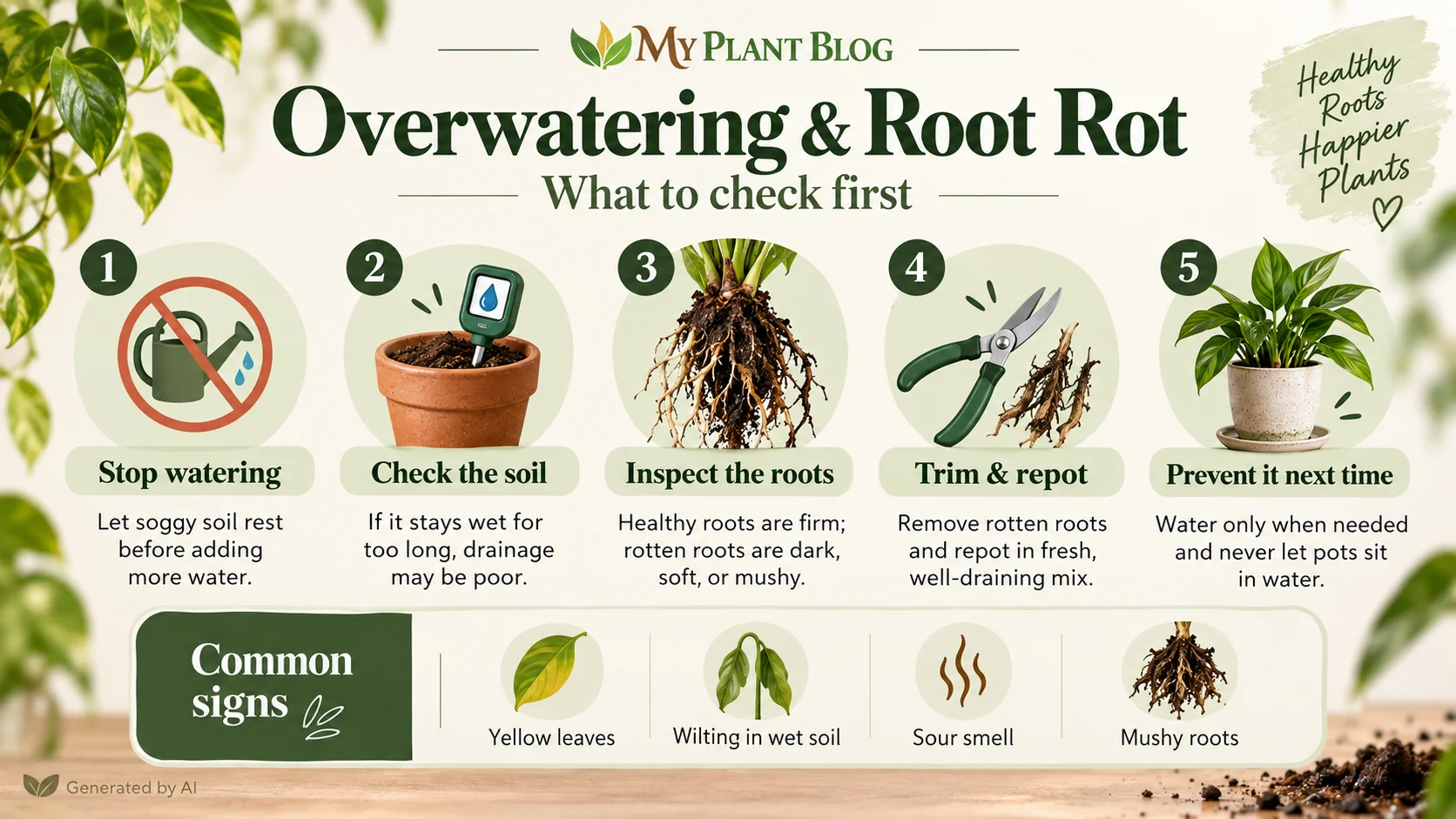
Diagnose first, correct the root environment, and give the plant stable care. More water is not always the answer to drooping leaves.
Overwatering and Root Rot: FAQ
Can an overwatered plant recover without repotting?
Yes, sometimes. If the roots are still healthy, improving drainage and allowing the soil to dry appropriately may be enough. Repotting becomes more useful when the mix remains saturated, is unsuitable, or the roots are decaying.
Should I water a plant immediately after removing rotten roots?
It depends on the plant and the moisture level of the fresh mix. The roots should not remain in saturated conditions, but the plant also needs appropriate moisture to recover. Settle the mix as needed, allow excess water to drain, and adjust subsequent watering to the species and remaining root system.
Are brown roots always rotten?
No. Some healthy roots are naturally brown or darker in color. Firmness and tissue condition are more useful clues. Roots that are mushy, slimy, or disintegrating are more concerning.
Can yellow leaves turn green again after root rot?
Severely yellowed or dead leaves usually do not return to their original appearance. Focus on whether the plant stabilizes and produces healthy new growth.
Does root rot spread to other houseplants?
Some organisms associated with root rot can spread through contaminated growing media, tools, pots, or water. Separate affected plants when appropriate, discard diseased material, and clean equipment before using it elsewhere.
Give Your Plant a Better Start
Overwatering is easier to manage when you catch it early. Check the soil, look at the roots when necessary, and improve drainage before reaching for another quick fix.
Healthy roots need moisture and air. Match your watering routine to the plant, keep its potting mix suitable, and give it time to respond to better care.
Further Reading
For additional horticultural guidance on diagnosing and managing root problems, consult:
