
How to Create a Small Healing Herb Garden
A small healing herb garden can begin with a few pots, a sunny corner, and herbs you genuinely enjoy growing. Chamomile, lemon balm, peppermint, lavender, thyme, and calendula make a lovely starting collection. Together, they offer fragrant foliage, colorful flowers, culinary possibilities, and a garden you can care for without needing much space.
Whether you have a balcony, a small raised bed, or a bright windowsill, this guide will help you choose the right plants, arrange them sensibly, water them according to their needs, and harvest without weakening new growth.
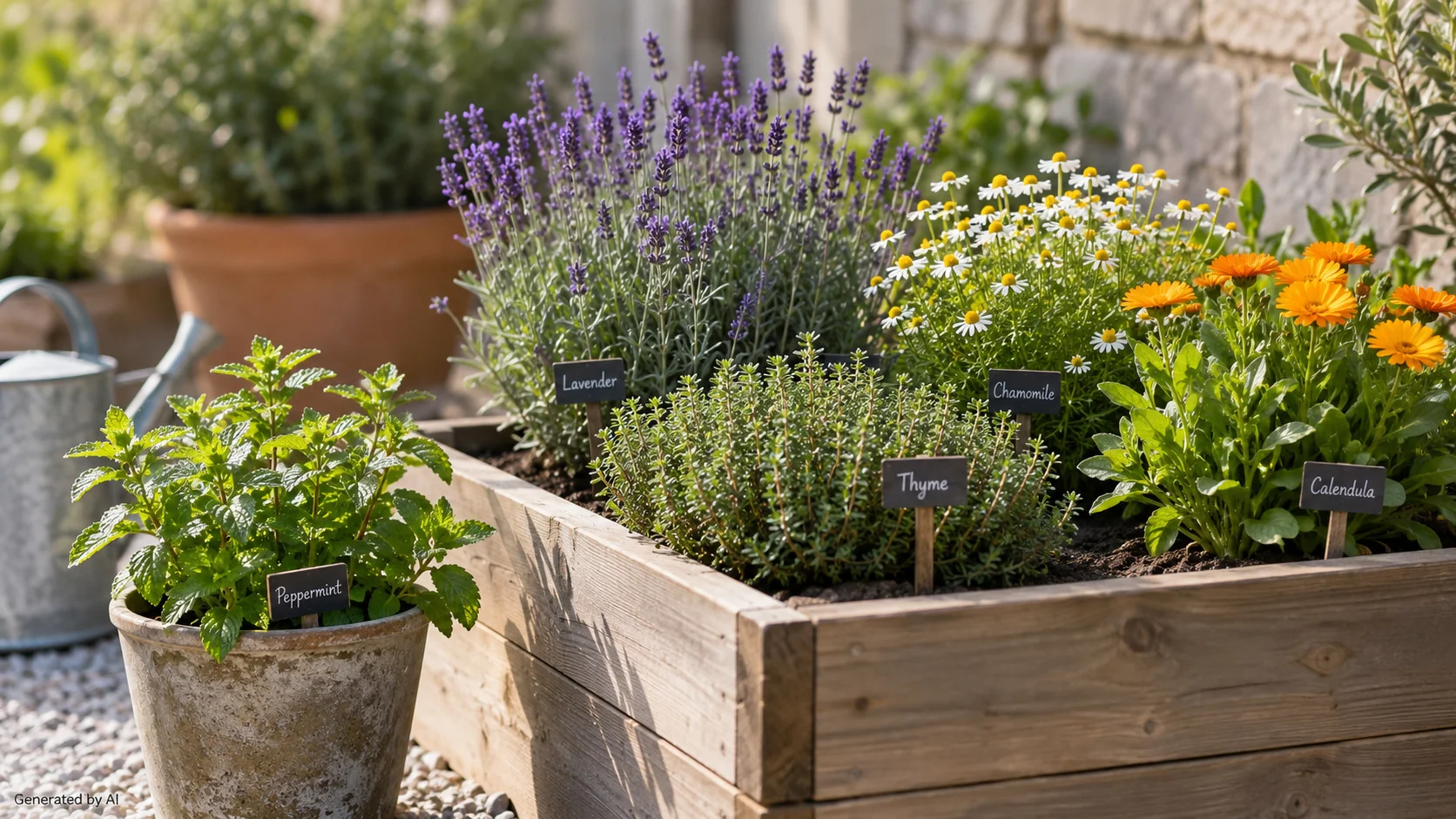
What Is a Small Healing Herb Garden?
A small healing herb garden is a dedicated space for growing familiar plants with a history of use in cooking, fragrance, herbal traditions, or everyday garden life.
You do not need to turn your home into an herbal workshop. A few healthy plants can be enough to enjoy the scent of lemon balm, fresh thyme for dinner, chamomile flowers, or lavender growing beside a sunny path.
Think of it as a living herb corner rather than a medicine cabinet. The garden itself is about choosing suitable plants and learning how they grow. Traditional medicinal use is a separate topic that requires appropriate safety information.
A healing herb garden is not a replacement for medical care. Herbs can cause allergic reactions, interact with medications, and may be unsuitable for certain people or pets. Culinary herbs are also different from concentrated essential oils, extracts, and supplements.
If you are considering medicinal use, seek advice from a qualified healthcare professional rather than relying on a gardening article for treatment.
Six Beginner-Friendly Herbs for a Small Garden
You can create an attractive small herb garden with three to six carefully chosen plants. The following herbs offer a mix of flowers, fragrance, and familiar culinary or traditional uses without requiring a large growing area.
| Herb | Why Grow It? | Care Priority |
|---|---|---|
| German chamomile | Delicate daisy-like flowers with a long history of traditional tea use. | Good light, moderate moisture, and room to flower. |
| Lemon balm | Soft leaves with a bright lemon scent and familiar culinary uses. | Consistent moisture and manageable growing space. |
| Peppermint | Vigorous aromatic foliage for beverages and cooking. | Its own container and regular moisture checks. |
| Lavender | Fragrant flowers, garden structure, and pollinator appeal. | Full sun and excellent drainage. |
| Thyme | Compact, aromatic foliage for everyday cooking. | Sun, free-draining soil, and moderate watering. |
| Calendula | Bright orange or yellow flowers and traditional ornamental uses. | A bright position, suitable moisture, and regular flower harvesting. |
Chamomile: Delicate Flowers for a Sunny Spot
German chamomile produces small white flowers with yellow centers. It is commonly grown as an annual and has a long history of traditional tea use.
Roman chamomile is a different species. It has a lower-growing habit and can behave as a perennial in suitable climates. Check the botanical name when buying seeds or plants.
Lemon Balm: A Fresh Citrus Fragrance
Lemon balm has soft green foliage with a pleasant lemon scent. It can be grown in containers or garden beds, although mature plants may become quite large.
A separate container makes it easier to manage its growth. Trimming the plant and removing spent flowers can also help limit unwanted self-seeding.
Peppermint: An Aromatic Container Herb
Peppermint is vigorous and often grows readily when it receives appropriate light and moisture. It is a convenient choice for a small kitchen or fragrance garden.
Its underground stems can spread quickly, so give peppermint its own pot rather than planting it beside slower-growing herbs.
Lavender: Fragrant Flowers and Structure
Lavender is a useful plant for sunny, well-drained spaces. Its flowers attract pollinators, and its silvery foliage brings structure to a small garden.
Avoid soil that remains constantly wet. Lavender generally does better in a sunny position with excellent drainage than in a pot shared with moisture-loving mint.
Thyme: A Compact Culinary Herb
Thyme is well suited to the front of a raised bed or a sunny container. It stays relatively compact and produces aromatic leaves for cooking.
Like lavender, thyme prefers free-draining soil and should not remain waterlogged. Harvest the softer leafy growth rather than cutting deeply into old woody stems.
Calendula: Bright Flowers for a Small Garden
Calendula brings cheerful orange and yellow flowers to a small herb bed. It is often grown as an annual and can flower for an extended period when conditions are suitable.
Remove faded flowers regularly to encourage further blooming. If you intend to use any part of the plant in food, confirm its identity and suitability beforehand.
There is no need to buy every herb at once. Start with a few plants that suit your available light and the way you plan to enjoy the garden.
Choose the Right Space for Your Herb Garden
Before you choose containers or buy plants, observe your growing area throughout the day. Light, wind, and temperature affect how well herbs grow and how quickly their soil dries.
Lavender, thyme, rosemary, and sage generally grow best with plenty of direct sunlight. Mint and lemon balm can tolerate some partial shade, particularly where afternoon sun is intense.
Many sun-loving herbs benefit from around six hours or more of direct sunlight, although requirements vary by species, climate, and growing conditions.
Sunny Balcony or Patio
Choose containers with drainage holes. Give spreading herbs their own pots and arrange sun-loving plants where the light is strongest.
Check moisture more frequently during hot or windy weather.
Small Raised Bed
Place taller herbs toward the back and lower-growing plants near the front edge.
Leave room for mature growth and provide well-drained soil.
Bright Windowsill
Choose compact herbs and a window that provides sufficient useful daylight.
Additional grow lighting may be helpful during darker months. Keep foliage away from cold glass and heating vents.
Near the Kitchen Door
A herb garden close to your daily routine is easier to check, water, and harvest.
Choose a sufficiently bright spot rather than a shaded location solely for convenience.
If you are unsure whether a balcony or windowsill receives enough light, the guide to plant light requirements explains the differences between full sun, partial sun, and indirect light.
Two Simple Layouts for a Small Herb Garden
A practical layout makes daily care easier. Group herbs according to their light and watering needs rather than simply arranging them by height or flower color.
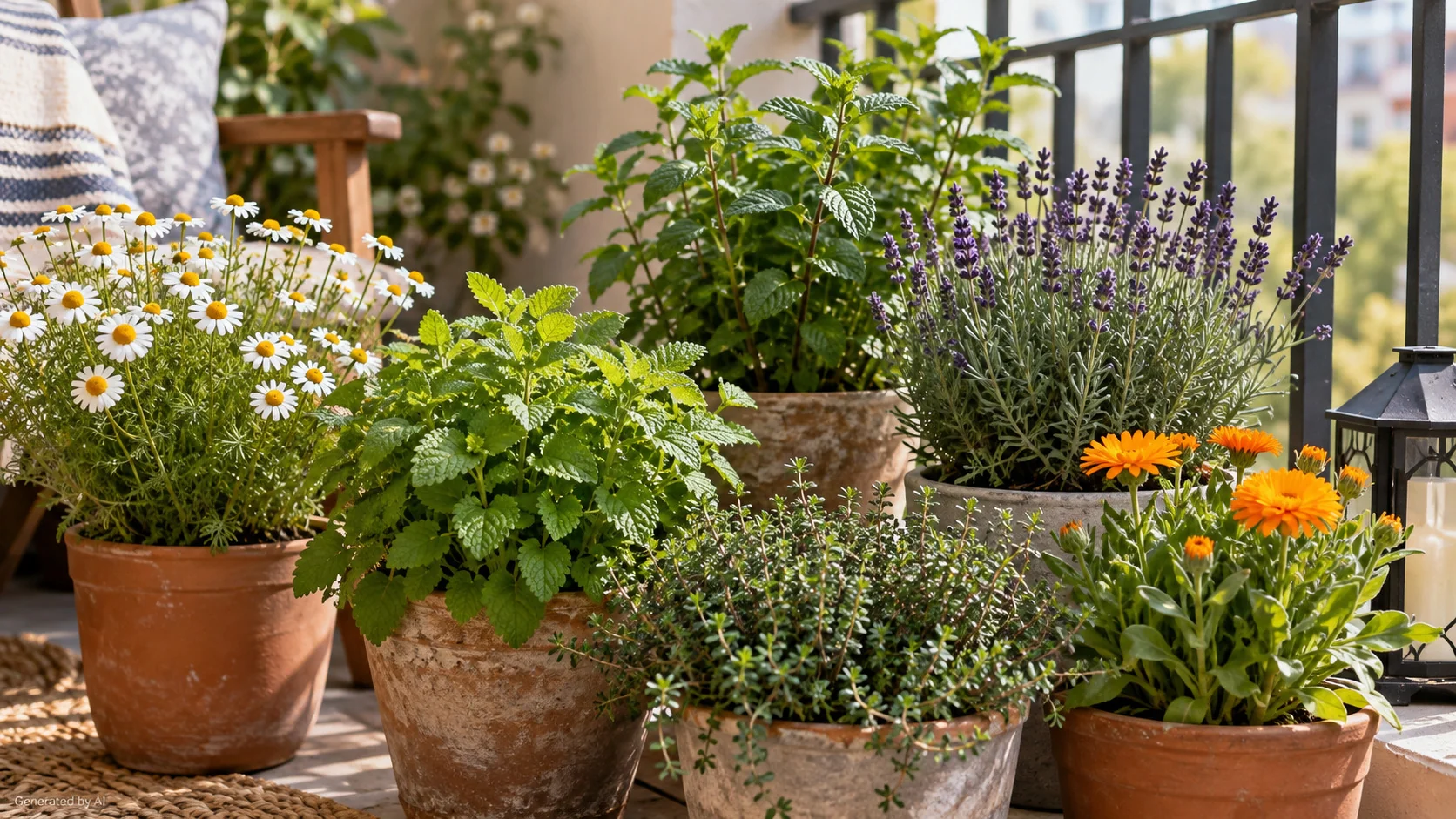
A Balcony Herb Garden
For a sunny balcony, separate pots offer flexibility. You can move individual plants, adjust watering, and prevent vigorous herbs from taking over the whole arrangement.
- Use a separate, reasonably deep container for peppermint.
- Give lemon balm its own pot with enough room for mature growth.
- Place lavender and thyme in sunny containers with suitable drainage.
- Use an open container for chamomile so its flowers are easy to reach.
- Add calendula in a wider pot for color and seasonal flowers.
Arrange the larger containers toward the back and place smaller herbs where they remain accessible. Leave enough space between pots for airflow and regular maintenance.
A Small Raised-Bed Herb Garden
A bed measuring approximately 3 by 5 feet can provide a useful starting footprint. Exact spacing depends on the varieties you choose and their mature sizes.
- Position taller herbs, such as rosemary or sage, toward the back where they will not shade smaller plants.
- Give lavender a sunny position in the best-drained part of the bed.
- Plant thyme near the front edge for easy harvesting.
- Allow calendula and chamomile enough open space to flower.
- Keep peppermint in a separate container beside the bed.
Avoid filling every inch when you first plant. Young herbs may look small, but many will spread or become bushier as the growing season progresses.
For more ideas on planning and maintaining outdoor growing areas, explore the Garden & Outdoor guides.
How to Plant Your Healing Herb Garden
Once you have chosen your herbs and growing location, planting is fairly straightforward. Focus on drainage, root space, and the needs of each plant.
Step 1: Choose Your First Plants
Choose three to six herbs that suit your space. Include a mixture of aromatic foliage and flowering plants if you want variety.
You can also replace one of the suggested plants with rosemary or sage if you have a suitable sunny location and enjoy using those herbs in cooking.
Step 2: Prepare Containers or a Bed
Use pots with effective drainage holes and enough room for root development. Very small containers dry quickly and may restrict growth during summer.
If planting in a raised bed, remove weeds and prepare the soil so that excess water can drain away.
Step 3: Group Herbs by Their Needs
Keep lavender, thyme, rosemary, and sage in similarly sunny, well-drained conditions.
Give mint and lemon balm separate space where you can manage their more vigorous growth and moisture needs.
Step 4: Plant Gently
Water dry root balls before planting. Gently loosen tightly circling roots if necessary, then place each plant at approximately the same depth it occupied in its nursery pot.
Fill around the roots with suitable potting mix, firm it lightly, and water to settle the soil.
Step 5: Watch the First Two Weeks
Recently planted herbs need time to establish. Check moisture regularly and observe how the foliage responds to direct sun, wind, and temperature.
If a plant wilts immediately after transplanting in hot weather, temporary midday shade may help. If the soil stays wet and leaves begin yellowing, check drainage before watering again.
Avoid heavy harvesting immediately after planting. Wait for healthy new growth before taking larger amounts of foliage.
Soil, Drainage, and Watering Basics
Herbs are often described as easy to grow, but they do not all want the same conditions. Poor drainage, unsuitable light, and overwatering can cause problems even in a small, carefully planted garden.
Use a Suitable Potting Mix
For containers, choose a quality potting mix rather than dense garden soil. The mix should hold enough moisture for the plant while allowing excess water to drain.
Lavender and thyme generally prefer especially free-draining conditions. Mint and lemon balm appreciate more consistent moisture, but their roots still need air.
Water Each Herb According to Its Needs
A fixed watering schedule is rarely suitable for every pot. Check the soil below the surface and consider recent weather, container size, and the needs of the herb.
| Herb Group | Watering Approach | What to Check |
|---|---|---|
| Mint and lemon balm | Maintain relatively consistent moisture without waterlogging. | Check frequently during warm, dry weather. |
| Lavender, thyme, rosemary and sage | Let the growing mix dry somewhat between waterings. | Check moisture below the surface before watering. |
| Young chamomile and calendula | Provide moderate, consistent moisture during establishment. | Keep young roots from drying out completely. |
When a container needs water, water thoroughly until excess drains through the bottom. Avoid leaving the pot sitting in a full saucer for an extended period.
Our guide to watering plants according to soil moisture explains why checking the growing mix is more reliable than following a fixed weekly schedule.
Adjust Your Routine Through the Seasons
Small outdoor containers can dry rapidly during summer heat and wind. Check them more frequently when conditions are demanding.
During cooler periods, slower growth and lower evaporation may reduce watering needs.
Before winter, check the cold tolerance of individual herbs. Some perennial herbs can remain outdoors in suitable climates, while exposed pots or tender plants may need protection.
The surface of a pot can look dry while the root zone is still moist. Check below the surface before deciding whether to water.
How to Harvest and Dry Your Herbs
Harvesting is part of maintaining an herb garden. Many established leafy herbs produce fresh growth after a modest harvest, provided enough foliage remains on the plant.
Harvest Leaves Without Stripping the Plant
On branching herbs such as mint and lemon balm, cut above a suitable leaf node to encourage new side shoots.
For established woody herbs, harvest the softer leafy growth rather than cutting deeply into old stems.
As a conservative beginner rule, avoid removing more than about one-third of an established plant's growth at one time. Harvest less from young, stressed, or recently transplanted plants.
Harvest Flowers at the Right Stage
Chamomile and calendula flowers are commonly harvested once they are fully open and dry on the surface.
A dry morning after the dew has evaporated is a convenient time to collect healthy, correctly identified flowers.
Dry Herbs Before Storage
Spread clean leaves and flowers in a thin layer on a suitable drying screen or tray. Choose a dry, well-ventilated location and avoid leaving plant material in damp piles.
Store herbs only once they are completely dry. Use clean, dry containers and label each batch with the plant name and harvest date.
Partly dried herbs can spoil when sealed in a container. If stored material becomes visibly moldy or develops an unusual odor, discard it.
For additional information about growing, harvesting, drying, and preserving common kitchen herbs, visit the Herbs & Natural Living collection.
How to Use Your Herbs Responsibly
Growing fragrant herbs is different from preparing herbal medicines. A plant's traditional use does not establish that it is effective or safe for treating a medical condition.
Culinary use also differs from using concentrated extracts, capsules, essential oils, or other preparations.
- Identify every herb correctly before considering it for food or beverages.
- Use clean plant material that has not been treated with unsuitable chemicals.
- Seek professional advice about medicinal use if you take medication or have an existing health condition.
- Check safety during pregnancy or breastfeeding and before preparing herbal products for children.
- Keep essential oils and concentrated extracts away from children and pets unless appropriately advised by a qualified professional.
- Check the safety of each plant before placing it where pets may eat it.
A Special Note About Chamomile
Chamomile can cause allergic reactions, particularly in people who are sensitive to ragweed or related plants. It may also interact with medications.
The National Center for Complementary and Integrative Health provides further information about chamomile's safety and research evidence.
Keep Pet Safety in Mind
Not every herb is safe for dogs or cats. For example, the ASPCA lists lavender as toxic to both dogs and cats.
Check reliable veterinary resources before creating a garden accessible to pets. If you suspect that an animal has eaten a potentially harmful plant, contact a veterinarian.
The ASPCA lavender plant guide provides additional pet safety information.
Common Herb Garden Mistakes to Avoid
Starting With Too Many Herbs
A crowded collection can be difficult to maintain. Begin with a few suitable plants and expand once you understand their needs.
Letting Mint Spread
Mint can quickly occupy a small bed. A separate container makes its growth easier to control.
Using Pots Without Drainage
Decorative pots without drainage can leave roots sitting in water. Use containers with working drainage holes.
Watering Every Herb the Same Way
Lavender and peppermint have different moisture preferences. Check each plant before watering.
Harvesting Too Heavily
Leave enough healthy foliage for continued growth, especially on young or recently transplanted herbs.
Overlooking Safety
Do not assume that a traditional herb is automatically safe to consume or use around pets.
Your Small Healing Herb Garden Checklist
Ready to create your own herb garden? This practical checklist takes you from choosing a location to caring for your plants and harvesting them responsibly. Check off each step as you go.
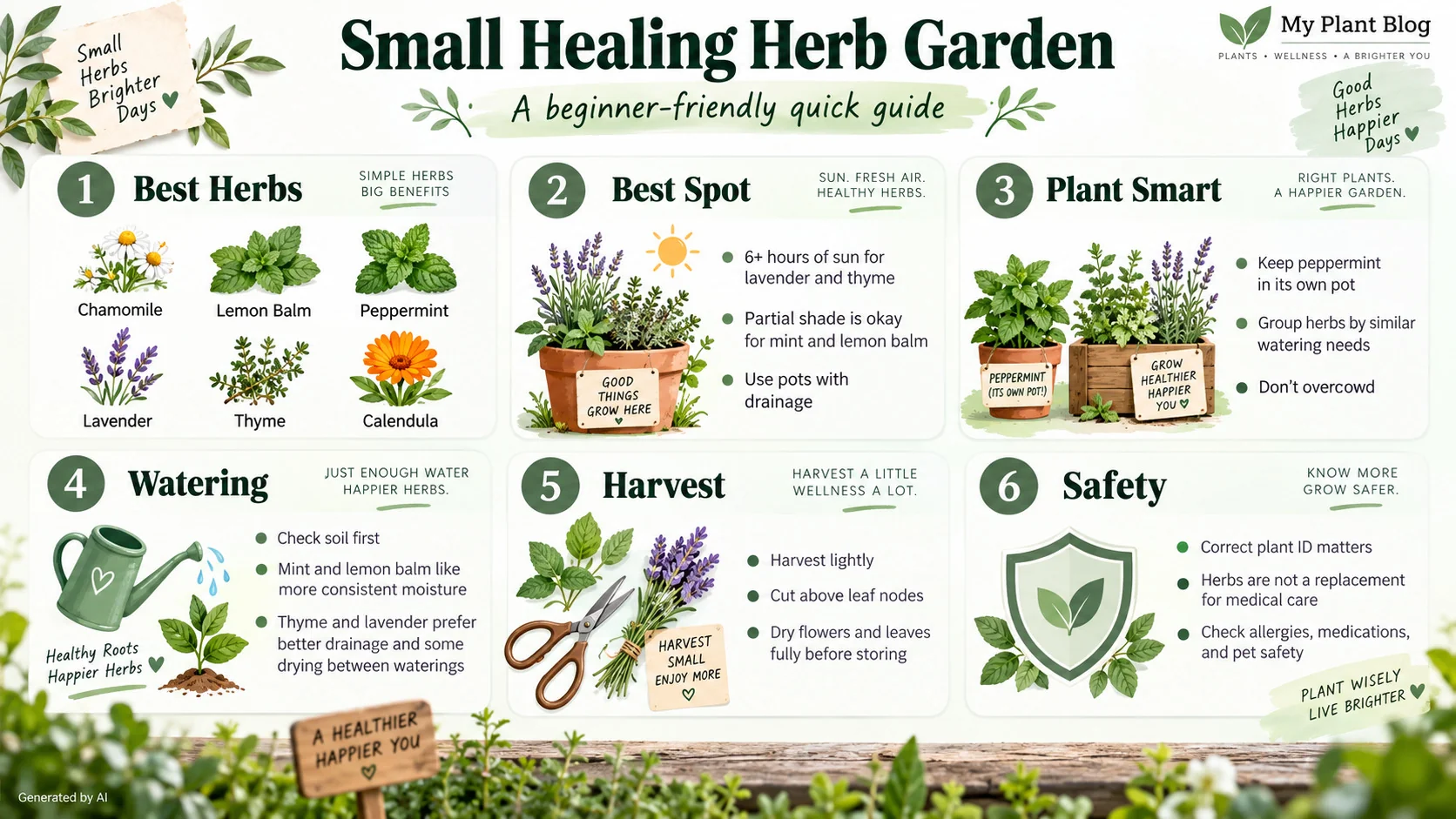
From First Pot to First Harvest
Work through the five stages below. You can tick the boxes on your screen or print this checklist and keep it with your gardening supplies.
Small Healing Herb Garden FAQ
What are the easiest herbs for a small healing herb garden?
Mint, lemon balm, thyme, chamomile, and calendula can be approachable choices when growing conditions suit them. Select plants according to your light, climate, and available space.
Can I grow a healing herb garden on a balcony?
Yes. A balcony can accommodate several herbs in suitable containers with drainage holes. Keep spreading herbs separate and arrange plants according to their light and moisture needs.
Which herbs should not share a pot?
Avoid combining vigorous mint with slower-growing herbs. Also avoid planting moisture-loving mint together with lavender or thyme, which generally prefer drier, well-drained conditions.
Can I grow healing herbs indoors?
Some herbs can grow indoors if they receive sufficiently bright light and suitable care. Sun-loving plants may struggle in dim rooms, particularly during winter.
Can I use herbs from my garden for tea?
Some correctly identified herbs have established culinary or traditional tea uses. However, individual safety matters. Check allergies, medication interactions, and other relevant circumstances before consuming herbs.
Start Small and Let Your Herb Garden Grow
A small healing herb garden does not need to be complicated. Choose a few plants you enjoy, give them suitable light and drainage, and learn how they respond to your space.
Harvest modestly, label what you grow, and use herbs thoughtfully. As your confidence grows, you can add another pot, try a new flowering herb, or expand into a larger bed.
Even a small collection can bring fragrance, color, and fresh culinary herbs into your everyday routine.
