
10 Easy-Care Outdoor Garden Plants for Beginners
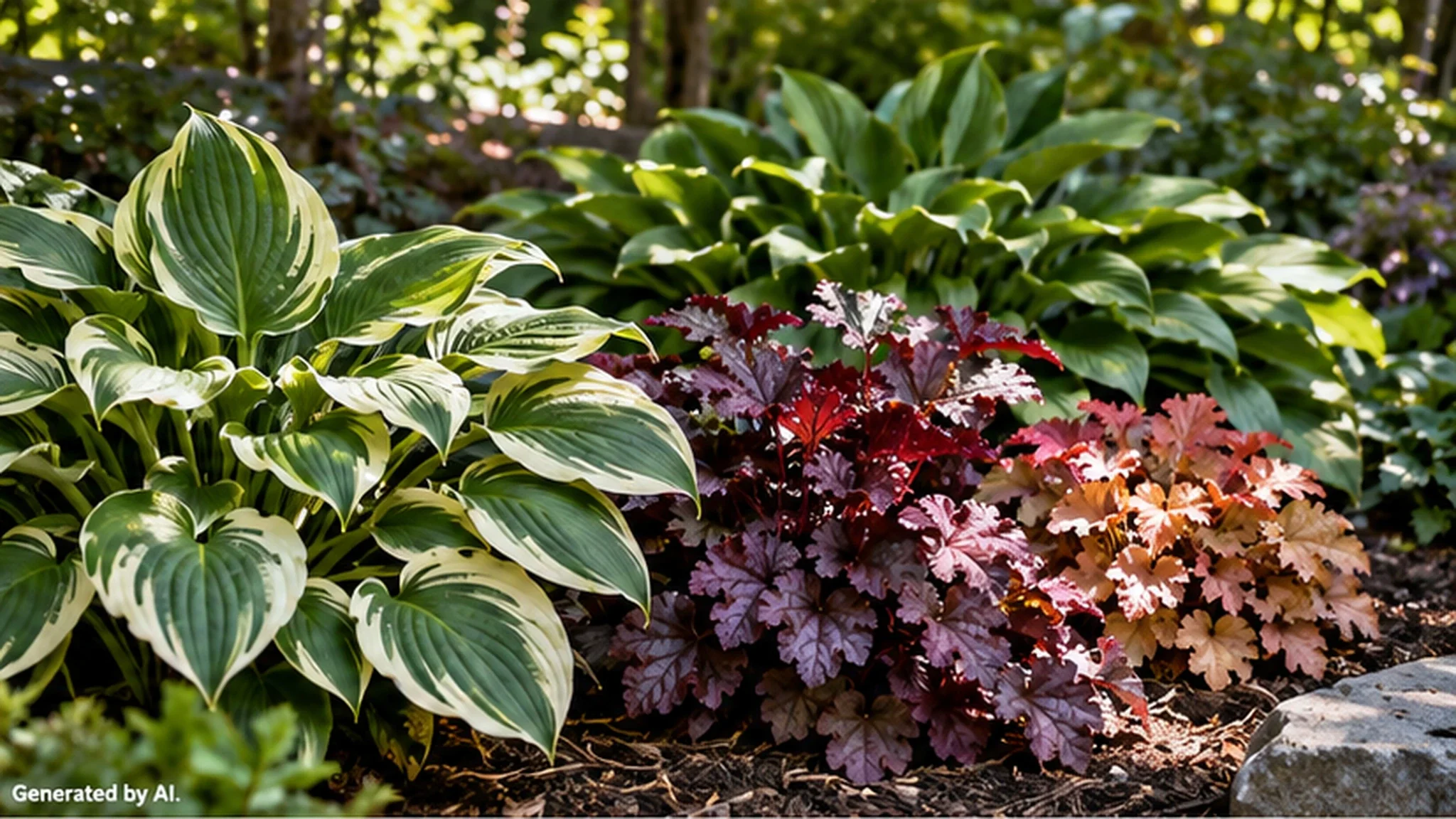
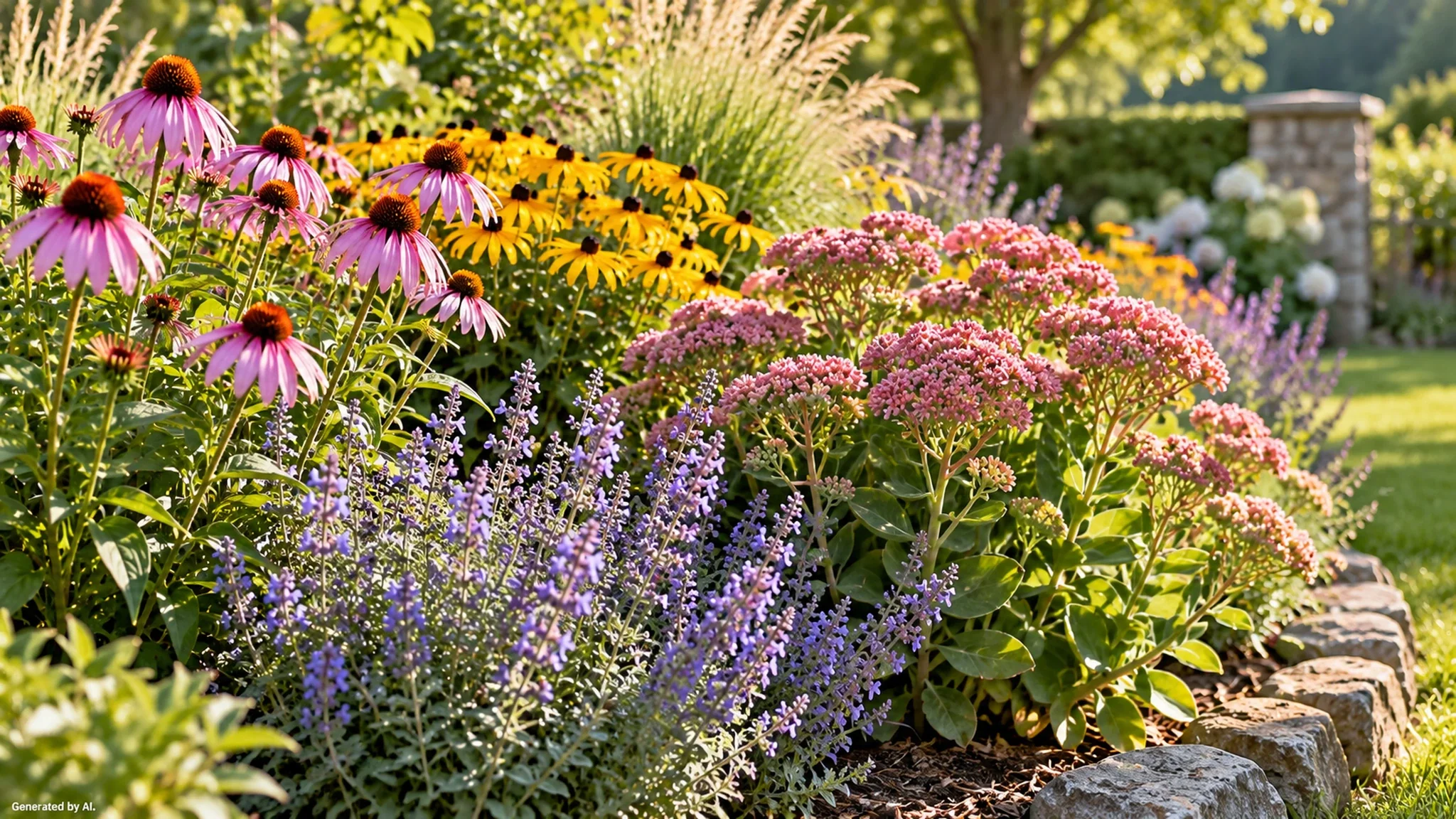
The best easy-care outdoor garden plants are the ones that suit your yard. Coneflowers, black-eyed Susans, catmint, and stonecrop are dependable choices for many sunny beds, while hostas and coral bells bring color and texture to partly shaded areas.
Once established, these plants can make your garden easier to maintain without sacrificing flowers or attractive foliage. The trick is choosing the right varieties for your climate, sunlight, soil, and available space.
What Makes an Outdoor Plant Easy to Care For?
A low-maintenance garden plant needs relatively little attention once its roots have settled into a suitable location. It may tolerate occasional dry weather, need only seasonal pruning, or return year after year without being replanted.
That does not make every plant suitable for every garden. Lavender may thrive in a sunny, well-drained bed but struggle in heavy, soggy soil. A hosta can be a great choice under a tree, yet its leaves may scorch in strong afternoon sun.
Choose plants for the conditions you already have. A plant that naturally suits your yard usually needs less watering, feeding, and correction than one growing in the wrong location.
The goal is not to eliminate every garden task. It is to choose plants that grow well together and fit the amount of time you want to spend outdoors.
10 Easy-Care Outdoor Plants at a Glance
These ten plants offer different colors, heights, and growing habits. Use this comparison to find suitable options for your garden's light and moisture conditions.
The water preferences below describe typical conditions for established plants. Recently planted specimens need closer moisture monitoring.
| Plant | Light | Soil and Water | Best Feature |
|---|---|---|---|
|
Purple coneflower Echinacea purpurea |
Full sun to light shade | Well-drained; moderate to low water | Summer blooms and pollinator value |
|
Black-eyed Susan Rudbeckia fulgida |
Full sun to light shade | Average, well-drained soil | Dependable yellow flowers |
|
Catmint Nepeta hybrids |
Full sun | Well-drained; tolerates dry conditions | Long flowering period |
|
Stonecrop Hylotelephium / Sedum |
Full sun | Well-drained; low water | Succulent foliage and fall color |
|
Yarrow Achillea millefolium |
Full sun | Well-drained; tolerates lean soil | Colorful, flat-topped flowers |
|
Coreopsis Coreopsis lanceolata |
Full sun | Well-drained; low to moderate water | Bright summer flowers |
|
English lavender Lavandula angustifolia |
Full sun | Fast-draining; avoid wet soil | Fragrance and silvery foliage |
|
Daylily Hemerocallis hybrids |
Full sun to light shade | Adaptable; average moisture | Reliable summer flowers |
|
Hosta Hosta species and cultivars |
Partial to full shade | Moist, well-drained soil | Attractive foliage |
|
Coral bells Heuchera species and hybrids |
Partial shade | Well-drained; moderate moisture | Colorful leaves |
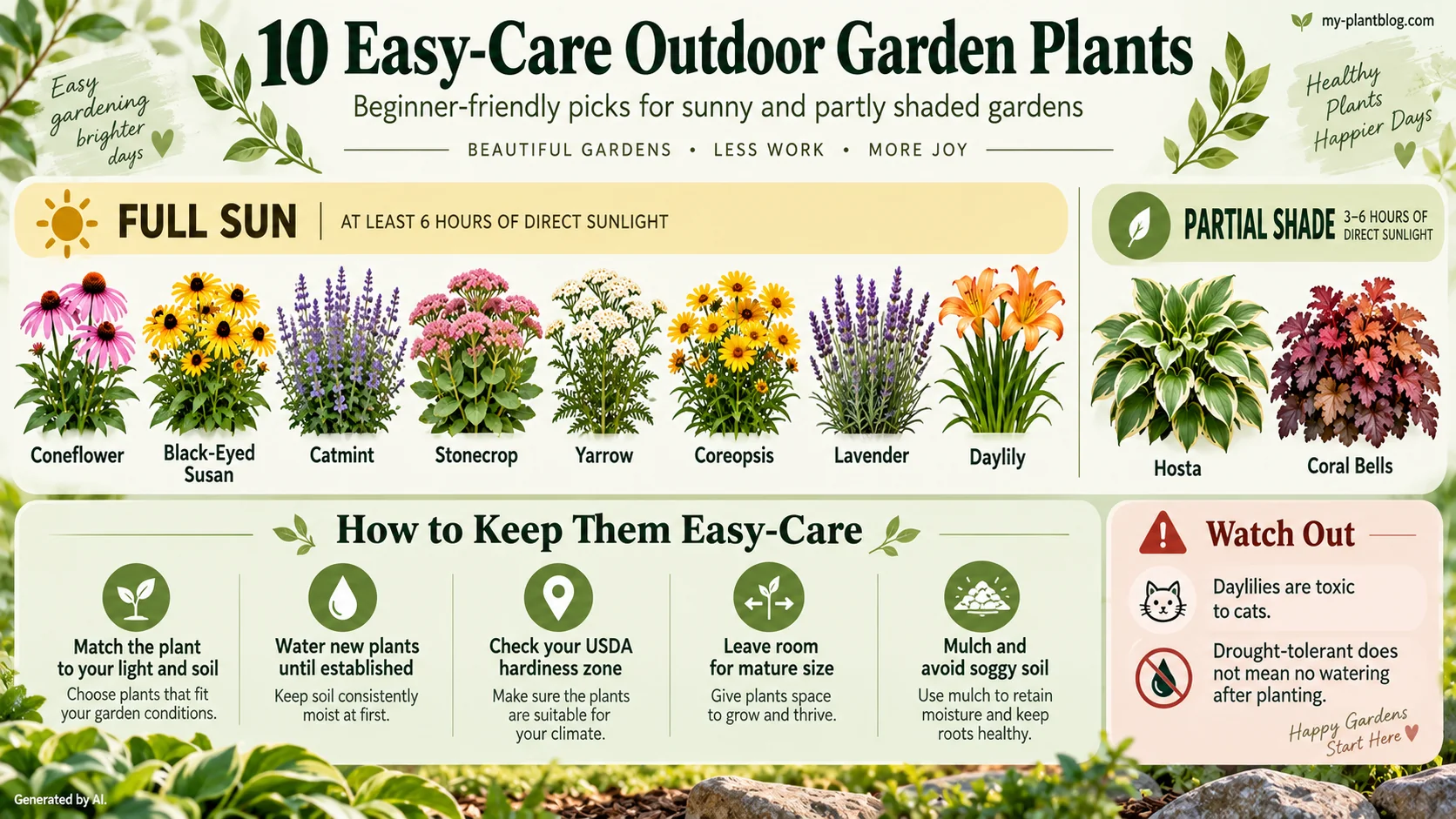
Check each variety's mature size, winter hardiness, and growing conditions. A plant that performs well in one part of the United States may need different care elsewhere.
8 Easy-Care Plants for Sunny Garden Beds
Sunny borders offer plenty of options, especially where the soil drains well. These eight plants are useful starting points for gardeners who want lasting flowers, varied foliage, and manageable seasonal maintenance.
Purple Coneflower
Purple coneflower has pink-purple petals and prominent central cones. It works well in sunny borders and pollinator-friendly plantings.
Give it well-drained soil and water regularly while it establishes. Mature plants generally handle dry spells better than newly planted specimens.
Leave some seed heads standing after flowering if you want to provide a potential food source for seed-eating birds.
Black-Eyed Susan
Black-eyed Susans brighten outdoor beds with yellow, daisy-like flowers. For a dependable perennial display, look for suitable varieties of Rudbeckia fulgida.
Full sun encourages strong flowering. Water during establishment and prolonged dry weather, then cut back old growth when needed.
Check the botanical name before buying. Rudbeckia hirta is often short-lived and may behave differently from perennial R. fulgida.
Catmint
Catmint produces soft purple-blue flowers and aromatic foliage. Compact varieties are especially useful along sunny garden paths and at the front of borders.
It prefers well-drained soil and generally tolerates heat and some drought after establishment.
Shearing spent flowers can tidy the plant and encourage additional blooming. Choose a cultivar with a mature size that fits your planting space.
Stonecrop
Stonecrop is a practical option for sunny, well-drained areas. Upright types, such as 'Autumn Joy', produce fleshy leaves and late-season flower clusters.
Once established, these plants need relatively little supplemental water in suitable soil.
Avoid consistently wet ground. The dried flower heads can remain through winter, adding structure to the garden.
Yarrow
Yarrow has fern-like foliage and clusters of small flowers. It is particularly useful in sunny, relatively dry beds with well-drained soil.
Rich soil and excessive fertilizer can encourage floppy growth. Established plants usually need only modest care in suitable conditions.
Allow enough room for spreading. Some forms can self-seed or expand vigorously, so choose the species and cultivar carefully.
Coreopsis
Coreopsis, also called tickseed, produces cheerful yellow flowers that fit naturally into informal garden borders.
Coreopsis lanceolata prefers full sun and well-drained soil. Once established, it can tolerate periods of dryness.
Remove spent blooms for a tidier appearance. Some varieties self-seed, so check whether that suits your garden before planting.
English Lavender
English lavender brings purple flower spikes, silvery leaves, and fragrance to a sunny garden.
The key is drainage. Lavender dislikes waterlogged soil and often struggles in humid locations with poor airflow.
Avoid heavy feeding. Prune lightly to maintain a compact shape, taking care not to cut deeply into old, bare wood.
Choose a variety suited to your winter temperatures and summer climate.
Daylily
Daylilies are adaptable, clump-forming plants with colorful summer flowers. They perform well in full sun or light shade when their soil drains adequately.
Once established, many varieties need little more than occasional watering during dry spells and seasonal removal of old foliage.
Mature clumps can be divided when they become crowded or flowering declines.
Daylilies are highly toxic to cats. Avoid growing them where cats may chew the foliage or flowers.
2 Easy-Care Outdoor Plants for Partial Shade
Not every garden receives six or more hours of direct sunlight. Shaded beds can still look attractive, especially when you use foliage color and texture rather than relying only on flowers.
9. Hosta
Hostas are valued for their broad leaves, which range from blue-green to gold and variegated patterns.
They grow well in partial to full shade, depending on the variety. Hostas prefer soil that stays reasonably moist without becoming waterlogged.
They are not drought-proof plants, so dry, shady locations beneath thirsty tree roots may still require supplemental watering.
Slugs and deer can damage hostas in some gardens. If those are recurring problems, consider alternative foliage plants.
10. Coral Bells
Coral bells offer colorful foliage in shades of green, purple, bronze, and caramel. They work particularly well in part-shade borders and smaller planting spaces.
Provide well-drained soil and avoid letting newly planted coral bells dry out completely. Light requirements vary by cultivar, and excessive hot afternoon sun can damage some varieties.
Remove damaged old leaves as new growth begins. Check the variety's mature size and local hardiness before planting.
A bed beneath a large tree may receive little direct sunlight but still dry quickly because the tree's roots compete for water. Check the soil before assuming a shade-loving plant will thrive there.
How to Choose Easy-Care Plants for Your Garden
The plant list is only a starting point. Before shopping, spend a little time checking the conditions in the area you want to plant.
1. Count the Hours of Direct Sun
Full sun generally means at least six hours of direct sunlight during the growing season. Partial shade means less direct sun or filtered light.
Observe the location at different times of day. A bed that looks sunny in the morning may be shaded by a building or tree in the afternoon.
If you are unsure what the descriptions on plant labels mean, our guide to understanding full sun and partial shade explains the main light requirements and why location matters.
2. Check the Soil and Drainage
Notice whether the soil drains after rain, stays wet for days, or dries rapidly.
Lavender, catmint, and stonecrop generally prefer well-drained soil. Hostas and coral bells usually need more consistent moisture.
If water collects in a low area, choose plants adapted to wetter conditions rather than forcing a dry-soil plant into the wrong spot.
3. Check Your USDA Hardiness Zone
Perennial plants must survive local winter conditions if you want them to return each year. Check your location using the USDA Plant Hardiness Zone Map.
Remember that hardiness zones describe winter temperature conditions. They do not tell you whether a plant will tolerate your summer heat, humidity, rainfall, or soil.
4. Consider Mature Size and Spread
Leave room for plants to grow. Crowded plantings are harder to maintain and can reduce airflow around foliage.
Check whether the plant spreads by seed, rhizomes, or expanding clumps. Also consider locally native alternatives and regional invasive-plant guidance before buying.
5. Match the Plant to Your Available Time
A busy gardener may prefer long-lived perennials with modest pruning requirements. Someone who enjoys occasional trimming might choose plants that flower again after deadheading.
Also consider deer, rabbits, slugs, pets, and children when choosing plants for accessible outdoor areas.
How to Plant and Maintain a Low-Maintenance Garden
Even forgiving plants need attention at first. The goal is to help them develop healthy root systems so their routine becomes easier over time.
Start With a Small Planting Area
Choose one manageable bed or border. Group plants with similar light and moisture needs, and leave enough space for mature growth.
Plant at the Right Depth
Water the nursery plant as needed before planting. Dig a hole wide enough for the root ball and set the plant at approximately the same depth it grew in the container.
Backfill with suitable soil, gently firm it, and water thoroughly to settle the soil around the roots.
Water More Carefully During Establishment
Newly planted perennials need closer moisture monitoring than mature plants. Check the soil around the root ball, especially during warm, windy, or dry weather.
Once plants are established, watering can often become less frequent. The right interval depends on rainfall, soil, plant species, and local growing conditions.
Our practical guide on how often to water garden plants explains how to check moisture and adjust your watering routine for outdoor beds.
Use Mulch Where Appropriate
A layer of organic mulch can help retain soil moisture and reduce weeds. Around many established perennial beds, a layer approximately two to three inches deep is a useful starting point.
Keep mulch away from crowns and stems. Avoid piling damp mulch directly against plants that require especially dry conditions.
Keep Your Seasonal Routine Simple
- In spring, remove dead or damaged growth and check for winter damage.
- During summer, monitor new plants and water according to soil moisture.
- Remove weeds before they spread and crowd young plants.
- In fall, assess plant spacing and divide crowded clumps when appropriate.
- Leave suitable seed heads and stems for winter interest or wildlife where practical.
A plant labeled drought-tolerant is not necessarily drought-tolerant immediately after planting. Give new plants the water they need while establishing, then adjust your routine to their mature requirements.
5 Common Mistakes That Make an Easy Garden Harder
1. Choosing Plants by Appearance Alone
A beautiful flower may be a poor choice for a wet, shady, or unusually hot location. Check the plant's requirements before buying.
2. Treating Low Maintenance as No Watering
Even drought-tolerant perennials need moisture while their roots establish. Monitor new plantings more closely.
3. Planting Too Close Together
Small nursery plants can quickly fill a bed. Follow mature spacing recommendations to reduce crowding and future maintenance.
4. Adding Fertilizer Without Checking the Soil
More fertilizer does not correct poor drainage or the wrong light. Some plants grow weakly or become floppy in overly rich soil.
5. Ignoring Climate and Local Conditions
Winter cold, humid summers, heavy rainfall, and regional plant-spread concerns can change which varieties perform well. Choose plants suited to your location.
A Simple Beginner-Friendly Planting Plan
If you have a sunny, well-drained garden bed, start with a small group of compatible plants rather than purchasing every variety at once.
| Garden Area | Planting Idea | Why It Works |
|---|---|---|
| Sunny back or middle border | Coneflowers and black-eyed Susans | Upright summer flowers with pollinator value |
| Sunny front edge | Compact catmint | Lower-growing flowers that soften the border |
| Dry, well-drained corner | Stonecrop | Succulent foliage and late-season interest |
| Partly shaded border | Hostas and suitable coral bells | Contrasting foliage color and texture |
These combinations are examples, not a universal planting plan. Choose varieties suitable for your climate and the actual soil conditions in each part of your yard.
Frequently Asked Questions
What are the easiest outdoor plants for beginners?
Coneflowers, black-eyed Susans, catmint, stonecrop, and hostas can be good beginner choices when matched to the right site. Their maintenance needs depend on climate, soil, and establishment.
What outdoor plants need very little water?
Established stonecrop, catmint, yarrow, and some coneflowers tolerate relatively dry conditions in suitable soil. Newly planted specimens still require watering.
What are the easiest plants for a shady garden?
Hostas and suitable coral bells are practical foliage plants for partial shade. They still need adequate moisture and well-drained soil. Very dry shade can be more challenging.
Do low-maintenance perennials come back every year?
Perennials can return for multiple growing seasons when they are hardy in your climate and receive suitable care. Some species are short-lived, and even hardy plants may fail in poorly matched conditions.
Can I grow easy-care garden plants in containers?
Yes. Compact catmint, some stonecrops, and suitable lavender varieties can work in containers. Choose pots with drainage and enough room for roots. Outdoor pots generally require closer watering checks than garden beds.
Start Small and Let Your Garden Grow
You do not need a complicated planting scheme to create a beautiful outdoor space. Start with a few plants that match your sunlight, soil, and climate.
Give them the care they need while establishing, then let their natural growth habits do much of the work.
For more practical advice on planning beds, improving soil, and adjusting your routine through the seasons, explore our Garden & Outdoor guides.
