
The Best Herbs to Grow at Home for Beginners
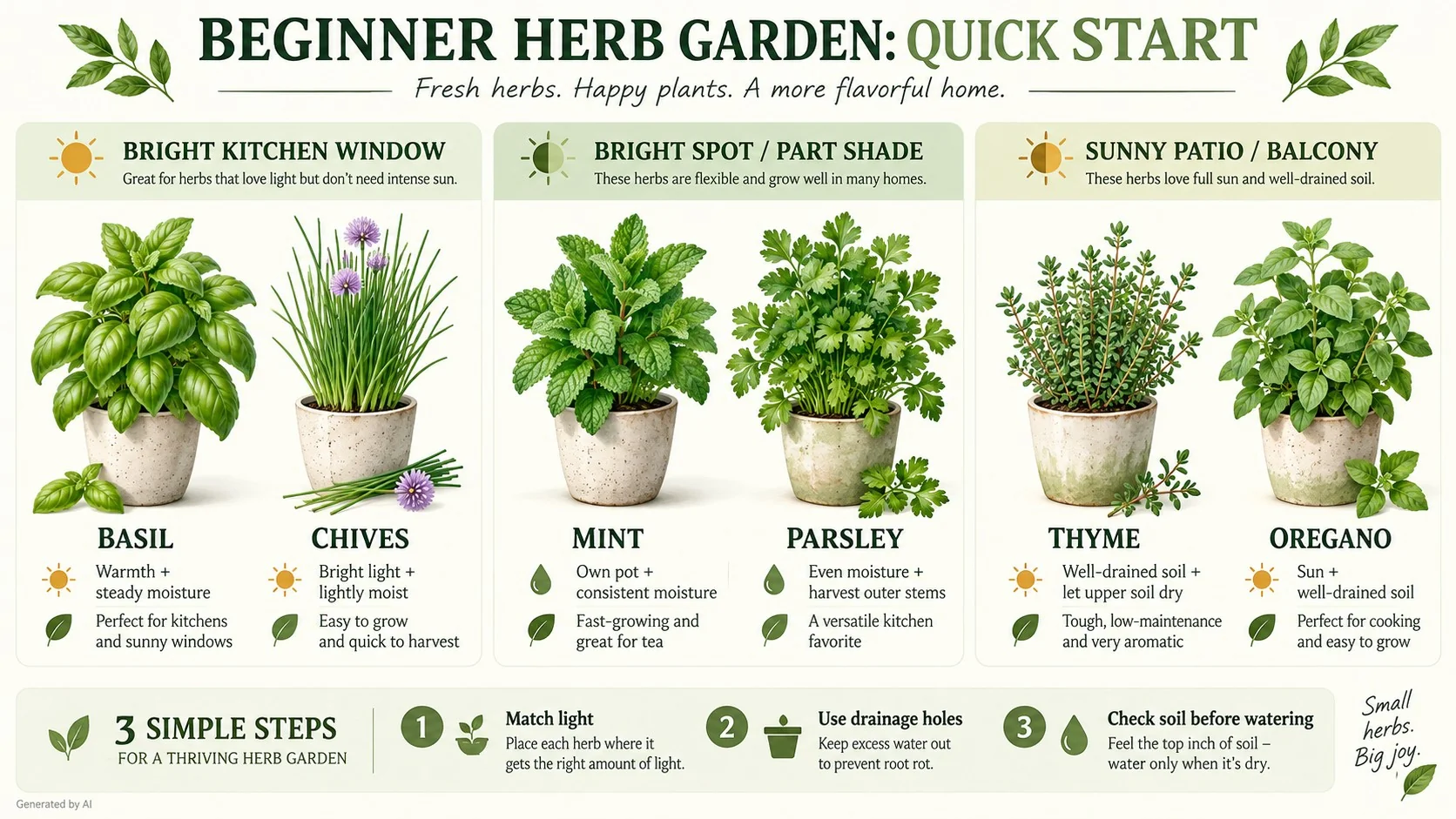
Want to grow fresh herbs at home? Basil, chives, parsley, and mint are practical starting choices for a bright kitchen or small container garden. If you have a sunny balcony or patio, thyme and oregano are also worth considering.
You don't need a backyard or a complicated setup. Start with two or three herbs that you already use in your cooking, give them suitable light and drainage, and learn how each pot responds to watering and harvesting.
This guide introduces 11 beginner-friendly herbs, helps you choose the right ones for your space, and explains how to keep them growing. You'll also find more specific advice in our Herbs & Natural Living guides .
Which herbs should you grow first?
The easiest herb for you depends on where you plan to grow it. Match the plant to your available light and the flavors you enjoy.
Basil and chives
Basil loves warmth and strong light. Chives are compact, easy to harvest, and useful in everyday cooking. Both work well in separate containers.
Mint and parsley
Mint and parsley can tolerate somewhat less direct sun than Mediterranean herbs. They still need adequate light and reasonably consistent moisture.
Thyme and oregano
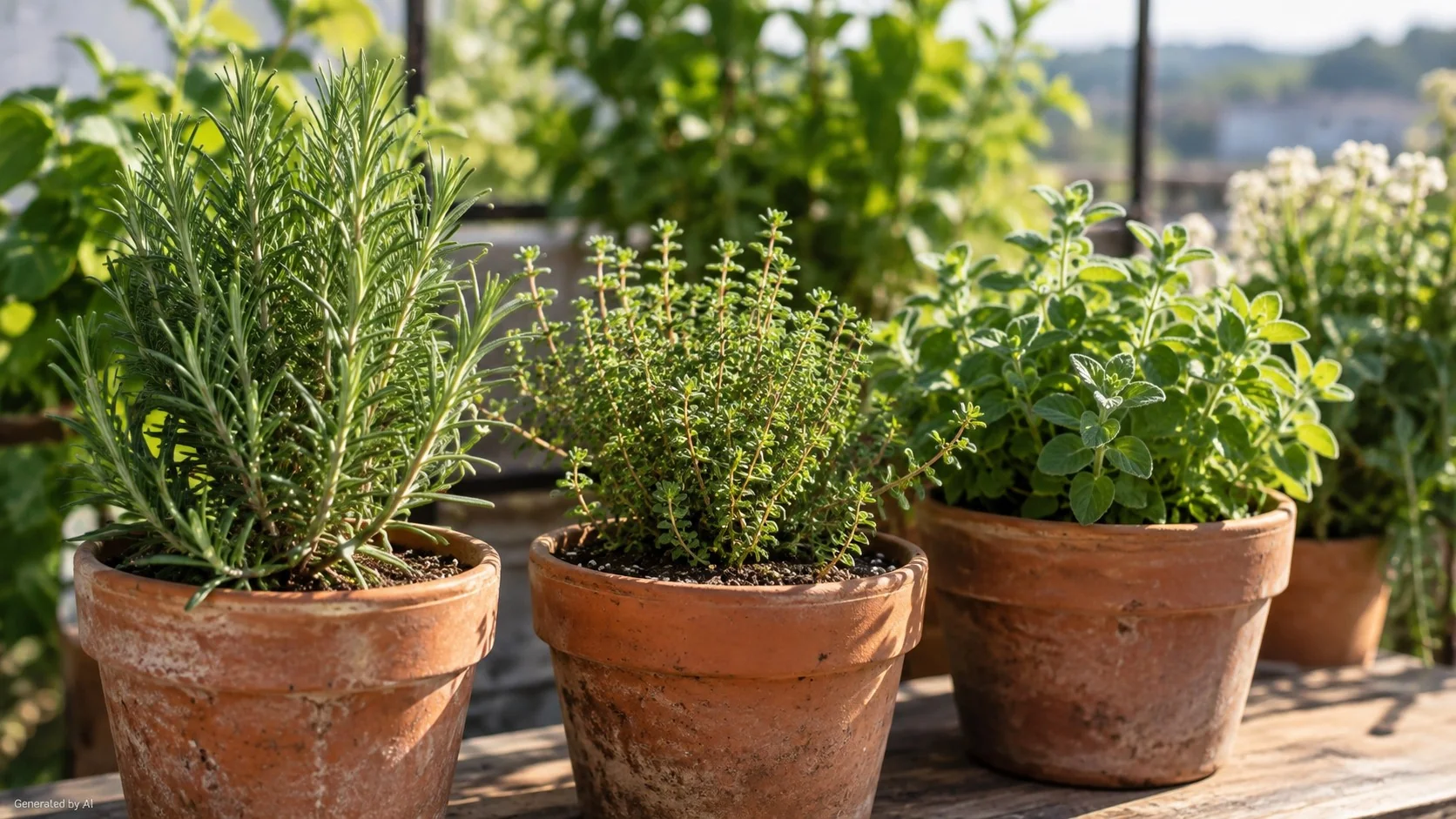
These Mediterranean herbs enjoy a sunny location, freely draining soil, and a little more drying between waterings.
Cilantro and dill
Both are useful seasonal herbs. Sow small batches, give the roots suitable space, and harvest while the foliage is healthy.
The 11 best herbs to grow at home for beginners
The herbs below are useful in the kitchen and can grow successfully in containers. Some are particularly suitable for a bright windowsill, while others are more comfortable in a sunny outdoor location.
Choose herbs that fit your light, available space, and normal cooking routine.
Basil
Basil is a familiar kitchen herb for pasta, pizza, tomato salads, and pesto. It grows actively in warm conditions with plenty of light.
Keep the potting mix lightly moist without leaving the roots waterlogged. Protect the plant from cold drafts.
Harvest tip: Cut above a pair of leaves to encourage branching and fuller growth.
Parsley
Parsley works well in soups, sauces, salads, and many everyday dishes. It can tolerate somewhat cooler conditions than basil.
Flat-leaf parsley usually has a more pronounced flavor, while curly parsley also makes an attractive garnish.
Harvest tip: Remove older outer stems near the base and leave the center to develop new growth.
Chives
Chives have a mild onion flavor that pairs well with eggs, potatoes, soups, cream cheese, and salads.
Their compact growth makes them useful for small containers. Give them good light and check the soil regularly during active growth.
Harvest tip: Cut leaves with clean scissors, leaving a little green growth. The clump can produce new shoots.
Mint
Mint is useful for fresh tea, lemonade, fruit salads, and sauces. It grows vigorously when it receives enough water, light, and root space.
It tolerates some partial shade outdoors, but indoor plants still need useful growing light.
Beginner tip: Give mint its own pot. Its spreading roots can crowd neighboring plants in shared containers.
Thyme
Thyme has small aromatic leaves and a concentrated flavor. It works well with roasted vegetables, potatoes, soups, and savory dishes.
Give it plenty of sunlight and a loose, well-drained potting mix. Allow the upper soil to dry before watering again.
Beginner tip: Keep thyme separate from mint and other herbs that need more consistent moisture.
Rosemary
Rosemary has fragrant, needle-like leaves that work beautifully with potatoes, roasted vegetables, bread, and marinades.
It prefers strong light, good airflow, and a freely draining pot. A sunny patio or balcony is often easier than a dim indoor room.
Beginner tip: Check the soil before watering. Avoid prolonged waterlogging, but do not leave the entire root ball completely dry for an extended period.
Oregano
Oregano is especially useful for pizza, tomato sauces, marinades, and roasted vegetables.
It performs well in sunny locations with freely draining soil. Healthy, established plants can provide repeated small harvests.
Harvest tip: Trim suitable soft stems during active growth and avoid keeping the container continually wet.
Cilantro
Cilantro adds fresh flavor to salsa, tacos, rice dishes, salads, and sauces.
It is easy to start from seed, but can be relatively short-lived. Hot weather often encourages the plant to flower and set seed.
Beginner tip: Sow small batches during suitable growing weather instead of expecting one plant to produce leaves indefinitely.
Dill
Dill has delicate, feathery foliage and is useful with potatoes, fish, pickles, yogurt sauces, and salads.
It develops a taproot and generally prefers being sown directly into its final container.
Beginner tip: Choose a sufficiently deep pot and avoid disturbing established roots.
Sage
Sage has soft gray-green leaves with a distinctive earthy flavor. It works well in stuffing, bean dishes, roasted vegetables, and savory butter sauces.
Give it plenty of sunlight, good drainage, and moderate watering.
Harvest tip: Take modest amounts of healthy new growth and avoid severe cuts into old woody stems.
Lemon balm
Lemon balm belongs to the mint family and has fragrant, lemon-scented leaves. It can be grown in a container near the kitchen or in an outdoor herb garden.
Give it adequate light, a well-draining pot, and consistent care during active growth.
Beginner tip: Keep lemon balm contained if you do not want it spreading into nearby garden beds.
Beginner herb comparison: light, water, and care
You don't need to memorize every herb's care requirements. This quick comparison helps you choose six useful first plants.
| Herb | Suitable location | Watering style | Useful tip |
|---|---|---|---|
| Basil | Warm, very bright window | Keep lightly moist | Pinch above leaf pairs |
| Parsley | Bright spot | Fairly even moisture | Harvest outer stems |
| Chives | Bright window or container | Lightly moist during growth | Cut leaves and allow regrowth |
| Mint | Bright spot or partial shade | More consistent moisture | Use a separate pot |
| Thyme | Sunny patio or bright window | Allow upper soil to dry | Avoid soggy conditions |
| Rosemary | Very sunny, airy location | Let upper mix dry | Prioritize light and drainage |
Should you start herbs from seeds or young plants?
Both options work, but young plants usually make the first few weeks easier. You can see their condition before buying, skip germination, and begin harvesting once they are established.
Start with young plants
Basil, mint, chives, parsley, thyme, oregano, sage, rosemary, and lemon balm can all be purchased as starter plants.
Choose compact, healthy specimens with fresh foliage. Avoid plants with widespread yellowing, visible mold, or severely wilted growth.
Start from seed
Cilantro, dill, basil, and parsley are useful options for seed starting. Keep the mix lightly moist during germination and provide sufficient light as seedlings emerge.
Sow dill and cilantro directly into suitable final containers where practical to reduce root disturbance.
How to set up a simple home herb garden
A useful herb garden can fit on a sunny windowsill, patio, porch, or balcony. You only need a few suitable pots and a location that matches the plants you choose.
1. Observe the light before choosing herbs
Most culinary herbs need bright conditions, and many grow best with several hours of direct sunlight.
Rosemary, thyme, oregano, and sage are especially suited to sunny spots. Mint, parsley, and chives can tolerate somewhat less direct sunlight, but they still need useful growing light.
If you're unsure what your windowsill or balcony actually provides, our guide to plant light needs and the difference between full sun and indirect light explains the main light conditions and how to recognize them.
Winter daylight may be too weak for strong indoor herb growth. A suitable grow light can help when natural light is limited.
2. Choose pots with drainage holes
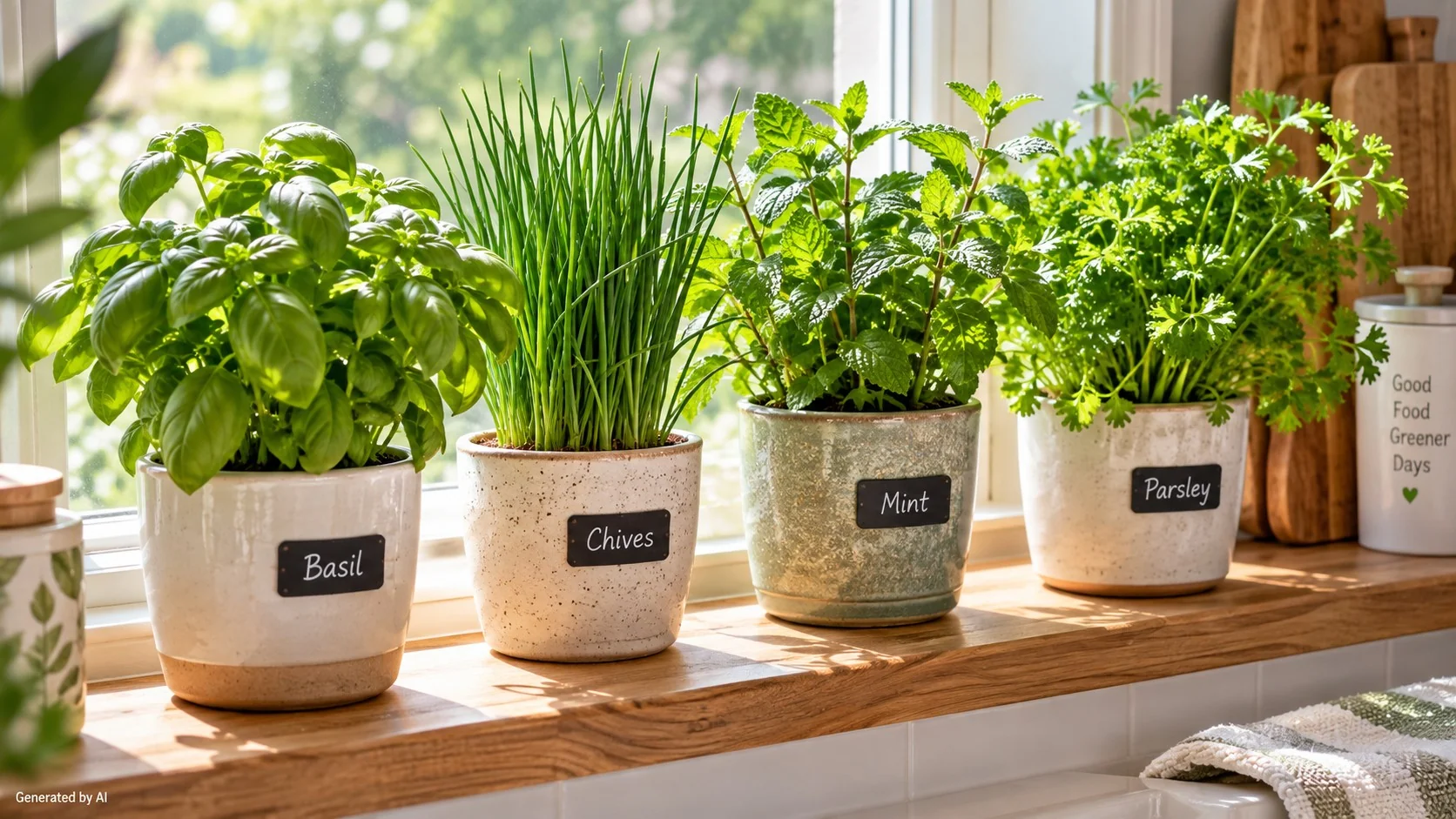
Drainage holes let excess water escape from the root zone. Decorative outer pots are fine, but do not leave the growing pots standing in collected water.
Terracotta tends to dry faster, while plastic and glazed containers generally retain moisture longer. Choose a pot that suits the root system instead of moving a small plant into an unnecessarily large container.
3. Use a suitable potting mix
A loose, well-draining container mix is a practical starting point for most culinary herbs. Mediterranean herbs benefit from particularly good drainage.
If you're planning a patio or balcony setup, our balcony and container gardening guide explains how light, pot size, potting mix, and outdoor conditions affect container plants.
4. Keep different watering needs separate
Herbs can grow beside one another without sharing the same container. Separate pots let you water mint without automatically soaking thyme, or care for basil without keeping rosemary too wet.
How to water herbs without overthinking it
One of the easiest beginner mistakes is watering every herb on the same schedule. Water use changes with light, temperature, pot size, airflow, and active growth.
Instead of watering automatically every few days, make a quick soil check part of your routine.
- Feel the soil. Check approximately the top inch of potting mix and consider the needs of that particular herb.
- Compare moisture needs. Basil, mint, parsley, and chives generally need more consistent moisture than thyme and oregano.
- Water thoroughly when needed. Apply enough water to moisten the root zone and let excess water escape through the drainage holes.
- Empty collected water. Avoid leaving the growing pot standing in a filled saucer.
- Check again before the next watering. Do not assume the same interval will work after a change in weather, light, or growing conditions.
For a more detailed explanation, read our guide to how often you should water plants . It covers the finger test, seasonal changes, drainage, and the signs of too much or too little water.
How to harvest herbs so they keep growing
Harvesting is part of normal herb care. The right cutting method depends on the plant's growth habit.
Avoid removing too much foliage at once, especially from small, newly planted, or stressed herbs.
Leafy, branching herbs
For basil, mint, oregano, and lemon balm, cut suitable soft stems just above a leaf pair or node. This can encourage branching during active growth.
Clumping and leafy herbs
Harvest chives with clean scissors, leaving some green growth. For parsley and cilantro, take outer stems first and protect the developing center.
Woody Mediterranean herbs
Take modest amounts of new growth from rosemary, thyme, and sage. Avoid cutting deeply into old woody stems on small plants.
Short-lived herbs
Harvest cilantro and dill while their leaves are fresh. Sow replacement batches if you want a longer seasonal supply.
Once your garden is productive, visit our herb harvesting and storage guides for more detailed cutting methods and practical ways to preserve extra culinary herbs.
Common mistakes when growing herbs at home
Even easy herbs can struggle when the growing conditions are off. Before changing everything at once, look for the clearest symptom and check the plant's surroundings.
| What you notice | What to check | What to do next |
|---|---|---|
| Yellow leaves and wet soil | Drainage, watering frequency, and root condition | Stop automatic watering. Check drainage and let the mix dry appropriately for the herb. |
| Long, weak, pale growth | Actual daylight at the plant | Move the plant to a brighter, suitable location or consider supplemental lighting. |
| A crowded supermarket pot | Root space and drying speed | Consider gentle division or repotting into suitable draining containers. |
| Slow regrowth after cutting | Remaining foliage, plant health, and light | Harvest less, leave healthy leaves, and allow recovery time. |
| Cilantro flowering early | Temperature, age, and seasonal conditions | Sow fresh batches during suitable growing weather. |
If you cannot identify the problem, visit our plant problem troubleshooting guides and compare the visible symptoms before deciding what to change.
Your first herb garden: a practical checklist
Keep this checklist handy when buying and setting up your first herb plants.
- Choose two or three herbs you already use in the kitchen.
- Observe the light in your growing location before choosing sun-loving herbs.
- Start with young plants if you want to skip germination.
- Select containers with working drainage holes.
- Use a loose, suitable potting mix.
- Keep mint in its own pot.
- Separate herbs with different moisture needs.
- Check the soil before watering.
- Water thoroughly when needed and remove collected water.
- Harvest modestly from healthy, established plants.
- Adjust care as the light and seasons change.
Start with one herb you will actually use
A successful first herb garden does not need to be large. Choose a suitable plant, give it a draining pot, and learn how quickly its soil dries.
If you love fresh leaves for everyday meals, start with basil, parsley, or chives. If you have a sunny outdoor spot, consider thyme or oregano.
Add another herb once the first one is growing well.
Looking for your next step? Browse our Herbs & Natural Living collection for detailed guides about kitchen herbs, windowsill growing, harvesting, drying, and storage.
Frequently asked questions about beginner herbs
What is the easiest herb to grow at home?
Chives and mint are approachable choices for many beginners. Parsley is also useful, while basil grows well when it receives enough warmth, light, and moisture. Your easiest herb depends on your growing conditions.
Can herbs grow indoors all year?
Some culinary herbs can grow indoors throughout the year when they receive enough light and suitable care. Winter daylight may be insufficient in many homes, so a grow light can be useful.
How many herbs should I start with?
Two or three pots are a manageable starting point. They let you learn the needs of individual herbs before expanding your collection.
Do potted herbs need fertilizer?
Potted herbs may benefit from light feeding during active growth, especially when nutrients in the potting mix become depleted. Use an appropriate fertilizer according to its instructions and avoid excessive feeding.
Can I grow herbs from supermarket plants?
Yes. Check for crowded seedlings, healthy roots, adequate drainage, and sufficient light. Some grocery-store herbs benefit from gentle division or repotting. Let them establish before harvesting heavily.
Which herbs grow well together?
Herbs with similar light and moisture needs make practical neighbors. Thyme, oregano, rosemary, and sage can share a sunny growing area, while basil, parsley, chives, and mint generally need more consistent moisture. Separate pots are easiest for adjusting individual care.
Start small and keep growing
The best beginner herbs are the ones that suit your space, cooking habits, and available light. Begin with a few suitable plants rather than trying to grow everything at once.
Check the soil before watering, give the roots room to breathe, and harvest a little at a time. These simple habits make your first herb garden easier to maintain and help you understand what each plant needs.
