
Why Are My Plant's Leaf Tips Turning Brown?
Brown leaf tips can develop when a houseplant struggles with dry air, inconsistent watering, mineral buildup, or damaged roots. Too much direct sun and sudden changes in temperature can also cause leaf damage. The best fix depends on what is happening around your plant. Before you water again or reach for the scissors, check the potting mix, drainage, and growing conditions. The brown tissue will not turn green again, but correcting the underlying problem can help prevent new damage.
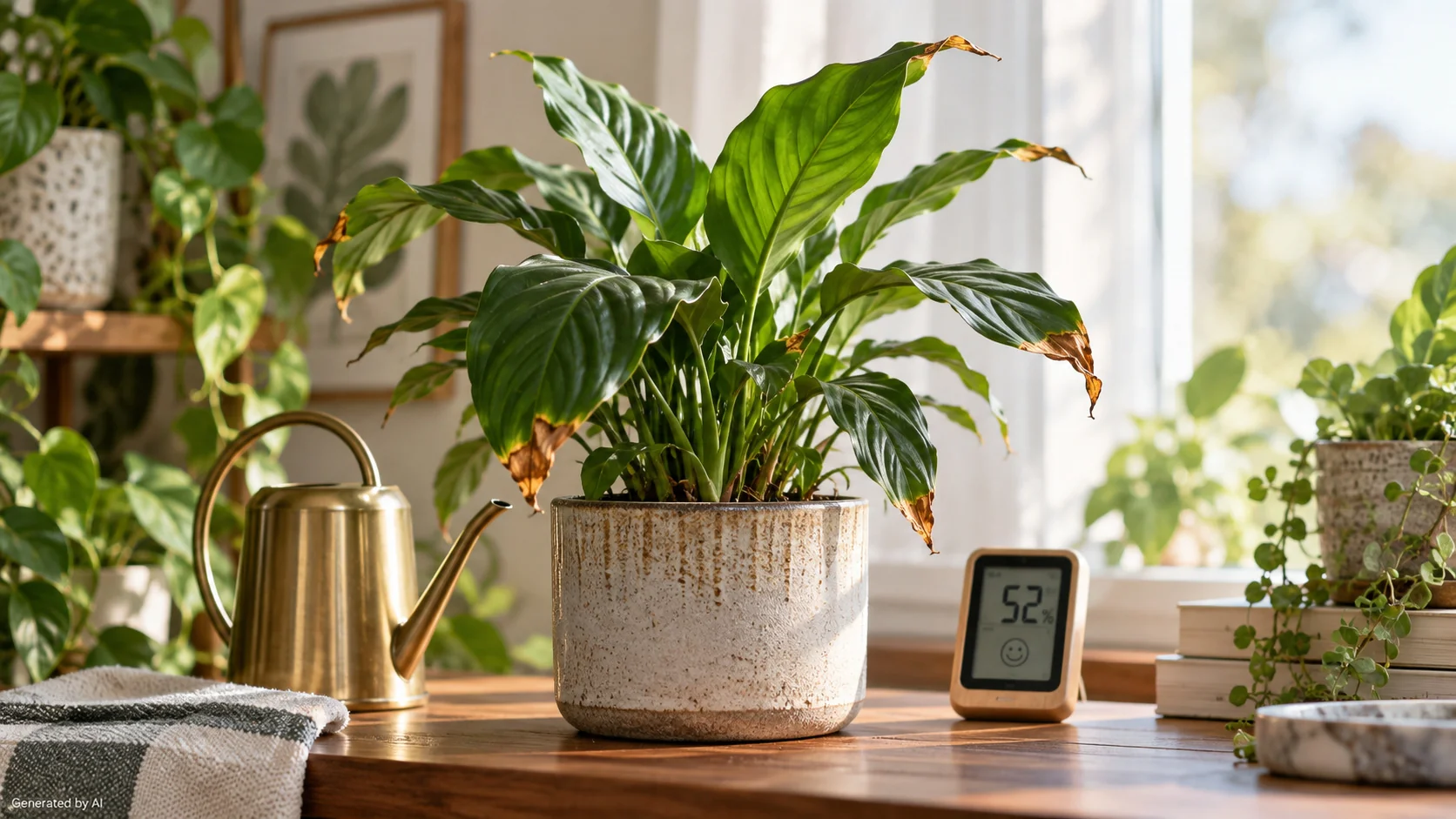
Brown Leaf Tips: What Should You Check First?
Start by looking at the whole plant. A single crispy tip on an otherwise healthy leaf is different from widespread browning accompanied by yellow leaves, wilting, or consistently wet soil.
- Soil moisture: Is the potting mix unusually dry, or has it stayed wet for several days?
- Drainage: Can excess water leave the pot? Is water collecting in the saucer?
- Indoor air: Is your plant close to a heater, air vent, or drafty window?
- Water and fertilizer: Have you increased feeding or noticed white mineral deposits on the pot?
- New growth: Are only older leaves affected, or are new leaves developing brown tips too?
If your plant has several symptoms at once, the Plant Problems troubleshooting guide can help you compare brown tips with yellow leaves, drooping stems, and other warning signs.
Brown Leaf Tips: Symptoms, Causes, and First Fixes
The appearance of a damaged leaf can help narrow down the problem, but one symptom rarely confirms a single cause. Compare the leaf damage with the condition of the soil and the plant's recent environment.
| What You Notice | Possible Cause | What to Check |
|---|---|---|
| Dry, crispy tips with otherwise healthy green leaves | Low humidity, inconsistent watering, or water sensitivity | Check soil moisture, indoor humidity, and your water source. |
| Brown tips after the pot becomes extremely dry | Underwatering or repeated drying cycles | Check the root-zone moisture and adjust watering to the plant's needs. |
| Brown tips with yellow leaves and wet soil | Overwatering or impaired root function | Check drainage and whether the growing medium stays wet too long. |
| Brown edges and white crust on the pot or soil | Fertilizer or dissolved mineral buildup | Review feeding, water quality, and the condition of the potting mix. |
| Brown or bleached patches on exposed leaves | Excessive direct sunlight or heat | Check the plant's location and recent changes in light exposure. |
| Recurring damage on a sensitive houseplant | Water quality, humidity, or combined environmental stress | Review the plant's care requirements before making several changes. |
Start with what you can observe. If the potting mix is wet, do not assume the plant needs more water simply because its leaf tips are dry.
6 Common Causes of Brown Leaf Tips
1. Inconsistent Watering
Allowing a houseplant to become too dry between waterings can damage leaf tissue. Repeated moisture stress may eventually show up as dry, crispy tips.
However, watering more frequently is not always the answer. Potting mix that stays constantly wet can also damage the roots and interfere with water uptake.
The goal is to water when the plant needs it and allow the mix to dry appropriately for the species.
For practical advice on checking moisture and avoiding rigid watering schedules, read How Often Should You Water Plants?
2. Low Indoor Humidity
Dry air can contribute to brown leaf tips, particularly on humidity-sensitive tropical houseplants.
This often becomes more noticeable during winter, when indoor heating can reduce relative humidity.
If your plant is close to a heating vent or radiator, consider moving it to a location with more stable conditions and suitable light.
A room humidifier can help when indoor humidity is consistently too low. Grouping plants may also provide a modest improvement in their immediate surroundings.
If dry air is an ongoing problem, measure the conditions with a hygrometer. Frequent misting provides only a temporary change and is not a reliable substitute for suitable room humidity.
3. Too Much Fertilizer or Salt Buildup
Fertilizer contains dissolved salts. When these accumulate in potting mix, they can interfere with water uptake and damage sensitive roots.
Warning signs may include brown leaf tips, reduced growth, or white crusty deposits on the soil surface or around the pot.
If salt buildup is suspected, pause fertilizing and check the condition of the growing medium.
When the plant has healthy roots, a suitable draining pot, and appropriate potting mix, flushing with water can help remove accumulated soluble salts.
If the mix is old, compacted, or severely affected, replacing it with fresh potting mix may be more appropriate.
4. Tap Water Sensitivity
Certain houseplants, including some dracaenas and spider plants, are sensitive to substances in their water.
Fluoride sensitivity and the accumulation of dissolved minerals may contribute to brown tips in susceptible species.
If your plant continues developing brown tips despite suitable watering and humidity, consider water quality as another possible factor.
Distilled water or another suitable low-mineral water source may help sensitive plants.
Avoid using water from a household salt-based water softener for sensitive houseplants.
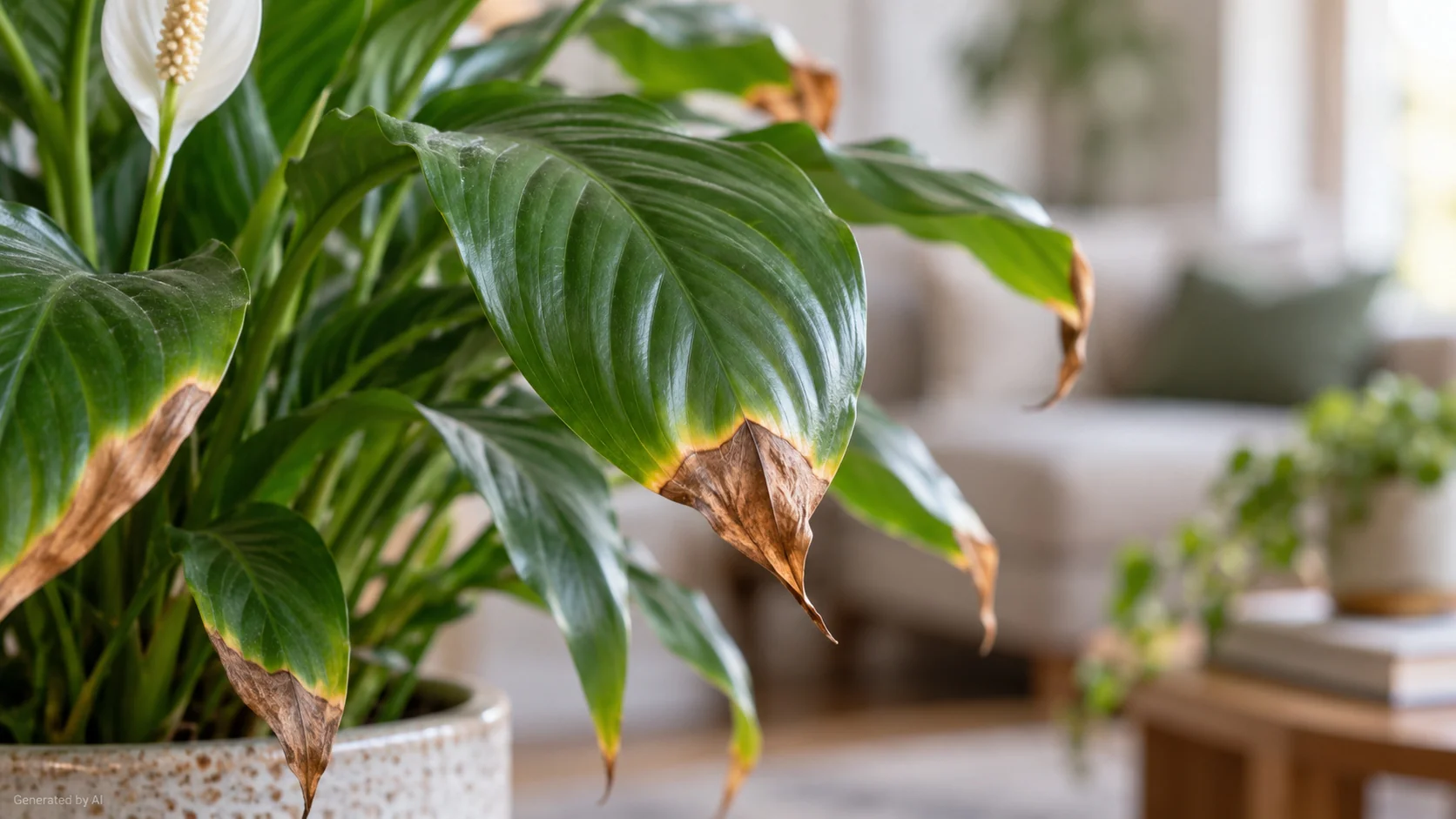
5. Overwatering and Root Problems
A houseplant with damaged roots may struggle to absorb water even when the potting mix is wet. This can result in wilting, yellow leaves, and brown leaf tips.
If the mix remains soggy for a long time, check the drainage holes and whether the growing medium is too dense.
Also inspect for soft stems, yellowing leaves, or an unpleasant smell from the pot. These may indicate a more serious root problem.
Do not automatically repot a plant because one leaf has a brown tip. First, determine whether the root environment is actually causing trouble.
The Grow Guides for potting mix, drainage, and repotting explain how these factors work together and when changing the growing medium may be useful.
6. Too Much Sun, Heat, or Drafts
Strong direct sunlight can scorch leaves, especially when a houseplant has recently moved from a shaded location.
Heat from a nearby window or radiator, as well as cold drafts, can contribute to environmental stress.
If the damage appeared after a change in location, compare the old and new growing conditions.
For help choosing a suitable spot, see Plant Light Needs Explained . The guide covers bright indirect light, direct sunlight, and why distance from a window matters.
How to Stop New Brown Leaf Tips: A 5-Step Plan
Instead of changing your entire plant-care routine at once, work through the most likely causes.
Make adjustments gradually unless there is an urgent drainage or root problem.
- Step 1 — Check the soil. Feel the mix below the surface. If it is dry and the plant needs water, water thoroughly. If it is soggy, do not add more water.
- Step 2 — Inspect drainage. Make sure excess water can leave the container. Empty saucers or decorative outer pots after watering.
- Step 3 — Review the environment. Check for dry heating air, strong sun, cold drafts, and recent changes in location.
- Step 4 — Review water and fertilizer. Avoid fertilizing a stressed plant. Check for mineral deposits and consider water sensitivity if other conditions are suitable.
- Step 5 — Watch new growth. Observe whether fresh leaves remain healthy. Existing brown tissue will not recover, so look for signs that further damage has stopped.
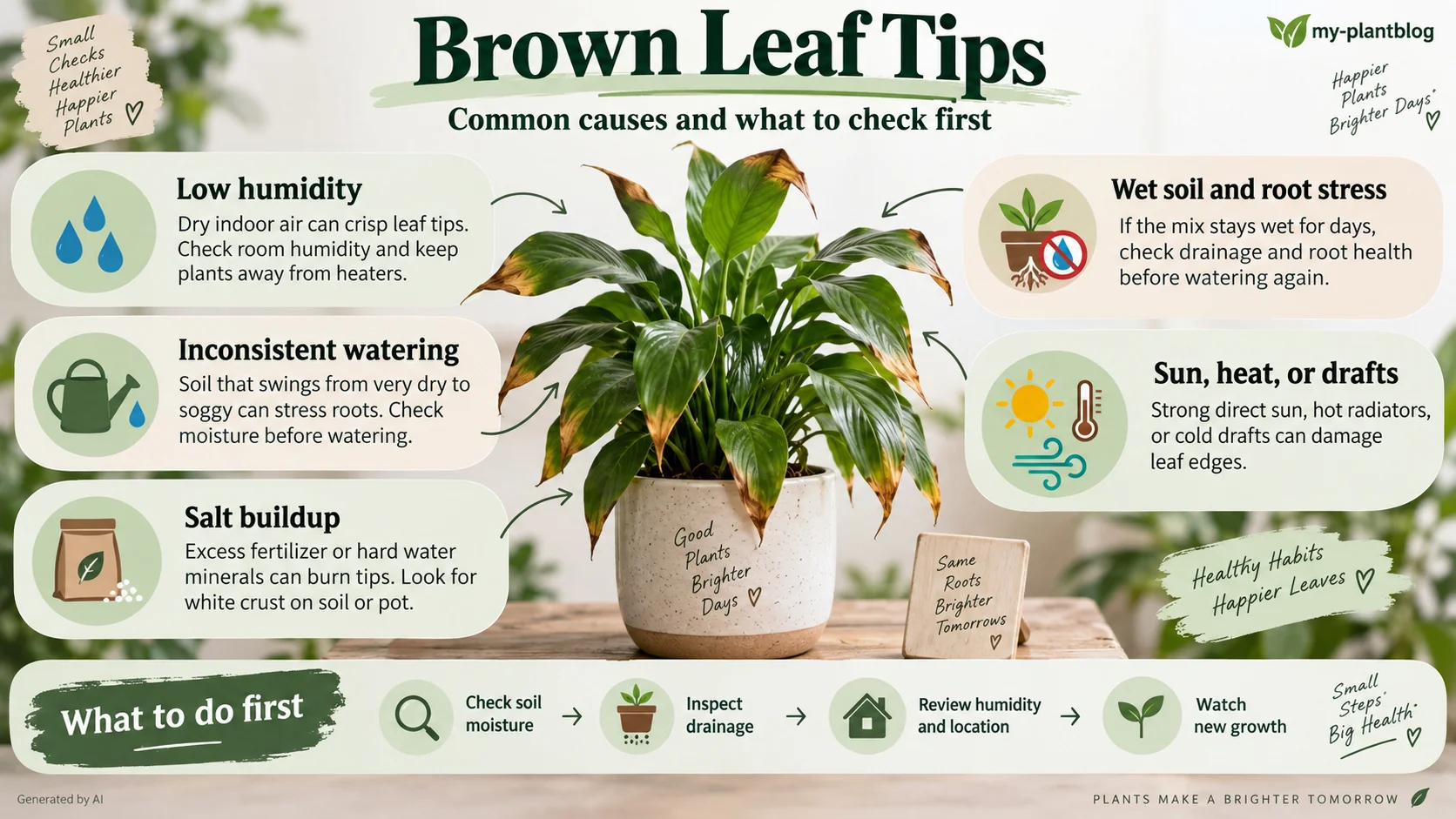
If your plant is wilting while the potting mix remains wet, do not assume it needs another drink.
Check drainage and root health before watering again.
Should You Cut Off Brown Leaf Tips?
Yes, you can carefully trim dead brown tissue if you want to improve the appearance of your houseplant.
Trimming is cosmetic, though. It will not correct the conditions that caused the damage.
If a leaf is mostly green and healthy, there is usually no need to remove the entire leaf just because its tip is brown.
How to Trim Brown Tips Safely
- Use clean, sharp scissors or small pruning snips.
- Cut away the dead tissue without cutting deeply into healthy green tissue.
- Follow the natural shape of the leaf when possible.
- Remove an entire leaf only when the damage is extensive or the leaf is otherwise declining.
If brown tips keep appearing, focus on the growing conditions rather than repeatedly trimming the same symptom.
How to Prevent Brown Tips on Houseplants
Preventing leaf-tip damage usually comes down to maintaining suitable conditions for the individual plant.
- Check soil moisture rather than watering on a rigid calendar.
- Use a pot with working drainage holes and suitable potting mix.
- Avoid unnecessary exposure to heating vents and temperature extremes.
- Fertilize according to the plant's needs, growth stage, and product instructions.
- Use appropriate water for species that are sensitive to dissolved minerals.
- Compare older leaves with new growth to monitor whether the problem continues.
Remember that plant-care requirements vary. A drought-tolerant succulent and a tropical foliage plant should not automatically receive the same watering or humidity routine.
Brown Leaf Tips: Frequently Asked Questions
Can brown leaf tips turn green again?
No. Once leaf tissue is dead, it cannot recover its green color. Correcting the underlying problem can prevent new damage. You can trim the old brown tissue if desired.
Why are my plant's tips brown even though I water regularly?
Regular watering does not rule out moisture stress. The potting mix might remain too wet, dry out too much between waterings, or contain excess dissolved salts.
Low humidity and water sensitivity may also contribute. Check the soil and drainage first.
Are brown leaf tips a sign of root rot?
Not necessarily. Brown tips can develop for several reasons.
However, wet soil combined with wilting, yellowing, soft stems, or deteriorating roots warrants a closer inspection of the root system.
Can I use tap water for my houseplants?
Tap water is suitable for many houseplants, but some species are sensitive to certain dissolved substances.
If damage persists despite appropriate care, consider water quality as one possible factor.
Should I fertilize a plant with brown leaf tips?
Do not use fertilizer as an immediate treatment for brown tips.
First, check moisture, light, roots, and the growing environment. Resume appropriate feeding when the plant is stable and actively growing.
Further Reading and Plant-Care Sources
For additional information about leaf-tip damage, watering, and common houseplant problems, see these horticultural resources:
Give Your Plant a Better Chance to Recover
Brown leaf tips are a useful clue, but they do not tell the whole story.
Start with the soil and drainage, consider humidity and water quality, and look for additional symptoms before making major changes.
Once you have addressed the likely cause, give your plant time. Healthy new growth is a more useful sign of improvement than the appearance of an already damaged tip.
If you notice new symptoms or the plant continues to decline, return to the Plant Problems guide to compare the next visible clues.
