
Monthly Garden Planner: What to Do Each Month
A monthly garden planner helps you stay on top of planting, watering, harvesting, and seasonal care without making gardening feel like another full-time job. Use this 12-month checklist to see what deserves your attention, then adjust the timing to your local weather and growing conditions.
The same month can look very different in Maine, Texas, California, and Ohio. Frost dates, rainfall, soil temperature, and summer heat matter more than the calendar alone. Think of this guide as a flexible starting point, not a strict planting schedule.
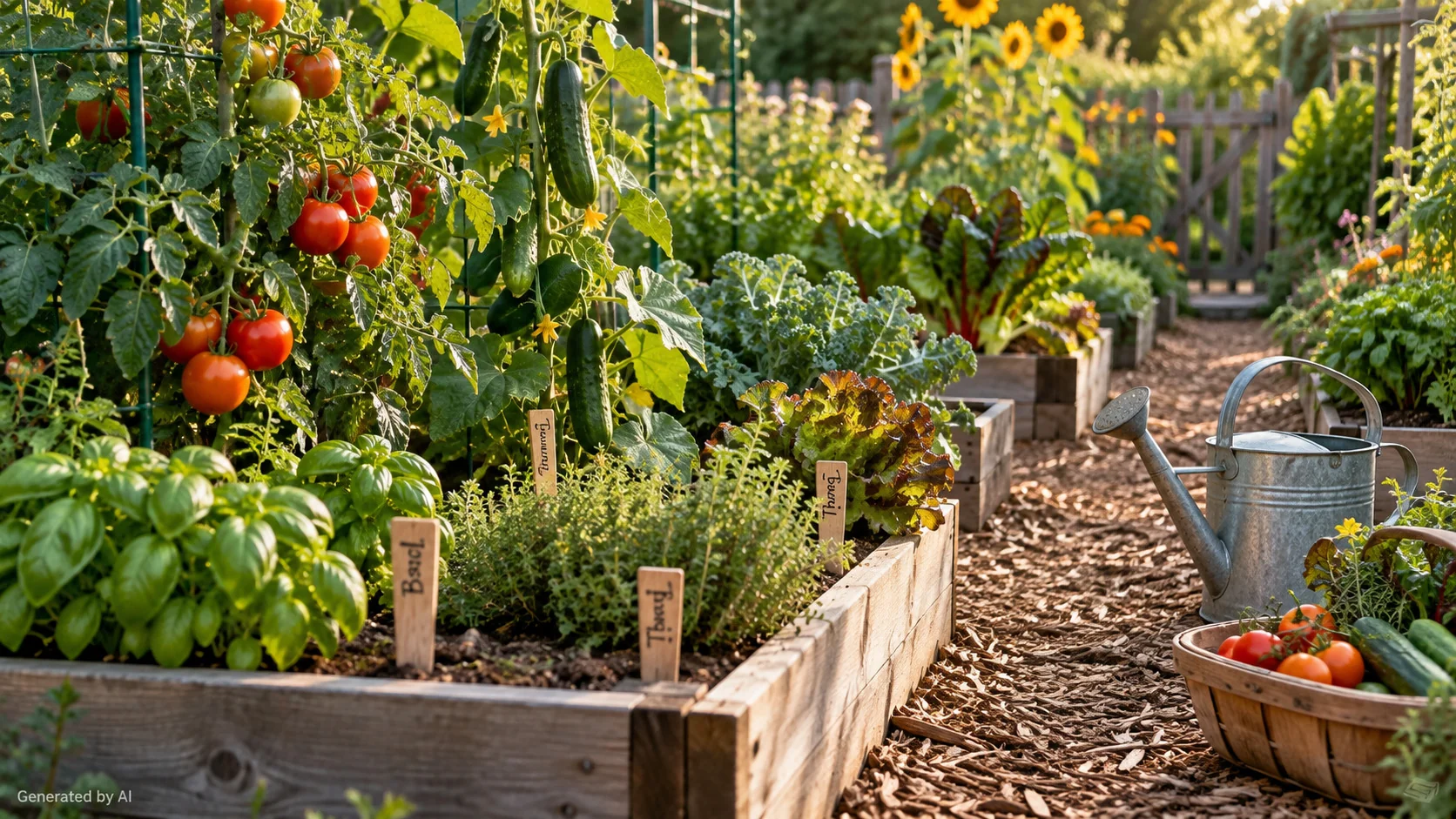
How to Use This Monthly Garden Planner
Gardens respond to temperature, daylight, moisture, and weather, not the date on a calendar. Start by finding your local growing conditions. Then use the monthly tasks below to decide what you can do now and what should wait.
Know Your Frost Dates
Find your average last spring frost and first fall frost. Use these dates to plan seed starting, transplanting, and late-season crops.
Check Your Growing Conditions
Your USDA hardiness zone helps assess winter survival for perennial plants. Actual frost dates, soil temperature, and weather are more useful for timing annual vegetables.
Keep a Garden Notebook
Record frost events, sowing dates, rainfall, pests, harvests, and plants that perform well. Your notes will make next year's plan more useful.
January Garden Tasks: Plan Before You Plant
January is often the quietest month in a cold-climate garden. Use this time to look back at last year and make a manageable plan for the season ahead.
Which plants grew well? Which needed too much attention? Was one bed too dry, too shady, or too crowded? Write down what you remember before spring arrives.
- Review last year's garden notes and harvests.
- Sort seed packets and make a seed inventory.
- Clean hand tools, labels, and seed trays.
- Check stored bulbs, tubers, and overwintering plants.
- Inspect winter protection after storms or heavy rain.
If you are starting a new garden, sketch the beds, note the available sunlight, and think about access to water. The Garden & Outdoor guides can help you choose a practical starting point for a raised bed, patio, or larger garden.
February Garden Tasks: Start Planning for Spring
February is a good time to finalize your garden layout and prepare for seed starting. In warmer climates, outdoor planting may already be underway. In colder regions, patience is still important.
Sketch where your vegetables, herbs, and flowers will grow. If you rotate annual vegetables, record which crop families occupied each bed last season.
- Check seed-starting dates against your local last frost.
- Start suitable early crops indoors when appropriate.
- Repair plant supports, raised beds, and containers.
- Inspect seed-starting supplies and available light.
- Wait until soil is workable before digging or planting.
Onions, leeks, and some cool-season vegetables may be started early in many regions. Tomatoes and peppers also benefit from indoor starting in shorter seasons, but follow the timing on the seed packet.
March Garden Tasks: Prepare Beds and Sow Hardy Crops
March often brings the first signs of spring growth. Before sowing anything, check whether your soil has warmed and dried enough to work.
In suitable conditions, cool-season crops such as peas, spinach, lettuce, radishes, and arugula may be ready for direct sowing. Carrots can also be sown when soil conditions suit the crop.
- Inspect emerging perennials and overwintered plants.
- Prepare vegetable beds only when the soil is workable.
- Sow suitable cool-season crops for your region.
- Add finished compost where needed.
- Keep row cover available for cold nights.
A modest layer of finished compost is often enough to refresh a bed. More fertilizer or compost is not automatically better. If plant growth has been poor, a soil test can help identify what is actually needed.
April Garden Tasks: Plant, Weed, and Watch the Weather
April can be a busy garden month, but conditions may change quickly. Mild days do not guarantee that frost risk has passed.
In suitable climates, continue sowing cool-season vegetables and planting hardy perennials or shrubs. Keep tender plants protected until local conditions are reliably warm enough.
- Plant suitable hardy crops and perennials.
- Keep frost protection available for tender growth.
- Remove small weeds before they become established.
- Check new leaves for pests and disease symptoms.
- Apply mulch when soil conditions are appropriate.
Mulch helps conserve moisture and suppress weeds. Keep it away from stems and trunks so plant crowns are not buried against wet material.
Look closely before treating an insect problem. A few damaged leaves do not always mean a plant needs pesticide treatment.
May Garden Tasks: Plant Warm-Season Vegetables
May is a major planting month in many US regions, especially where spring frost risk has passed. Tomatoes, peppers, basil, cucumbers, squash, and other warm-season plants can move outdoors once conditions suit them.
Before transplanting indoor-grown seedlings, harden them off gradually. Start with sheltered outdoor conditions and increase exposure over several days. Young plants need time to adjust to sun, wind, and temperature changes.
- Check your local frost forecast before transplanting.
- Harden off indoor-grown seedlings.
- Install supports for tomatoes, beans, and cucumbers.
- Water new plantings consistently as roots establish.
- Check container drainage and growing conditions.
New plants need reliable moisture, but that does not mean watering everything every day. Check the root zone and recent weather. The plant watering guide explains how to adjust watering for garden beds, balcony pots, and indoor plants.
June Garden Tasks: Water, Mulch, and Keep Crops Growing
June is often a month of rapid plant growth. Garden beds fill out, containers use more moisture, and harvesting becomes a regular part of the routine.
Water according to soil moisture, plant size, and weather rather than relying on a fixed schedule. Established garden beds often benefit from deeper, less frequent watering, while small containers may need checking more often.
- Check soil moisture and water when needed.
- Mulch suitable beds to reduce evaporation.
- Harvest herbs and fast-growing vegetables regularly.
- Continue succession sowing where conditions allow.
- Inspect leaves, stems, and undersides for pest activity.
If you grow kitchen herbs, take modest harvests from healthy plants and leave enough foliage for continued growth. Find more advice on choosing, caring for, harvesting, and preserving herbs in Herbs & Natural Living.
Succession sowing can provide a steadier harvest, but timing matters. Lettuce may struggle in intense heat, while beans and other crops have their own preferred temperature ranges.
July Garden Tasks: Protect Plants During Summer Heat
July often brings strong sun, high temperatures, dry wind, and faster water use. Focus on soil moisture, plant health, and harvesting rather than adding unnecessary work.
Morning is generally a practical time to water outdoor plants. During a heat wave, check vulnerable containers more frequently, especially small pots exposed to full sun or wind.
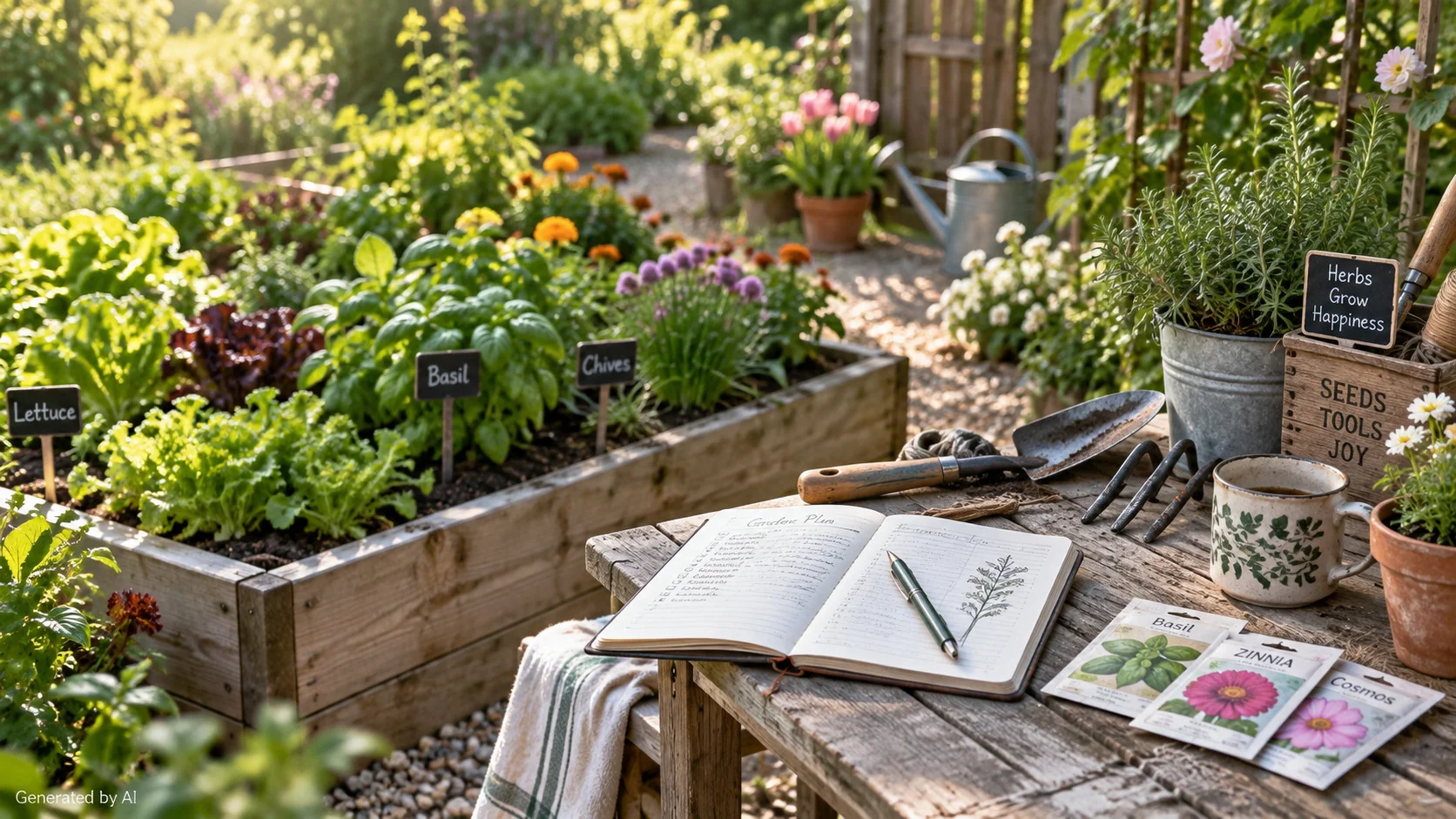
- Check thirsty plants and containers early in the day.
- Refresh mulch where soil is exposed.
- Harvest beans, cucumbers, zucchini, and herbs regularly.
- Watch for heat stress and pest outbreaks.
- Provide temporary shade for vulnerable plants when useful.
Containers on balconies and patios behave differently from in-ground beds. Small pots can dry rapidly, while poorly draining planters may remain wet. Our balcony and container gardening guide covers light, drainage, pot size, and seasonal care.
August Garden Tasks: Start Planning the Fall Garden
August is a turning point in many gardens. Summer harvests may still be strong, but it is time to think about crops that can grow into fall.
Depending on your first fall frost and summer temperatures, suitable choices may include kale, broccoli, lettuce, spinach, beets, carrots, or radishes. Some crops need to be started earlier so they can mature before cold weather.
- Check days to maturity against your fall frost date.
- Start or transplant suitable fall crops.
- Provide shade and moisture for seedlings during heat.
- Keep harvesting productive summer plants.
- Save labeled seeds from healthy, mature plants.
This is also a good time to evaluate your garden. Note which containers dried too quickly, which vegetables used more space than expected, and which plants you would grow again.
September Garden Tasks: Harvest and Prepare for Cooler Weather
September can bring more comfortable gardening weather after summer heat. In many regions, cooler air and still-warm soil make fall a useful planting season.
This can be a good time to establish suitable perennials, shrubs, and trees. Continue harvesting warm-season vegetables and caring for fall crops as local conditions allow.
- Harvest remaining productive summer crops.
- Monitor fall vegetables and their water needs.
- Plant suitable perennials and shrubs in your region.
- Remove clearly diseased or finished crop material.
- Collect healthy fallen leaves for mulch or leaf mold.
Compost healthy plant material where appropriate. Diseased debris is generally best kept out of a cool home compost pile unless your composting method reliably manages the relevant pathogen.
October Garden Tasks: Plant Bulbs and Prepare for Frost
October is a preparation month in many temperate climates. Growth slows, nights cool, and it becomes important to protect tender plants before damaging temperatures arrive.
Garlic and spring-flowering bulbs may be suitable fall planting choices, depending on your region and the bulb or crop. Use well-drained soil and follow the recommended planting depth.
- Plant garlic where fall planting is appropriate.
- Plant suitable spring-flowering bulbs.
- Bring tender container plants indoors before frost.
- Inspect plants for pests before moving them indoors.
- Collect leaves and remove diseased garden debris.
A healthy garden does not need to be completely bare in fall. Leave some suitable seed heads, stems, and leaf litter where they can support wildlife without creating plant-health problems.
As temperatures fall, nutrient needs change too. The Garden & Outdoor seasonal care resources offer further guidance on fall feeding, soil care, and preparing plants for changing weather.
November Garden Tasks: Protect Plants and Store Equipment
November is often less about active planting and more about preparing the garden for winter. The exact work depends on your local temperatures, rainfall, and the plants you grow.
Store equipment before prolonged freezing conditions and check containers that may remain outdoors. Wet potting mix, freezing temperatures, and poor drainage can create problems for both roots and pots.
- Drain hoses and irrigation lines where needed.
- Clean and store hand tools in a dry location.
- Check outdoor containers for drainage and stability.
- Protect suitable perennials after the ground cools.
- Inspect winter covers after wind or storms.
Mulch can help moderate soil temperature around established perennials. Keep it away from crowns and stems, and use protection appropriate for the species and local climate.
December Garden Tasks: Reflect and Plan for Next Year
December is a good month to review the year. Which plants were worth growing again? Which vegetables produced more than you could use? Which flowers supported pollinators or made the garden more enjoyable?
Keep next year's plan realistic. A smaller garden that fits your time and growing conditions is often easier to maintain than one that requires constant attention.
- Review garden notes and harvest records.
- Sketch changes for the coming year.
- Check stored bulbs, tubers, and equipment.
- Monitor overwintering plants and indoor containers.
- Allow dormant beds to rest where appropriate.
Remember that winter care also changes indoors. Shorter days and slower growth can mean slower drying in containers. Check moisture before watering rather than keeping the same summer schedule.
Quick Monthly Garden Checklist
The infographic below brings the most important garden tasks together in one simple overview. The seasonal groupings are illustrative; adapt every task to your local climate.
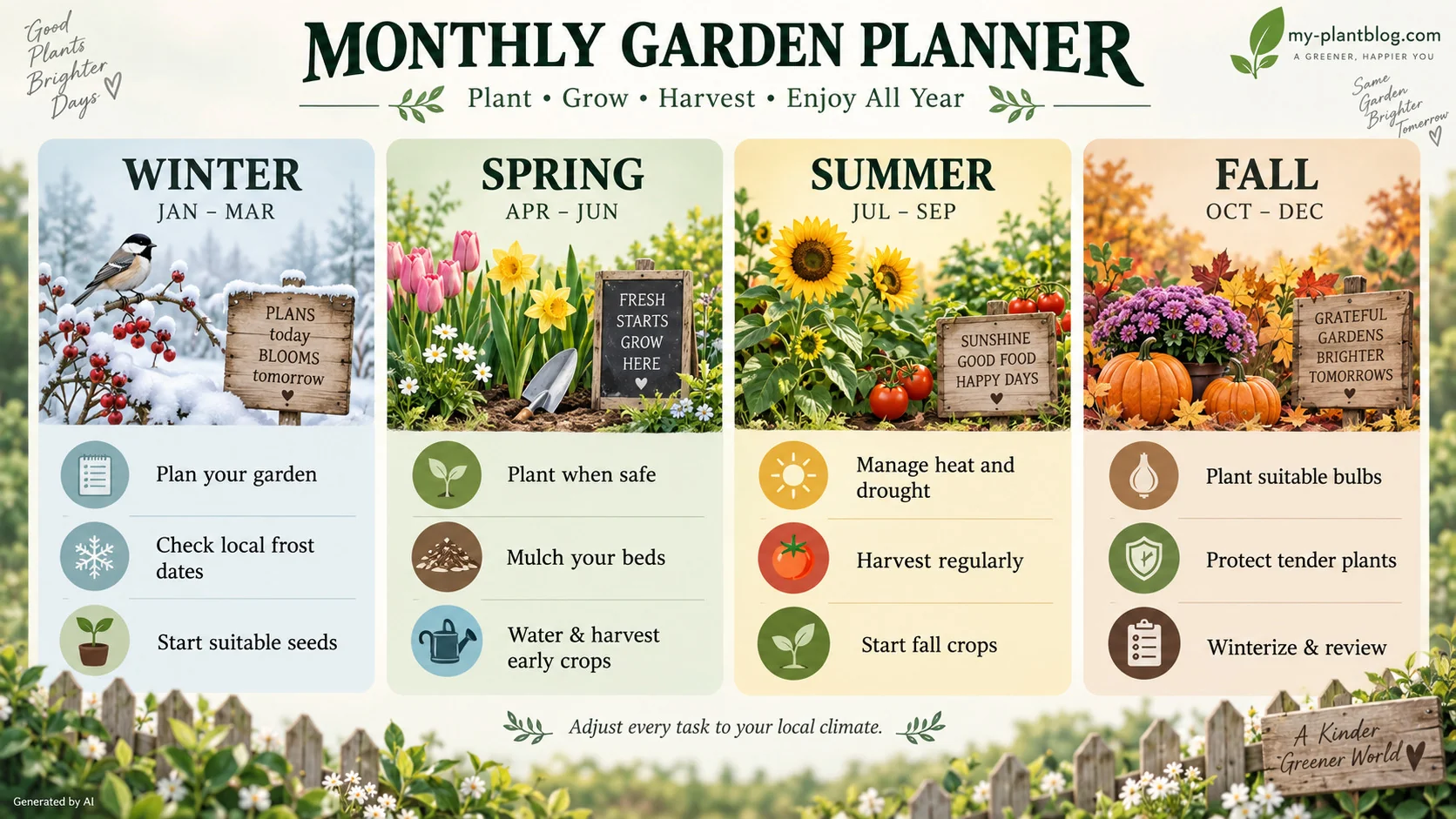
Use the checklist as a year-round reminder. Select each month as you review your tasks, and adjust every activity to the season in your own garden.
Common Mistakes When Planning Garden Tasks by Month
A monthly planner works best when it helps you observe rather than follow dates without checking conditions. These mistakes are worth avoiding.
Following Dates Too Strictly
A calendar may suggest planting tomatoes in May, but your nights may still be cold. Check your local frost risk and current forecast first.
Planting Tender Crops Too Early
Tomatoes, peppers, basil, cucumbers, and squash can struggle in cold conditions. Wait until outdoor temperatures suit the crop.
Working Soil When It Is Too Wet
Digging or walking on saturated soil can compact it. Wait until it becomes workable rather than sticky.
Forgetting to Harden Off Seedlings
Indoor-grown plants need a gradual transition to stronger sunlight, wind, and outdoor temperatures.
Watering Only by the Calendar
Rain, heat, wind, soil type, and container size all change water needs. Check the root zone before deciding whether to water.
Cleaning the Garden Too Completely
Some healthy stems, leaves, and seed heads can support wildlife. Remove diseased material, but keep useful habitat where practical.
Monthly Garden Planner FAQ
Is this monthly garden planner suitable for all US climates?
It is a general year-round guide. Adjust the tasks to your local frost dates, growing season, soil conditions, and weather. A national monthly calendar cannot provide exact planting dates for every region.
When should I start seeds indoors?
Start with the crop's seed packet and your average last spring frost date. Count backward by the recommended number of weeks. Different crops need different starting times.
What garden tasks should I do every month?
Check plant health, watch soil moisture, inspect for pests, remove small weeds where needed, and record useful observations. The frequency will change with the weather and growing season.
Should I fertilize my garden every month?
No. Feeding depends on the crop, soil, growth stage, and fertilizer. Use a soil test where appropriate and follow the product label rather than applying fertilizer automatically each month.
How can I adapt this planner to a balcony garden?
Follow the same seasonal priorities, but pay closer attention to container size, drainage, sun exposure, wind, and winter protection. Outdoor pots often need more frequent moisture checks than in-ground beds.
Keep Your Garden Plan Manageable
You do not need to finish every task in a single weekend. Choose a few priorities each month, check the weather, and keep notes on what your garden actually needs.
Some months are for planting and harvesting. Others are for protecting plants, preparing the soil, or simply observing what has changed. A useful garden planner makes room for all of them.
Start with your local conditions, follow the season, and adjust as you learn.
